Assister à l’European Shintaido College 2019 à Reims, France
Par Mark Bannon et Connie Borden
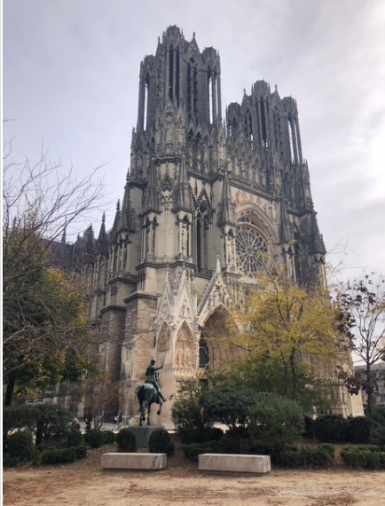
Le Collège européen Shintaido (ESC) a tenu son gasshuku d’automne du mercredi 31 octobre 2019 au dimanche 3 novembre 2019 à Reims, France. Reims est au cœur de la Champagne. La belle cathédrale du centre de la ville a accueilli les couronnements des rois de France. Une destination merveilleuse pour combiner un peu de tourisme avant le gasshuku.
Le thème de ce gasshuku était Shinten: Développement. Le thème vient des cinq étapes de Shintaido keiko: Shuchu-Concentration; Toitsu-Unification; Shinten-Développement; Seiketsu-Pure Propreté; et Rakuten-Freedom. Ce gasshuku a étudié le flux de la concentration à l’unification au développement tout en expérimentant les formes familières de Tenshingoso, Eiko et Meiso. L’accent était mis sur l’expression joyeuse et saine de la vie. Nous avons été encouragés à être curieux, à être ouverts en mettant l’accent sur la recherche du calme intérieur nécessaire pour partager des kumites harmonieuses, douces et profondes afin que nous nous unissons à nos partenaires.
Ula Chambers (Royaume-Uni) était directrice de l’instruction. Margaret Guay, membre de l’ASA, était l’instructeur invitée. Ula pratique shintaido depuis 1980 au Royaume-Uni, devenant instructeur en 1987 et instructeur général en 2016. Son travail a été avec les personnes ayant des troubles d’apprentissage et les personnes âgées pour explorer les aspects transformateurs de Shintaido. Margaret Guay a fondé Shintaido en 1985 et enseigne depuis plus de 25 ans. Margaret a étudié conjointement avec l’école de Body-Mind Centering® pour mieux comprendre son propre mouvement et acquérir un aperçu des états cultivés grâce à la pratique Shintaido. Body-Mind Centering® (BMCSM) est une approche intégrée et incarnée du mouvement, du corps et de la conscience développée par Bonnie Bainbridge Cohen. Margaret a donné des cours de développement avec des nourrissons et de jeunes enfants et a travaillé dans plusieurs programmes d’enrichissement après l’école pour les enfants ayant des besoins spéciaux.
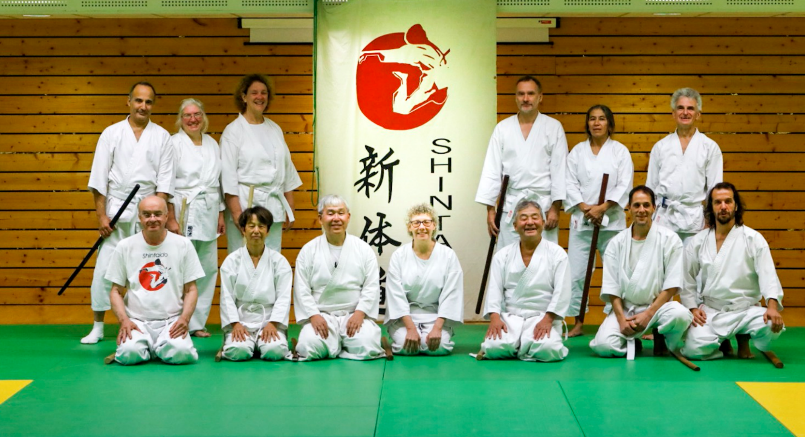
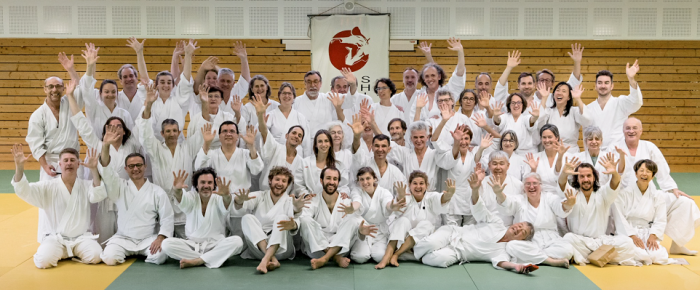
Cinquante-trois personnes ont assisté à ce gasshuku, venant de France, d’Allemagne, d’Italie, de République tchèque, du Royaume-Uni et des États-Unis. Jeudi et vendredi, le Comité technique européen a tenu trois réunions et deux etc keiko enseignées par Ito-sensei. Ces keiko ont continué avec l’étude de Kenjutsu et l’approche de Musoken. Les examens européens ont eu lieu vendredi après-midi. Deux personnes se sont avancées à Nidan Kenjutsu, une personne a avancé à Nidan Bojutsu et une personne a avancé au rang d’instructeur Shintaido Nidan.
Samedi et dimanche ont été le gasshuku général avec trois keiko avec deux sessions supplémentaires matin centrées sur Kenko-taiso. L’événement comprenait une fête le samedi soir.
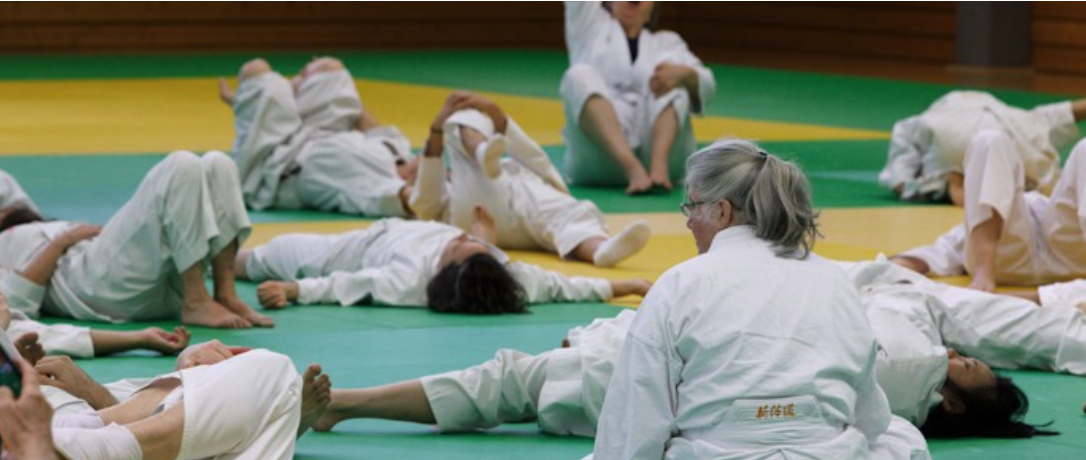
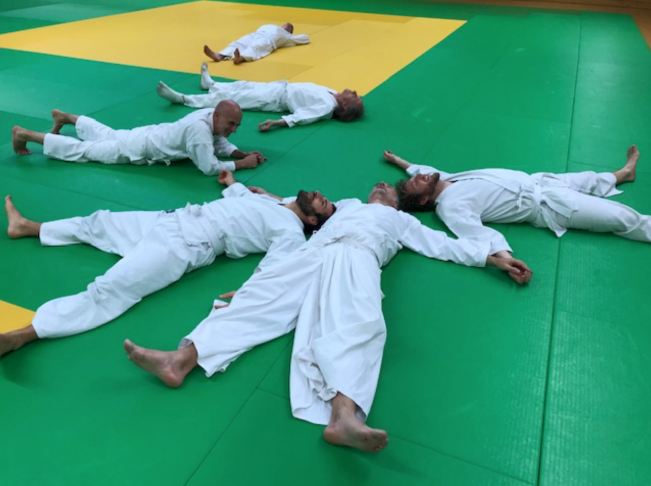
Margaret Guay a enseigné le keiko d’ouverture combinant son étude de Body-Mind Centering avec Shintaido. Elle nous a permis d’explorer nos mouvements du corps à partir des premières approches de développement cellulaire afin que nous roulions et tordions sur les grands tapis de tatami. Comme Ito-sensei l’a commenté, “à un moment donné, il ressemblait à un tas de compost se tortillant”. Pour certains, c’était comme un jeu géant de Twister® que nous avons déménagé et sous l’autre. Margaret s’est assise régulièrement et patiemment pendant que nous avons exploré des mouvements familiers avec la nouvelle perspicacité de notre développement tôt de système nerveux. Margaret a fermé avec Tenshingoso.
“L’esprit est comme le vent et le corps comme le sable: si vous voulez voir comment le vent souffle, vous pouvez regarder le sable.”
— Bonnie Bainbridge Cohen, Body Mind Centering Developer
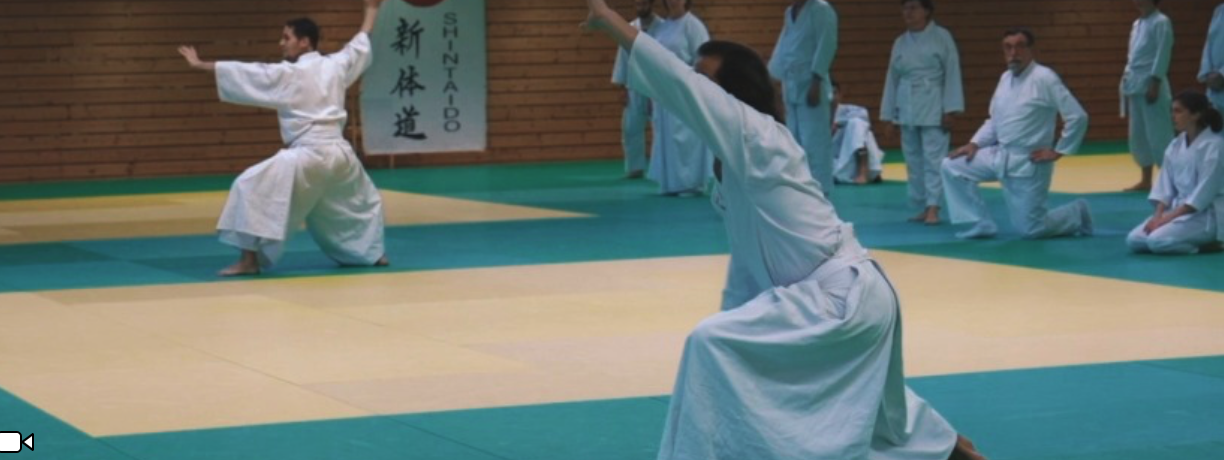
Samedi après-midi, les instructeurs généraux Ula et Mieko ont enseigné un processus pour présenter Eiko Dai axé sur le thème de «l’infini». Mieko nous a conduits à marcher avec des mains de musoken et kaishoken pour les coupes traditionnelles de dai-jodan, jo-dan, chu-dan et go-dan. Ula nous a ensuite conduits au ciel pour voler comme des oiseaux – l’image du troupeau unifié d’étourneaux faisant des murmures. Nous avons coupé dans le modèle d’infini – la figure 8 s’étendant sur son côté. Nous avons tourbillonné et grimpé en groupes de 5 ou 6 à suivre et à se déplacer dans des motifs unifiés sans chef. Puis nous nous sommes joints à un groupe faisant Dai jodan tandis que l’autre groupe a fait la coupe à l’infini. Nous avons conclu avec son partenaire en tête-à-tête Eiko Dai en utilisant notre voix.
Dimanche matin keiko fermé le gasshuku avec l’étude d’une nouvelle approche de l’utilisation des arrangements Tenshingoso dans Shintaido Karaté. L’instructeur général David Franklin (SOA/Czeck) a dirigé avec des échauffements, poursuivant l’étude de la communication étroite avec son partenaire par le massage et les étirements.
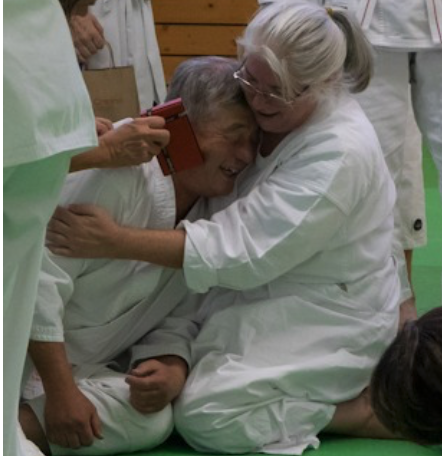
L’instructeur général Gianni Rossi (IT) dirige ensuite une série de katas pour enseigner le processus de sumo qui mène au renki. Les exercices ont commencé avec simplement déplacer le poids d’une jambe à l’autre. Gianni-sensei a ensuite ajouté glisser les pieds ensemble que le poids a été déplacé. Quand nous sommes devenus à l’aise, nous avons ajouté accroupi dans la position classique de lutteur de sumo shiko et a ensuite ajouté soulevant une jambe haute dans l’air sur le côté, puis le ramener vers le bas avec un piétinement. Pour certains, ces exercices ont mis en évidence un koshi centré et un contact stable avec la terre tandis que d’autres se souvenaient que le piétinement de shiko a également été exécuté pour chasser les mauvais esprits. Gianni-sensei nous a ensuite demandé de faire équipe avec un partenaire pour l’étreinte sumo et nous a invités à nous aider les uns les autres à devenir centrés avec notre partenaire fournissant une structure de soutien et la force d’équilibrage que nous avons déménagé comme une équipe co-dépendante.
Maître instructeur Minagawa (Royaume-Uni) a enseigné comme un kata familier mouvements Shintaido main libre pour recevoir une attaque en uchite jodan overhand tout en gardant l’essence Shintaido. Les exercices de karaté ont gardé la mise au point nette tout en utilisant la nature transformatrice de Shintaido pour que tout le monde se sente bien dans leur mouvement du corps en travaillant avec leurs partenaires.
Ces keiko montrent l’adaptation continue et le développement de Shintaido pour les conditions du corps des gens – vraiment garder le «NOUVEAU» dans le mouvement du nouveau corps.