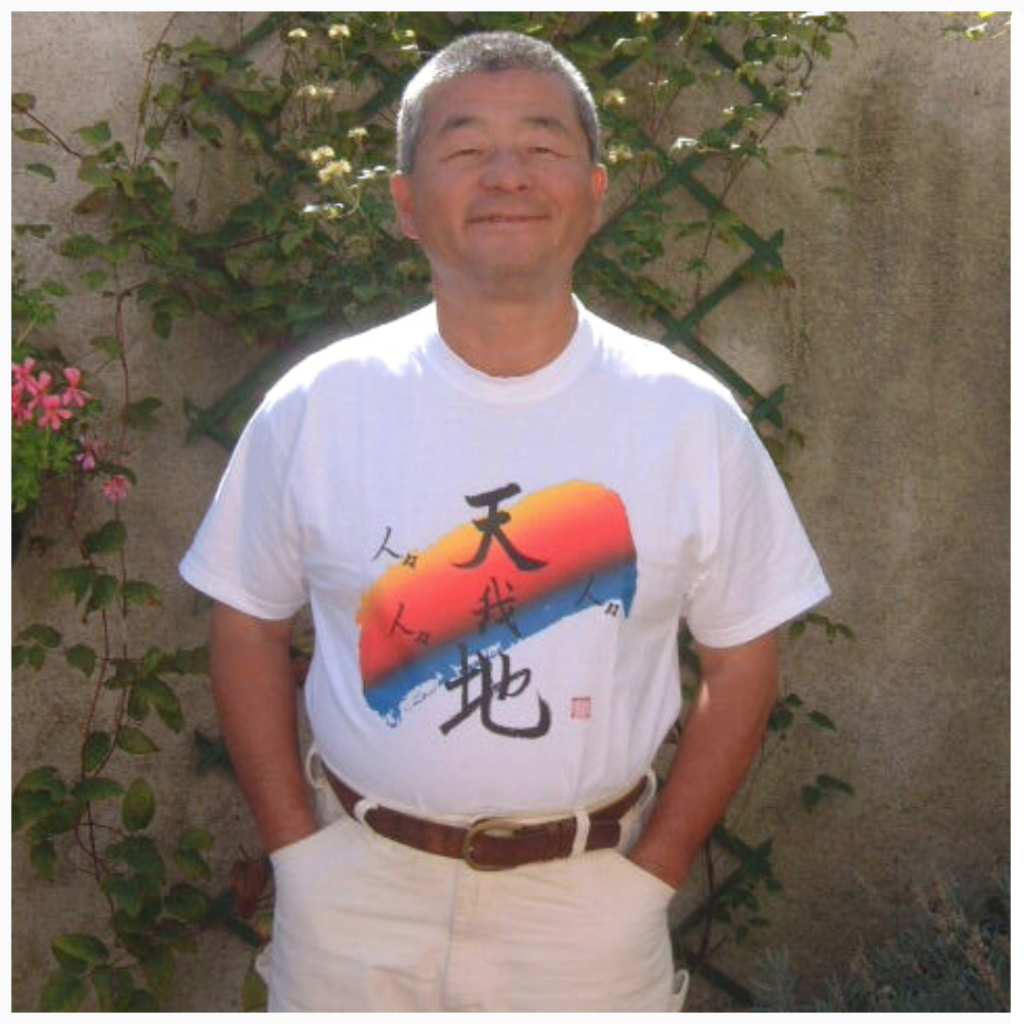
On May 1st, 2023, after a long struggle with Parkinson’s disease, James Cumming took the MAiD (Medical Assistance in Dying) medicine, which is legal in the state of Vermont where he lived. He passed away peacefully with his wife Evangelina “Vangie” Holvino by his side.
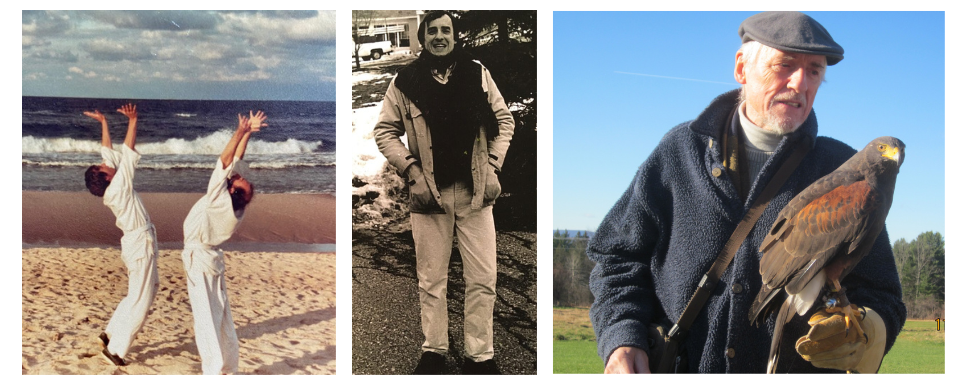
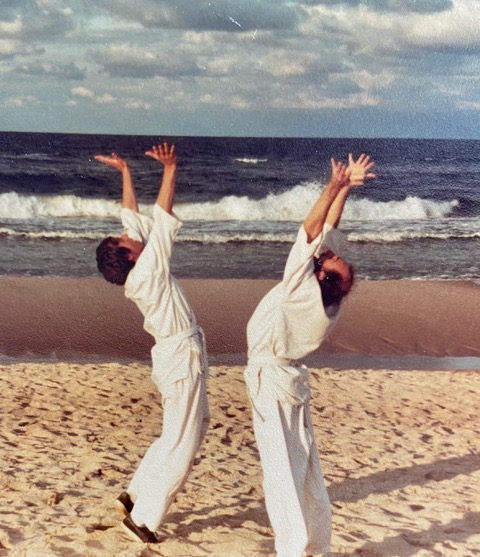
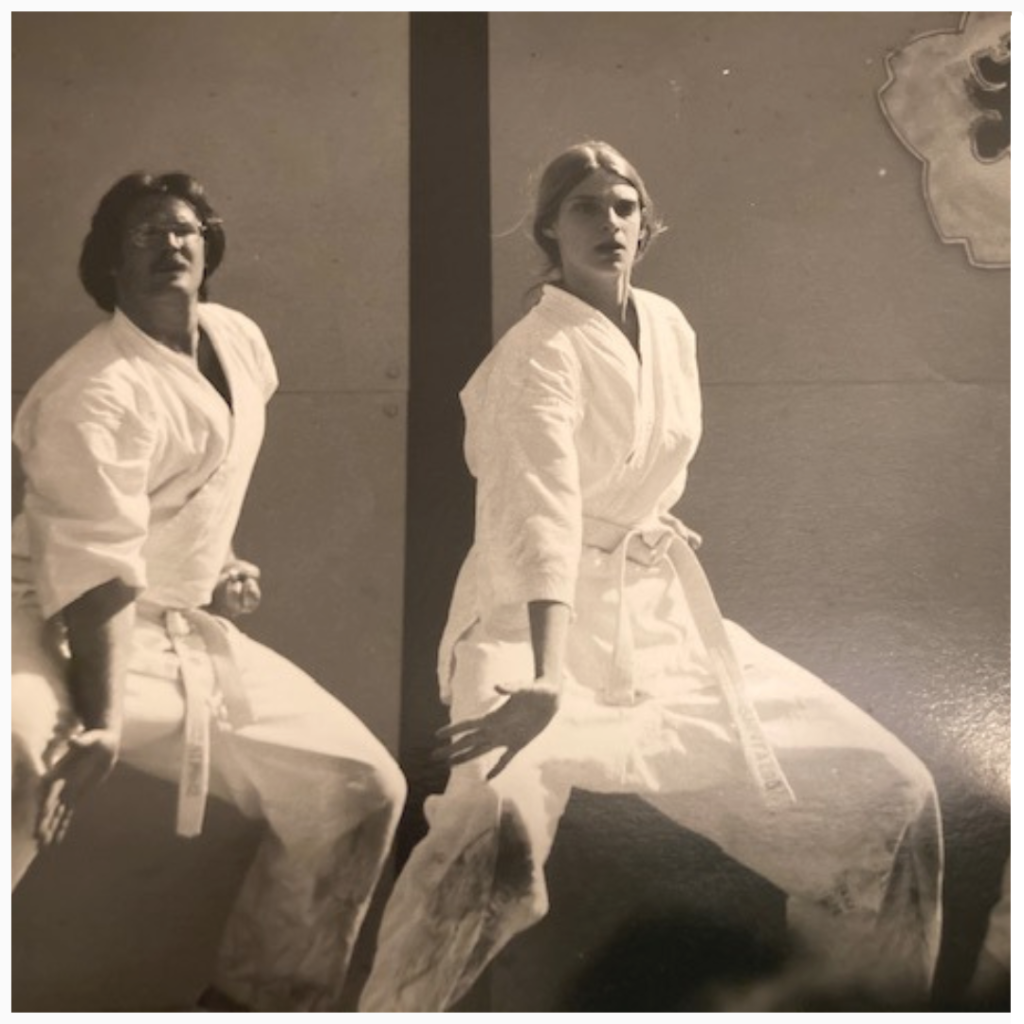
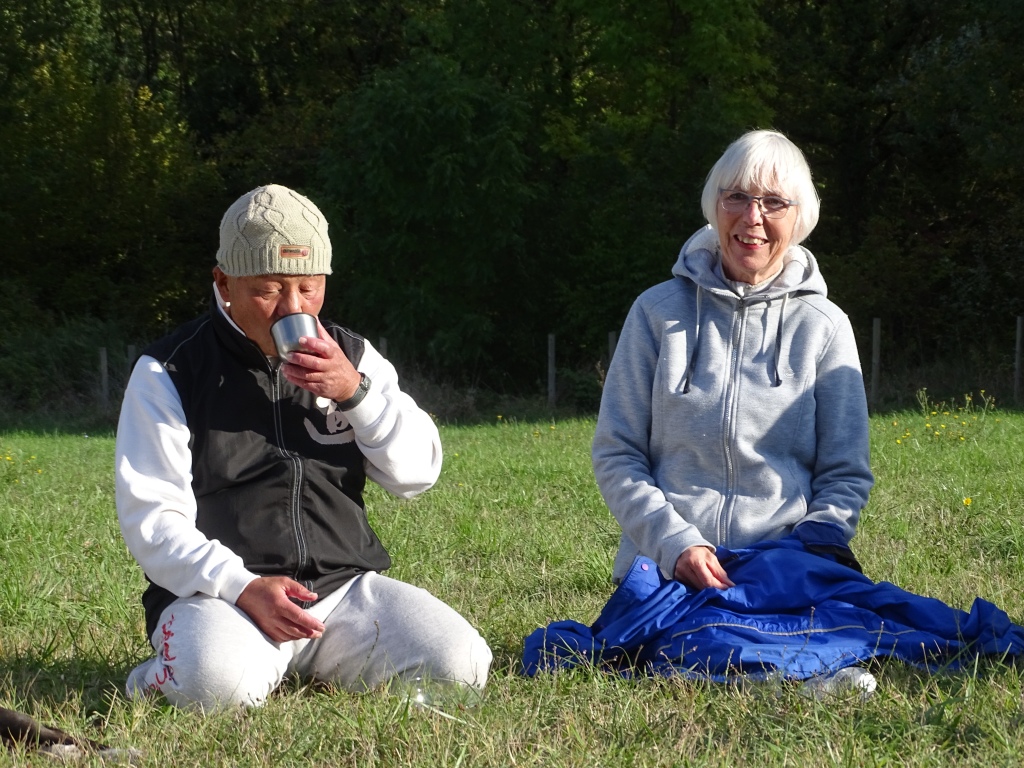
James was a longtime Shintaido practitioner in England. He also spent time in the San Francisco Bay Area, where he stayed for a time with Bela Breslau and Ito-sensei. Here’s a photo of James (on the left) doing Shintaido on a beach somewhere with his longtime friend and business partner John Kent.
I got to know James through Bela. When we moved East in 2004 to build and run the Shintaido Farm, Bill Strawn and Eve Siegel, friends from the Bay Area let Bela know that that James and Vangie were still living in Brattleboro, just a few miles up the road from Deerfield. We connected with them. James came back to Shintaido, participated in a few classes at the Farm, and reconnected with Master Instructor Michael Thompson and other people in Shintaido Northeast.
James introduced me to Tai Chi, which I have been studying for a dozen years now. This is a great debt I owe James, because Tai Chi turned out to be the right practice for me at my age–soft, relaxing, thoughtful. James and I worked on a non-fiction book proposal, and quickly grew close. James and Vangie had many friends in the area, particularly among the Tai Chi students of teacher Wolfe Lowenthal. Somehow, possibly through the practice of Tai Chi, James had managed to stabilize his Parkinson’s and for many years he was in relatively good health despite his illness. Unfortunately, at the end of last year, James fell in the parking lot of a medical facility after a doctor’s appointment. That fall precipitated a difficult period of decline marked by stays in three hospitals and rehab places before returning home after three months.
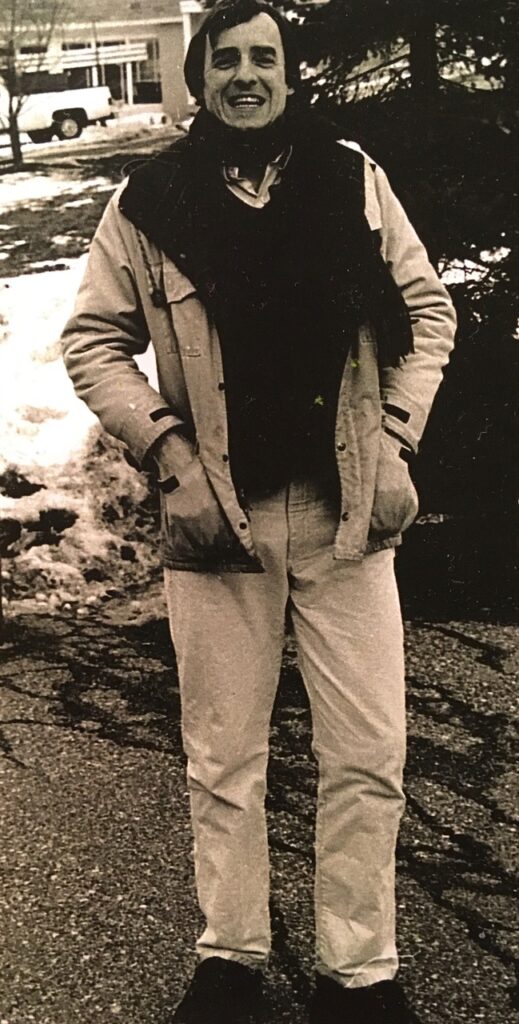
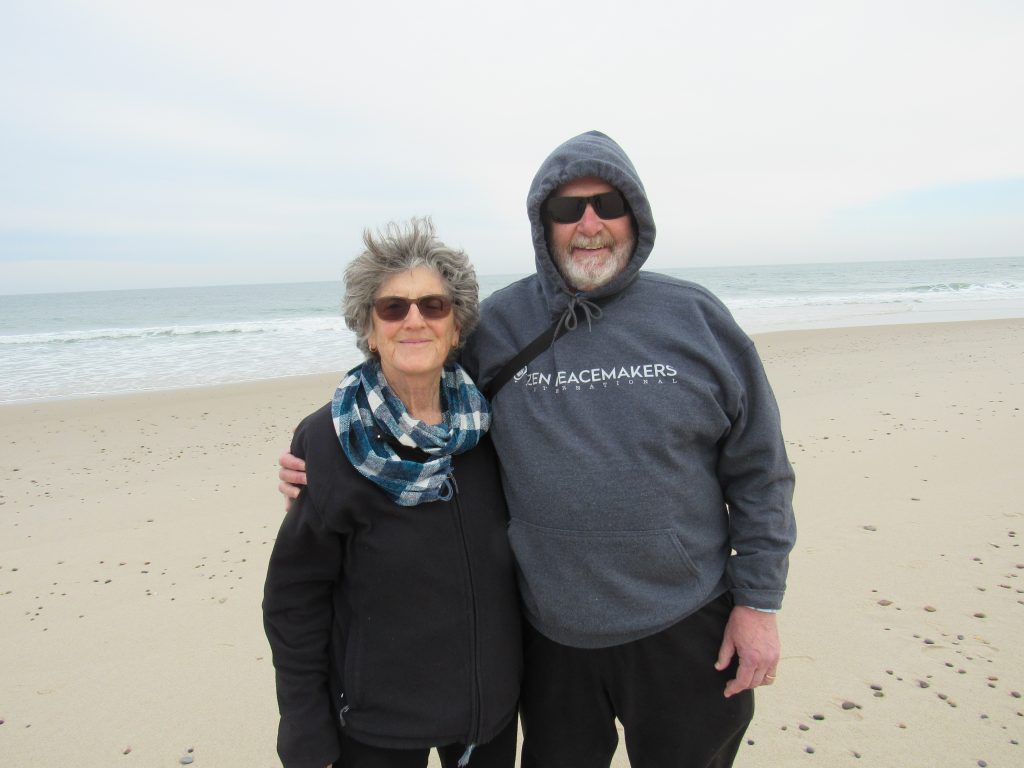
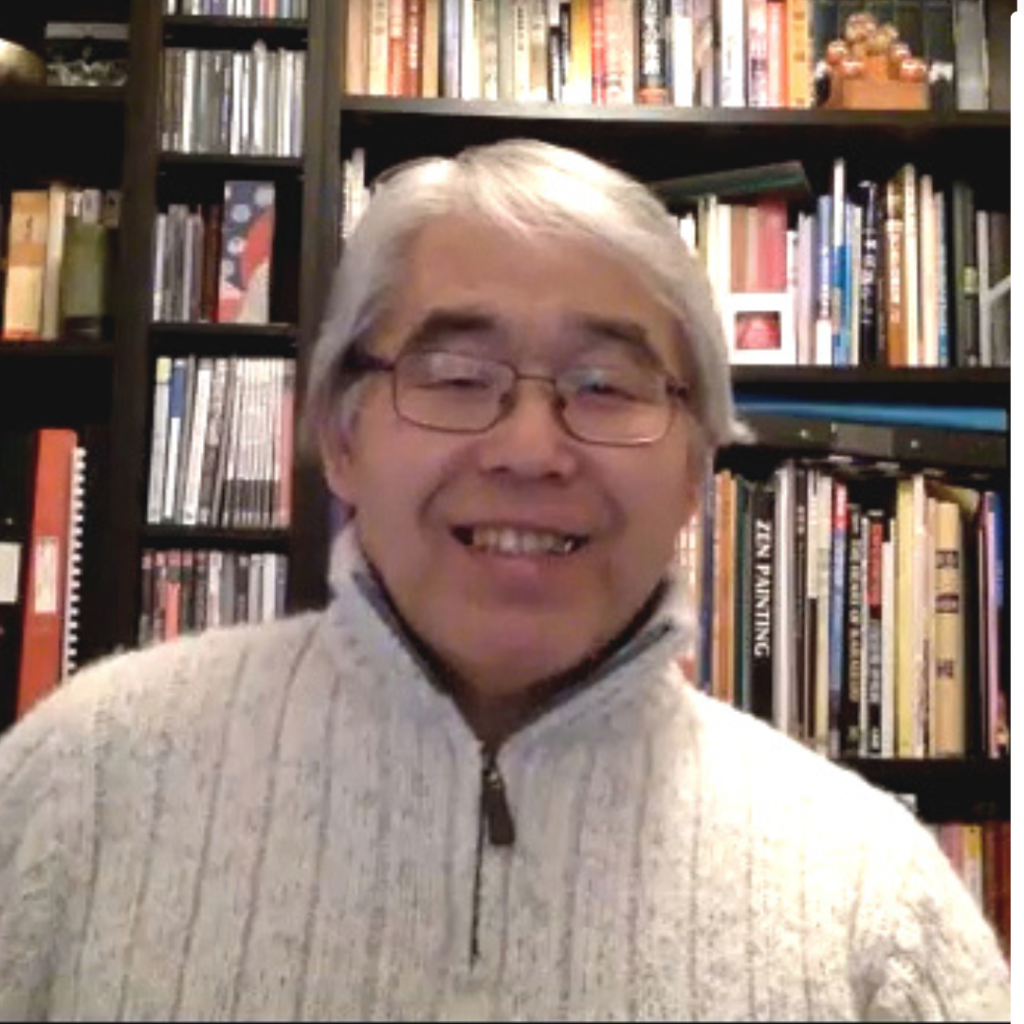
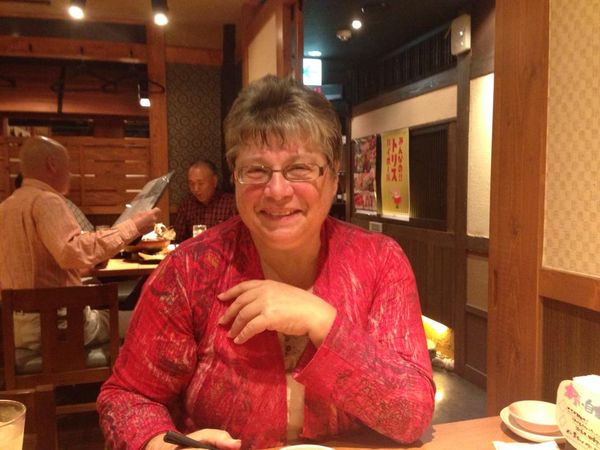
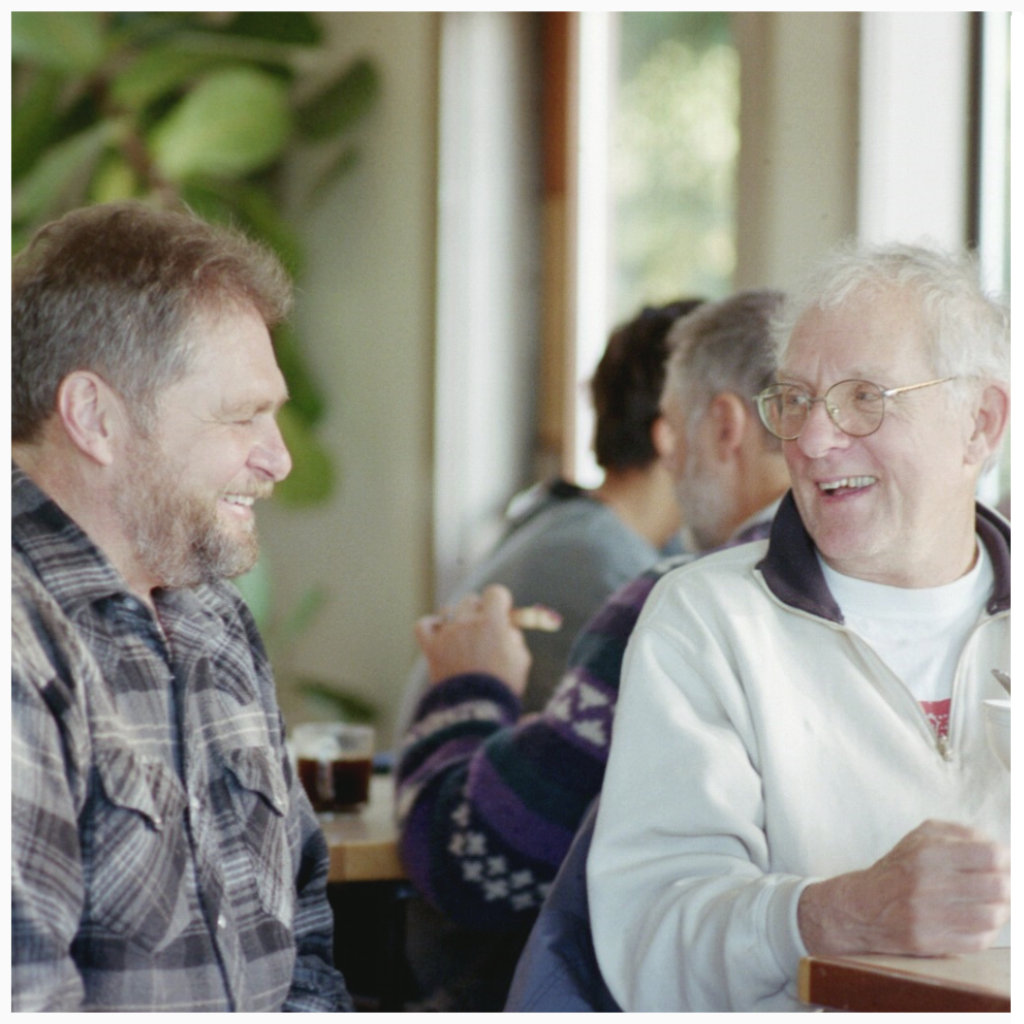
You can read more about James’s struggles and joys in his and Vangie’s website Paths to the End, where they posted updates about James and created a forum where people could talk comfortably and exchange ideas about death and dying. Though he looks a bit forlorn in the picture on the home page of their website, James was a strong man with a terrific sense of humor, dry and wry in the British way, but also capable of a loud belly laugh when the mood struck him. He was gentle, inquisitive, warm, a loyal friend and a rousing companion. Bela told me stories of she and James and a few other roustabouts having long evenings of carousing in San Francisco. Here’s a picture of a young James, around the time he met Vangie:
James and I had many wonderful talks on a variety of subjects. Among other things, I learned that James had been a pilot in the RAF, though he never had to serve in combat. For many years he and John Kent taught cross-cultural learning classes. Later James and Vangie gave workshops on change through their company Chaos Management.
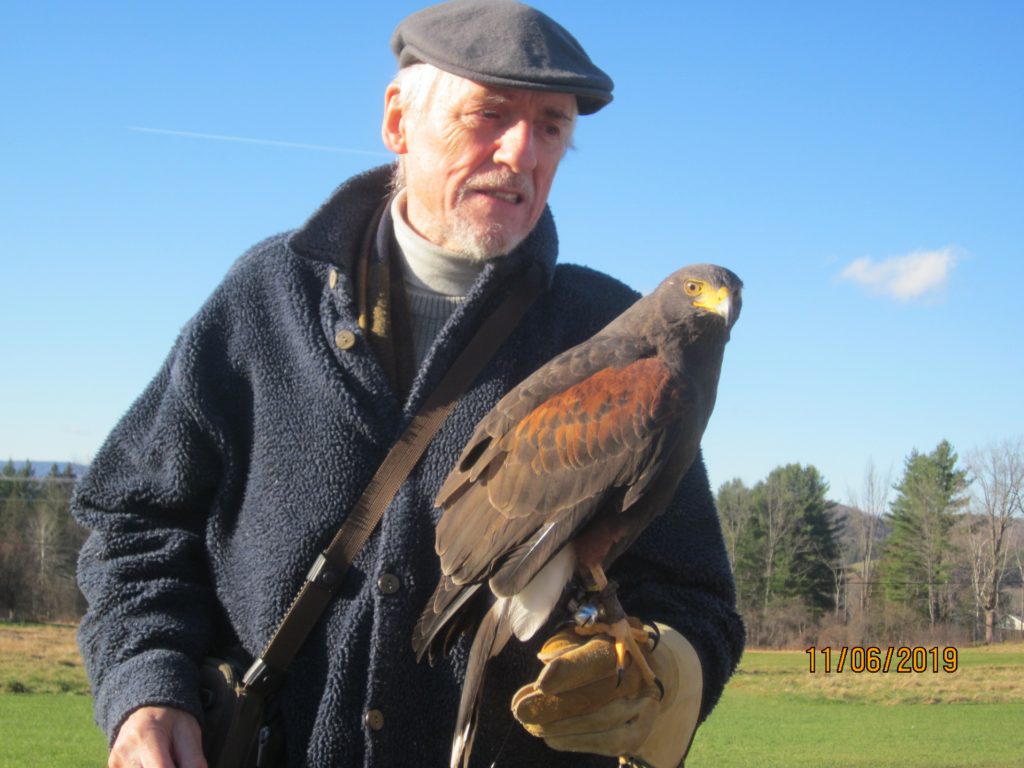
My favorite picture of James is this one of him handling a falcon at New England Falconry in 2019:
Both James and the bird are majestic.
James included a link to the British Army’s Last Post bugle call as part of his final post on the Paths to the End website. Quintessentially English, James was a citizen of the world. Shintaido practitioner. Tai Chi student, international traveler, gifted teacher, loving husband, cherished friend.
I was looking for some words from Tai Chi or Shintaido that might sum up James’s life and ending. What I found instead were the last lines from The Soldier, by the poet Robert Frost from James’s adopted home state Vermont:
Included here, you will find our current offering of over 190 videos ranging from highlights captured during keikos and larger gathering, replays of Sunday Zoom keiko, katas for reference, and interviews and talks.
You are welcome to browse the videos in one giant list. Also, on the Home page, you will find them sorted by categories and then into playlists by topics such as:
Interviews & Sharings Don’t see an interview of someone you’ve wondered about, let us know. You’ll also find insights into Shintaido practice shared by HF Ito formally and informally.
Podcasts Currently working on our second season. You will find our complete first season here as well. The new season has two podcasts that are released twice each month. Hear David Franklin read from our book selection Untying Knots: A Shintaido Chronicle by Michael Thompson. In 2023 we are also offering periodic interviews. So far this year we have listened to Mario Uribe, Kent Nagano, and Brad Larson.
Shintaido Disciplines An assortment of videos from Kenjutsu, Bohjutsu, Karate, and Shintaido
Shintaido Keiko and Events See replays of Sunday Zoom keiko, revisit workshops and gasshukus including PacShin Kangeiko in 2022 and 2021, workshops in Quebec and much more.
Created Playlists This area contains all the playlists that have been created on the SOA channel. All of these playlists can be found in the headings at the top of the page, but if you know the grouping of videos you want to see, this is a good place to look.
Videos The “Videos” area is just that, all the individual public videos posted on the Shintaido of America YouTube channel. Maybe you know what you are looking for by title, but are not sure which category or playlist it might be in. Or perhaps you simply want to browse all of the videos to see if something sparks an interest.
It is also possible to search just Shintaido of America’s videos on YouTube by title.
At first, this may seem confusing but just stick with me.
On the Shintaido of America YouTube Home page, there is a large search bar across the top of the page. This bar is used to search all YouTube channels.
To keep your search within the Shintaido of America videos, please notice there is a second magnifying glass. This is below the Shintaido of America banner “Opening to Life” and below the level of Jumping Man. Scroll all the way over on the far right to find the Search Icon/magnifying glass.
Use this search icon to search locally on the Shintaido of America channel.
The best way to learn is to just poke around and see what you find. You can’t break it, we promise.
Please let us know if the Channel is missing something you would like to find here. Or maybe the content is okay, but you’d like shorter or longer videos. Maybe you have an idea that just isn’t here at all.
If you haven’t already “subscribed”, please do it today and enjoy our channel.
Subscribing is completely free and as easy as clicking:
Once you’ve subscribed, you can choose how often you want to be notified when Shintaido of America posts a video.
Please let us know what type of content you enjoy. Was the content useful? Any suggestions are welcome.
General Instructor Jim Sterling asked me and Bela to submit an article to Shintaido of America’s Body Dialogue newsletter, using excerpts from our recently published novel Pilgrim Maya that reflect our background as longtime Shintaido practitioners.
Although we never use the word Shintaido in the book, Shintaido was the inspiration for many scenes. We have both put many episodes from our lives into this novel. For example, in one chapter the main character goes to Japan and attends a wedding. Bela participated in a wedding ceremony in Japan. In this article, though, we’re going to confine the excerpts to two that will be familiar to anyone who has practiced Shintaido, especially those practitioners in the Bay Area.
In Pilgrim Maya, the main character, Maya Marinovich has lost her husband and baby daughter in a freak car crash. To find a new start, Maya leaves Boston for San Francisco. She gets involved briefly, but passionately, with the leader of a Japanese-Jewish cult movement. This part of the novel is not based on Shintaido, but the excerpt below about a hike up a hill in Tennessee Valley in Marin County will be familiar to Bay Area practitioners of Shintaido. Ito-sensei led many groups up that hill over the years. In the second third of the novel, Maya, lands a job as assistant property manager for The Bon Vivants, a group of artists in a co-housing building in Oakland. Later she learns details about the accident and spirals into depression and thoughts of suicide. In the final chapters, Maya meets Buddhist teachers Eli Ronen and his wife Reva, and begins a lifelong process of healing and transformation, finding meaning through helping others. Here are two excerpts that were inspired by our Shintaido experiences.
Bela Breslau and Stephen Billias
A hike in Tennessee Valley:
Chapter 8 The View from the Top of the World
It’s not that easy, I discover, to get to Tennessee Valley without a car. I suppose I could have asked one of the Tribers, but I’m still clinging to a loner’s independence. I take two buses and a long walk to get to the trailhead, at the upper end of a deep valley that leads to an ocean beach. The vivid air smells of sage and salt. It’s easy to find the Tribe of Dan in the area in front of the parking lot by the first gate into the valley, a common meeting point. Their white robes make them stand out from the young couples with baby strollers and the avid hikers in shorts and hiking boots. When I arrive, a California Highway Patrol officer is interrogating Sajiro while the rest of the Tribe stand around looking amused. Manami comes up to me immediately.
“Wonderful,” she says. “Glad you came.”
“What’s going on?” I ask.
“Oh, we get this all the time. He just wants to make sure we’re not a terrorist group.”
“Are you a terrorist group?” I ask. Manami just laughs. The CHP officer soon leaves, apparently satisfied that Sajiro and his people aren’t going to blow up anything or throw themselves off a cliff in a mass suicide. The Tribe starts down the flat, easy trail out to the beach, but after a quarter mile they veer onto a steep path up the side of the hill. I struggle to keep up. Sajiro is a good hundred yards ahead already. I can’t tell whether his followers are letting him be ahead or whether he’s just in much better shape than everyone else. It takes us a good forty-five minutes to crest the ridge. We walk another quarter mile to where the views are most spectacular up and down the coast and far out to sea. I wonder if we’re going to do more chanting and moving, but we don’t. All we do is face the ocean in a natural stance. Though he isn’t saying or doing anything, Sajiro is leading us. Some people have their eyes closed. Others have them open. I’m looking around, wondering when we will finish, wondering what this is all about and at the same time totally enjoying being here on the continent’s edge with amazing views of the Pacific.
After the meditation, Sajiro turns and stands with his back to the ocean, facing us. “This is always here,” he says, gesturing to the panorama of sparkling water, golden hills, a cloudless day with a heaven full of different shades of blue, sky and ocean meeting at a soft line in the far distance. “Don’t be afraid to come back here, any time. Even if just in your mind.” The walk down is somewhat easier. I catch a glimpse of the city of San Francisco, just for a minute between the hills. It shines white and pink like a fairy castle in the air. Then Sajiro is walking by my side.
“Very beautiful and peaceful, isn’t it?” he says.
I nod, still somehow embarrassed and strained by being near him. He laughs easily and puts his arm over my shoulder and says how glad he is that I have decided to be open to the beauty around me, and that it reflects the beauty that is inside me. I am surprised at the ease and innocence of his gesture and what he says. I laugh easily also, letting go of the tension and uncertainty.
A keiko in a Japanese martial art that strongly resembles Shintaido, followed by an episode of takigyo (waterfall training) that some Shintaido practitioners (including Bela) have experienced:
Chapter 21 Zen Body, Zen Mind
The next time I do yoga, I see Jimmy again and am impressed by his physical agility, grace, and balance. I remember what he said about studying a martial art of some sort. Over the next several weeks, I start looking into martial arts. As helpful as I find yoga, the nightmares have persisted. Maybe something more active and rigorous would speed things up, dislodge the body memories of nighttime car crashes. Something tells me it might also augment my development in meditation. I’m never sure what drives me but with the help of my Zen teachers and my therapist Sarah, I’m coming to trust and believe in myself and I follow my intuition, my instincts. It’s San Francisco—with a cornucopia of offerings available—tai chi, karate, aikido, tae kwon do, as well as lesser-known practices. I try classes in different forms but nothing fits. Tai chi is too passive, karate too focused on combat and self-defense. I continue my long walks, and on a sunny Sunday afternoon, I find myself in front of the Kiri-Do dojo on California Street. With a start I remember that this is the family dojo of my new friend from yoga, Jimmy. A large poster covers the window.
Need to Change Your Life?
Try Kiri-Do (The Way of Cutting)
The Martial Art for Personal Transformation
A jolt runs through me as I read the words. That’s me: I need to change my life. I’m on the path already. Maybe Kiri-Do is what Sarah was getting at when she suggested a body-centered practice. At the end of the next yoga class, I approach Jimmy and ask about beginners’ classes.
“We’re all beginners. We always will be. You should just come. We all practice together. Are you free Wednesday night? If you are, come by. I’ll be there too.”
So here I am showing up for class on a drizzly San Francisco Wednesday night. I’m wearing grey sweatpants and a long-sleeved white t-shirt. The dojo is a nearly empty room with a scuffed and worn wooden floor and a tokonoma altar in one corner. Everyone leaves their shoes and street clothes in the outer entry way. The first thing I notice is that there are few students, and they’re all in incredible shape. A youngish woman welcomes me. She’s not Japanese, but she’s dressed in a white martial arts outfit I later learn is called a gi.
I’m surprised when Jimmy comes out. He’s wearing a white uniform, white special shoes, and a white skirt-like covering that makes him loom large. When he sees me, he smiles broadly and nods in my direction. The class is about to start. Jimmy has everyone form a circle.
Jimmy leads warmups, a series of increasingly strenuous stretches, starting at the top of the head and working down to the lower part of the body. It’s not too hard. I’m getting a bit comfortable. We reform the circle at the end of warm-ups and have a short standing meditation. An older Japanese man walks out from a back room. He’s shorter than Jimmy, and has the square body of a martial artist, compact, muscular, with short-cropped gray hair and glasses. His face is severe, with none of the easy warmth Jimmy projects. He notices me right away and comes over to me while the rest of the class waits on the side. Jimmy hurries over to make an introduction.
“Father, this is Maya, a friend of mine from yoga class. Maya, this is my father, Mr. Ueda. In class we call him Sensei.”
Sensei nods. “Hello, Sensei,” I say, and I bow, something I learned from my time in the Tribe.
“Please just follow. You are not expected to know what to do. Jimmy will be near you.”
What happens next surprises me. There are a series of partner exercises that include leading and following and jumping. Lots of jumping. After twenty or thirty minutes, I am completely exhausted and surprised. I thought I was already in pretty strong shape, but these exercises are something else. Also, there is something to the way we are touching one another. Holding out our hands to support the person doing the jumping. Jimmy comes by to be my partner toward the end of the break-out session and I follow as best I can. When I lead him, I notice how the slightest movement on my part sends him jumping up almost to the ceiling. I try to pull back my energy, but he just smiles at me and continues.
We again stand in a circle for a brief calming meditation. We do some strange movements accompanied by sounds. I continue to do my best to follow. The rest of the class is more technical. As far as I can tell, it’s basic karate stuff, except the students aren’t sparring, there’s no headgear or padding, and when they do partner practice, they don’t strike each other. I try to follow Jimmy’s father, the teacher, but it’s hopeless. He doesn’t explain anything and pays no attention to me. I’m supposed to copy what he’s doing, without any instruction. Oh well, I think, waiting for the class to be over so that I can leave and never come back. A funny thing happens toward the end of class. We take up wooden practice swords. I notice that each of the students has one of their own, carefully wrapped in cloth scabbards or furoshikis. Jimmy gives me a loaner. We follow Sensei in a series of cuts. Jimmy comes over to correct my form because I’m holding the sword upside down, but in my defense it’s hard to tell, since the thing, I learn, is called a bohkutoh andis just a straight, heavy piece of hard wood that barely resembles a sword; it has no curve and only the hint of a blade edge, though it does have a rough point which keeps me from holding it by the wrong end, thank goodness! The funny thing is, I like it all—the sword, the cutting, everything!
After the class, Jimmy comes over to ask how I am and what I thought. The other students are filtering out of the dojo, bowing to the Sensei and bowing at the entrance before turning to leave. I intuitively understand that they are appreciating and acknowledging the sacredness of their practice space. My time with the Tribe and in Japan taught me at least that much.
Just as I am about to leave, Jimmy’s father comes over to the two of us.
“Why are you here?” he asks. It’s a challenge. I wonder: Did I do something wrong. Have I presumed too much in some way I’m unaware of?
The question takes me by surprise. I don’t have a quick, easy answer. Sensei is silent; he’s not offering anything. He waits. He expects an answer. I think about it. Hesitantly I start to give a response:
“I’ll tell you why I’m here. I love the zazen, the sitting that I’m doing at the Zen Center. I love the kinhin, the walking meditation. I have terrible nightmares; my therapist told me it’s from my worst memories locked in my body. And, sometimes I get so restless that I just want to—”
“Scream—” he says.
“Yes.”
“So. I see. Scream, right now.”
“What?”
“Go ahead. Scream.”
I look at Jimmy, but he’s stepped back and is letting me have this moment with Sensei on my own.
“Scream what?”
“Anything. ‘Yes!’ ‘No!’ Your scream is a meditation also.”
“I don’t know,” I say doubtfully. Okay, I’m not completely ignorant. I’ve heard of Primal Screaming. It’s so unlike anything Eli and Reva are teaching me.
“There are many ways,” Sensei says. “Even within Zen. Many ways. You have to find your own way within the No Way.”
“No Way?”
“Exactly.” And he opens his mouth and lets loose a yell that roars around the dojo until I think it’s going to shatter the windows that rim the upper level of the room.
“Try,” he says. “First, go deeply silent. Then, scream!”
“Ah,” I say. ‘Go deeply silent’ is a clue. I kneel down, make myself small, concentrate my breathing, empty my mind. I go toward the place that I’ve been seeking these months in the zendo. This time when I get there—instead of grasping to stay in it and immediately losing it, always fleeting, never settling in—this time I jump up and give out a shriek that comes from the depths of my being, from the inside of a smashed car, from the newfound power I have found through meditation. I start to cry, but then I stop.
Sensei smiles for the first time and says in a kind, almost gentle voice: “You have pain locked in your body. I’m glad you are here even if it is for a short time.”
Can he see the pain I am holding? Can he see the hot molten river that still flows somewhere inside me? The one I’ve tried and am still trying to bury. To escape. Can he see the pain from the accident? The part Sarah says is locked in me?
“Now, try running around the dojo screaming.”
“Wait, what? Why? What for?”
“To free yourself, of course. Sitting is good, standing is good, walking is good, all will get you where you want to go. You have good teachers at the Zen Center. Now try. Cut! As if you have a samurai sword in your hands, the sharpest blade imaginable.”
“Cut what?”
“Cut everything. The air, the walls, the sky. Me. Yourself. Scream!”
I have no idea what I’m doing but I try again. And again. And again. Each time, Sensei exhorts me to try harder, express myself more and more. Finally, I get frustrated and angry, and I run around the room like a crazy woman, yelling, “Yes!” and “No!” randomly, hating the teacher, hating this foolish exercise. When I stop, I’m crying. As before, I stop myself, a new thing for me. Before I can say anything, he says: “Better.” That’s all. It’s just a moment, but in that instant of complete release I see possibilities.
At the next meditation session in the zendo I mention my first Kiri-Do class experience to Reva. She knows of the Uedas and approves of the idea of me taking up another practice.
“It can only help,” she says.
I also mention my new sword practice during an early-morning session with Sarah. She also approves, using almost the same language as Reva: “Perhaps it will help.”
I make Kiri-Do a regular part of my routine and go to class weekly. I even get a gi and a basic wooden sword, bohkutoh. I notice the students treat these plain swords with utmost respect as if they were sacred objects, keeping them in their coverings except when using them, and bowing after each use. I’m never going to be a master swordsman, but the one-pointedness, the intense focus and concentration required is certainly good for taming my erratic mind. It’s deepening my zazen in ways that I can hardly understand. I learn the basic cuts, and I enjoy the way the combination of the gently strenuous yoga and the outright arduous Kiri-Do classes complement each other.
A couple of months go by. One day after yoga class, Jimmy mentions that there’s a special Kiri-Do event planned for the weekend and asks if I would like to go.
“What is it?” I ask.
“It’s called takigyo. Waterfall training. Up in Marin. My father will lead it. If you want to come, show up at the dojo on Saturday morning.” I’m noncommittal with Jimmy. The idea brings back memories of the hike up Tennessee Valley with Sajiro. I think about it and decide I shouldn’t let the past influence the future. No regrets, the Buddhist texts say.
On Saturday, Sensei takes a vanload of students up onto Mount Tam. We drive halfway up the mountain, park in a lot near Lake Lagunitas, and hike up an almost hidden path. I soon learn why the trail is avoided by most hikers. It’s steep and slippery. Water runs down it, making footing treacherous as it parallels a runoff stream, sometimes crossing it. High up on the mountain we come upon a waterfall, the rivulet spilling over a ledge more than twenty feet up, into a shallow pool. It’s a magical place, a hidden dell of wondrous natural beauty, sheltered and tranquil, the water splashing into the pool musically. Sajiro’s words about the ocean view at Tennessee Valley come to me unbidden: “This is always here.”
“Here,” Sensei says. We all take off our daypacks and the others start to change into their white gis. No one cares about modesty, so I strip down with the rest and put on my gi. Sensei stands at the edge of the pool and chants a prayer, intermittently clapping his hands. A senior student informs me that this is a supplication to the water god to keep us safe and not send anything over the fall onto us while we’re there. “It’s a Shinto thing,” he says. I shrug off this oddity and watch as Sensei enters the water first. He stands under the plunging cascade, takes the horse riding stance, and executes tsuki punches, each time emitting a shout which reverberates over the sound of the water into the surrounding silence of the forest. When he’s satisfied that the falls are safe, he leads us, one by one under the waterfall, senior students first, and leaves us there for as long as we can stand it. Before the first person goes in, he says: “In Japan the water would be much stronger than this, and much colder, but for American students this is a good first time for takigyo.”
Some people last only seconds, others revel in the pulsing crashing liquid beating down on their heads. Some simply stand there, and others perform imaginary sword movements; and no one takes their sword into the cataract even though people have brought theirs with them. When my turn comes, I’m shocked by how cold the water is, and I think that I’ll stay in for only a second or two. I find myself standing straight and still. I lift my hand up and reach up into the water that’s crashing down and cut forward with my arms. It’s the movement I did from the balcony a long time ago, when I was planning to jump and end my life, the time when I turned away from death and towards the struggle to find a way to live.
When I step out, hands reach out to assist me. I stand by the dark wet rock next to the falls and support myself with one hand. I look at my white hand against the dark shining wet black rock. The rock is me. I am the same as the rock. We have become one.
On the next Wednesday, as I enter the dojo, I’m shy for some reason. The waterfall training humbled me and at the same time ignited a fire inside me. How can standing in cold water ignite a fire? How can my white hand be the same as black rock? How can black rock be me?
Jimmy starts the class by asking us to form a circle. This time we sit in seiza position on our knees with our eyes closed. There’s an obvious space in the circle and I’m expecting Jimmy’s father to step into that space and meditate with us. Instead, a tall blond woman quietly slips into the circle, wearing the white skirt that I have learned is called a hakama. I immediately recognize her as Jimmy’s mother. She is the Sensei’s wife, and the Sensei this evening. She has curly blond hair that frames a round beautiful face. When Jimmy ends the meditation, we all bow toward her.
She steps into the circle and asks us to hold hands, to let the energy of the circle pass through us, through the left and to the right. I’m surprised at how the circle comes alive, pulsating, swaying as one. When we start the class, we again do more cutting movements. The difference is that we do them slowly as if we are cutting through a thick liquid. We end up reaching to Ten (Heaven) and slowly cutting down. This is my movement, that I’ve done instinctually. It is the movement that saved me from jumping. It is my waterfall movement. It’s wonderful to follow this strong woman. The entire class is free hand. No swords, but plenty of movement, plenty of cutting using our hands and arms, with many different partners. The end of the class is simply running and cutting with our arms for a long time. Energy comes and goes, surges and ebbs until I am in a trance of movement and meditation.
At the end, Jimmy calls us back into a circle for meditation.
“Jimmy, your mother is amazing,” I say after class. He leads me over to introduce me, and I have a sensation of surrender. I’ve found another teacher, another woman to help me find my way.
I never miss a class of Kiri-Do. My sword work becomes more assured.
Similar to my experience in the zendo, I surpass some students who have been practicing much longer than me.
“It’s not a competition,” Mrs. Ueda tells one student who is peeved that I’m progressing so rapidly. “It’s not a competition with anyone except yourself. Remember that.”
My posture changes. I notice that when I walk down the street, people are, if not truly afraid of me, then respectful. I doubt a mugger would ever pick on me, I’m projecting too formidable a presence, without doing anything martial whatsoever.
Then one day it all ends suddenly.
In class one Wednesday evening, Jimmy’s father is watching me in partner practice with another student, Paul, a guy I don’t know well. Paul is a lanky white guy, not so much muscular as lithe, stringy, flexible, and quick. We’re practicing timing and cutting techniques. We have to catch the other’s movement. Beat him or her to the punch so to speak. Sensei stops us almost immediately after we change roles. He gives me a funny look. I can’t read it. Is he going to praise or criticize me?
“Do you want to defeat and humiliate your opponent?” he asks. “Do you wish to be victorious and ego proud? No! You want to lead them into mu, emptiness. Suck them into the vacuum space where there is no ego. Can you do that?”
He gives me that look again, and this time I think I understand. It’s a test, like the first day when he made me run around the dojo forever. I stand with my eyes closed for a long while. Sensei’s eyes are on me. Paul is waiting. To do what Sensei is looking for, I must connect with Paul in some way that I haven’t yet. I must find his center, cut it open, and let it expand. I have an instantaneous momentary vision of the poster of Kuan-yin hanging on Taisha’s door in The Laundry. Unbidden, the phrase “kill him with kindness” comes into my head.
I face Paul again, look at him as deeply as I know how, really examining him, his strengths and his pains. He looks away at the last instant before we bow. Then, each time he raises up his sword, I slash across his body in the space he’s opened up. I’m shredding him with each cut. In some weird way as I’m cutting Paul, I’m revealing myself also, opening up my shell and letting inside and outside merge. I finish the round and bow deeply to Paul, who also appears to have been strongly affected by the experience. He walks away with a slightly stunned expression on his face. Sensei approaches me. He doesn’t bow, which would be totally out of character, but he cocks his head to one side and says:
“For you the sword is a step on the path. For me, it is the path. It is my life. Different paths. I’m glad ours crossed.”
I bow, holding back tears. Sensei is dismissing me. He knows I’ll never study sword long enough or hard enough to follow his path. I can’t let anything, even the practice of Kiri-Do that I enjoy so much, get in the way of my true search. We both know this is my last class. As Sensei Ueda says so wisely, I’m on my own path and must follow it.
Interested readers can go to Odeon Press to purchase the book from a variety of sources including Amazon, Barnes & Noble Booksellers, and iTunes.
Greetings from your friends at the board of Shintaido of America! It’s time to renew your membership. Last year we added to our membership and QUADRUPLED the amount of traffic on our website. Can we do that again this year?
Your $60 annual membership fee now offers more benefits than ever. While most groups are now (thankfully!) back to holding keikos in-person, the technological lessons learned during the pandemic have continued to stretch and strengthen our practice.
Zoom offerings:
Connie Borden, Rob Gaston, and Sandra Bengtsson continue to co-teach a weekly Sunday ZOOM class from 9am to 10am Pacific Time. Everyone is welcome to join. Many of these classes are available on the Shintaido of America YouTube channel.
Ito-sensei teaches regularly on Zoom from his home in France. From the UK, General Instructor Charles Burns teaches several classes each week from his dojo. Shintaido of America members are warmly invited to join.
The second season of the Shintaido Podcast was launched on February 5, 2023, on several listening platforms. Season Two of the podcast begin with chapters of the book Untying Knots: A Shintaido Chronicle by the co-founder of Shintaido of America, Master Instructor, Michael Thompson, narrated by General Instructor David Franklin. Michael Sensei was feted at the launch by the receipt of a Lifetime Achievement Award during which several of his students offered their memories of his gorei. Here’s what one member said:
Watching the podcast brought many memories from the last 20 years. I consider myself so damn lucky for being introduced to Shintaido and all of you. I often wonder where would I be today without Shintaido, what life would I have, who would I be… Gorazd Drozina
Also on the Podcast, David hosts a series of interviews on Shintaido-related topics with various people familiar with our practice, including the visual artist Mario Uribe, rock musician Amanda Palmer and classical conductor Kent Nagano.
General Instructor and Shintaido of America Board Director Connie Borden hosts a monthly podcast discussion group on the last Tuesday of each month. Please contact Connie if you’d like to join in!
In addition, Shintaido of America supports our community of practitioners by providing members with:
1. Full access to the Shintaido of America Website. Check it out! New things are happening all the time! We now feature a media page that includes all our newsletter, YouTube and Podcast links.
2. Body Dialogue is now completely digital and appears in real time as postings on the website.
5. Liability Insurance for instructors and students – so you and your students are covered no matter where you practice. This is available to members at no cost.
6. Access to the most up-to-date changes to the curriculum, which continues to develop, especially the Kenjutsu curriculum.
7. Support to our instructors and the National Technical Committee.
8. Communication with International Shintaido Technical and Exam Committee (ITEC)
9. Leadership by Shintaido of America and ESC as the organizing and sponsoring organizations for international activities.
10. Shintaido of America examinations and Shintaido of America Diplomas.
11. Shintaido of America has 4 grants for 2023. These grants are to support start up costs for new classes or expand Shintaido into healthcare and associated settings. Contact Connie for more information.
Membership fees are still only $60. For ALL of the benefits listed above, your annual membership works out to only $5 a month, or 16 cents a day!
Alternately, a check for $60 payable to SOA can be mailed to:
Shintaido of America Membership 426 Day Street San Francisco, CA 94131 (as of 12/2023)
We sincerely hope you will consider renewing your membership, and join us as Shintaido of America moves into the future!
Connie Borden, Chair SOA Board of Director Shin Aoki, Chair SOA NTC Sandra Bengtsoon, Treasurer Nancy Billias, Membership David Franklin, Podcast Michael Thompson, co-founder H.F. Ito, co-founder
On February 5, 2021, Shintaido of America (SOA) held a celebration via Zoom to honor Michael Thompson, Doshu, with a Lifetime Achievement Award. During this event over 40 of his students and colleagues spoke about the impact he had on their lives through Shintaido.
Michael Thompson was born in 1938. He received a B.A. from Hamilton College in 1960, an M.A. from Middlebury College in 1963, and a Ph.D. from the State University of New York, Buffalo in 1969, specializing in French literature.
He taught high school French (and German!) for three years before becoming Assistant Professor of French at Hobart College from 1969-71.
While in France in the fall of 1971, he began his study of Shintaido with Marc Bassis, a student of Aoki-sensei and Egami-sensei. He first met Aoki-sensei in France and then, a year later, went to Japan to study with him and the Rakutenkai group.
After two years in France, he returned to the U.S. and started to teach Shintaido at Hobart College where he stayed for two years.
In 1975, he joined with H.F Ito in San Francisco where they established the first national Shintaido organization, then known as Rakuntenkai-Shintaido of California in 1976.
Michael Thompson published his book “Untying Knots: A Shintaido Chronicle in 1996. He became the first non-Japanese Doshu in 2004.
As Michael approaches his 85th year, he has been honored with this Lifetime Achievement Award and in season two of the podcast David Franklin is reading from his autobiography “Untying Knots: A Shintaido Chronicle”.
You can watch the recording of this special event on our YouTube
There were many people who spoke during the celebration. We have captured some comments for you to read. Enjoy!
Master Instructor – H.F. Ito Sensei
H.F. Ito Sensei
I have many memories, but I particularly remember the congratulations that Aoki Sensei gave me at the Shintaido America Tenth Anniversary Event, “Shintaido Ten” Gasshuku in 1986.
Aoki sensei said:
Shintaido America has come to be what it is today, firstly, because of Ito Fugaku’s “ability to carry out objectives,” which he has cultivated through his karate training, and secondly, because of Michael Thompson’s “intelligence” and “gentleness” in supporting it!
I would like to express my deepest gratitude to Michael for his ability to digest my numerous unrestrained suggestions and gradually transform them into something more tangible and concrete to develop Shintaido America.
Thank you so much, Michael! Master Instructor Masashi Minagawa
Master Instructor Masashi Minagawa
I heartily congratulate you, Michael, on your Lifetime Achievement Award today.
I’d like to share three episodes with Michael. In the days of Rakuten kai, the predecessor of Shintaido, an American with an afro came along with a French instructor. Aoki Sensei took notice of this young man’s intelligence rather than the French instructor and, with the help of an interpreter, enthusiastically explained the Aoki World to him. Soon he became independent from the French instructor and became a resident of Rakuten kai, where Ito Sensei and other Rakuten kai members lived.
I would like to share my memories of the three kumites with him.
1. The Shoko team & Invisible teacher The other day in Japan, I saw Kato sensei’s wife. I told her about this ceremony and that I would like to talk about an episode of Michael and Kato sensei, which she was very pleased about.
A group of young people formed a team to introduce Shintaido to the world, and a national event was held to promote it. Shoko team of three people were formed, and Michael and I were in the same group.
Each team went into a forest nearby and we did Shoko for one hour. Kato Sensei was watching over everyone’s practice. When Michael thought Kato sensei’s presence had disappeared, he relaxed, and then Kato sensei whispered gently into Michael’s ear from behind, “Michael”. In that instant, our team became relaxed and united.
Since then, Michael often came to my house with biscuits. Later, he founded the International Shintaido Federation with Ito Sensei and others, and they, along with the American Shintaido people, warmly watched over me and encouraged me when I had lost my way in Japan.
Michael is very good at guiding young people. I was one of them, and I recently realised that he had been watching over my practice, which I didn’t really notice, invisibly.
2. International Shintaido Federation & ‘San nin ichi retsu’/ Three in a Row
Michael , Ito sensei and myself demonstrated the Sannin Ichiretsu at the international event in America.
That kumite became a new starting point for me. Instead of colliding with each other, in the open world created by Michael and Ito sensei, I was able to release unnecessary strength from my constricted body, enjoy kumite, and later I became a member of the international Shintaido movement.
This trio continues to this day.
3. Generalizing the world where heaven, earth, people, and I are one/ “Tenchi hitobito ware ittai”
The final episode is the Doshu exam in 2004, where he demonstrated Hikari with Connie.
He generalized and embodied Mr. Aoki’s world of unity of heaven, earth, and people. He showed us the world of light and play, where the other party can be freed by his very existence. It remains deeply in our hearts as a message that pointed us in a new direction.
And I am convinced that it will become a guideline not only for American Shintaido, but also for us Shintaido practitioners, and will continue to shine as eternal life.
Congratulations, Michael, on your day!
General Instructor, Jim Sterling – Michael’s Student for over 45 Years
Jim Sterling, on the left
Thank you for inviting me to say a few words on this special day honoring Michael Thompson with a special achievement award.
I first met Michael at Hobart college around 1973, although it was not in the classroom but on a field where we were playing touch football. Michael had recently returned to the campus from Paris where he was introduced to Shintaido. I caught a pass in front of him and his “touch” knocked me into the ground. I was surprised that this rather skinny and quiet academic was so strong. Guess he had his koshi turned on!
After college I eventually moved to San Francisco in 1976 and started attending regular evening classes taught by Michael and Ito. I eventually found a job where I began my day in the afternoon and needed to find another time for keiko.
I had heard Michael and Ito were practicing together in the morning in Golden Gate Park and I asked if I could join them. They agreed. Every morning, I would ride my bicycle with my bo tied to the bike’s cross bar. I arrived at their apartment around 8am and went upstairs to wait until they were ready. Typically, Michael was awake sitting in his living room chair drinking tea and reading the Bible. The three of us would walk slowly and quietly through the park to the baseball diamond where we did some brief warmups. Ito and Michael would practice by themselves and eventually do some kumibo. I was instructed to do two things for the entire hour of class, jump back and forth across the field and run Eiko with my bo. Sometimes, when I finished they would do kumite with me but that was rare. Those morning keikos got me hooked on Shintaido and I’m sure Ito and Michael were teaching me from a distance.
The first of two stories I’d like to share about Michael took place in the basement of a church in Japan Town. Ito had a relationship with the minister at the church so we were able to use the space for free. The Shintaido students at that time were very eager to have new people come to practice. We wanted to spread the word about this amazing body movement so any newcomers were welcomed and encouraged to join our group.
One evening, a pleasant couple showed up. They were very svelte, around thirty-five and dressed in fashionable active wear. Michael was teaching the class and they seemed intrigued by the keiko. After they left, I asked Michael whether or not he thought they would return. He immediately replied, “Nope, they weren’t desperate enough.” I promise I did not steal this from Burtis ! Hope it isn’t a recurring theme but as Lou Reed once sang, “those were different times.”
The second story took place at an International Gasshuku. I think it may have been in France or the Bay Area but my memory isn’t so clear. During the last keiko, Aoki Sensei presented his latest creation called Taimyo Kata. Now, many of you are familiar with this and know it is combination of various Shintaido movements. The students were fascinated and excited about this new arrangement. After the keiko ended, I asked Michael, “Well, what do you think about Taimyo?” He smiled and replied. “Microsoft upgrade to 3.0.”
I always enjoyed Michael’s teaching both in and out of the dojo and really missed him when he left the Bay Area. His sense of humor and sharp wit was a necessary counterpoint to Ito, who at the time, was very serious about his mission to spread Shintaido in the States.
Finally, my deepest impression and fondest memories of Michael came from doing kiroroshi kumite with him. He was always able to cut deeply into me. Unforgettable and transformative moments. I encourage everyone who has the opportunity to ask him for this kumite. Thank you Michael !!!
Nancy Billias – Shintaido of America Board Member and Long Time Student of Michael
Nancy Billias
Michael,
I expect you will be both happy and embarrassed by this award.
Your lifetime achievement has been to bring Shintaido out of its Japanese shell. If it hadn’t been for your sojourn at Hobart, there would have been no Bela Breslau as a Senior Instructor, and therefore no Stephen Billias as an Instructor, and therefore no Shintaido Farm, and very likely, no Shintaido North East. There would have been no David Franklin as a Senior Instructor, and therefore no Shintaido in the Czech Republic. No Gianni Rossi as a Senior Instructor, and therefore no Shintaido in Italy.
Quite an achievement, I’d say.
There’s probably much more that I’m leaving out, but that is enough to be going on with, as they say.
As for me, I can only say that we have come a long way from the early days when I was so afraid of you! And that I will always remember your only piece of feedback for me when I took and passed my Assistant exam. You told me I needed to meditate more. You were, as so annoyingly often, right.
Thank you for everything you have been and done for all of us. Thank you for showing us a new way to be in the world.
Nicole Beauvois – From France
Nicole Beauvois on the right
Thank you Michael !
You have once again been able to reunite so many “old timers” around you.
I want to share my impressions about one aspect of your nice character.
It was in England, maybe Wales, and I had taken the Assistant exam. I was very anxious about the results of the exam. Ito was sitting next to you at the same table and when my name was announced, you were both laughing and that made me even more nervous.
I thought Ito would give me the feed-back, but it was you who did it. I was very nervous at the beginning since I knew you were very sharp and honestly, I was afraid that you would tease me in front of everyone.
But, I still remember your nice smile (with a lot of teeth) and your kind feedback. I was so surprised by such supportive comments since I was sure you would list all my weak points and instead, I was very moved. You suggested that I have more confidence in myself because my demonstration was very good.
I still remember this moment and this kindness, that I have seen many times, and also the accuracy of your evaluation on the practice. But, those things have already been mentioned by other people so I must be right.
Also I want to thank you for the fun translation of Aoki speeches into French, but I do not know why they were always shorter than the actual speech …..HA HA !!
And thank you for the moments around a “nice cup of tea” and cookies.
Hoping to see you again soon “Tonton Mike.” Love, Nicole de France
Stephen Billias – Michael’s Student and Neighbor
Stephen Billias on the left
I’m grateful for the opportunity to speak about Michael Thompson Doshu. In the years since Michael moved up to Greenfield, Massachusetts to be Master Instructor in Residence at the new Shintaido Farm, I have learned so much from him! He was present at every one of the many gasshukus that Shintaido Northeast held at the Farm, either as a teacher or a thoughtful observer. For many years, we have had a strong tradition of Sunday morning informal keikos with Michael, Bela, Margaret Guay and me, with occasional visitors and guests, first at the Farm and later at the Senior Center in South Deerfield, in our back yard on Graves Street, or out by the Connecticut River in Turners Falls. Often, Michael’s contribution would be a few minutes at the end of these keikos, often with a single keen insight into our practice, which we gladly pay him for in breakfasts, either at our house or the Shady Glen Café!
I have witnessed Michael-sensei’s transformation into a kind and gentle wise elder. I’m proud and honored to consider him as a friend in addition to my main teacher since the inception of the Farm. Michael doesn’t put on airs or act like the guru. The other day I was in our local co-op the Greenfields Market, where Michael goes every day and where he is well known by all the staff. I mentioned to Judy, one of the cashiers, that Michael was one of five Master Instructors in the world in Shintaido, and she had no idea!
Some of the people on this Zoom may not know that Michael is also a grandfather figure to our daughter Sophia. They have a wonderful relationship that includes their common interest in the latest technology, and occasional beer runs to keep Michael stocked for his nightly IPA.
I hope that I can continue my studies with Michael, and our friendship, for many years to come. Thank you, Michael, from the depths of my heart.