Curriculum
Current SOA Member
Find useful information under Member Resources
New to Shintaido? Start here.
Shintaido is a modern martial art and movement practice. You’ll learn forms of body movement that can increase flexibility, help you feel more at ease in your body, and gradually calm the mind—opening the way to a deeper connection with yourself, others, and to life. You don’t need any prior experience—just a willingness to explore.
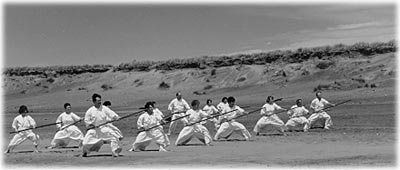
Shintaido blends elements of
-
-
- Japanese martial arts
- creative, expressive movement
- meditation and awareness.
-
Who Practices Shintaido
Our Shintaido community brings together people of all ages and backgrounds, welcoming anyone ready to explore movement at any stage of life. Individuals join with all kinds of personal and physical goals — from building strength to finding ease, from reconnecting with their bodies to discovering something new.
Practice isn’t about performance or getting it “right” — it’s about opening up, relaxing into the moment, and becoming more present, alive, and engaged.
In shintaido, everyone wears a white belt as a reminder that we’re all continually learning.
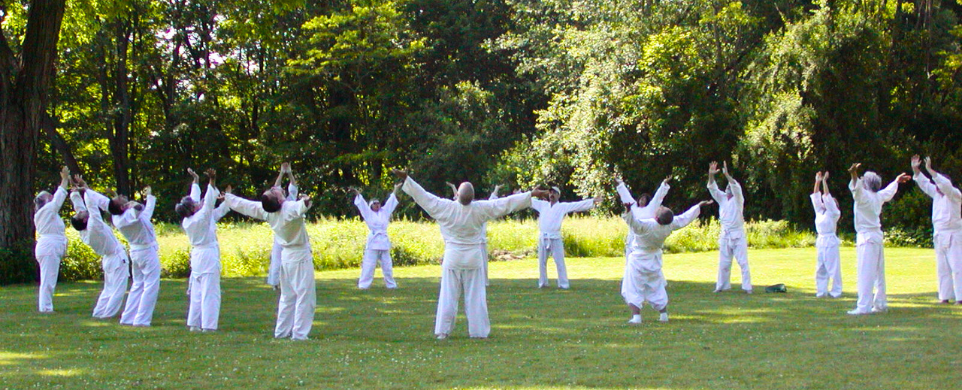
We often practice in a circle, reflecting a simple idea: everyone matters, everyone contributes, and we meet ourselves—and each other—without judgment.
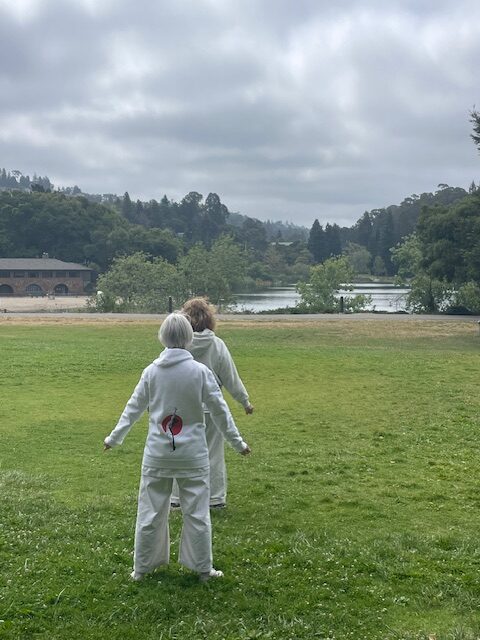

What to expect in a typical class
A class (called keiko) unfolds in three easy stages:
-
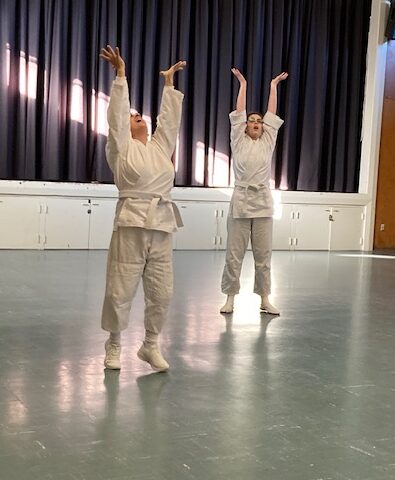
- Gentle warm-up (in Japanese: jumbi-taiso or kenko-taiso)
We begin with simple movements to loosen the body and settle the mind.
- Gentle warm-up (in Japanese: jumbi-taiso or kenko-taiso)
-
- Opening and balancing (in Japanese shin-shin-kaihatsu-undo)
These exercises help you feel more coordinated, centered, and at ease.
- Opening and balancing (in Japanese shin-shin-kaihatsu-undo)
-
- Practice together (in Japanese kumite or kumitachi)
We explore different forms – sometimes individually, sometimes with a partner, sometimes as a group – in a relaxed, supportive way. Classes can focus on one or several shintaido forms including: Core Shintaido, Shintaido Bojutsu, Shintaido Karate, and Shintaido Kenjutsu.
- Practice together (in Japanese kumite or kumitachi)
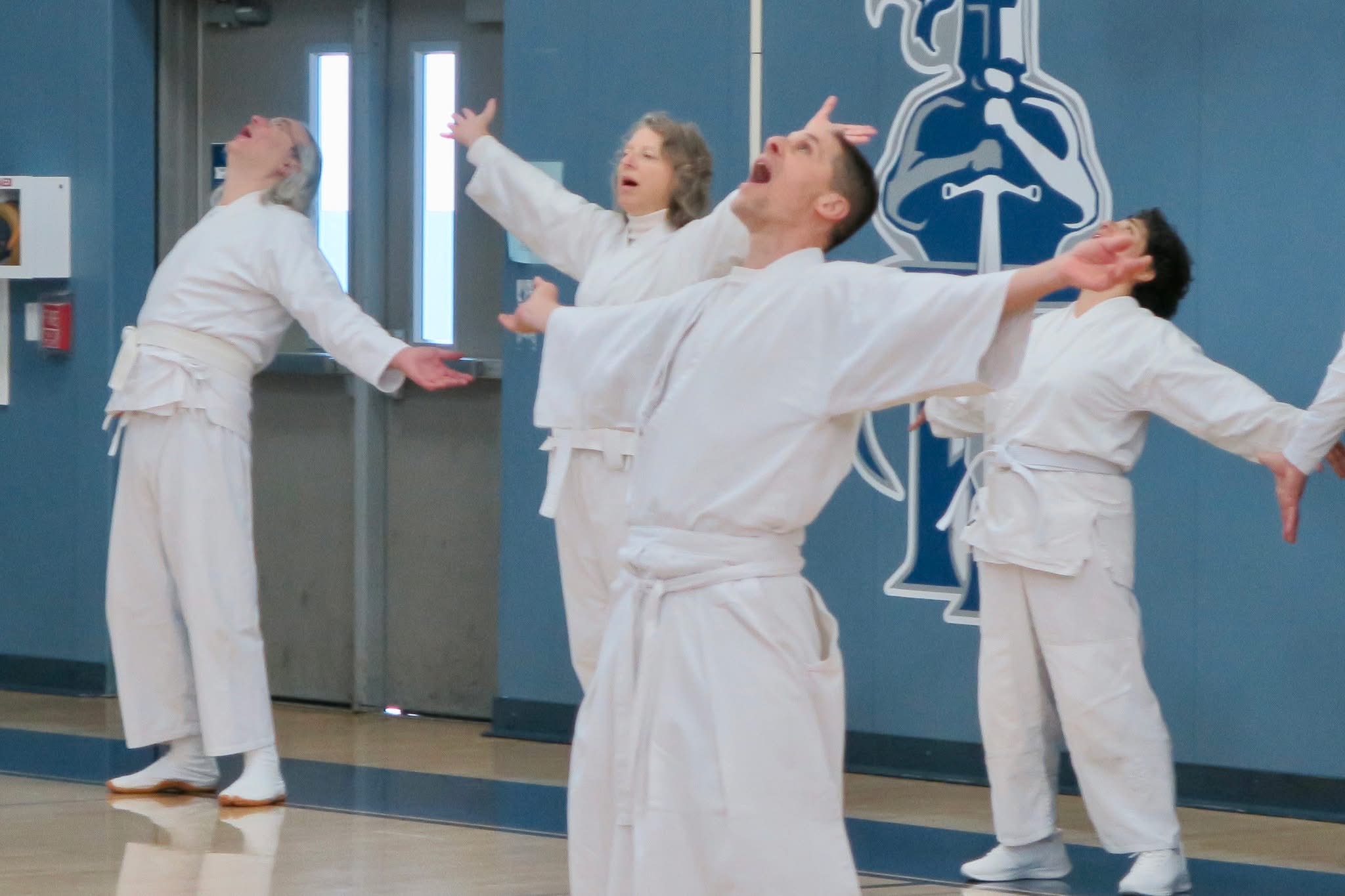
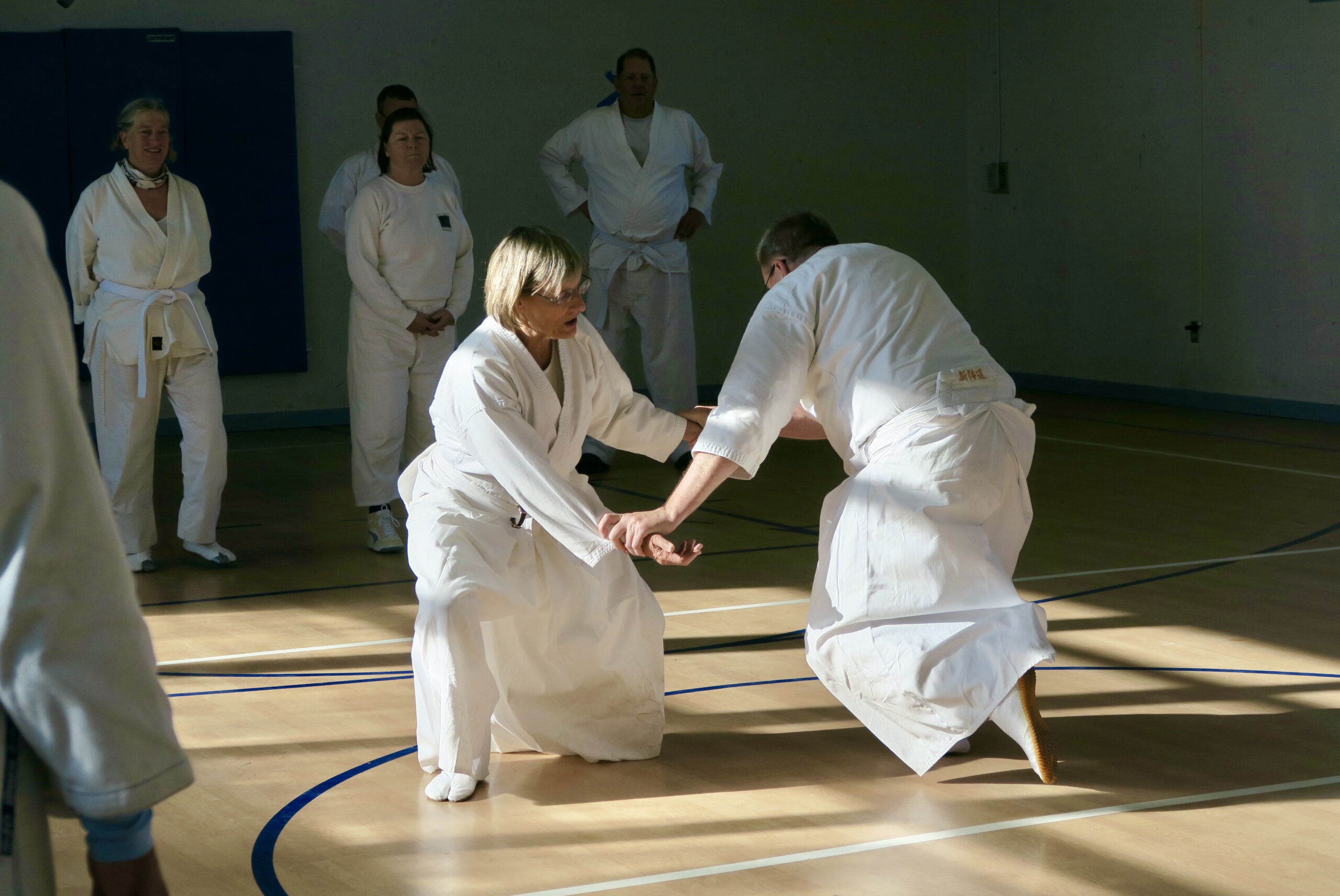

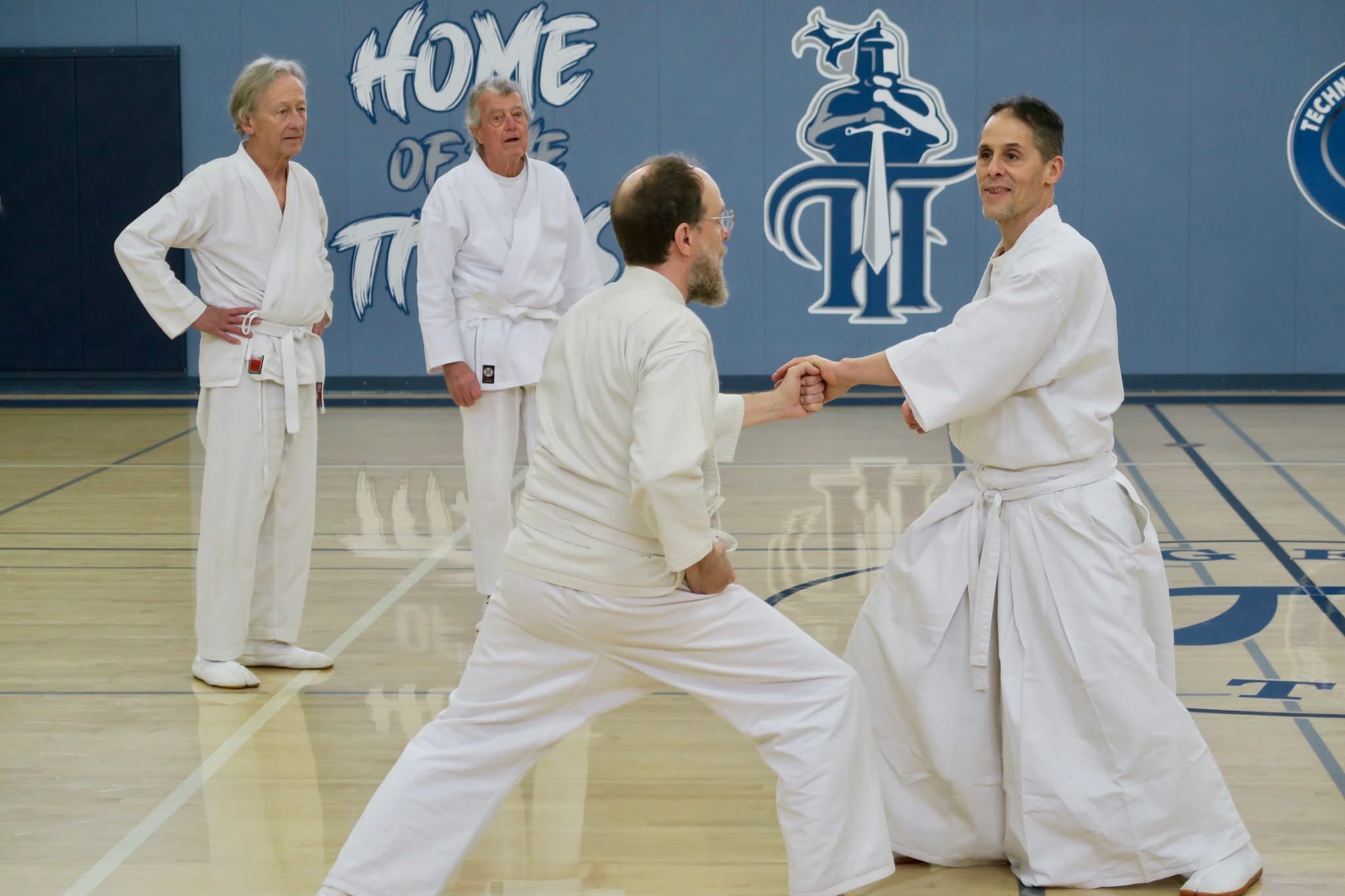


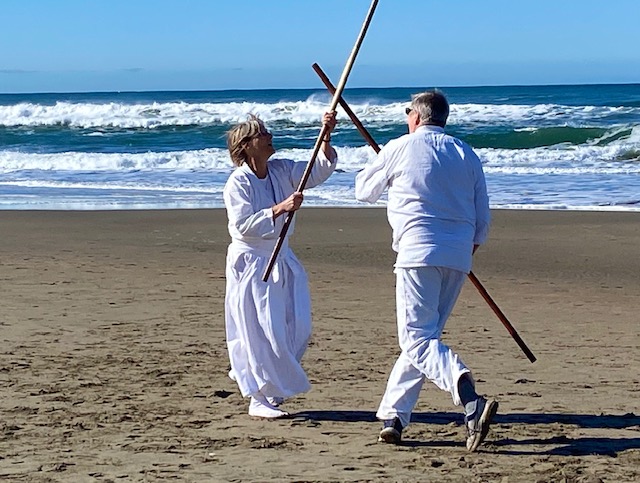
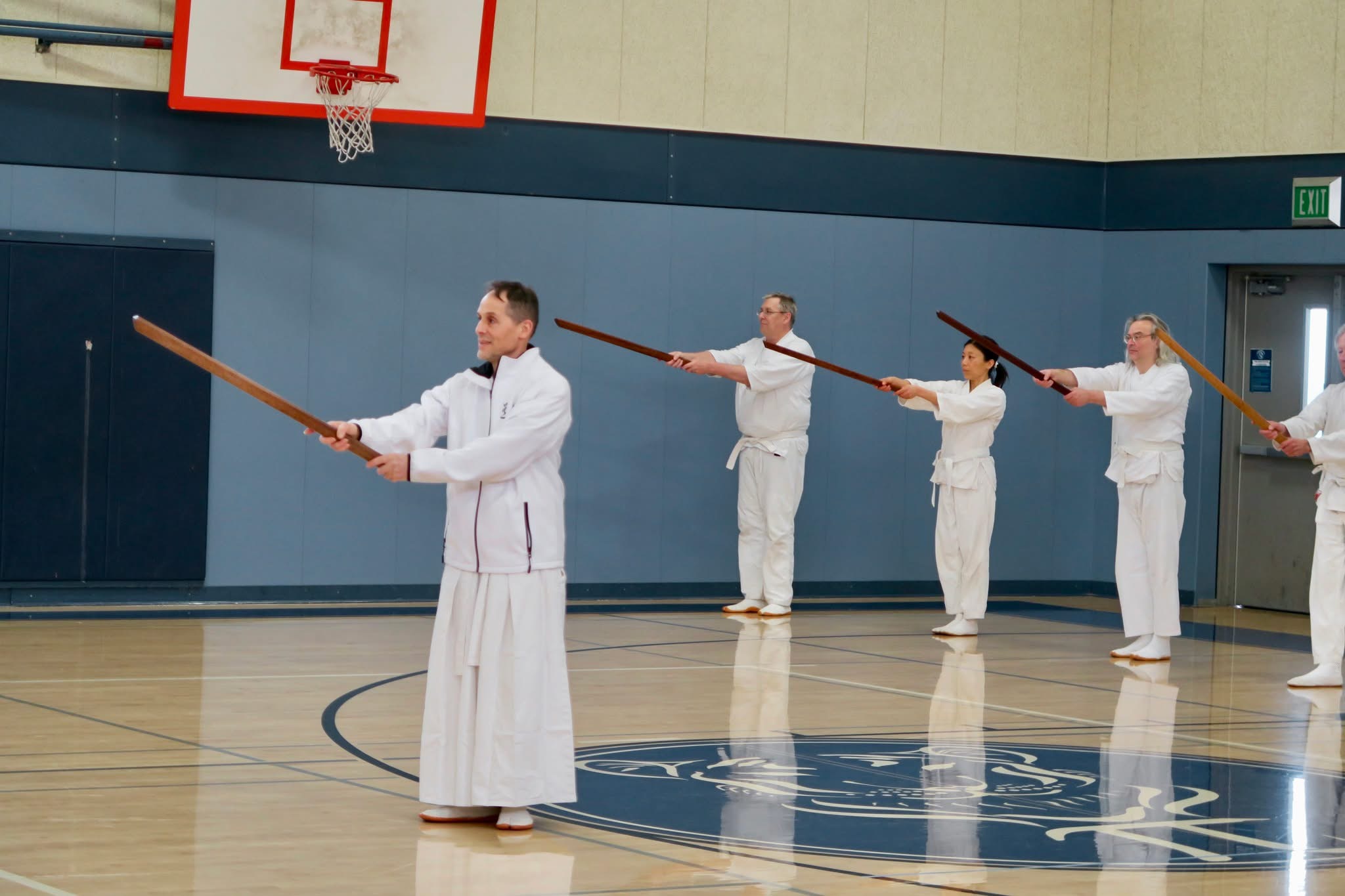

There are five primary forms of Shintaido:
-
- Open-hand Shintaido: movements focused on opening the body and voice. These movements are intended to unlock and express yourself. Practice with other class members is also involved.
-
- Soft-hand Shintaido: meditative movement using gentle flowing patterns. These help you to relax, relieve stress and calm your mind and body. Often, many seniors are attracted the meditative movements for healthy, easier exercise and group involvement.
-
- Shintaido Karate: exercises using punches, kicks, and rolling. This lets you concentrate, focus and express your energy. Also, it teaches you basic self-defense techniques.
-
- Shintaido Bojutsu: exercises using a 6-foot staff. Bojutsu is a unique form of practice that gives you a chance to work with wooden staffs. It adds a different dimension to Shintaido hand movements.
-
- Shintaido Kenjutsu: exercises using wooden swords. The sword is the classic Japanese warrior weapon. You learn precise/sharpened movements while cutting with the sword. We see this practice as the sword of peace.

Examinations (Optional)
Shintaido examinations are optional opportunities to receive structured feedback, mark progress in your training, and are the means of obtaining designated rank. Exams are held with the focus, etiquette, and formality associated with traditional martial arts. During an exam, everyone present is asked to support an atmosphere of respect and concentration.
To learn more about examination subjects within each branch of shintaido and other examination materials, visit our Examination page
From more basic information about the study of shintaido please see our Shintaido FAQ page
For a list of common terms used during class, visit the SOA Glossary.
For a listing of SOA classes and instructor contacts visit Where to Practice.