The SOA board of
directors is pleased to announce that Shintaido of America has received an
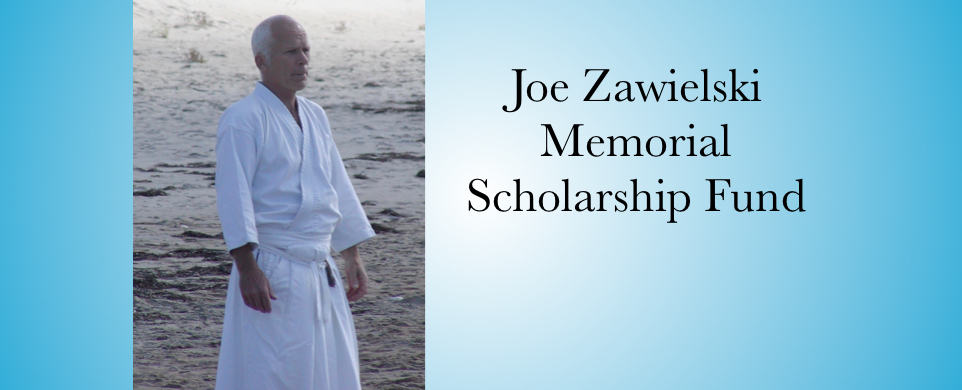
anonymous donation in the memory of Joe Zawielski, General Instructor of
Shintaido. This donation is specific in supporting SOA members who are
Graduate/Shodan and above in attending international events to further their
knowledge of Shintaido and teaching of Shintaido. This generous donation will
total $5000 over these next five years from 2019 to 2023.
Japan 2020 will be the
first international that is available through this memorial scholarship fund to
provide scholarships. There will be 4 scholarships giving $500 for each
selected individual.
SOA members who are Graduate/Shodan and above can apply and applications will be available 1 January 2020. Selections will be made by the SOA Board of Directors. Should SOA Board members apply, these individuals will not be eligible to make the selections. The results will be announced by 30 June 2020. This is intended to allow enough time for the selected individuals to complete their plans to attend the November 2020 international event.
The application will request the individual to summarize their Shintaido activities and then state how attending the international in 2020 will enhance their teaching of Shintaido. One expectation is for the selected individuals to share a written report, or a video/photo report on sharing their learning from the international 2020.
The SOA Board is grateful to our benefactor and is excited to offer this scholarship for 2020! Future plans are for 6 scholarships to be available for 2024.
Thinking
about donating to SOA to add to the donations in memory of Joe Z. or for
establishing other memorial funds? Contact Connie at bordensheets@aol.com
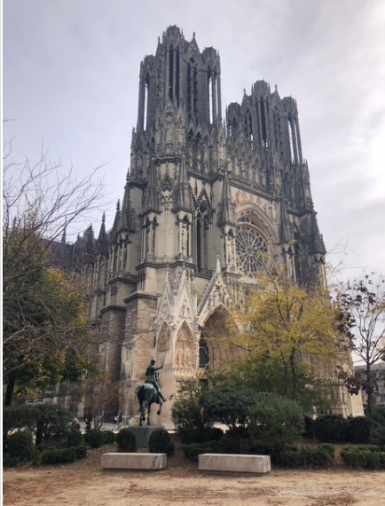
The European Shintaido College (ESC) held their fall gasshuku from Wednesday 31 October 2019 to Sunday 3 November 2019 in Reims, France. Reims is in the heart of the Champagne region. The beautiful Cathedral in the center of the city played host to the coronations of the kings of France. A wonderful destination to combine some tourism before the gasshuku.
The theme of this gasshuku was Shinten: Development. The theme comes from the five stages of Shintaido keiko: Shuchu-Concentration; Toitsu-Unification; Shinten-Development; Seiketsu-Pure Cleanliness; and Rakuten-Freedom. This gasshuku studied the flow from Concentration through Unification to Development while experiencing the familiar forms of Tenshingoso, Eiko and Meiso. The emphasis was on joyful and healthy life expression. We were encouraged to be curious, be open with a focus on finding the inner calm necessary to share harmonious, soft, and deep kumite so that we unite with our partners.
Ula Chambers (UK) was Director of Instruction. SOA Member Margaret Guay was the Invited Instructor. Ula has been practicing Shintaido since 1980 in the UK, becoming an instructor in 1987 and a General Instructor in 2016. Her work has been with people with learning disabilities and the elderly to explore the transformative aspects of Shintaido. Margaret Guay started Shintaido in 1985 and has been teaching for over 25 years. Margaret has jointly studied with the school for Body-Mind Centering® to better understand her own movement and gain insight into the states cultivated through practicing Shintaido. Body-Mind Centering® (BMCSM) is an integrated and embodied approach to movement, the body and consciousness developed by Bonnie Bainbridge Cohen. Margaret has conducted developmental movement lessons with infants and young children and worked in several after-school enrichment programs for children with special needs.
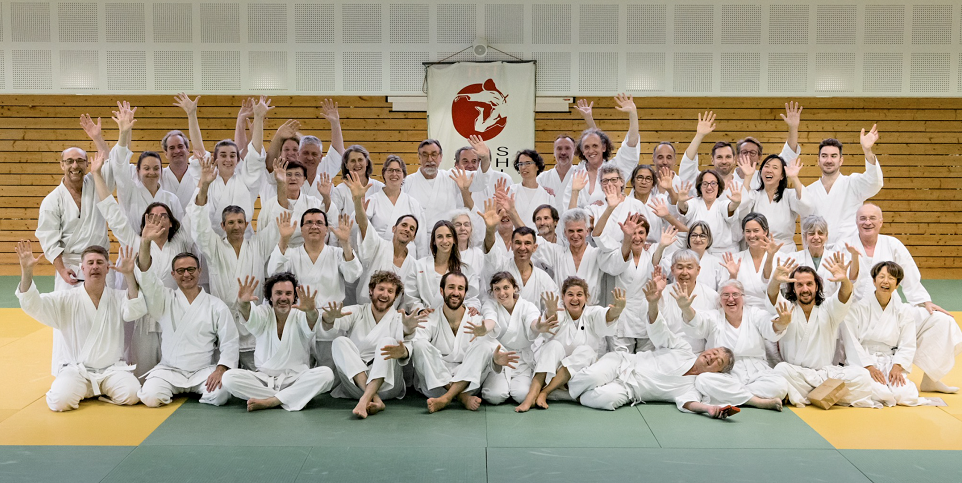
Fifty-three people attended this gasshuku, coming from France, Germany, Italy, the Czech Republic, the UK and the USA. On Thursday & Friday the European Technical Committee held three meetings and two ETC keiko taught by Ito-sensei. These keiko continued with the study of Kenjutsu and the approach of Musoken. European Exams were held Friday afternoon. Two people advanced to Nidan Kenjutsu, one person advanced to Nidan Bojutsu and one person advanced to the rank of Shintaido Nidan Instructor.
Saturday and Sunday were the general gasshuku with three keiko with additional two morning sessions focused on Kenko-taiso. The event included a party on Saturday evening.
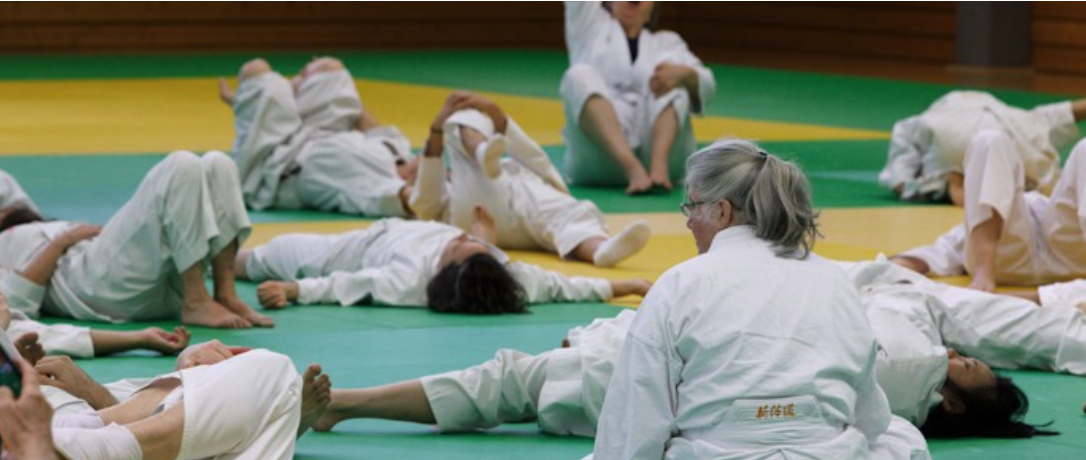
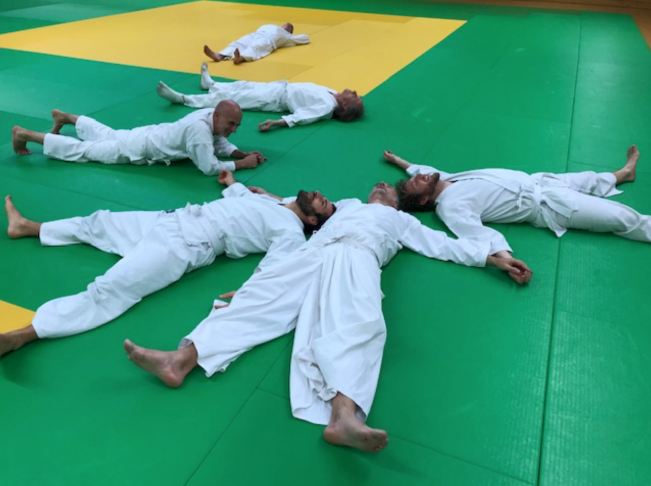
Margaret Guay taught the opening keiko combining her study of Body-Mind Centering with Shintaido. She allowed us to explore our body movements from early cellular development approaches so that we were rolling and twisting on the large tatami mats. As Ito-sensei commented, “At one point it looked like wriggling compost pile”. For some, it felt like a giant game of Twister® as we moved over and under each other. Margaret sat regally and patiently as we explored familiar movements with new insight of our early nervous system development. Margaret closed with Tenshingoso.
“The mind is like the wind and the body like the sand: if you want to see how the wind is blowing, you can look at the sand.”
— Bonnie Bainbridge Cohen, Body Mind Centering Developer
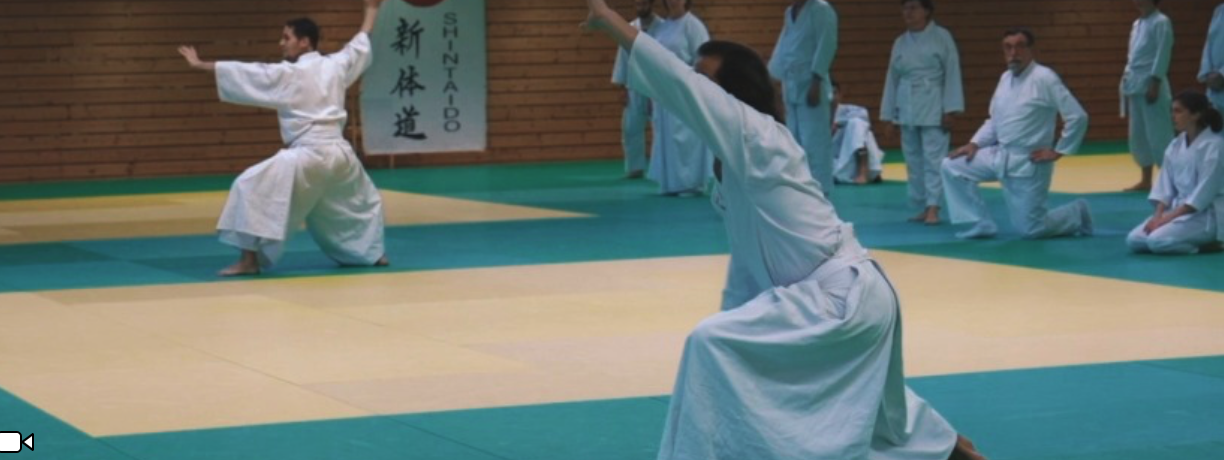
On Saturday afternoon, General Instructors Ula and Mieko taught a process to introduce Eiko Dai focused on the theme of “Infinity”. Mieko led us in stepping with musoken and kaishoken hands for the traditional dai-jodan, jo-dan, chu-dan and go-dan cuts. Ula then led us to the skies to fly like birds – the image of the unified flock of starlings doing murmuration. We cut in the infinity pattern – the figure 8 laying on its side. We swirled and soared in groups of 5 or 6 to follow and move in unified leaderless patterns. Then we joined into one group doing Dai jodan while the other group did the infinity cutting. We closed with one-on-one partner Eiko Dai using our voice.
Sunday morning keiko closed the gasshuku with studying a new approach of using Tenshingoso arrangements in Shintaido Karate. General Instructor David Franklin (SOA/Czeck) led with warmups, continuing the study of close communication with one’s partner through massage and stretches.
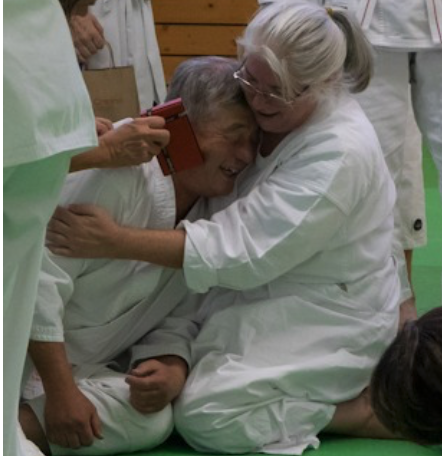
General Instructor Gianni Rossi (IT) then lead a series of kata to teach the process of sumo that lead to renki. The exercises started with simply shifting weight from one leg to the other. Gianni-sensei then added sliding the feet together as weight was shifted. When we became comfortable, we added squatting into the classic sumo wrestler shiko stance and then added raising a leg high in the air to the side, then bringing it down with a stomp. To some, these exercises highlighted a centered koshi and stable contact with the earth while others recalled that shiko stomping was also performed to drive away bad spirits. Gianni-sensei then asked us to teamed up with a partner for the sumo embrace and invited us to help each other become centered with our partner providing supportive structure and balancing force as we moved as one co-dependent team.
Master Instructor Minagawa (UK) taught as a kata familiar free-hand Shintaido movements to receive a overhand jodan uchite attack while keeping the Shintaido essence. The karate exercises kept the sharp focus while using the transformative nature of Shintaido to have everyone feeling successful in their body movement working with their partners.
These keiko show the continued adaption and development of Shintaido for people’s body conditions – truly keeping the “NEW” in New Body Movement.
This is my story of using Taimyo Kata for world peace and healing over the past 20 years. It is a story about friendships and collaborations, world events, timely encounters and a personal calling to contribute to peacemaking and healing. I see my life as a tapestry of relationships and this is one part of that tapestry.
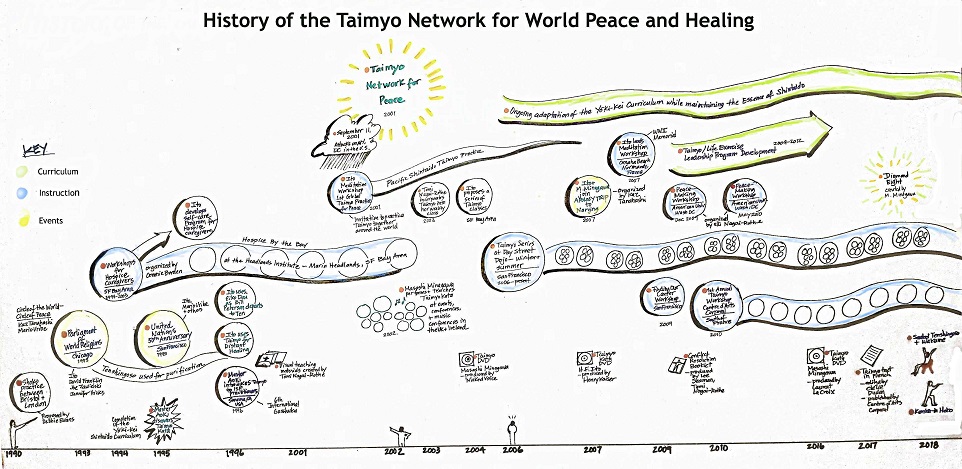
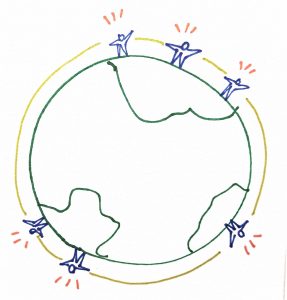
As you read along you can follow this story via the graphic history above, created by Tomi Nagai-Rothe.
Pre-History
In the early 1980s John Kent and James Cumming were leading business English trainings as well as cultural training for German and Swedish businessmen going to Japan. I led a Shintaido workshop for their clients. Later, John would lead kenko taiso in the mornings when he and Jim were teaching.
As their work expanded more into intercultural training, they hired me to offer intercultural workshops for their clients. This was the start of ITO Services (Intercultural Training and Orientation) which was my first adaptation of Shintaido to non-martial arts audiences.
Shoko Practice at a Distance
In 1996, Debbie Evans, a UK Shintaido instructor in Bristol, and her Shintaido friend living in London were feeling challenged by their shoko practice. Debbie suggested they practice at the same time to support one another. So at the appointed time, Debbie practiced shoko facing east (toward London) and her friend practiced facing west (toward Bristol).
In keiko we do shoko practice with partners facing one another. It allows us to do it much longer than we could alone. When Aoki-sensei practices toate he sends his awareness some distance to connect to another person because our imaginations can extend beyond time and space. Debbie put all of this into practice.
Stress Management Workshops and Distant Healing
As the executive director of Hospice by the Bay, a non-profit hospice service provider, Connie Borden asked me to design a stress management course for hospice caregivers. Families, friends and other caregivers of the dying experience stress and Connie felt they would benefit from a workshop aimed at their needs. I was happy to do it, but Connie had no budget for such a course.
At the same time, my friend Henry Kaiser was serving as a family board member with the Henry J. Kaiser Family Foundation. He had had the idea of supporting my teaching for several years. Because Henry could not contribute to me as an individual, he proposed supporting my teaching for 7 or 8 years through a non-profit that would organize workshops which I would lead. I put Connie and Henry together and voila! This was my second major adaptation of Shintaido for a non-martial arts audience. This time it was specifically designed for wellness and healing.
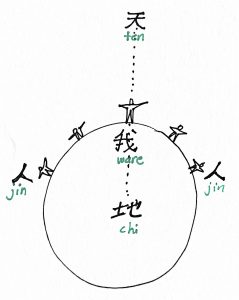
Ten chi jin Illustration by T. Nagai-Rothe
I created some conceptual charts to explain the concept of distant healing that could be used for Yokikei or Kaihokei keiko. I visited groups in Europe and the U.S. and recommended distant healing through keiko to help others with health issues, depression, etc.
I started teaching at L’Attitude in Quebec and at the Japanese Arts Seminar at Green Gulch Zen Center in Muir Beach, California and used the charts to describe Shintaido and particularly stress management.
Peace and Healing
Parliament of World Religions — Photo by Mario and Liz Uribe
Mario and Liz Uribe, founders of the Japanese Arts Seminar, were impressed with this approach and invited me to participate in their peace work. In 1993 I participated in the Parliament of World Religions at Mario and Liz’s invitation.
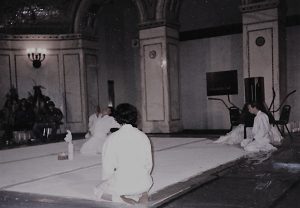
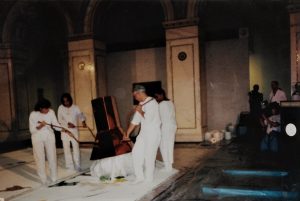
Parliament of World Religions — Photo by Mario and Liz Uribe
Mario took the brush-painted circle practiced by Kaz Tanahashi and made it a group activity to set the tone for peace among world religions. He created a huge brush that four people could use to paint a large circle (Enso). They asked me to ritually purify the canvas with Shintaido movement before the circle was painted.
You can read more about the Parliament experience here on page 2 of Body Dialogue.
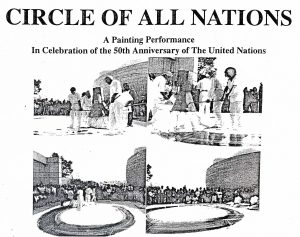
UN 50th Anniversary 1995
In 1995 we organized another Enso painting ceremony in San Francisco’s Civic Center Plaza for the United Nations 50th Anniversary in San Francisco (Resource: Body DialogueUnited Nations 50th – Will the Circle be Unbroken?)
The purification ritual for the brush circle is similar to what Kazu Yanagi (artist, painter) does by painting with water to purify a canvas. The house purifications I perform for healing and prosperity are the same: they clear away barriers and stuck ki energy.
Purification Rituals and End of Life Rituals
I was able to be with Bill Peterson, a Shintaido practitioner in San Francisco, at the end of his life. Sitting by his bed, I sensed that even though he struggled to breathe and be in his body, he was ready to go. As I held him, I asked him to do a meditation with me. We imagined ourselves doing Tenshingoso Dai and finally, Eiko Dai. I encouraged Bill to run and to let go. (Resource: Body DialogueFacing Death, Part II)
Like the purification ritual, this was about clearing a path forward. In this life this process creates an open space for peace and healing, and for those leaving this life, it creates a path to peace.
The Development of Taimyo Kata
Master Aoki developed Taimyo Kata in 1995 and shared it at the 1996 Shintaido International in Sonoma County, California. Taimyo became a form to focus much of what came before: distant healing, stress management, spreading peace and purification.
Over decades of practice, I have come to see Taimyo as a microcosm of all of Shintaido – a gallery or collage of Shintaido movement. Taimyo is like a fractal. One part of it reflects the whole. In one sense, I feel like its parts express my own life.
Taimyo and Global Peace
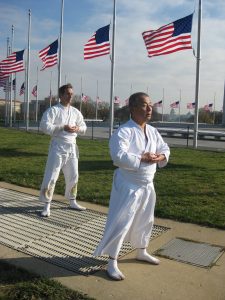
Taimyo at the Washington Monument, Washington DC. Photo by T. Nagai-Rothe
I was scuba diving at Point Lobos in California on the morning of Tuesday, September 11, 2001 and learned about the attacks on the World Trade Center and the Pentagon (U.S. Department of Defense) after emerging from the ocean.
Hands around the world
That week I was working with Rob Gaston and Tomi Nagai-Rothe to finalize plans for a weeklong meditation workshop starting Sunday, September 23 in the Bay Area. We had 17 people participating in person and 12 people participating virtually from different parts of the U.S. and other countries.
It was an ambitious format and the attacks upended our plans. How could we use our practice to make sense of what had happened? Could we do something positive through the workshop? We brainstormed many ideas: meditation as healing, creating stronger connections at a distance, managing our fears and pain. Then we came up with the image of practitioners standing at various places on the globe and, through their Taimyo practice, extending an enormous web of caring and peace around the earth. This was the genesis of the International Taimyo Network for Peace.
Developing and Expanding Taimyo Kata
Masashi Minagawa began to perform and teach Taimyo at conferences and music performances in Ireland and the UK. I expanded my teaching of Taimyo with a more global perspective on our practice and the need for peacemaking.
In 2006 we began an ongoing workshop series at the Day Street Dojo in San Francisco, thanks to Connie Borden. I built on the material covered in the Caregiver Workshops (1994 – 2003) incorporated Tai Chi from my study with Master Ma and connected the practice to personal peace-making (resolving conflicts within ourselves), healing (including distant healing) and peace – the impact we have on those around us and where we are called to create positive social change.
9/11 focused our Taimyo practice and connected it to our hopes for peace.
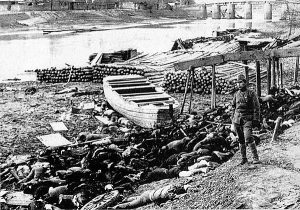
My friend and colleague Kaz Tanahashi – artist, teacher, peacemaker and Buddhist practitioner – invited me and Masashi Minagawa to join him for an apology pilgrimage to Nanjing, China in 2007. Kaz had arranged to participate in the Nanjing University international conference on the 70th anniversary of the Nanjing Massacre.
We felt for some time that it was important to make a formal apology as individual citizens since Japan had not done so. Still, we were anxious about going to Nanjing — concerned about an angry response from the Chinese.
Bodies of massacre victims on the shore of the Qinhuai River. From Wikipedia
The conference participants included those who have studied and experienced genocide in many parts of the world. There was press coverage of the conference and our apology ceremony. People in Nanjing seemed glad that we had come.
Masashi Minagawa and I went down to the edge of the river for our own meditation and form of apology. After some time I had a profound sense that the souls of those who had been massacred were present, and that they were not only forgiving but loving. I will never forget that experience.
That same year I organized a Meditation Workshop on Omaha Beach in France to lift up peacemaking — rather than the glorification of war that often happens there.
In 2009 and 2010 Elli Nagai-Rothe helped organize a Peacemaking Workshop at American University in Washington DC for graduate students in the International Peace and Conflict Resolution Program and others interested in practical peacemaking. Taimyo and Shintaido provided a powerful and practical antidote to the intellectual work of graduate studies.
Peacemaking Workshop at American University Photo by T. Nagai-Rothe
A Taimyo and Life Exercise Curriculum
With the help of Lee Seaman and Tomi Nagai-Rothe I created a curriculum and teaching program so that I could involve others in sharing this work. I began certifying my students in the U.S., France, Japan and Quebec. There are now 19 people coaches and instructors around the world.
My students in the South of France have held an annual Taimyo Workshop since 2010. They invited me to teach for many years, and now four students have taken over and established the Institut des Nuages Flottants and lead Taimyo Workshops four times a year.
Diamond Eight Cut
In 2016 Masashi Minagawa was inspired to create the Diamond Eight Cut – an improvisation on Shintaido movement that brings to fruition 50 years of Shintaido practice, teaching and research and development. It combines Tenshingoso and Eiko as well as Kiri-Oroshi kumite in an elegant and accessible form that can be used for celebration or purification, energetic healing, and connecting our inner world with the Universe.
Diamond Eight is a perfect fit for movement inspired by Taimyo Kata. I have taught it and found innumerable ways to creatively adapt it to my students’ needs over the past three years. Its combination of centering, clearing, opening and healing makes Diamond Eight a fractal of Shintaido.
It miraculously helps us express and experience everything from Mother Nature and the deep Universe to the cells in our body and everything in-between. When I practice Diamond Eight it feels like my body is its own cosmos and, simultaneously, as if tiny versions of my cellular self are also practicing Diamond Eight.
After practicing the Diamond Eight, I understand meditation in a deeper way — in a way that monks probably understood intellectually, though not somatically. It is an amazing gift.
Ito and Lee Ordeman at the Washington Monument. Pearl Harbor Day – December 7, 2009. Photo by T. Nagai-Rothe
Diamond Eight marks a new era for Shintaido and Taimyo that I trust will carry us for many many years to come.
Since this Spring Gentle Shintaido has been the topic European Technical Committee instructors have wanted to discuss.
Looking back at the history and development of Shintaido, “Shintaido for Everyone” has been an intention and repeated refrain. Although the term Gentle Shintaido makes sense in English, in French it sounds like a diluted version of Core Shintaido − like flying economy class because you can’t afford anything better.
During my Shintaido career I have seen many animated email exchanges on this topic.
“Shintaido without losing the experience”
I have been closely involved in this discussion because Gentle Shintaido mirrors the approach I took starting in the early 2000s. I wanted to make Shintaido accessible to people outside the martial arts. My motto was “Modify Shintaido without losing the core experience.”
In talking with instructors – regardless of whether or not we use the term Gentle Shintaido – I have noticed the following themes:
When we teach Shintaido to people who have physical, mental or emotional difficulties, the movement has to be gentle and soft. However, if that is all there is the students as well as the teacher may become bored.
It is important to periodically share some Kaiho-kei techniques, or to do Chudan-tsuki on kibadachi with a firm kiai. Or you can give people the experience of Toitsu kihon movement, even if their bodies can’t sustain it for very long. This allows them to have an awakening experience.
If we look back over the history of Shintaido, we see that in order to be avant-garde it is necessary to be classical first. From Karate to Shintaido Kaiho-tai to Shintaido Yoki-tai, we continue to build from classical roots. Jigo-kei, Kaiho-kei, Yoki-kei, Seiritsu-kei — all of these keiko forms have advantages, but none of them are as powerful alone as they are together. Good teaching must include them all.
That is why Gentle Shintaido instructors must be able to switch immediately from one style to another in response to their students.
Should we say that, for example, students might start with Yoki-kei and as they grow stronger advance to Kaiho-kei (or maybe even Jigo-kei), and finish up in Seiritsu-kei?
I suggest that the 2020 examinations for Sei-Shihan and Dai-Shihan should focus on candidates’ ability to understand these points and to put them into practice in their own teaching.
For your information, I’m including a table showing the relationship between Yoki-kei and Kaiho-kei, as well as Jigo-kei and Seiritsu-kei. I originally developed this table to clarify my own thinking about the differences and similarities among these elements of Shintaido.
[table id=6 responsive=scroll/]
Kaihotai
Yokitai
Jigotai
Seiritsutai
Addendum (Lee Seaman’s experience):
When I started Shintaido, I was 25 years old. Most of the other students were between 18 and 30, and Aoki-sensei had just celebrated his 30th birthday. Everyone was in great physical shape, and we did nothing but Kaiho-tai keiko. Aoki-sensei told us that Tenshingoso and Eiko were the core of Shintaido, and those two forms were also the core of our practice. The bigger the better, the farther the better, the louder the better.
I have been practicing Shintaido for almost 40 years now, and I have come to the conclusion that Aoki-sensei had a hidden teaching. In my experience, there is something more basic than Tenshingoso and Eiko. It reminds me of the koan about the gateless gate – I call it the techniqueless technique. It embodies Tenchijin, informs Tenshingoso, and is the beating heart of Eikodai. This core Shintaido is the basis of all our practice, and Kaiho-tai, Yoki-tai, Jigo-tai, and Seiritsu-tai are its branches.
I believe that, to give Shintaido to a world that needs it more than ever, we need roots in this core place.