My first exposure to karate keiko was practicing with a student of Tsutomu Ohshima, founder of the Shotokan Karate of America school, in New Orleans, when I was studying in law school in the early ‘90s. I was interested primarily in the self-defense aspects back then.
After law school, I moved to Japan to study at Chuo University in Tokyo. Although I was a post-graduate student, I had the good fortune to join the University Karate Club. At the time, I was wholly ignorant of its proud history and important role in the Shotokai. I practiced regularly with the Club during my three years at Chuo. At that time, student club members practiced every day, usually twice a day, and attended gasshukus (special intensive offsite trainings) several times a year.
In terms of the content, the stances were lower than I was used to, and the practices were quite vigorous and initially painful and exhausting. Lots of paired stretching and dynamic jumping and hopping exercises (kaikyaku zenshin) in the warmups. Even cleaning the dojo floor in the traditional manner was a tough workout.
As I met and became friendly with recent graduates of the club, I had the opportunity to practice more widely, at the Main Dojo, with company clubs, at other universities, and with various other teachers and groups. I found that the flavor of Shotokai practices in Japan varied depending on the group within the Shotokai organization and the particular instructor and/or dojo. The Shotokai in Japan at the time was a big tent.
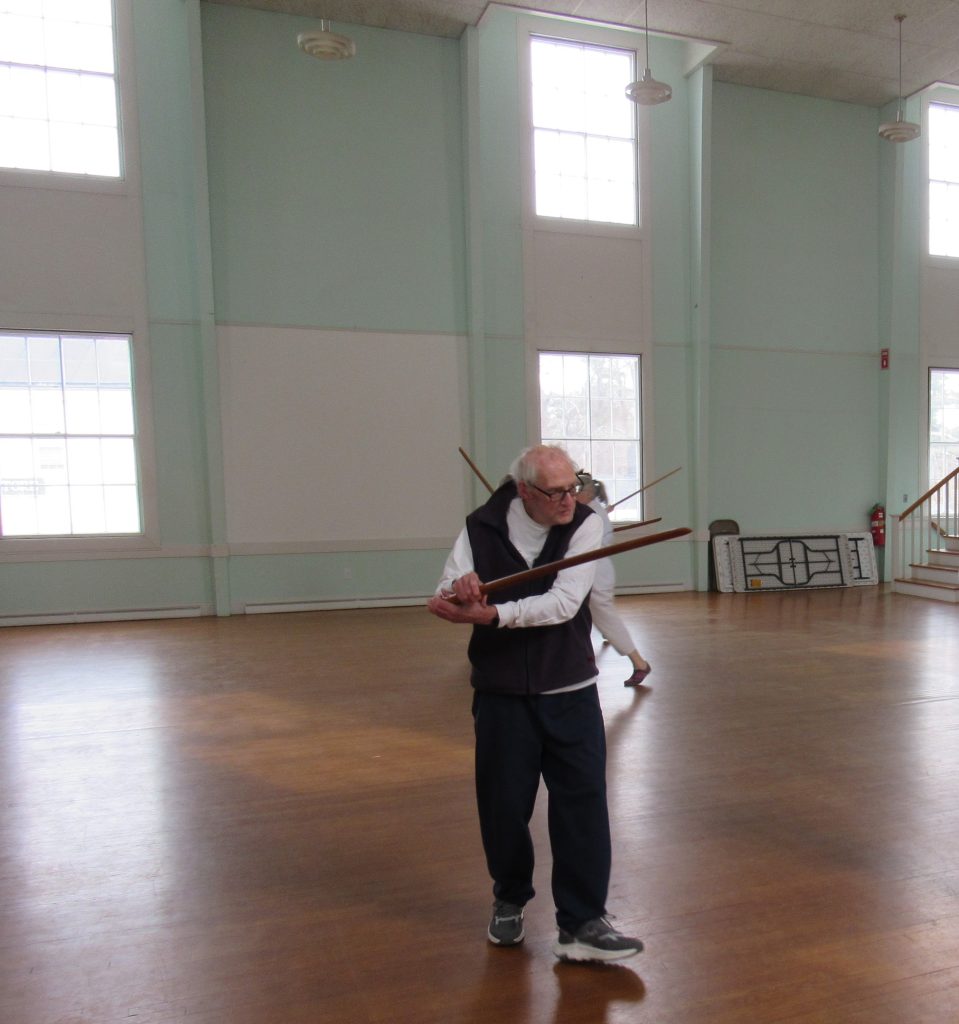
For example, one small group I regularly practiced with was very close to Shintaido, perhaps nearly indistinguishable (I’m guessing) from Master Ito’s early practices in the U.S. Lots of running kumite, tenshin goso kumite, rolling on ground, use of bokuto and bo, a dynamic, ecstatic, free (and exhausting) keiko, etc. This group had a huge influence on my karate at the time – it became more flowing and more dynamic.
Other teachers I learned from emphasized different aspects of Master Egami’s karate that had inspired or resonated for them, but the content of keiko was quite different and not Shintaido-y. Yet other groups within the Shotokai were stylistically much like mainstream Shotokan karate, but with no competitions or free sparring.
So, at that time, there was a wide spectrum of practices that co-existed within the Shotokai. And each of the university clubs that constitute most of the active membership of the Shotokai had their own unique flavor as well.
Meanwhile, at the time, the top of the organization transmitted to the university clubs and more broadly, a renewed emphasis on the traditional karate keiko/curriculum of Master Funakoshi. It seemed that the soft techniques and esoteric practices introduced by Master Egami were fine for a master practitioner or for senior students to explore in private but not appropriate to be taught broadly as Shotokai karate, especially to more junior members. Overall, practices and instruction that strayed too much from the mainstream were discouraged. In hindsight, I’m sure it was viewed as “quality control”.
My impression is that this eventually resulted in some of the “softer”, Shintaido-adjacent karate groups and practitioners splitting off. However, they continue to practice, either independently or as part of one or more groups of like-minded clubs.
After I returned to the U.S., and moved to Boston, I was not interested in the types of karate I found there, and instead started practicing aikido. I also had the good fortune to connect with a Shintaido group led by David Franklin in Cambridge. I found the practice very enjoyable and practiced with the Cambridge group for a couple of years in the late 90’s before moving overseas for work. The emphasis on heart/body opening was new to me.
I reconnected with Shintaido about twenty years later when Mark Bannon, my longtime karate-do training partner in Vermont, connected with Shintaido of New England and began attending Master Ito’s training sessions in Quebec. Mark was really inspired by Master Ito’s training and began incorporating his new learning into our training sessions.
Eventually, I joined Mark for several trips up to Quebec to train with Master Ito, Connie and Rob, and the wonderful Quebec group. In terms of open hand movements, many of the exercises were familiar to me from my days in Japan practicing karate and my earlier exposure to Shintaido, but the kenjutsu practices were completely new to me and very exciting. In addition, practices like Diamond Eight, Sunrise-Sunset, Lower Limb strengthening exercises were a revelation and allowed me to practice as I recovered from having my knee “scoped”. More recently, Mark and I were so lucky to have learned some batto jutsu (sword drawing) from Master Ito via Zoom.
My current practice is very circumscribed since I’ve torn my rotator cuff and am about to have a shoulder operation. I do Master Ito’s Lower Limb strengthening routine most days, in combination with a light one-handed karate keiko. Also, I am practicing my mae-geri and yoko-geri regularly again after a long hiatus. I join Connie and Rob’s Sunday zoom keiko. Going forward, I am looking forward to picking up the sword again this summer and getting back into batto justu and the kenjutsu curriculum with my training partner. And continuing to practice the karate techniques and kata I learned more than thirty years ago in Japan.
As I think back on the wonderful teachers of karate-do and Shintaido who have taught me, I am filled with profound gratitude and appreciation. In particular, in recent years I have been so inspired by and learned so much from Ito Sensei – he has given me a path to follow for the rest of my days. Domo arigato gozaimashita.
By Connie Borden, the Shintaido Of America Board President
Welcome Jim Sterling and David Palmer as new SOA Board Members! Shintaido of America board has had several vacancies in the past few months, so we thank Jim and David for agreeing to an interim board appointment until June 2025. Board members serve two-year terms and we appreciate that Jim and David would complete vacancies until our next board elections in August 2025.
Meet these two people:
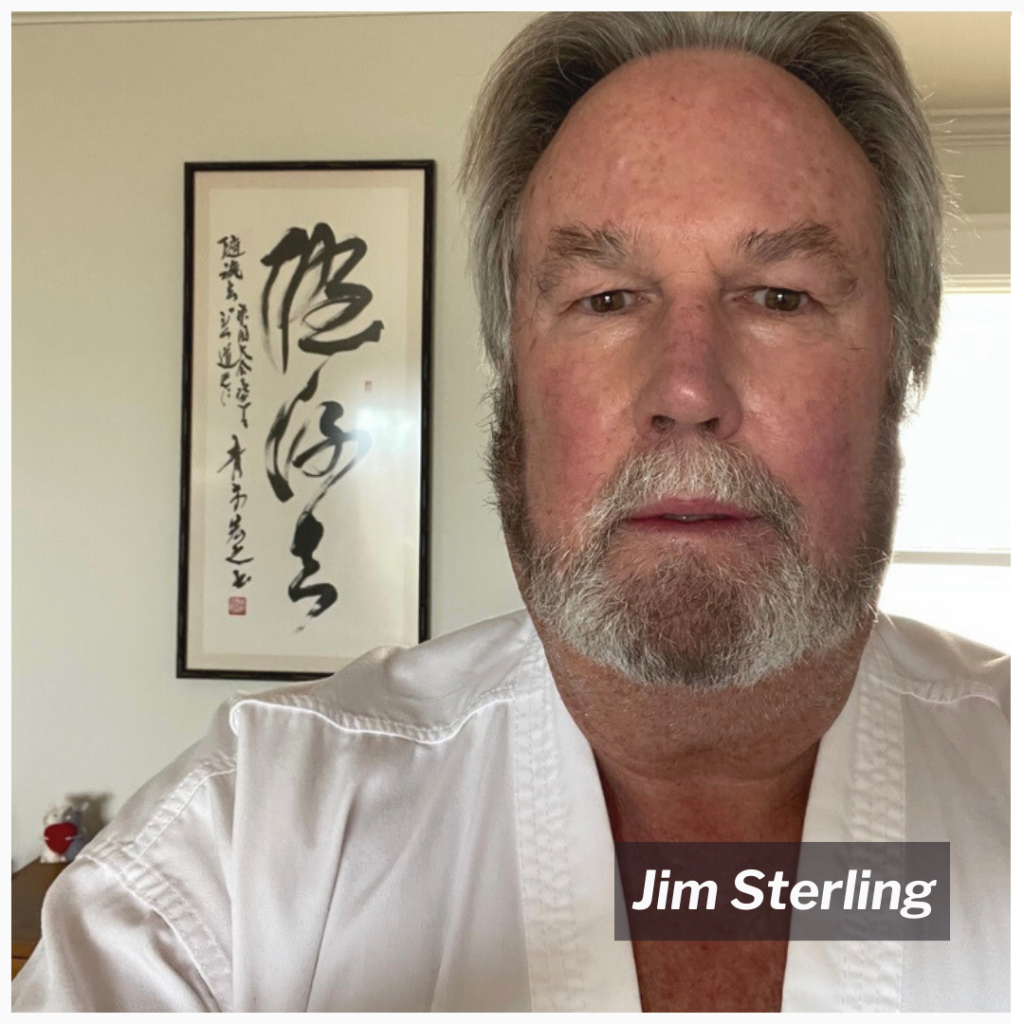
Jim Sterling
Jim Sterling is ranked in Shintaido as General Instructor, Yondan Kenjutsu, Sandan Bojutsu and Nidan Karate. Most recently he has been serving as an officer of SOA as Editor of Body Dialogue and is a member of the SOA National Technical Committee (NTC) and International Technical and Examination Committee (ITEC). Jim has worked as a writer, consultant, and project manager in San Francisco for many years. Since Jim started practicing Shintaido in 1976 he has been a guiding force of the Pacific Shintaido group and interested in advancing Shintaido both through keiko and organizational structures.
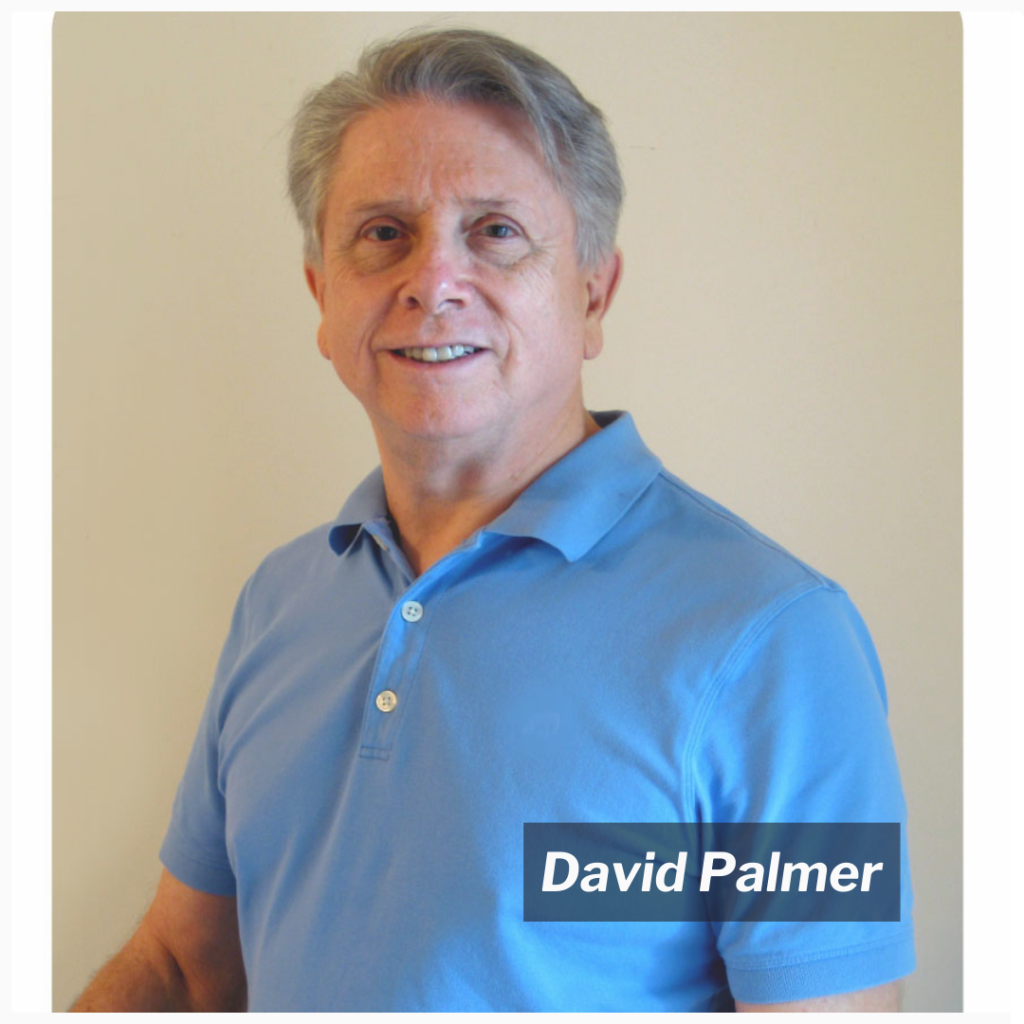
David Palmer has been involved with Shintaido since 1984 when he met H.F. Ito and asked him to critique the first iteration of his seated massage protocol. Both Shintaido and massage are movement forms, one active (you move yourself) and one passive (someone else moves you). The interplay of these two sides of the movement coin have been foundational to his professional and personal life.
Prior to entering the field of massage, David spent ten years as a developer and administrator of social service programs for nonprofit agencies in Chicago and San Francisco. His work included the creation of the first nationwide social service hotline in 1972, the National Runaway Switchboard. While working for the Wieboldt Foundation, in 1974, he staffed the development of the first association of private family foundations in the United States, the Donor’s Forum, a model that has been duplicated in major cities throughout the country.
David began his professional massage career in 1980. Before his teacher, Takashi Nakamura, returned to Japan in 1982, he prepared David to assume operation of The Amma Institute. The Amma Institute was the first school in the United States exclusively devoted to traditional Japanese massage. It was here that David first began experimenting with teaching his graduates to work on clients seated in a chair, rather than lying on a table. In 1989 David stepped down as Director of the school to focus full-time on the development of the Chair Massage industry.
Greetings from the board of Shintaido of America! It’s time to renew your membership. This past year has seen many changes for our organization. The most important were the loss of our beloved co-founder, Ito-sensei on 30 December 2023, and the sad passing of our Treasurer Brad Larson in November 2023.
As we move forward in a world filled with an urgent need for peace, we rededicate ourselves to our practice of Shintaido.
The annual membership subscription of $60 has not changed for several years, and it now offers more benefits than ever.
Alternately, a check for $60 payable to SOA can be mailed to: Shintaido of America 426 Day Street SF, CA 94131
We strive to support our community of practitioners by providing members with:
Full access to the Shintaido of America Website. Check it out! New things are happening all the time! We now feature a media page that includes all our newsletter, YouTube and Podcast links.
Body Dialogue is now completely digital and appears in real-time as postings on the website.
Access to episodes of the Shintaido of America podcast. We are now in the third season of the Shintaido Podcast! The podcast is available on all the usual platforms such as Spotify, Apple Podcasts, Google Podcasts and many others. On the podcast, producer and host General Instructor David Franklin hosts interviews on Shintaido-related topics with various people around the globe.
General Instructor and SOA Board President Connie Borden hosts a monthly podcast discussion group on the last Tuesday of each month. Please contact Connie Borden at president@shintaido.org if you’d like to join in!
Several senior instructors – from the UK and the US – hold regular classes on Zoom which members can attend. A full listing of these is available on the SOA website.
Access to the most up-to-date changes to the curriculum, which continues to develop, especially the Kenjutsu curriculum.
Support to our instructors and the National Technical Committee.
Communication with International Shintaido Technical and Exam Committee (ITEC)
Leadership by SOA and ESC as the organizing and sponsoring organizations for international activities.
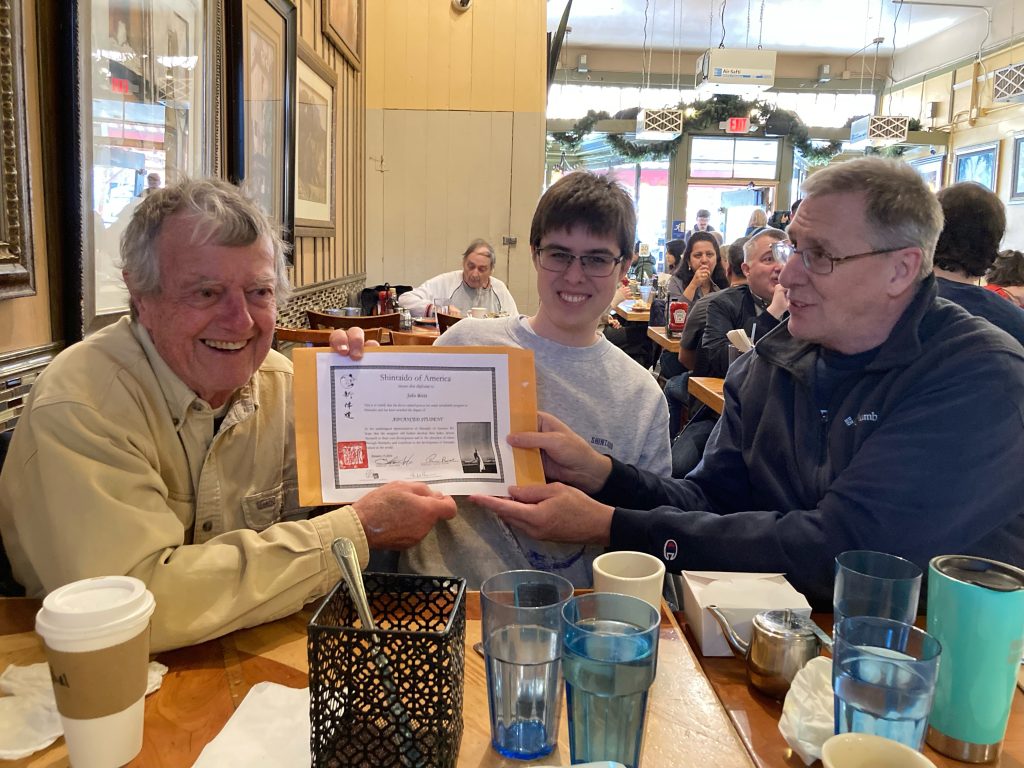
SOA examinations and SOA Diplomas.
Access to grants for travel and education scholarships for Shintaido events worldwide. British Shintaido is celebrating its 50th anniversary this year and hosting an international gasshuku in August in England. Grants are available from SOA to help with the cost of attendance at this significant event. Please contact Connie for details.
For ALL of the benefits listed above, your annual membership works out to only $5 a month, or 16 cents a day!
We sincerely hope you will consider renewing your membership, and join us as SOA moves into the future!
Connie Borden, Chair SOA Board of Directors Robert Gaston, Chair SOA NTC Sandra Bengtsson, Treasurer pro tem Nancy Billias, Membership David Franklin, Podcast Michael Thompson, co-founder
I arrived at the Petersham Town Hall with a heavy feeling the size of a grapefruit in my solar plexus. It was mostly grief with an edge of an almost stubborn need to honor the mounting deaths in our local and larger Shintaido community. I was a little afraid we wouldn’t be able to find the courage among us to fully acknowledge the impact of the missing people in our circle and the tragedy that we’ve all watched recently unfold.
When Joe Zawielski sensei died in the Summer of 2018, it was a huge loss for Shintaido Northeast (SNE) and for his students, among many others. To this day, my eyes well up every time we do bokutoh practice. I can see Joe swerving around his koshi as he gently cuts the space around him. There have been several keiko when I have felt his presence in the circle, but it’s challenged me to know what exactly to do with that feeling. Whether to acknowledge it out loud or not, and I wonder whether anyone else is noticing it too.
On November 2, 2023, we tragically lost Brad Larsen. Since then, I have spent hours on the phone, texting and talking to SNE members; trying to wrap our minds around what happened to him, and how to find peace with the sudden empty “Brad-shaped hole” that was left. For a long while, we’d named this persistent unsettled vigilance when we were checking the news daily for any indication of how he’d passed. It was difficult to find acceptance when there were so many questions surrounding why and how he’d died.
Just weeks before Kangeiko, we received the answers we’d been seeking, and they were devastating. But, it did mean we could finally move on to the task of embracing the grief that had in some ways been on hold. February 10-11, 2024, would be the first retreat where a large group of us would gather to practice since his murder.
Rob Kedoin sensei led our opening keiko, and generously helped warm up our wintered and weathered bodies, preparing us for the keikos to come. He reminded us that the sword’s movement comes from the hara and introduced the idea that the end of our bokutoh was like a radiating beam of light that made it possible for our message to be felt by our partner.
Margaret Guay sensei, who was also Director of Instruction, stepped in last minute to lead our second keiko in the afternoon. With no advanced planning, she masterfully modeled how to say yes to the unknown and trust that it will all be as it needs to be. Without a single word said, we riffed on one another to warm the group up. Although I did not have a personal relationship with Ito sensei, I had really enjoyed reading the commemorative posts and especially his rendition of Neurologic Music Therapist’s Allison Davies song “Every little cell in my body is happy.” We marched and skipped around the dojo singing this song over and over.
The Keiko progressed to bokutoh kumite trying to catch our partner’s timing without being able to see them coming. I noticed it was nearly impossible to catch the timing of a daijodan cut when my partner was shining their sunbeam from the start. Reading you loud and clear already!
Also, we did some profound investigating around tenshingoso kumite, where I had some new insights. I was experiencing the end of “Ohh” as either being a gift offered to the world or doing the offering of the gift. Like, ‘behold this amazing being!’ And feeling myself as a gift when following my partner’s “Ohh.” This was the keiko where I entered full on cosmologic consciousness.
We ran eiko dai around and around the Petersham Town Hall for what seemed like forever. For me, it was very clear we were doing this together. Not little islands of trying, but a community finding it’s voice, and the courage to keep going.
That evening we went to Matt Shorten’s beautiful rural homestead to share a meal. Many stories, hilarious, inspiring, and questionable, were told about the early days of Shintaido. People I have never met were invoked and one story led to another. It was a real trip down memory lane, especially for those at the table who have been around the longest.
It felt as though all those people, and all of us, and all of you represent a cluster of glowing threads that make up the Shintaido community. People who have experienced Shintaido’s embodied transcendence. And we all speak this language that allows us to connect without talking, more deeply than words could ever aspire to. Through the tiny electro-kinetic sun beams we cultivate within and between our bodies and then blast off into the universe as a message back to itself.
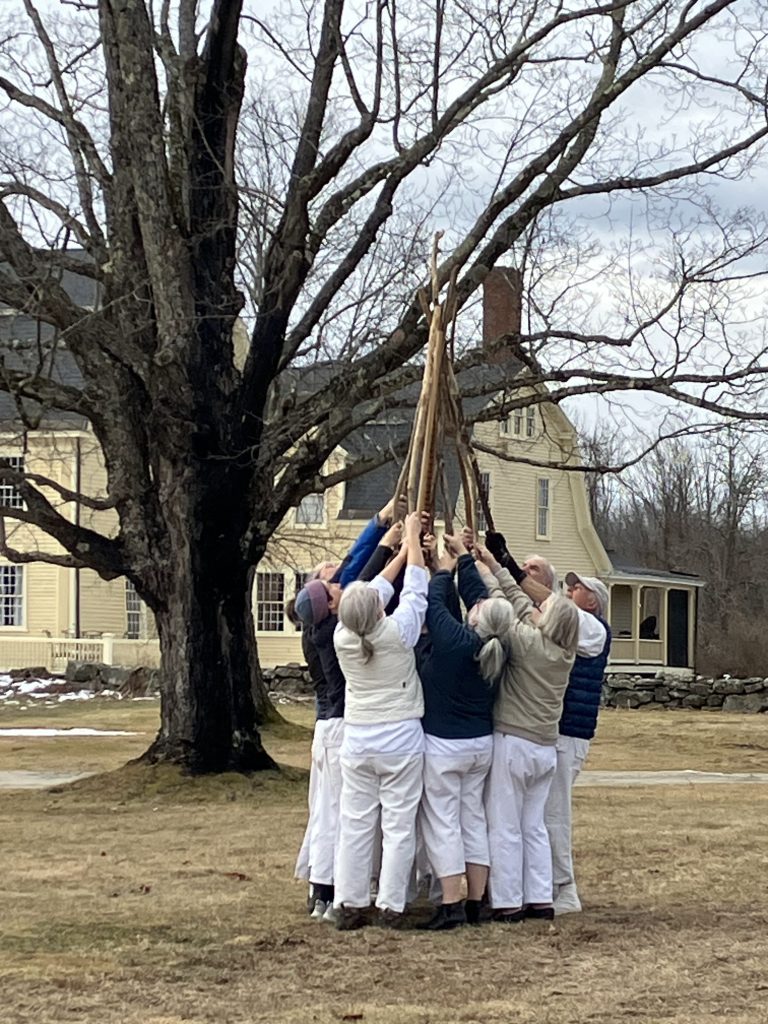
Stephen Billias sensei was the steadied goreisha we needed for our third and final keiko. We did a series of toitsukihon exercises with the boh and bokutoh which were a welcome grounding and centering after the previous day’s big opening. We did an experimental kumite with both bohs and bokutohs. We’d been instructed to bring a “Brad” stick for the weekend and, after introducing them to one another, we went out into the winter air, next to a big old tree and pointed our pure and glowing intentions up to the heavens. It was the first time it felt like we could directly bring Brad into our awareness as a group. And, I felt like Brad could sense our message. I heard the words “there are my people.”
I sometimes feel grief that, if I’m lucky and live a long life, I may very well be the last Shintaidoist in the Northeast someday. Michael Thompson sensei said something to me this weekend that brought me tremendous relief. He said “everything in a grain of sand…it’s all there.” He was referring to William Blake’s poem “Auguries of Innocence” that begins:
“To see a World in a Grain of Sand And a Heaven in a Wild Flower Hold Infinity in the palm of your hand And Eternity in an hour.”
The universe will remember and accommodate all the exploration we’ve done in Shintaido. Nothing gets erased at death. Every action and every person leaves an imprint. As Shintaidoist, we have practices that give us tangible ways to deeply connect with one another. I think that’s one of Shintaido’s greatest gifts.
Over the 2024 Martin Luther King Jr. weekend, Pacific Shintaido hosted its annual Kangeiko workshop in the Claremont Middle School gymnasium in Oakland, California.
Master Ito Sensei died on December 30, 2023, just a few weeks before Kangeiko 2024, and his spirit infused the entire weekend.
General Instructor Connie Borden and Senior Instructors Robert Gaston and Shin Aoki were our instructors, guiding us through four keiko (two on Saturday, two on Sunday) and each, in their own way, developing and leading kenjutsu-based curriculum inspired by the theme “Finding Center.”
By inviting Connie Sensei, Rob Sensei, and Shin Sensei to instruct, the Pacific Shintaido board (Shin Aoki, Cheryl Williams, and Derk Richardson) was providing them the opportunity to share some of what they had gleaned from their recent international travels—Connie Sensei and Rob Sensei to British Shintaido Daienshu 2023 last August, and Shin Sensei to a gasshuku in Japan last October.
The PacShin board came up with the theme as a general, rather than prescriptive, concept, and in his opening remarks on Saturday morning, Derk mentioned a few ideas that came to mind when the Board conjured the theme: We live in increasingly polarized times when finding center is essential; Shintaido movement originates from the center and returns to the center; in kumite, we find out partner’s center, find our own center, and connect the two, becoming one; the center can be a slippery target, requiring our concentration, awareness, and sensitivity to find it; the sword (bokuto, bokken) can be a compass to help us find center; finding center is connecting with our true selves; finding center enables us to take refuge in stillness.
A dozen Shintaido practitioners, from the greater San Francisco Bay Area, and also from Oregon and Florida, participated during the weekend. Each keiko was taught entirely by one instructor. On Saturday morning, after Sandra Bengstsson led warmups, Shin Sensei led the class through tachi jumping, wakame kumite that involved sensing the layers leading to the partner’s center, and irimukae—stepping forward and backward holding the bokuto perpendicularly and “entering” the sword and letting the sword “enter” you. The keiko also included Tenshingoso with sword, both individually and facing a partner; stepping practice (steps number three, four, five, and six), adding chudan cutting with sword, and kumitachi—daijodan versus chudan kiriharai.
After a midday potluck brunch hosted by Shin Sensei and Robert Friedman at their home in the Oakland hills, keiko two began with Nao Kobayashi leading warmups. Rob Sensei introduced a form of renki kumite to foster connection, with one partner using an open palm to receive the other partner’s fist. After pushing back and forth, the receiver would draw and send the attacker away. The next stage was for the receiver to apply the other hand to the back of the attacker’s arm or shoulder while sending away. The keiko concluded with daijodan versus chudan kumite first with open-hand cuts and then with sword. The differing levels of Shintaido experience among the participants allowed for a wide variety of partner-pairing.
On Sunday morning, Sally Gaston led warmups (fulfilling one element of her Shintaido Assistant exam, which she would successfully complete the next day). Connie Sensei then led the group in tachi jumping with increasingly quicker partner changes, the frenzied pace had everybody laughing. She settled us down with standing meditation before instructing us in Diamond Eight cut sei, using bokken, both stationary in place and with a triangle stepping pattern. The final exercise Connie Sensei introduced involved the opening three steps of Okuden no Kata, receiving/avoiding a daijodan cut from behind.
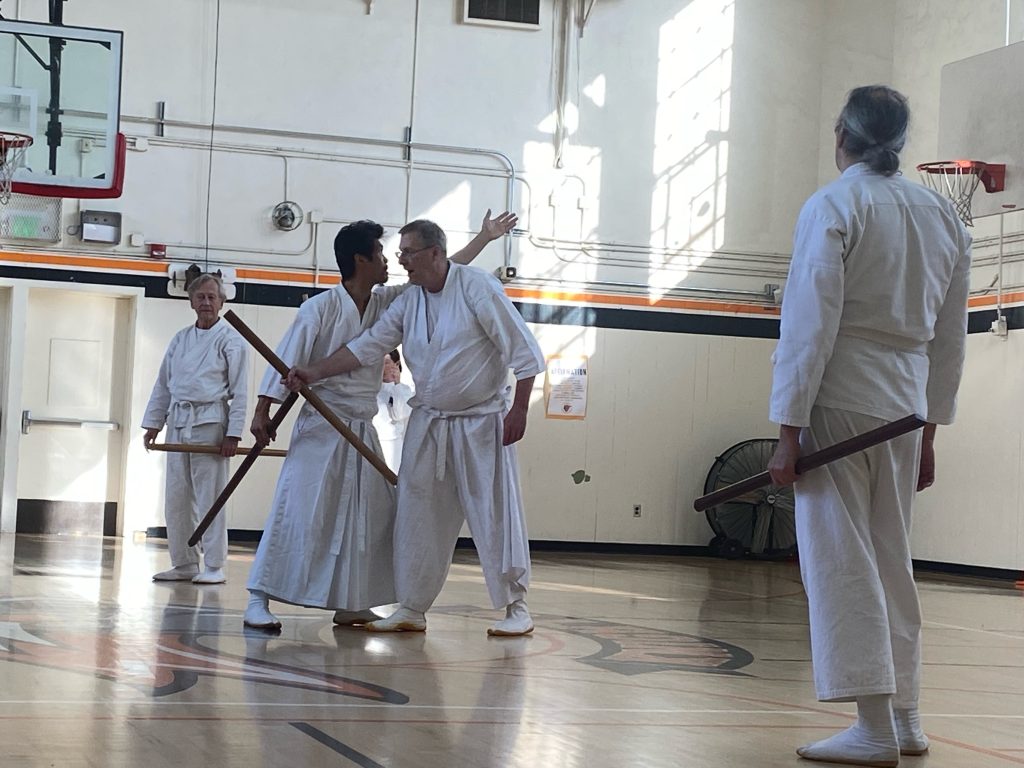
After lunch at a local restaurant, Derk led warmups for the final keiko, which Shin Sensei taught as a kind of synthesis, summation, and extension of the preceding curricula. We again did renki kumite, this time stepping back and forth, remaining connected by the backs of our wrists, and searching for one another’s center. After individual open-hand toitsu kihon (daijodan, jodan kirikomi, and chudan kirikomi cuts), we proceeded to kirioroshi kumite with various partners. Following that, Shin Sensei led us in Kyukajo #2 (nikajo) and #3 (sankajo), two of the nine-plus techniques fundamental to classic Shintaido Kenjutsu practice. Kyukajo #2 is daijodan sword cut versus jodan, #3 is daijodan versus chudan.
Those of who had attended Pacific Shintaido Kangeiko 2020, “Rediscovering Kyukajo,” might have recalled that Master Instructor H.F. Ito had shared his understanding of three elements basic to formal Kyukajo practice: It should be done with bokuto; stepping sequences all end by drawing the feet into musubidachi stance; and each kumite begins with partners bowing to each other, drawing their swords into shoko position, lifting their swords in tandem into tenso, and returning together down to shoko. The partners repeat shoko-tenso and bow at the conclusion of kumitachi, as well.
The energy level of the keiko escalated dramatically with several rounds of Eiko Dai kumite with sword, partners running toward one another from opposite corners of the gym, one cutting with daijodan, the other cutting jodan or chudan. We concluded the keiko with Tenshingoso kumite, first in partner pairs and then all together.
Upon reflection, it is clear that every exercise and technique led by our instructors—Connie Sensei, Shin Sensei, and Rob Sensei—during Kangeiko 2024 advanced our understanding of and brought us physically closer to “finding center.” We extend our gratitude to them for deepening our understanding, polishing our techniques, strengthening our relationships within the Shintaido community, and inspiring us to take our practice out into the world in our everyday lives.
In the closing ceremony, Derk read a poem by the Chinese-American poet Ha Jin:
A Center You must hold your quiet center, where you do what only you can do. If others call you a maniac or a fool, just let them wag their tongues. If some praise your perseverance, don’t feel too happy about it— only solitude is a lasting friend.
You must hold your distant center. Don’t move even if earth and heaven quake. If others think you are insignificant, that’s because you haven’t held on long enough. As long as you stay put year after year, eventually you will find a world beginning to revolve around you.
Navigating Roles and Identity I met H.F. Ito (“Ito” to most of us) in May 1988 when I began practicing Shintaido in San Francisco. At first, I knew him through his students who were my teachers – Jim Sterling, Connie Borden, and Ben Schireson. When I came to know Ito better, we would talk about the cross-cultural kumite of Shintaido roles: the hierarchy of Japanese student-teacher and sempai-kohai relationships vs. the level playing field friendships common in the U.S. He liked to play across that canvas sometimes as the stern goreisha and at other times as a friend cracking jokes over dinner. While dancing that dance with Ito it helped to know both cultures and the cues to transition back and forth, up and down.
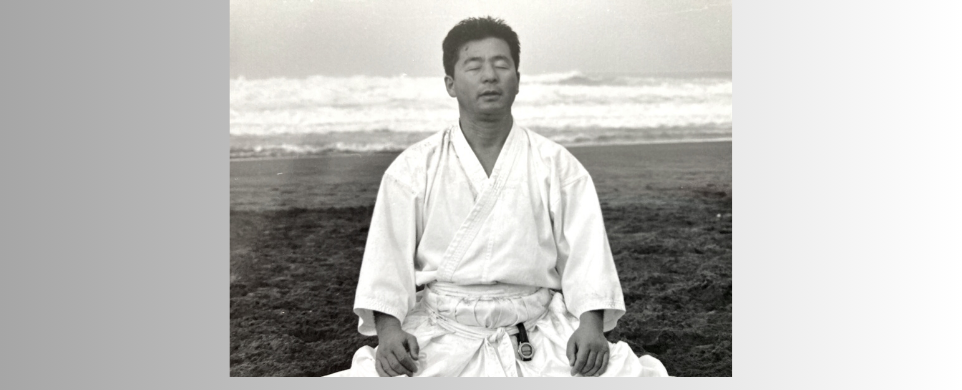
Photo by T. Nagai-Rothe
Ito brought Shintaido to San Francisco in 1975 and drove his first students with the intensity of his Rakutenkai* experience. (In Bela Breslau’s words, “One day I was so mad, I decided I would keep doing Daijidan Kirioroshi until I dropped – and that would be on him!”) As much as Ito taught Shintaido and the cultural forms associated with it, he was changed by living in the US. He described how his Japanese friends viewed him as less and less Japanese the more time he had spent away.
Neither was he American, though he made his home in San Francisco for more than 30 years. And though Ito had spent a great deal of time in France when he moved there to join his wife, Nicole Beauvois, in 2011 he was not French either. The role of traveling instructor and Shintaido ambassador was apropos. Ito navigated the edges, crossed boundaries and connected groups of people in Turtle Island (U.S., Canada), Japan, the United Kingdom, France, Switzerland, Germany Spain, Belgium, Italy, Romania, Australia, and Sweden.
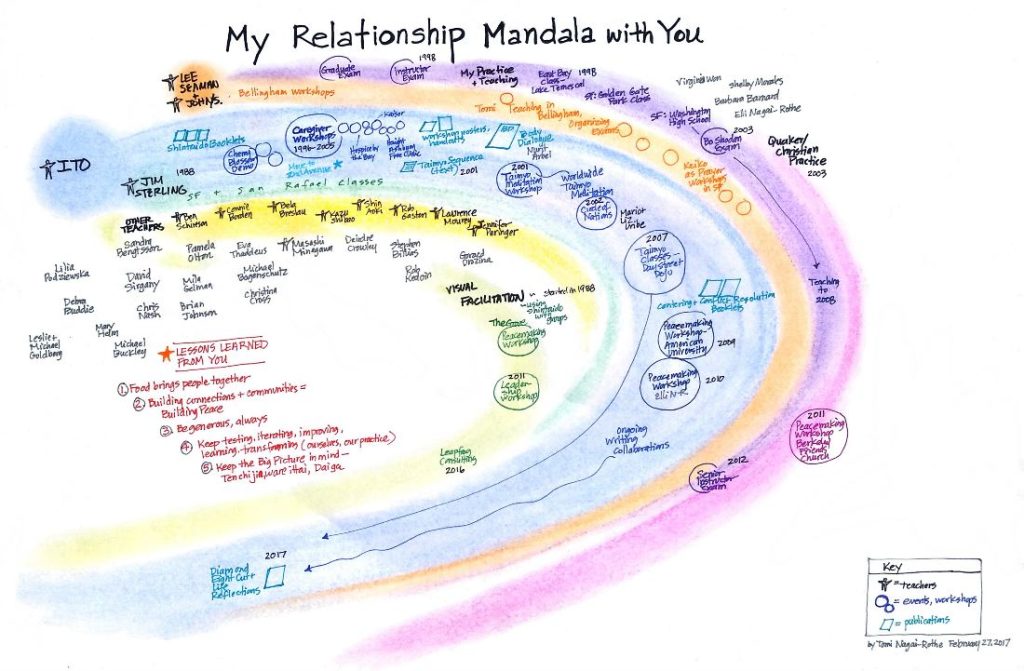
Ito often spoke about his relationship mandala – the web of friendships and partnerships that he had woven over 50 years. He asked me to illustrate how his relationships had led him to teach in Switzerland and I made this graphic for his Swiss group.
Graphic by T. Nagai-Rothe
Ito moved between worlds and connected people. Though we often speak about how we are all connected to one another and Mother Earth, Ito actually spent much of his time doing things to build strong connections among us. He gladly hauled bo, bokuto, jo, tabi and all manner of equipment from continent to continent just to make our practice better.
In my family, we define peace as actively building connections. In that light, Ito was all about making peace – every day.
I know Ito well because he moved in with my family in 1998. Over time I was able to navigate through our roles with one another: older family member-younger family member, teacher-student, author-writing collaborator, chef-sous chef, friend-friend.
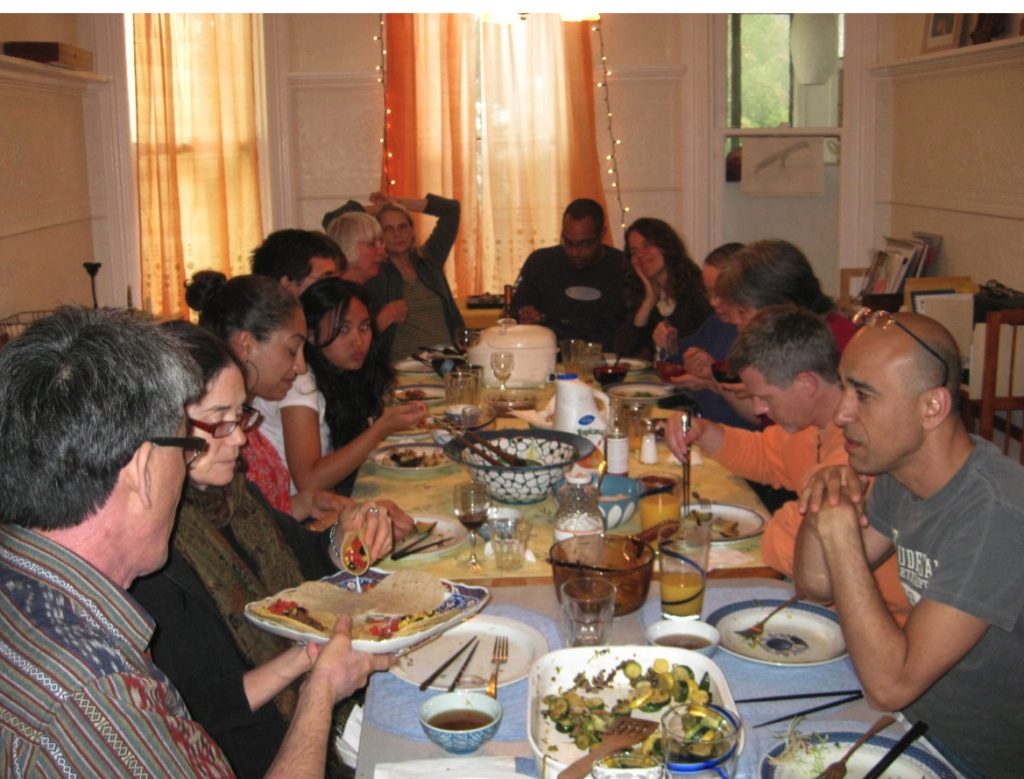
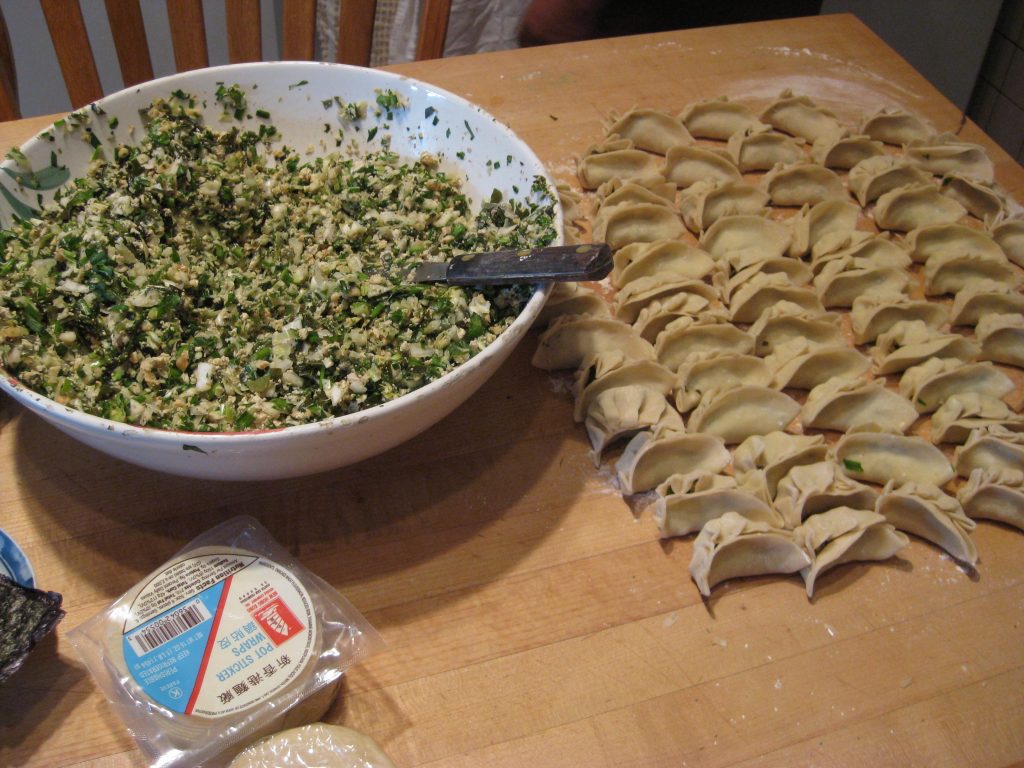
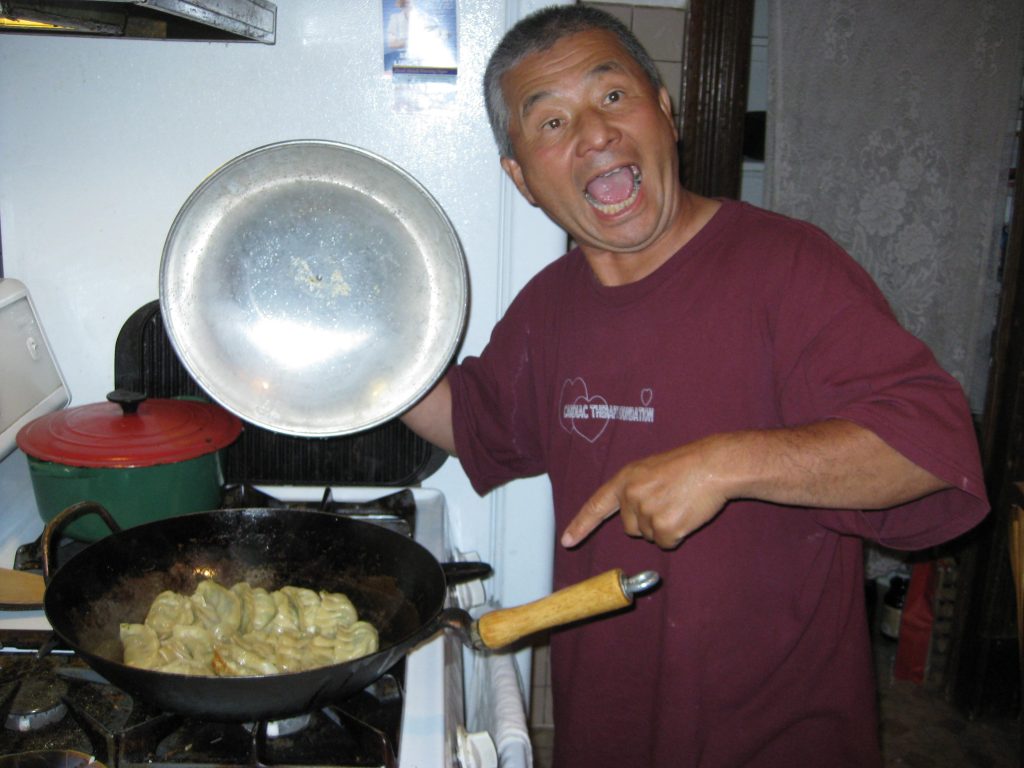
Building Community Ito loved to cook and invite people over to eat. The tempura fests and gyoza (potsticker) making parties at our 643 2nd Avenue house were epic. We would eat trays and trays of gyoza and Ito would produce yet another tray!
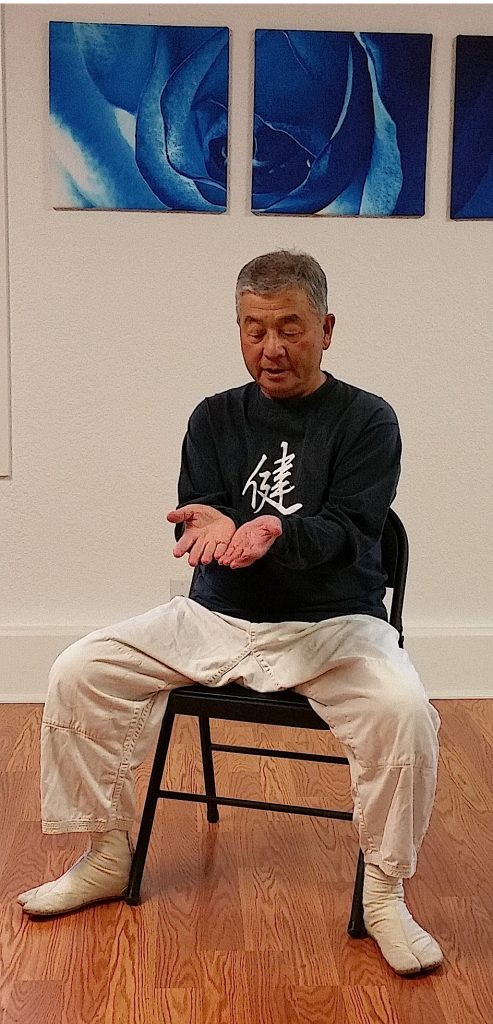
photo by T. Nagai-Rothe. 2010
Ito learned to make gyoza at the Chinese restaurant where he worked in Yokohama while part of Rakutenkai. Everyone contributed to the group in some way and Ito was assigned to work at the restaurant so his wages could support everyone. He would work at the restaurant, then get off his shift to join the Rakutenkai keiko at Nogeyama Park in the middle of the night.
At our house, Ito would start creating the gyoza filling early on party day because it took hours to mince the cabbage and garlic. I once asked him if he wouldn’t prefer to use the Cuisinart and he said, “It’s better to chop by hand. The energy in the gyoza isn’t the same if you use a food processor!”
photo by T. Nagai-Rothe
It was about building community, meal by meal. Food prep hour by food prep hour. My kids, Elli and Kai, formed their love of community meals from these gatherings. And when I think about the Shintaido of American examination criteria about building community – something I’ve never heard of in other martial arts examinations – I remember how Ito modeled this for us.
photo by T. Nagai-Rothe
In 1993 Ito began studying scuba diving in Hawaii. After one trip, he returned with a story about the examination process to become a freediving instructor. Ito had failed a written exam because the exam included trick questions that he was unable to register as a non-native English speaker. He said he was devastated because it meant he couldn’t progress any further in the program. The story continued, however, to include the class instructors’ response. They said, “No problem. We’ll work with you until you can pass the exam.” That completely stunned Ito: it was a completely different paradigm from competitive martial arts and the Japanese educational system. A new world: helping everyone be successful in practice! As a result, Ito completely changed his teaching style to focus on each student’s strengths and their learning style – not his agenda. He became adept at sensing which teaching approach would suit a student, based on his observations of them.
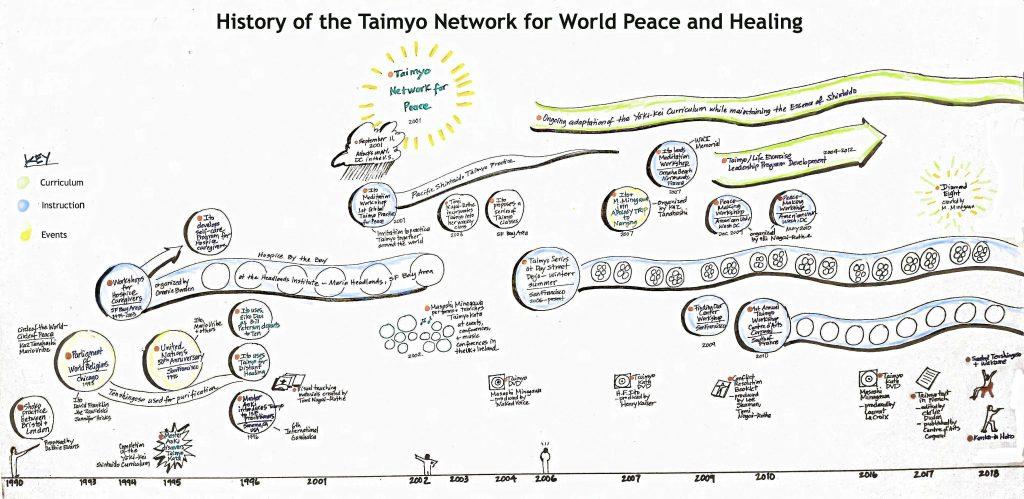
Peacemaking: Inner & Outer Iin 2001 Rob Gaston and I organized a meditation workshop with Ito in the Bay Area for September 23-30 – a weeklong in-person and virtual international practice. The early registration date was September 9 and our flyer said, “Please join us in the early morning to clear yourself and begin each day mindful and refreshed.” And then came September 11.
After 9/11, I remember a week of collective vulnerability and openness – the kind that we experience in Daijodan Kirioroshi – but because that isn’t a generally valued state of being, the anger and ugliness followed shortly after.
Ito, Rob and I didn’t know if we should postpone the workshop or continue as planned. We had to process what had happened ourselves before we could reframe the workshop. After some reflection and conversation, we decided to stay on track with the workshop, and frame it as practicing Taimyo Kata to create a ring of connectedness and love around the world. And though we were challenged to stay connected at a distance with email but no Zoom, it was a powerful experience. We needed that practice.
That week Connie Borden wrote, “One way to learn the value of human life is through practicing a body movement that requires you to fully give up your life and from this place of release the sense of holding on to life is even more important.”
This was the beginning of the International Taimyo Network practicing inner and outer peace, now known as the Global Taimyo Community.
Graphic by T. Nagai-Rothe
18 months later Ito was home in March 2003 and we watched U.S. tanks invade Iraq on tv, completely aghast. We were both sad and speechless. Ito said he was pained that the U.S.had created a legacy of violence for its young people. He talked about how younger generations in Japan have suffered from the violence it perpetrated during World War II.
One of Ito’s earliest memories was seeing the mushroom cloud rise over the hills that separated Kure from Hiroshima and hearing the deafening sound – on August 6, 1945. He was at his grandparents’ house in the mountains where his mother was about to give birth to his brother Yoshitaka (Juguro). Ito was marked by his experience of the U.S. Occupation of Japan as a young boy. Though there were some good interactions with U.S. servicemen, the feeling of being controlled by another country was dark and disempowering. He majored in law at Chuo University because of his deeply felt sense that he wanted to ensure justice in the world.
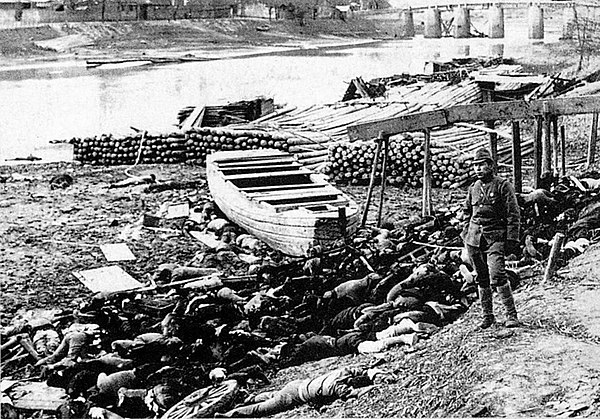
In 2007 Ito and Masashi Minagawa traveled to Nanjing, China to attend an international conference on the Nanjing Massacre that his friend, Kazuaki Tanahashi had co-organized. Ito had talked about the lingering guilt and shame of being Japanese without acknowledging the horrible violence unleashed on Nanjing residents in 1937, and the conference was an opportunity to make a public apology. He was very anxious about visiting China, and especially about going to Nanjing as a Japanese national.
He told the story of getting away from an apology media event and finding his way to the edge of the river with M. Minagawa. It was where residents had been killed by Japanese soldiers or chased into the water to drown. Ito and M. Minagawa bowed deeply and sat by the river in meditation.
Derivative work of photo by Moriyasu Murase, 村瀬守保 (Wikimedia Commons)Photo by M. Minagawa
Ito could feel those who had drowned in the river. They were sad yet offered forgiveness. He felt drawn to the water to get closer, but his scuba training mandated a clear return plan and he couldn’t imagine how he would return to the beach, so he stayed on shore. M. Minagawa said he could feel Ito being pulled toward the water, so he focused on energetically anchoring Ito to the beach. (A 32 min. video interview about the Nanjing trip with Ito and M. Minagawa with Japanese and French subtitled versions.)
In a world filled with violence, there are few stories of feelings of remorse, apology, reconciliation and making amends (repentance) on the part of individuals or nations responsible for the violence. No one wants to take responsibility, to face feelings of shame, or simply to apologize. This is why Ito and M. Minagawa’s Nanjing trip and their time at the river stands as a model for opening the door to connection – and peace.
As Ito grew older, he changed his idea about his practice and his teaching. He studied Tai Chi with Master Ma and evolved his practice toward Taimyo Kata, meditation and Tai Chi. He made peace with his aging body and continued to grow and change – the opposite of most of us who tend to hold onto what we have. In equal measure his connection to Ten (“heaven”), the Universe and the Divine grew and deepened as he released earlier conceptions about his practice.
After Nicole’s brother Philippe died, Ito began a meditation “requiem” for him and other friends who had transitioned in that period. Ito said that he could see Philippe and his friends in front of him as he practiced. He was very comfortable in the thin place between this life and what lies beyond. Ito was preparing to move between worlds, and the practice of life and death.
Ito navigated his last boundary in this life smoothly, and continued his requiem practice in his mind in late December until he died. Nicole says that Ito was enjoying a continuous state of Fang Song – part of the mantra from his Tai Chi teacher Master Ma – “relax, relax, just relax.”
photo by H.F. Ito
When Ito’s friends transitioned, he would always laugh and say, “Now she is OMNIPRESENT!” So now Ito is able to completely span all roles, places, cultures, and forms.
When I spoke to Lee Seaman on December 30 I mentioned how sad I was that we didn’t have more time to listen, and ask for more details about his life and practice. Lee said, “Don’t worry. Part of Ito is alive in each of us who studied with him.”
I felt bad that I was unable to complete a project for Ito that I’d planned this year, but knowing Ito I’m equally sure that my real gift to him is ultimately who I have become through his nurturing and what I will do with it. Each of us has received something from Ito and is part of his legacy.
I wonder, “What will we do to pay it forward?”
…
The beauty of the Shintaido community is that we are all over the world. For this reason, we publish Tomi´s personal remembrance also in French and Japanese.
Feel free to share this article, and the translations to anyone who might wish to read about HF Ito´s life. Thank you.
Notes & links
* The arts/martial arts group organized and led by Shintaido founder Hiroyuki Aoki.