Previously I sent a post about “Good is bad, bad is good.” This is my most recent follow-up (February 2022).
Unfortunately, the legal non-profit entity based in France known as International Shintaido Project was dissolved in June 2021. (Thank you Jean-Louis de Gandt, for your hard work to both help write bylaws and then guide the process of dissolution.)
However, I am very happy about several things that happened recently within the international Shintaido movement:
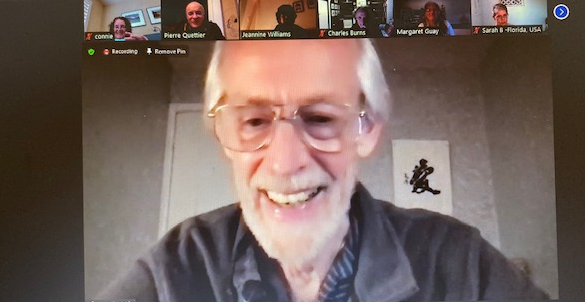
The International Technical and Examination Committee (ITEC) offered SanDan/Senior Instructor and above exams via Zoom in the summer of 2021. *
A Zoom lecture of Shintaido history, given by Peter Furtado at the UK Kan-Geiko at the beginning of 2021, was beautifully recorded and saved for future viewers **
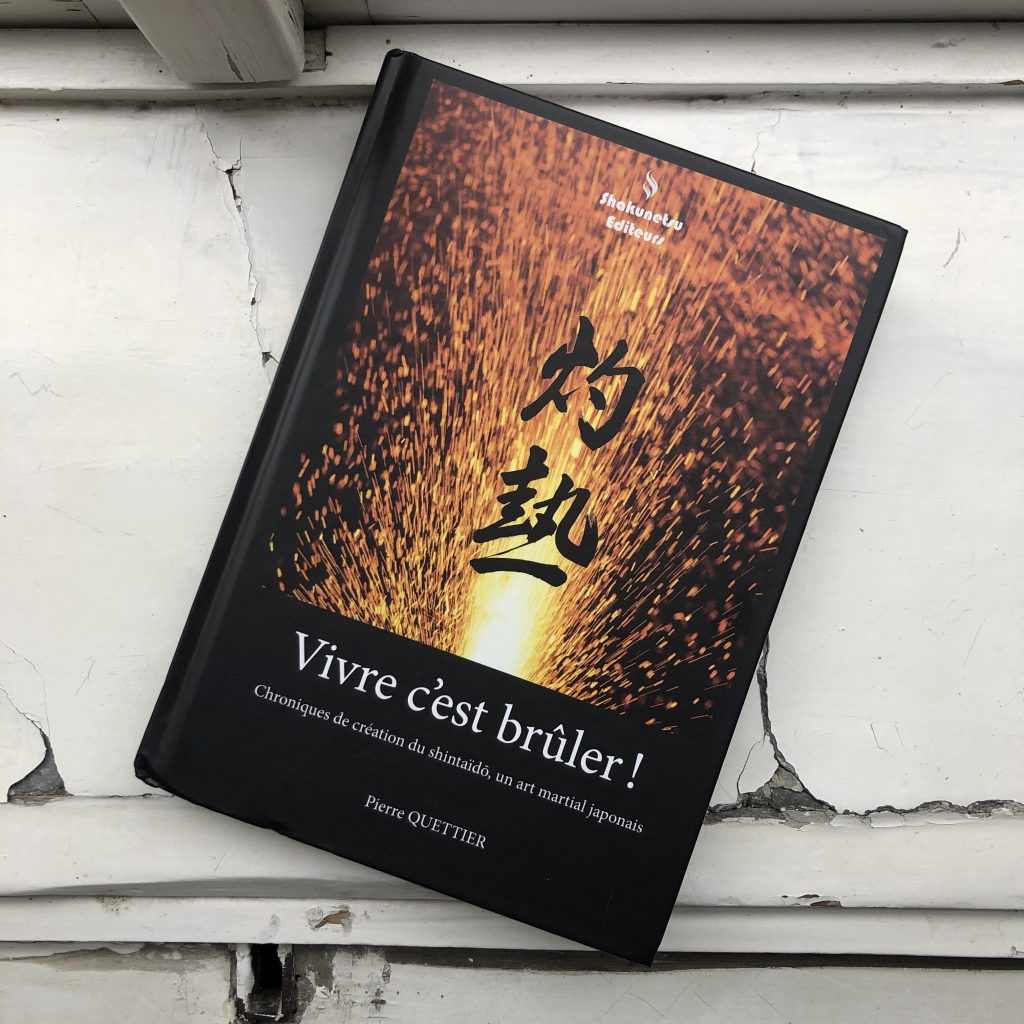
Pierre Quettier’s book of Rakutenkai interviews was successfully published at the end of 2021 ***
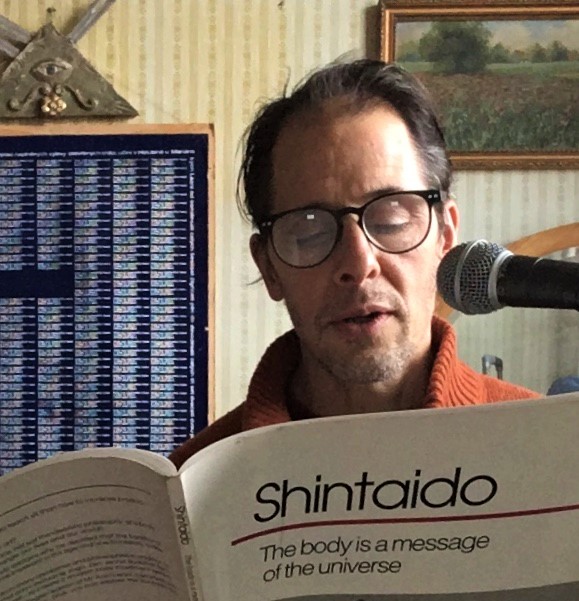
The SoA Podcast started this winter, with David Franklin giving readings from the book Shintaido – the body is a message of the universe. ****
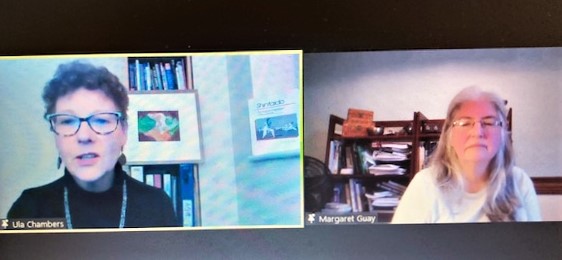
British Shintaido broadcasted another fascinating Zoom event on February 20th. SOA instructor Margaret Guay spoke about “The body is a Message of the Universe” looking at it from her Body & Mind Centering practice point of view.
• 天の時 Ten no Toki (the unpredictable timing of heaven) Because of the new Coronavirus, we were confronted with many regulations that slowed us down and prevented us from practicing any group movement in person. This slow-down felt to me like a message from Nature!
• 地の利 Chi no Ri (the strategic benefit of position) When we were confronted by the problem of the Coronavirus, new communication strategies like Zoom emerged almost simultaneously, and those strategies opened new opportunities for human relationships and communication, not only to maintain our previous connections but also to grow and foster them in ways that were previously unimaginable.
• 人の和 Hito no Wa (the transcendent harmony of human communication) Shintaido is blessed with a networked circle of well-trained Shintaido instructors who now can teach not only in local groups, but also anywhere in the world with no travel requirements and no scheduling restrictions. So, the body wisdom of Shintaido is now available in places where – and to people for whom – it used to be out of reach.
The many difficulties and opportunities that face Shintaido today remind me of a Bible verse that I memorized as a very young man, when I was involved heart and soul in the Rakutenkai community:
“…No temptation has overtaken you except what is common to mankind. And God is faithful; he will not let you be tempted beyond what you can bear. But when you are tempted, he will also provide a way out so that you can endure it. “(from 1 Cor 10:13, NIV)
So, let’s keep going!
H.F. Ito (thanks to Lee Seaman and Tomi Nagai-Rothe for their help with editing)
Shintaido of America’s new podcast has recently launched (find it at http://www.shintaido.org/podcast/), and as readers may know, the first season is an audio book: a reading of Shintaido: the body is a message of the universe by the founder of Shintaido, Hiroyuki Aoki.
I recently came across an article I wrote in 1998 for the Cambridge Shintaido newsletter when we had classes at the Dance Complex — it touches on Shintaido’s ‘origin story’ and the principles on which Shintaido was founded. Here it is:
When you come to a Shintaido class, one thing that may strike you in comparison to other health exercise practices or martial arts is that there is relatively little explaining. I don’t mean explaining of how to do the movements, because most instructors do that as much as needed. And depending on the instructor and the type of event (a workshop or retreat is different from an ongoing weekly class), there may be some discussion of the background, history, or philosophy of Shintaido. But what is rare in Shintaido is a specific explanation of the purpose of each technique: “This movement is for such-and-such, and it will do so-and-so for you.”
It certainly is possible to view the techniques of Shintaido through this kind of framework. For example, one of the basic kata (forms) of Shintaido called Tenshingoso could be viewed through the framework of traditional Chinese medicine and could be explained as a powerful technique for opening all the meridian pathways. Or one could refer to the system of Indian yoga and the explanation would be phrased in terms of opening the chakras. The benefits and purposes of the movements could be analyzed from the point of view of scientific physiology and body mechanics, or from the aspect of artistic and emotional expression, and so on.
But I wonder if this need for explanation isn’t a particularly Western or even American urge. I believe Alexis de Tocqueville (who wrote Democracy in America in 1835) remarked that as a people, Americans seemed to him almost obsessed with the pragmatic and the practical. This fits with the constant urge to have an explanation, to want to know: What is the purpose of this? What use is it? Often for us, the very meaning of a thing, it’s significance, is tied up with its usefulness.
This is very different from a more poetic or philosophical view of the world, where things have more meaning when you have to fill in the blanks. Shintaido lives a little more in this artistic world. An example of this can be seen in the rules for membership in the Rakutenkai group. Rakutenkai, literally meaning “the meeting of optimists” or “optimistic group,” was the group that developed Shintaido in Japan in the 1960s. The original group was loosely structured and had no clear lines of organization or regulations. Anyone who wanted could be a member, and the only guidelines were:
1. Do not go beyond your own morality.
2. Do not forget your original spirit.
3. Do not judge others.
4. Love your neighbor as yourself.
5. ___________ (fill in the blank yourself).
There is an alternative to being spoon-fed a practical, down to earth, ready-made explanation for each Shintaido movement technique. The alternative is to let yourself first experience Shintaido, to feel what is happening in you when you do these movements, and to strive to improve your technique. Second, consider the philosophy of Shintaido. There are many sources of written material on Shintaido, and each instructor you study with may have their own interpretation.
As with any art form, there are many different approaches; even Hiroyuki Aoki, the leader of the Rakutenkai group and founder of Shintaido, does not have the last word on interpreting its meaning and philosophy. Let yourself be open-minded in this pursuit. And third, there may be some gap between your intellectual understanding and your experience. That’s OK. Be honest. Don’t try to force your experience to conform to what you think it “should” be. There is meaning in the gap that may exist between the philosophy and your experience.
The ancient Taoists of China constantly emphasized the value of the “useless” thing, the hollow vessel, the empty space, the uncarved block of wood or stone, the unformed lump of clay. Don’t demand that all gaps be filled immediately with practical explanations. Give it time. This gap is what makes Shintaido a lifelong journey.
In the London subway (the “tube” or “undergound” as they call it), there are constant reminders to be careful when stepping from the platform into the train cars. “Mind the gap,” they say. Good advice, in my opinion.
For US participants: 12.00 noon PST 3.00 pm EST UK and European participants: 8.00 pm UK, 9.00 pm Europe
Online Via ZOOM
Margaret Guay is a Shintaido Instructor on the East Coast of the US and has taught in Europe at the Semi-International Gasshuku in 2019. She is also a teacher of Body-Mind Centering®, an integrated and embodied approach to movement, the body and consciousness, developed by Bonnie Bainbridge Cohen. The 2022 lecture will take the form of an illustrated and somatic conversation between Margaret, Peter Furtado and Ula Chambers. Margaret will guide us to look at Shintaido movements and ideals through the prism of Body-Mind Centering®, and reflect on what we can discover about “The Body is a Message of the Universe”.
The lecture will last approximately 45 minutes followed by a questions and answers.
A link will be sent to all registered participants.
Whilst the lecture is free to attend, donations will be welcome to support the work of British Shintaido and continue this lecture series. Paypal address: events@shintaido.co.uk.