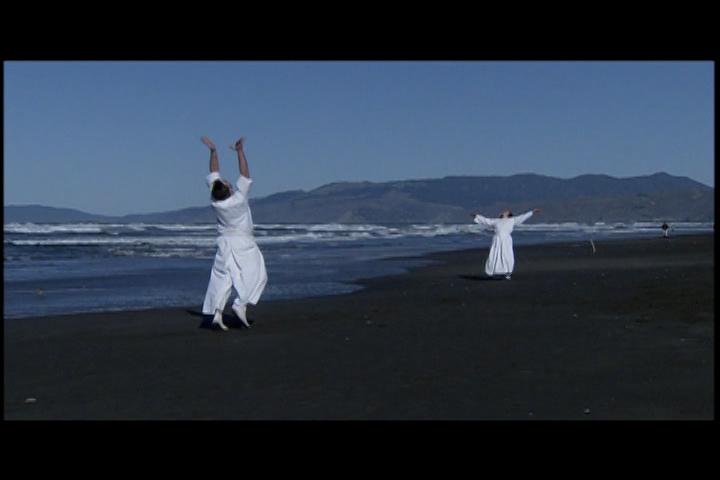
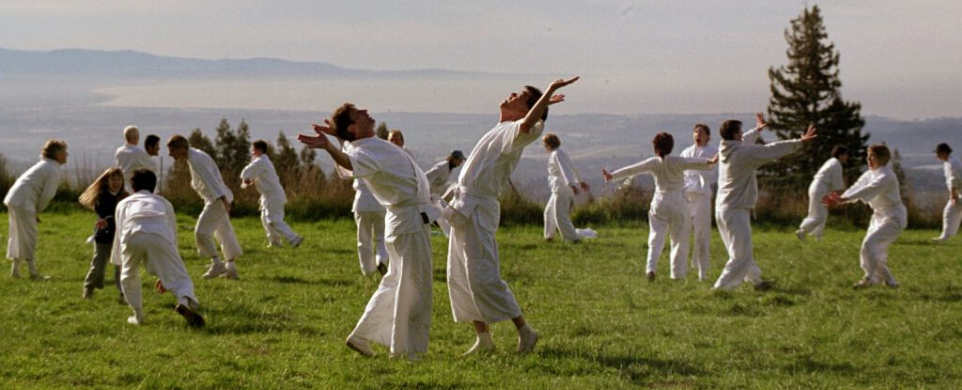
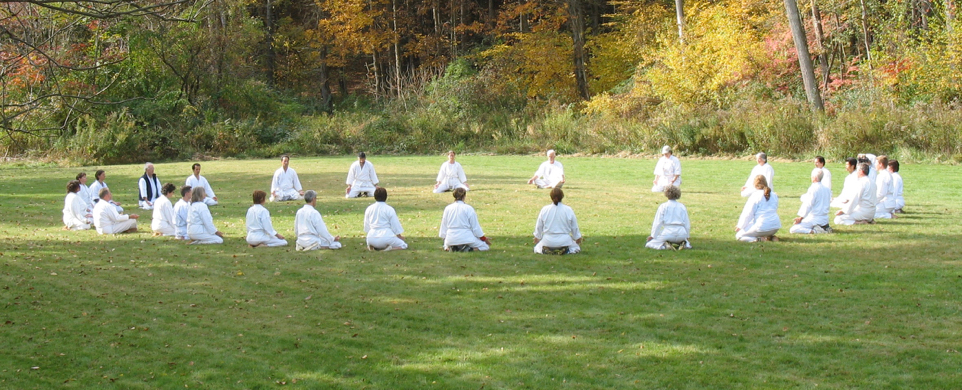
This summer of 2021 introduced the opportunity for Shintaido practitioners to take high level exams. Given the COVID pandemic, in-person exams during an international gasshuku were not possible. International Technical and Examination Committee (ITEC) worked with two of the doshu, HF Ito and Masashi Minagawa, to offer video/ZOOM exams. These exams had two parts: a video performance and then participating in a ZOOM Masterclass exam (ZME). For SOA, the video filming was done in the Bay Area on 6 June and on the east coast on the 18/19 of June. The ZME was held 8 August in the Bay Area
Congratulations to the following people who successfully passed their examinations!
Shintaido Kenjutsu: 3-Dan Lee Ordeman
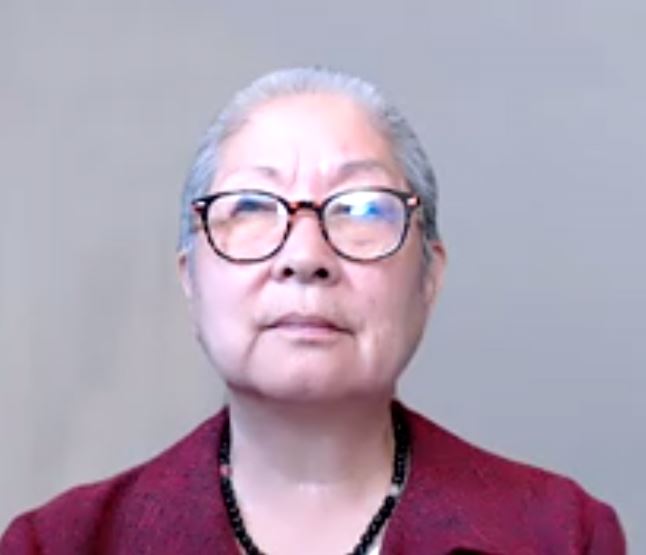
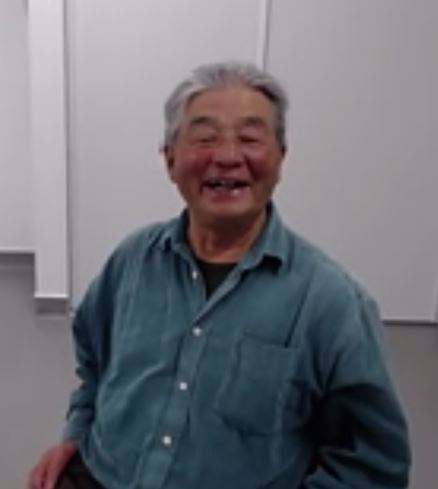
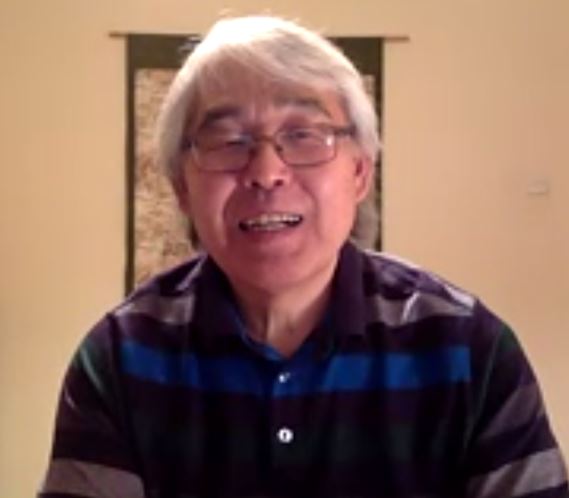
Shintaido Kenjutsu: 4-Dan Connie Borden Shin Aoki Robert Gaston
Shintaido Senior Instructor Lee Ordeman
Watch the video of the Zoom Master Class on YouTube below and for more details take a look here.
“Wonderful information, wonderful video.” “I was deeply touched.” “Moving, beautiful presentation.” “Somuch power in the desire to heal – almost as much as the healing itself.” “Deeply moved . . . by the transforming power of Shintaido teachings and movements.”
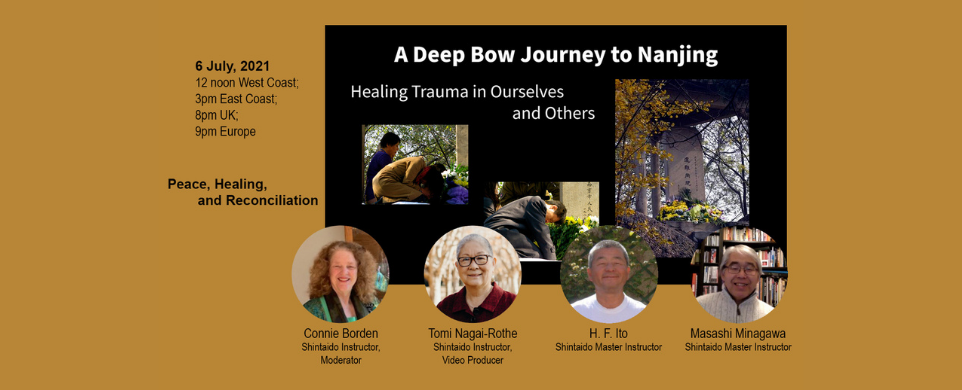
These are a few of the responses to A Deep Bow Journey to Nanjing presentation on July 6, 2021 attended by more than 77 people on Zoom of a joint partnership of Shintaido of America and Reimagine.
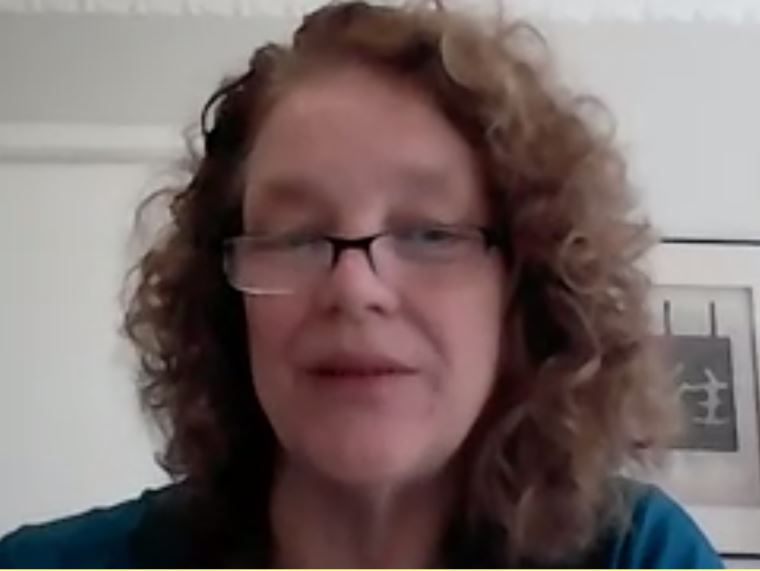
Connie Borden introduced herself as the moderator (and Shintaido instructor) and shared the purpose of the presentation: “Our hope is to show ways that body movements support healing and reconciliation from past traumas. We intend to show how body movement can help to prepare for the end of life as well as how to live well in this moment.”
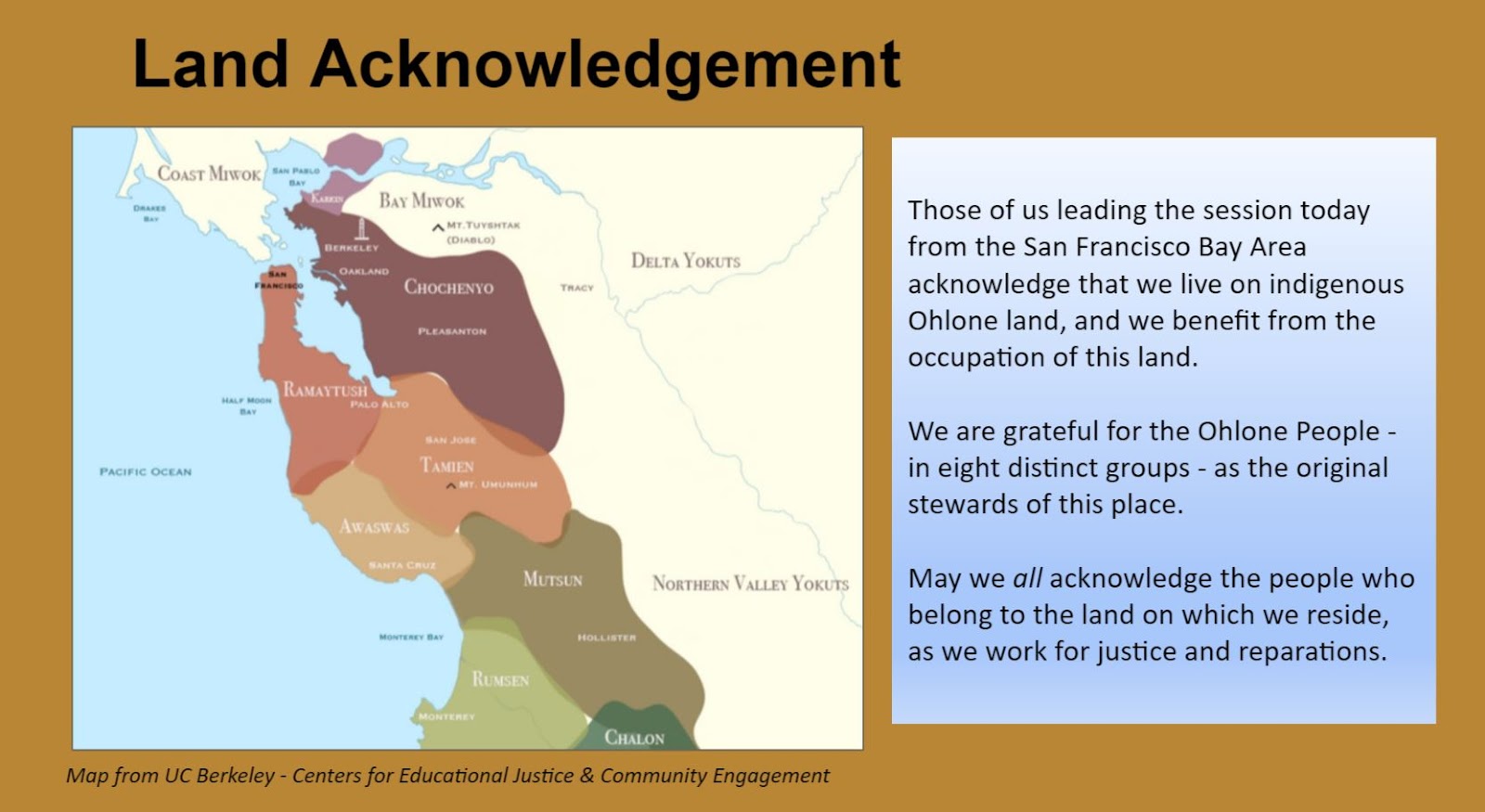
She then acknowledged that the land of the San Francisco Bay Area meeting hosts is occupied indigenous land of the Ohlone People – in eight distinct tribal groups.
Tomi Nagai-Rothe, Shintaido instructor and video co-producer, talked about wanting to bring this story of healing and repair to more people, through the video project. She mentioned the martial arts philosophy of living at the edge of life and death. She believes that healing body movement like Shintaido is a powerful tool for coming into alignment with our own deeper rhythms which, in turn, allows us to connect more deeply to others.
After the video showing, H.F. Ito, Master Shintaido Instructor, talked about his trip to Nanjing as an important part of addressing his negative cultural inheritance. He described the concept of our bodies as a mudra (Sanskrit: “gesture, seal or sign”) or whole body antennae that allows us to receive energy from the universe as well as sending energy.
H.F. Ito also talked about sword movement – in the post-Samurai era – as a spiritual cleansing technique to clear away unneeded thoughts or energy.
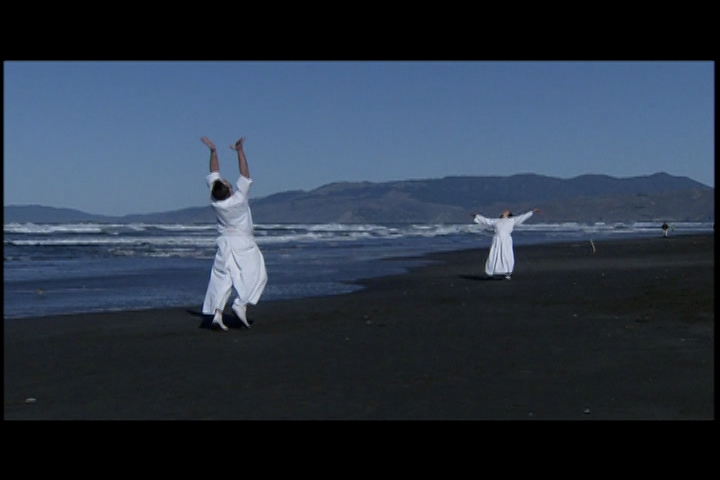
Masashi Minagawa, Master Shintaido Instructor, spoke about “wordless transmission” through body movement (kata in Japanese). He recounted a Shintaido performance at the first anniversary of 9/11 at London’s Royal Opera House during which he experienced sword movement becoming an act of spreading peace. The sword movement was transformed into his master HIroyuki Aoki’s wish to spread flowers over the bombed out buildings of Tokyo after Aoki had lost so many family members and friends to the violence. Masashi Minagawa saw white petals falling from the ceiling of the Opera House, covering the audience.
Some reminders from our Master instructors regarding Shintaido healing movement:
Use healing movement practice in daily life for all types of situations
Avoid expecting a specific or immediate result
Be non-judgmental
Practice gratitude
If you are interested in going further, please join Master H.F. Ito and Master Masashi Minagawa for a virtual workshop August 22-28 – the 20th Anniversary of the Global Taimyo Peace Community.
Registration includes:
2 – 90 minute virtual classes with H.F. Ito (8/22 and 8/28)
Up to 7 weekday classes with regional instructors (optional)
Second showing of the video featuring Master H.F. Ito and Master Masashi Minagawa (subtitled in English, French and Japanese): A Deep Bow Journey to Nanjing
A facilitated conversation about the video and workshop theme (with French, Japanese and English subgroups)
Taimyo Kata instructional materials – demonstration video and written sequence
Nominations for Shintaido of America Board members are now open. A Shintaido of America Board member works with other board members and SOA officers to help fulfill the mission of supporting keiko and instructors in the US and Canada.
Joining the SOA Board is a way to give back and support the people who teach and practice Shintaido. We are looking for folks who want to express their appreciation for Shintaido and dedicate a few hours a month to help the organization keep moving forward.
Being on the Board of Directors of a non-profit corporation is an important position that should be included on a resume or job application.
What are some of the things a board members have done?
A sub-committee of the Shintaido of America Board worked with an amazing marketing/branding professional, Robert Friedman. They devised a fresh and inventive way to describe Shintaido.
With this revitalized way to think of Shintaido as “Opening to Life”, the Teachers’ group led by Lee Seaman and Nancy Billias designed a five-week ‘soft hand’ curriculum for beginners which is designed to be conducted over Zoom.
Board members contributed to articles and worked with Body Dialogue editor Jim Sterling for our Body Dialogue.
The Shintaido of America YouTube Channel now offers new videos every few weeks led by Sarah Baker, who works with the SOA Board and officers.
Shintaido of America board members set the strategy for Shintaido of America, establish the annual budget to accomplish these strategies while also maintaining the infrastructure of a national nonprofit organization.
How to answer this call? It is quite easy.
Write us a short letter or shoot a video where you introduce yourself. We are keen to know more about your motivation to become a board member and if you already have an idea of what we can do together, let us know!
A board member serves a term of 2 years. The term is from September 2021 to September 2023. A board member attends 4 board meetings each year and participates in committee work throughout the year.
The nominations close on the 24th of July and the elections will happen from 1 August to 14 August 2021.
A person may self-nominate themselves. If nominating another person, please have their agreement before making the nomination.
Are you wondering who is in the Shintaido of America Board now?
The members from September 2019 to 2021 are Nancy Billias Connie Borden David Franklin Herve Hofstetter Brad Larson, all elected voting members
Nominations for SOA Board members are now open. A SOA Board member works with other board members and SOA officers to help fulfill the mission of supporting keiko and instructors in the US and Canada.
What are some of the things a board members have done?
A sub-committee of the SOA Board worked with an amazing marketing/branding professional, Robert Friedman. They devised a fresh and inventive way to describe Shintaido.
With this revitalized way to think of Shintaido as “Opening to Life”, the teachers group led by Lee Seaman and Nancy Billias designed a five-week ‘soft hand’ curriculum for beginners which is designed to be conducted over Zoom. Board members contributed to articles and worked with Body Dialogue editor Jim Sterling for our Body Dialogue. The Shintaido YouTube Channel now offers new videos every few weeks led by Sarah Baker, who works with the SOA Board and officers.
SOA board members set the strategy for SOA, establish the annual budget to accomplish these strategies while also maintaining the infrastructure of a national nonprofit organization.
A person may self-nominate themselves. If nominating another person, please have their agreement before making the nomination.
A board member serves a term of 2 years. The term is from September 2021 to September 2023.
A board member attends 4 board meetings each year and participates in committee work throughout the year.
Nominations close on 24 July 2021and the elections will happen from 1 August to 14 August.
Do you want to join us? Write us a little letter or shoot a short video about you and your motivation to become the Shintaido of America board member.
The current members of the Board from September 2019 to 2021 are Nancy Billias, elected voting member Connie Borden, elected voting member David Franklin, elected voting member Herve Hofstetter, elected voting member Brad Larson, elected voting member
We have two permanent SOA Board members H. F. Ito, lifetime member Michael Thompson, lifetime member
When the idea of dissolving the International Shintaido NPO was first proposed, I was strongly against it. For 13 years as a board member of ISC and then IS, I worked hard to establish a legally incorporated organization. Further, I spent a year on another committee that wrote the bylaws for IS. After all this, I couldn’t imagine giving up on an ideal and such a long-held goal. But then I considered the situation from a longer and wider historical perspective.
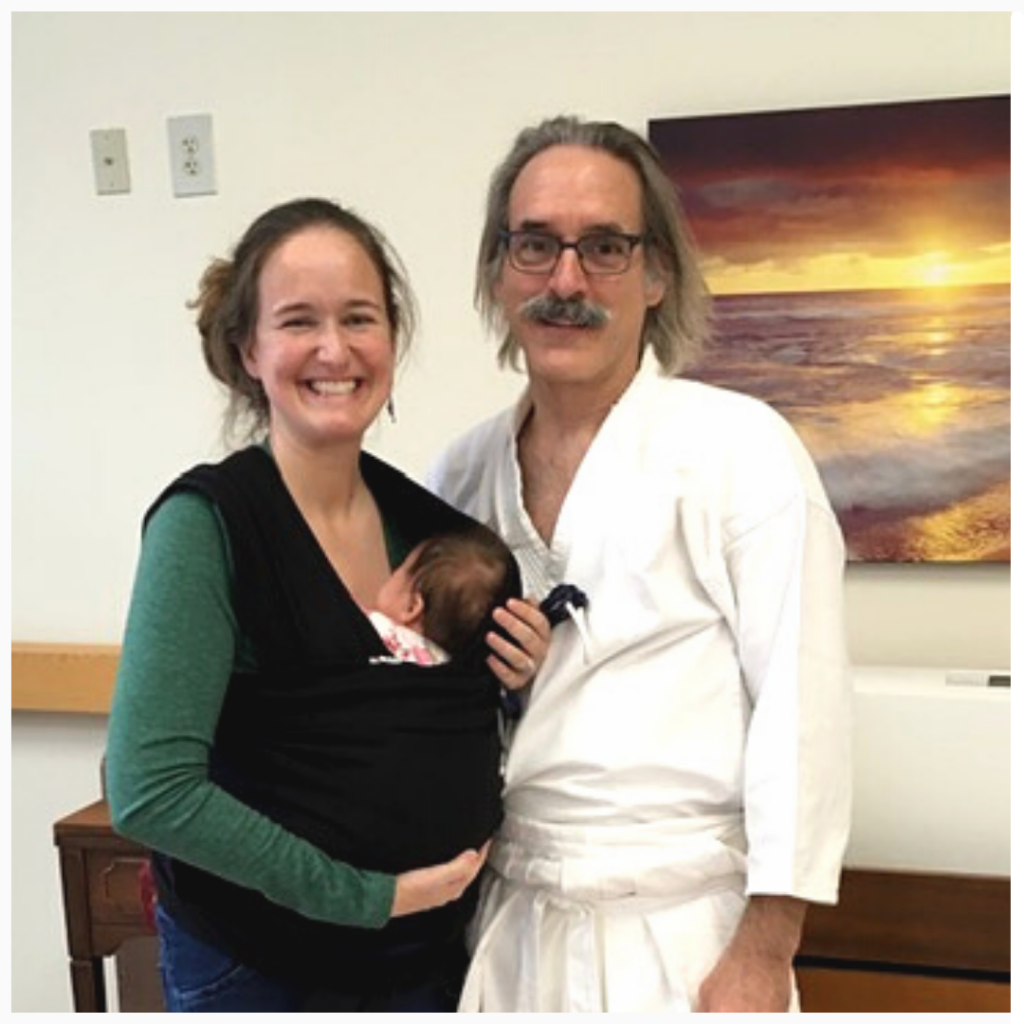
Lee Oderman with his family
Instead of seeing this moment as a setback, I began to see it as a stage of transition away from an old model, the iemoto system of leadership, and toward something more appropriate. The iemoto system is the way traditional Japanese cultural schools, including martial arts schools, handled succession of leadership. When a master died or ended his or her career, a new individual would be chosen to carry on and further the legacy. This system may have worked well in feudal times, but in modern times, it has not shown a lot of success – at least not for martial artists. Think of aikido or the various schools of karate. Succession at these schools has not gone smoothly. When a master has died or given up control, the school has divided and the tradition weakened. As far as I can tell, no organization like ours has succeeded in making this transition without splitting apart and weakening the stream of knowledge.
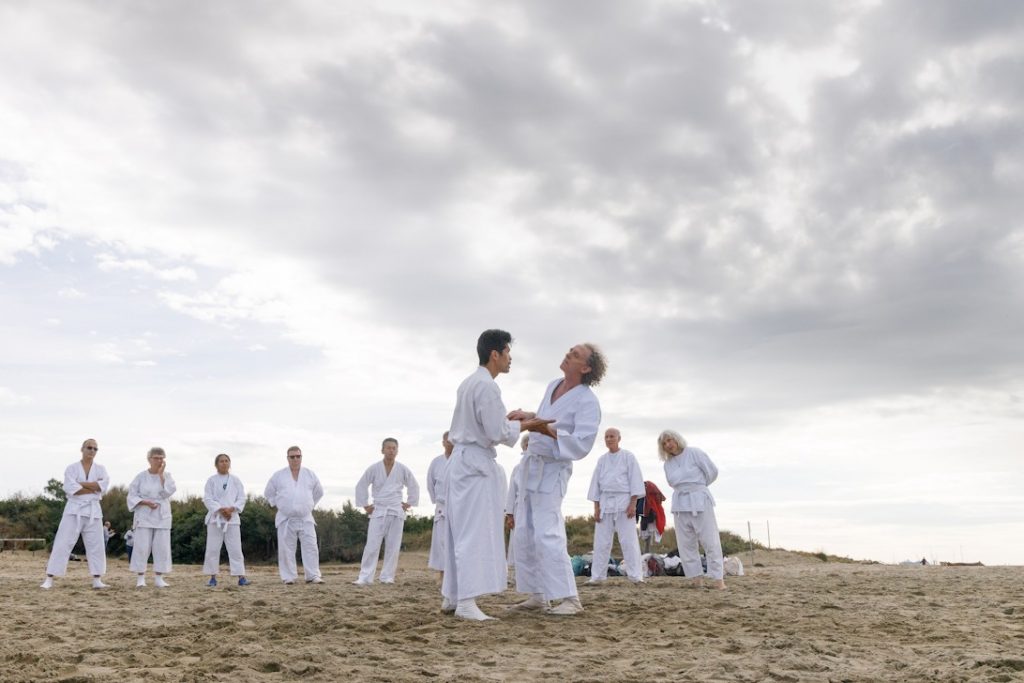
Shin Aoki teaching in Italy
We have been traveling this path of transition away from the old system for some years now, and we are discovering that such change doesn’t come as an event but as a process, and a longer and harder process than we had imagined. One main cause of our difficulty is that within Shintaido we maintain elements of pre-modern Japanese culture. Besides some superficial cultural traces like Japanese clothing and Japanese vocabulary, we have some important, deep and influential traditions, like sempai/kohai relationships and the students’ deep devotion and loyalty to a main teacher, whom we burden with great responsibilities and expectations, even beyond the walls of the dojo.
These ancient Japanese cultural elements rely on conditions that don’t normally exist in Western student-teacher relationships. [They don’t fit comfortably in modern culture anywhere, for that matter, arguably not even in Japan.] Over the last six years or so, we have been trying to knit these traditional Japanese elements into a way of self-organizing that embraces democratic principles. Not surprisingly, we are finding that hard to do: For some things we expect top-down leadership, for some we expect grassroots initiative, for some we expect the doshu to delicately indicate which way to go. It is confusing, sometimes frustrating, and at times conflicting for sempai and kohai alike.
It can be hard going, but for an “avant garde” martial art, that was founded in principles and ideals both Eastern and Western, in which the individual is valued as much as the group, we can neither return to a feudal approach to leadership, nor can we lock down another way of organizing ourselves that doesn’t work or feel relevant to so many in the group. Instead, we can respond to the new conditions and adapt. Just as our “new” martial art evolves with the demands of the times, so can its approach to organization and leadership.
It is unlikely that we will figure all this out on the first try, and maybe not on the second or third. We will have to revise and revise as we go. Like Jim Sterling said when ITEC and the Board met in March to discuss the way forward, we will wipe away the mandala and make a new one.
Without an individual patriarchal/matriarchal leader to tell us what to do, how we make decisions and organize will continue to be a process. The process will require us to voice our points of view to one another. The process will show us our differences, and it is valuable and important that it do so.
We can embrace these moments of opposing views as opportunities to practice our art. Shintaido shows us how to deal with differences and deal with the discomfort, regardless of the structure by which we do it. Shintaido life is not a life without differences with others. A life in Shintaido is rather a life equipped to deal with the differences, even conflicts, and to turn them into opportunities for making things better for everyone. And leading up to this moment, as we have struggled and experienced occasional disagreement, this process of change has brought us closer together, and we are now communicating better than ever.
Though I have come to believe that the IS NPO based in France should be dissolved to make way for the next phase or our organization, I don’t regret the work to create and operate IS as a waste of effort. The organization served a very good purpose: First, it taught us many things we are now finding useful as we refine how to organize ourselves in the future. Second, it held us together all this time. It did so especially through a much greater crisis in 2015 and 2016, when we were actually splitting apart, as we broke with the iemoto system and then struggled to hold together what was left. It was an emotional and divisive time; people were angry with each other and the future of Shintaido itself seemed at risk. But in this crisis we found opportunity to overcome differences. Finding agreement to create a new organization and attempting to make it support a unified curriculum and exam system brought us closer together than we were before.
I believe the next phase will bring us even closer together as we continue to make Shintaido a vital, strong and internationally unified stream of learning that brings joy and light to people well into the future.
See you in keiko and at exams!
Lee Ordeman served on the boards of the ISC and IS from 2008 until this spring. He also helped write the IS bylaws and code of ethics. He started practicing Shintaido 34 years ago in Cambridge, Massachusetts, studying with Michael Thompson and David Franklin. In 1990 he moved to Tokyo, where he became an instructor and studied with Hiroyuki Aoki, Mitsuru Okada, and H.F. Ito during his regular visits to Japan. Lee moved back to the U.S. in 2000 and since then has led classes in Baltimore and Washington, DC. He is also a regular guest instructor at El Haddawi, a school of body movement in Bavaria, Germany.