More Travels Across Time and Space: Revisit Shintaido Farm

More Travels Across Time and Space: Revisit Shintaido Farm

by Connie Borden

Published:
More travels across time and space:
Revisiting the SOA video made in 2008

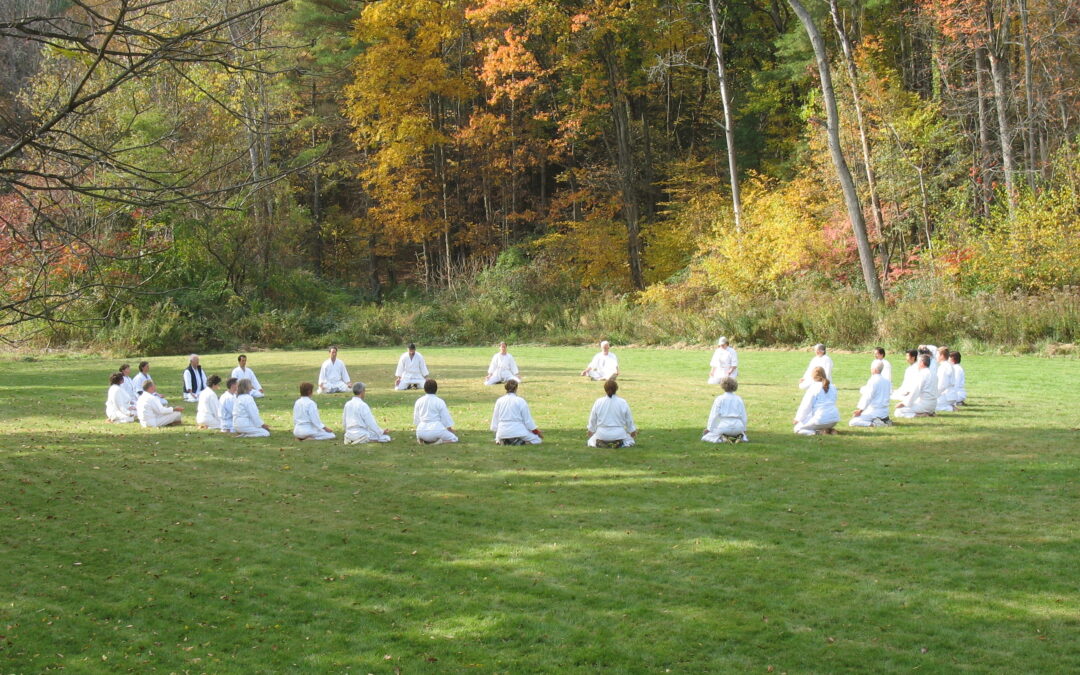
In the 50th Anniversary of the founding of Shintaido of America, we are taking some looks back. Enjoy this video about Shintaido. Link to the 2008 Video

Here is what Stephen Billias wrote at the release of the video:

Greetings! This is to announce that the short Shintaido video shot last October at the Shintaido Northeast Fall Gasshuku is complete 

Many thanks to David Franklin, who edited the video. Also, thanks to Rob Kedoin and Bill Burtis, who provided subcommittee guidance during and after the filming, and to videographer Carlyn Saltman, and to the many people who appeared in the film, including Shin Aoki, Joe Zawielski, Gianni Rossi, Bela Breslau, Anne-Marie Grandtner, Deb Zawielski, Margaret Guay, and others.
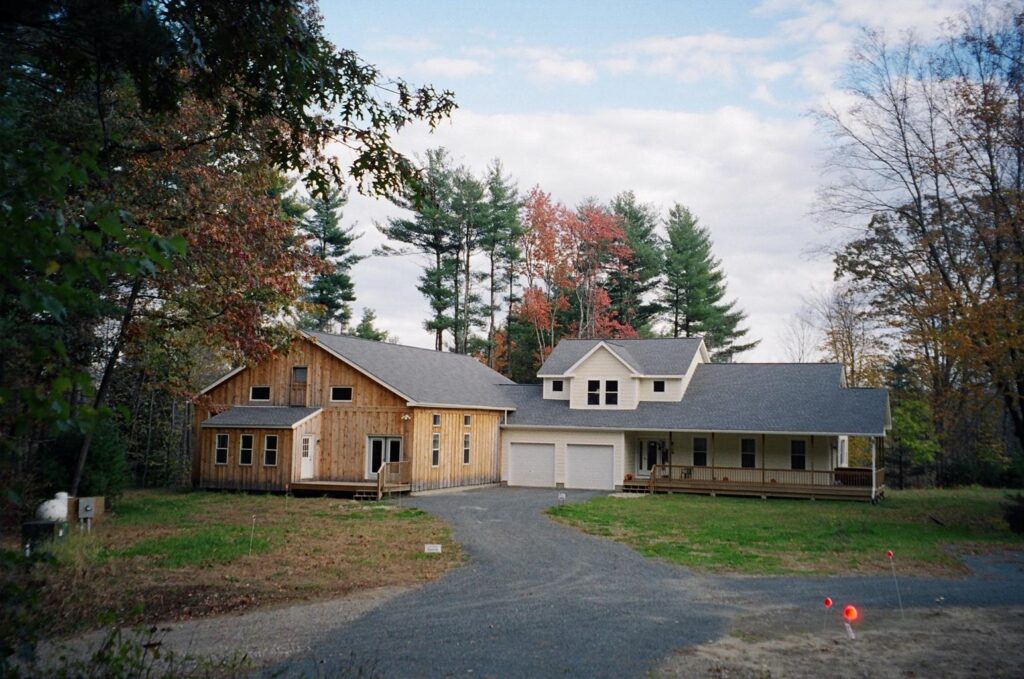
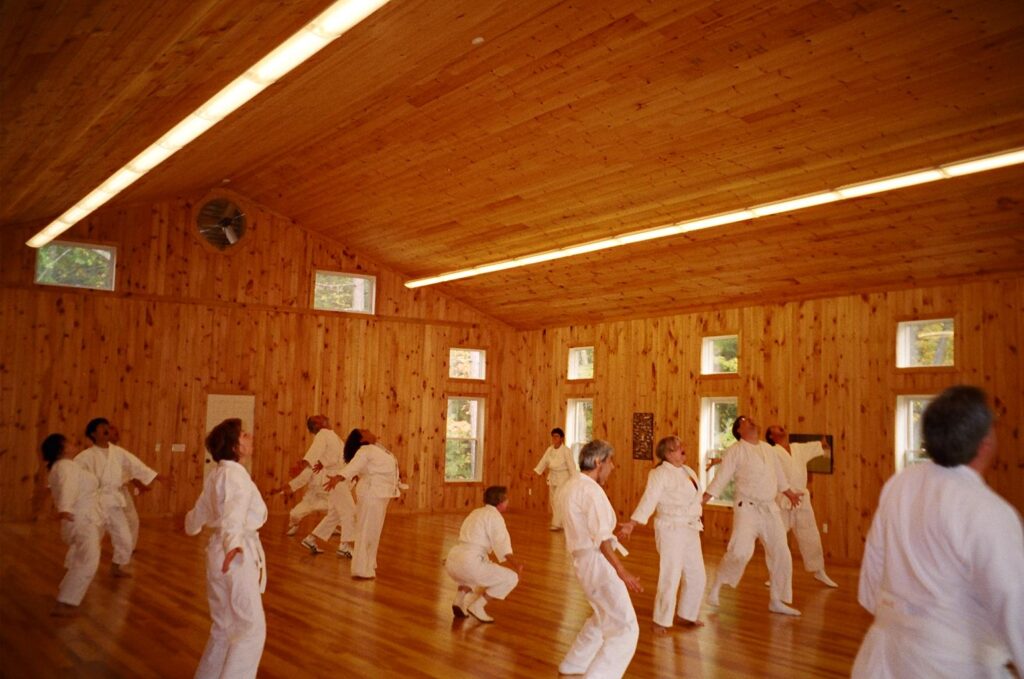
Enjoyed seeing Shintaido in the beauty of Western Massachusetts? The Shintaido Farm and dojo provided the setting for the video. Here is what Stephen wrote about the history of this special place:

In 2006, Bela Breslau and Stephen Billias founded the Shintaido Farm, a center for the practice of Shintaido. Many, many Shintaido events were held there during its ten-year existence. In 2016, Bela and Stephen sold the Shintaido Farm. What has become of it since then? The Shintaido Farm is now known as the Windhorse Hill Retreat Center, housing the Engaged Mindfulness Institute

Bela and Stephen are excited and gratified that the Shintaido Farm has become a lively and active place of spiritual development. All who participated in the Shintaido Farm experience contributed to the feeling that we created, and we can all be thankful that good and important things continue to happen there.

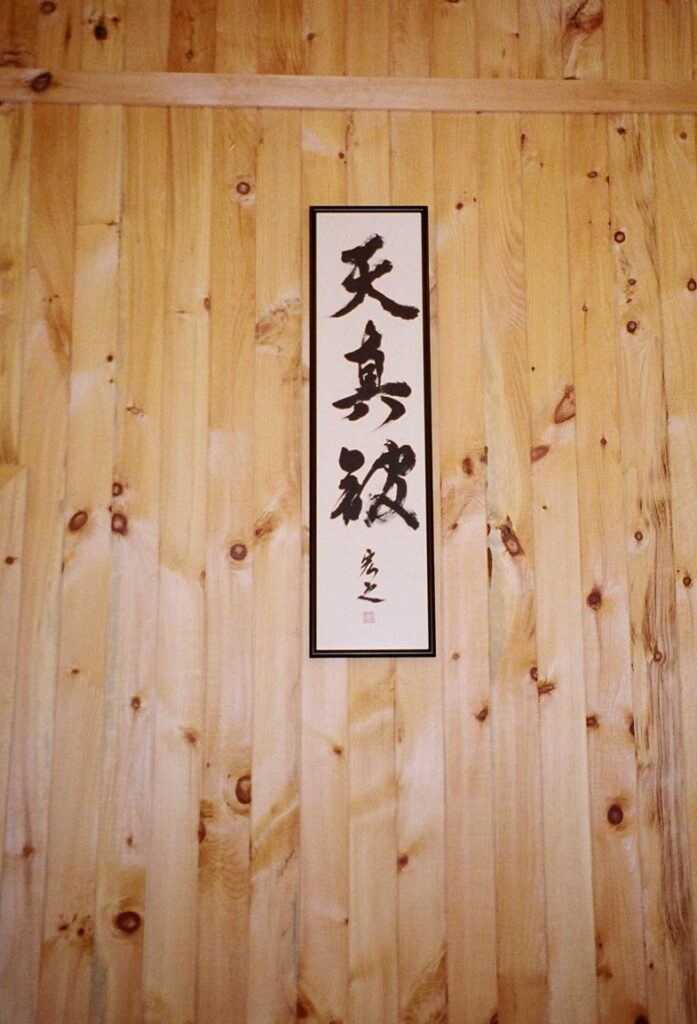
 In June 2006, when Ito came to the Shintaido Farm to teach the Shintaido Sans Frontieres workshop, he gave the dojo a name: Tenshinkan, which means “Heavenly Truth Building”. Later he presented calligraphy by Aoki Sensei of the new name.

Event Aug 2026 : Pacific Shintaido Bohjutsu Workshop and SOA Exams

Published:

Pacific Shintaido Bohjutsu Workshop and Shintaido of America Exams on August 29, 2026 in Golden Gate Park

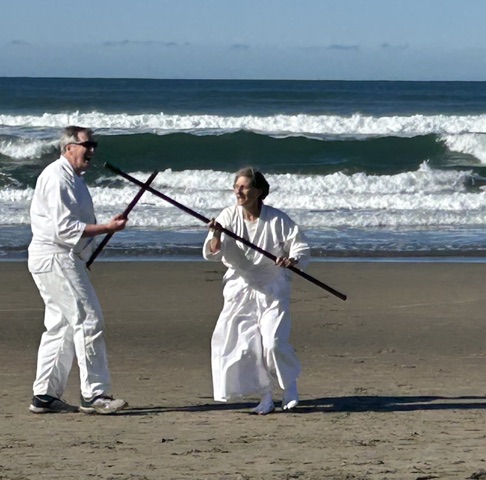
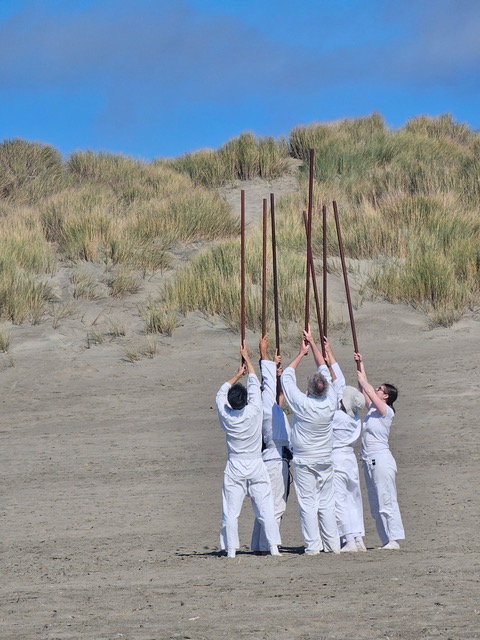
Come receive the latest inspirations of 4th Dan Shintaido Bohjutsu instructors Jennifer Peringer and Rob Gaston in an outdoor Shintaido Bohjutusu workshop entitled “The Art of Japanese Long Staff”.   Jennifer has been exploring kumiboh applications of Hino Kata (a formal sequence named after the element of fire) and Rob has been exploring bohjutsu applications of wakame (a practice inspired by the flowing flexibility of seaweed). The workshops are open to all levels from beginners to advanced. The day’s schedule will include two keikos, SOA examinations, a lunch/potluck, and a demonstration.

When:

Saturday, August 29, 2026 from 9 am – 3:30 pm

Where:

Bunny Meadow, Golden Gate Park. Entrance off Fulton at Arguello Gate (near the Conservatory of Flowers).
There will be limited parking so we suggest you carpool or park on Fulton.
Maps: Enter Here   Maps: Bunny Meadow  

Schedule:

First Keiko from 9:00 to 10:30 am, followed by examinations from 11:00 am – 12:00 pm. Lunch from 12:00 – 1:00 pm and exam results from 1:00 – 1:30 pm. Second Keiko from 1:30 – 3:00 pm. The event will end with a demonstration from 3:00 – 3:30 pm.

Event Cost:

$65 general  and  $60 for SOA members.
Payment in person at the event (cash, check or Venmo).

SOA examinations:

Notify Connie Borden via email at bordensheets@aol.com that you plan to take an examination.

Examinations are offered to 1 kyu in all Shintaido Disciplines.  

Pay online at   Examinations | Shintaido of America

Lunch:

We will have a picnic/potluck mid-day. More information to follow.

Equipment:

Bring your boh, notebook, sunscreen, water bottle, hat, and layers for San Francisco weather.

There will be limited parking so we suggest you carpool or park on Fulton.

Restrooms available.

For more information contact Jennifer Peringer at info@pacshin.shintaido.org or (415) 606-8710

Curious? Watch a free demo at 3:00 pm

GTC Event Sept 2026: Global Taimyo Community (GTC) gathering

GTC Event Sept 2026: Global Taimyo Community (GTC) gathering

Published:

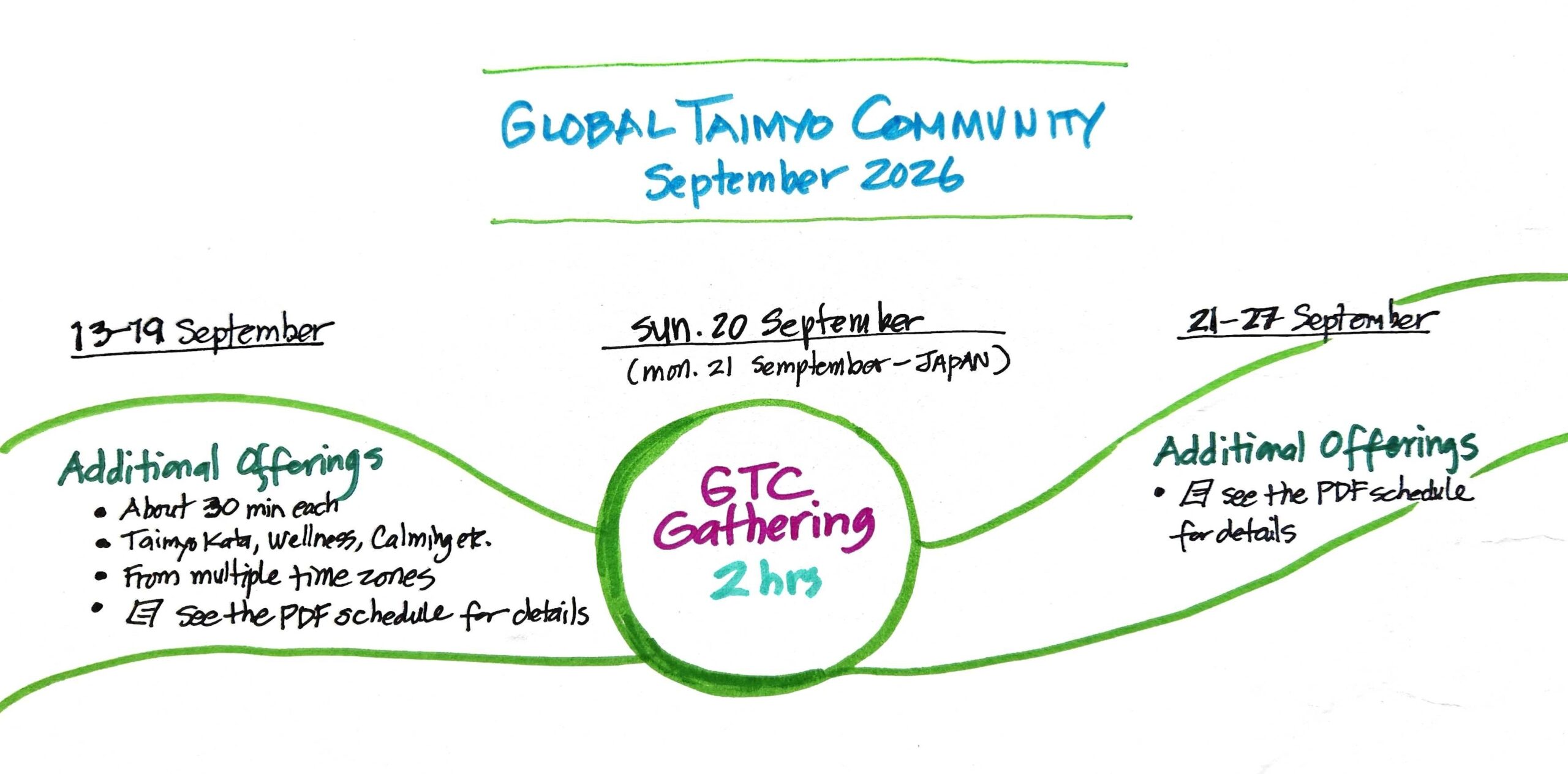
Global Taimyo Community (GTC) will be having their second 2026 ZOOM gathering on
20 Sept., 2026.

From 13 September to 27 September, there will be sessions to practice
Taimyo with our global community via ZOOM.

On 20 September, we gather to practice and talk about our practice of Taimyo in multi-lingual small groups via ZOOM.

Interested? Missed the April meeting? You can still join in September for $35.
Register here: Global Taimyo Community – Registration

(note: If you already registered for the full year, you are all set and do not need to register separately for this session.)

Curious to learn more about GTC? View Videos and read articles here:
Global Taimyo Community

Check the Theme page for the theme of the current year as well as past years to 2020.
Check Readings and Videos for articles and videos for the current and previous gatherings.

Oct ’26 Workshop: Calming Ourselves to Transform Stress & Conflict

Published:
Registration is OPEN for this in-person workshop on October 10 -11, 2026. Join Shintaido instructors Tomi Nagai-Rothe and Lee Seaman for this weekend workshop of 3 keiko and a video premiere presentation and color Shintaido history map, “Roots of Shintaido: Our Cultural Inheritance From Three Masters.” Let’s use the Shintaido in our bodies to heal and transform internal and external stress and conflict in order to positively affect those around us. Re-experience Tenshingoso, Tenshingoso kumite, Wakame-Bamboo and other kumite in a joyful and accessible way. This weekend will be special as we premiere a video of Master Minagawa relating the history and roots of Shintaido. Be the first to receive the color printed history map. Cost:

$100 for the full weekend Oct 10 + 11, 2026 all 4 keiko Sat AM:   9 – 11 AM Sat PM:   1 – 3  PM            Sun AM:  9 – 11 AM (video premiere plus color history map) Sun PM:  1 – 3  PM

$25 per each keiko you are available to attend

Note: Sunday morning will be the video premiere with Shintaido history map.

Please Register Here In-person Location: 426 Day Street, San Francisco, California Questions? Contact Connie at bordensheets@aol.com
Kumite and Conflict

Kumite and Conflict

by Matt Shorten

Published:

I’ll begin by thanking Tomi for starting this conversation with so many wise insights about the interaction of Shintaido and conflict transformation. I believe this issue has a deep foundation in our movement, and still has many  possibilities to develop  a richer exploration and practice. Shintaido is so varied and our curriculum so broad that it lends itself to many purposes and outcomes: health exercise, martial techniques, unity with partners, connection with nature, self-expression, self-reflection, but also conflict resolution.

One of the truly unique features of Shintaido practice is the intent to bring out the best in our kumite partners. While most martial arts are based upon a traditional win/ lose approach, ours is striving, ideally to yield a win/win outcome, the essential guideline for any progressive interpersonal mediation or conflict transformation.

Tomi references her Quaker faith as one source of influence on her work in this field. Me too! Because of our Peace Testimony and tradition of pacifism, Quakers have a reputation for avoiding conflict. But avoidance is not a healthy approach to conflict. As the Theory of Nonviolence informs us, the root causes of issues must be addressed or they will fester. The exemplary models of Rev. Dr. Martin Luther King Jr., Nelson Mandela and Mahatma Gandhi each led dynamic social movements which directly confronted their oppression- actively, personally, and strategically.

Aoki Sensei has said “ The objective of kumite is the study of relationship. The entire attack and receive kumite is sustained by relationship “ .  But we all know that when a conflict is not transformed, and instead descends into violence or abuse or is not ended fairly, the root issue will arise again until justice can prevail.

   So, let’s look at some of the levels of conflict in our practices, and how that reflects itself in relationships. At the most basic level, when faced with a skillful attack, sometimes the best we can do may be just getting out of the way. Okay,  but not great either, right? We’ve avoided harm, yet may have only enabled the attacker. And sometimes we can present a strong block, as when responding to gedan barai.The strike is met with equal force, and the conflict ends in a draw. This might be a better outcome, but the root issue is still not addressed. 

   A skillful sempai might be able to respond to an attack with a strong  block or perhaps avoidance, and also follow with a strong counter. This looks like effective technique from a purely martial sense, but through our lens of managing relationship doesn’t this just escalate the conflict?

   One level up, “ entering their space” with irimi or enticing them into ours with sagarai helps establish connection, a positive beginning to conflict transformation, parallel to listening in a therapeutic setting. Both irimi and sagarai techniques help us avoid the strike , arrive at a safer space, AND remain in a closer, engaged relationship  with the initiator. So, this seems to be a good step in the right direction, literally. 

   At another more advanced level the receiver may choose to turn with the attacker in the direction of their intended path, accompanying them throughout, all the while maintaining close contact. In Cutting the Blue Sky (p.136), Ito Sensei explains how the use of A-point timing can facilitate this. Now perhaps we can see , even feel the issue from their viewpoint and explore that adventure together. Then, ideally the conflict has begun to be transformed in a positive direction, with new perspectives and growth from that developing connection. In Tenshingoso our sensei always emphasize the importance of bringing our partners to their Tenso. The feeling of connection is integral to the concept of life exchange.

I genuinely admire the optimism and idealism of the founders. But in the 21st century, where violence is so sudden and fatal, I’m not sure we have all the techniques for all situations or prospective participants. When I’m facilitating nonviolence workshops in the local medium-security prison or training street workers to intervene with “at-risk” juveniles, these street wise men insist we keep it 100% real. They won’t let me get away with fluffy , weak stuff about being nice or turning the other cheek. They will tune out everything that won’t work in their vulnerable explosive living conditions. In such settings, the bottom line is always how to reduce the threat of violence and de-escalate the level of danger. So, we try to focus on practical strategies to find whatever limited agency we can identify and maximize.

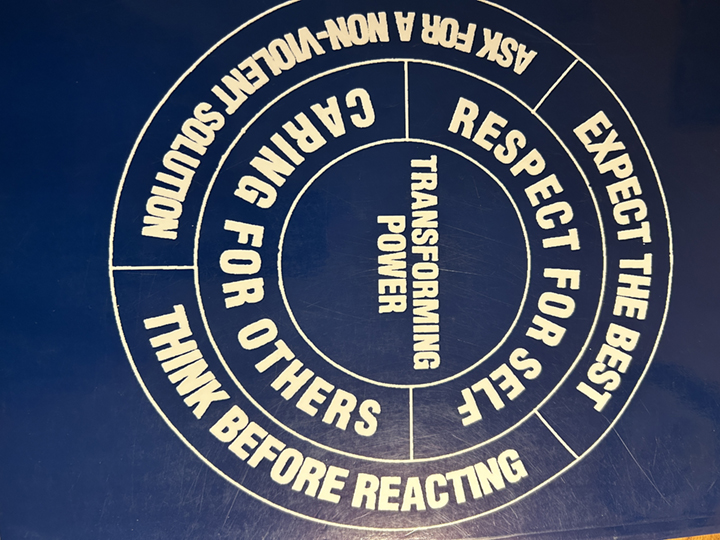
In the Alternatives to Violence Program (AVP) we call that kind of personal agency “Transforming Power”- power with, not power over. But how do we get to a win/win outcome when firm limits are being set by uncaring authorities- correction officers or bureaucratic state agencies? For the website see: https://avpusa.org and https://avp.international.

   In his wonderful new book Aikukan (p. 150) Minagawa Sensei writes that one of the vital aspects of keiko is “ The importance of letting others cut you-self-sacrifice”. In my experience this approach is not tenable with prisoners, DYS youth or those recovering from trauma. They are just too vulnerable to risk that the oncoming strike will be “the cut that heals”. Or in the prison vernacular, “Taking a short is for suckers”.

   One of the group discussion questions in the program is “What is Violence”? Folks usually begin by mentioning fighting and the use of force. After a few minutes, the conversation broadens to other issues like hatred, abuse, addiction, neglect , poverty, and other non-physical stuff. But over the past few years, I’ve come to my own understanding of violence as anything that keeps us from being our best selves or that separates us from each other and the unity of all creation. 

   King always stressed that we must strive to overcome the cause of the injustice, not defeat the people on the other side. In these difficult times with the risks so harsh and the consequences so costly, perhaps the current challenge for all of us to address is the interface between our relationships and our kumite practices, both in and out of the dojo.

   Can we create and hold enough space to reconcile with those whom we have serious differences? What would such kumite look like?