By Connie Borden, the Shintaido Of America Board President
Welcome Jim Sterling and David Palmer as new SOA Board Members! Shintaido of America board has had several vacancies in the past few months, so we thank Jim and David for agreeing to an interim board appointment until June 2025. Board members serve two-year terms and we appreciate that Jim and David would complete vacancies until our next board elections in August 2025.
Meet these two people:
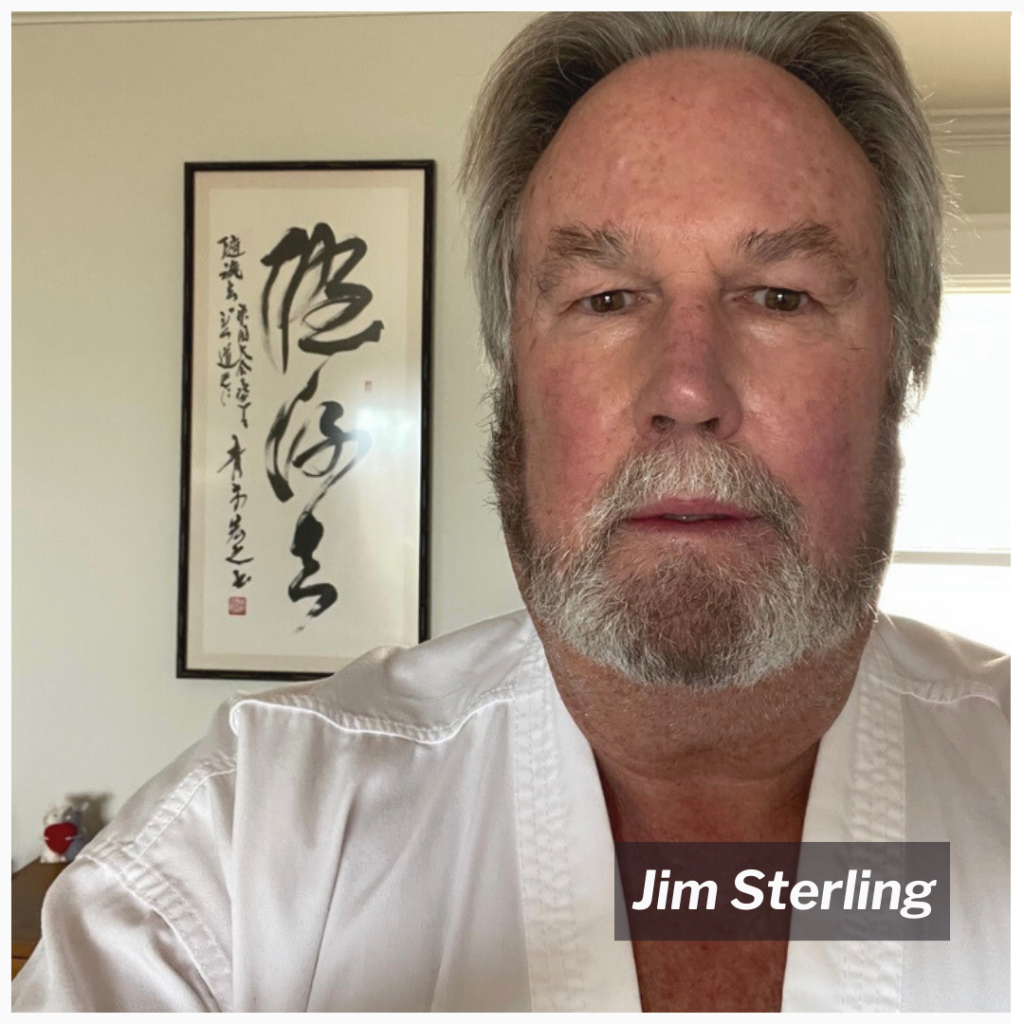
Jim Sterling
Jim Sterling is ranked in Shintaido as General Instructor, Yondan Kenjutsu, Sandan Bojutsu and Nidan Karate. Most recently he has been serving as an officer of SOA as Editor of Body Dialogue and is a member of the SOA National Technical Committee (NTC) and International Technical and Examination Committee (ITEC). Jim has worked as a writer, consultant, and project manager in San Francisco for many years. Since Jim started practicing Shintaido in 1976 he has been a guiding force of the Pacific Shintaido group and interested in advancing Shintaido both through keiko and organizational structures.
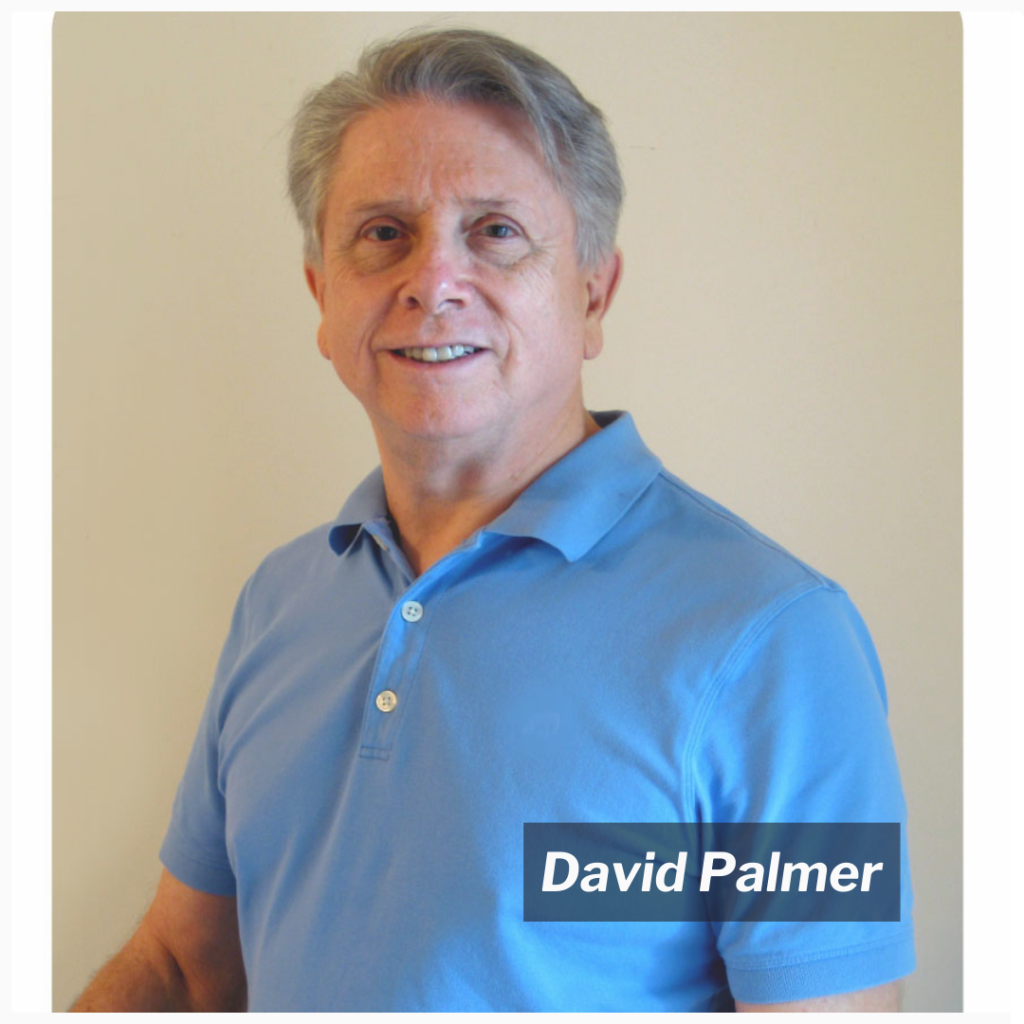
David Palmer has been involved with Shintaido since 1984 when he met H.F. Ito and asked him to critique the first iteration of his seated massage protocol. Both Shintaido and massage are movement forms, one active (you move yourself) and one passive (someone else moves you). The interplay of these two sides of the movement coin have been foundational to his professional and personal life.
Prior to entering the field of massage, David spent ten years as a developer and administrator of social service programs for nonprofit agencies in Chicago and San Francisco. His work included the creation of the first nationwide social service hotline in 1972, the National Runaway Switchboard. While working for the Wieboldt Foundation, in 1974, he staffed the development of the first association of private family foundations in the United States, the Donor’s Forum, a model that has been duplicated in major cities throughout the country.
David began his professional massage career in 1980. Before his teacher, Takashi Nakamura, returned to Japan in 1982, he prepared David to assume operation of The Amma Institute. The Amma Institute was the first school in the United States exclusively devoted to traditional Japanese massage. It was here that David first began experimenting with teaching his graduates to work on clients seated in a chair, rather than lying on a table. In 1989 David stepped down as Director of the school to focus full-time on the development of the Chair Massage industry.
Watch/Rewatch the release party for season 2 of the podcast and the presentation of an award to Michael Thompson on February 5, 2023 here.
Episode 1 of season 2 of the Shintaido of America podcast will be published on February 6, 2023. Find the podcast on most of the major podcast applications, our YouTube channel or listen directly from our website here. Links are to be provided in due time.
This Shintaido of America podcast series was produced by a group of volunteers. Technical support funding was generously provided through the Joe Zawielski Memorial Fund and Shintaido of America membership dues.
If you are not already a member, please consider a Shintaido of Americamembership today, or help support us by making a tax-deductible donation to this 501(c)(3) organization.
In Season Two of the podcast, we will read from a book Untying Knots: A Shintaido Chronicle by co-founder of Shintaido of America, Michael Thompson. By reading from this book, we wish to celebrate Michael´s contribution to the Shintaido community and his 85th birthday.
Each month will have a reading from the book and later in the month will be followed by an interview. David Franklin will talk about Shintaido-related topics with various people who are familiar with our practice. Among our guests are visual artists Mario Uribe, rock musician Amanda Palmer and many others.
Episode 1: Untying Knots chapter 1 and an interview with artist Mario Uribe
Section of the Book: Chapter One Interview with visual artist Mario Uribe
Read More About Episode One
Episode 1:
In the first episode of Season Two, you’ll hear a reading from Untying Knots by master Shintaido instructor Michael Thompson and an interview with artist and Shintaido practitioner Mario Uribe. While Micheal sets the scene for his first encounter with Shintaido in France in the early 1970s, Mario discusses his education as an artist/activist and his interest in tea ceremony – also set in the early 70s.
In the first episode of Season Two, you’ll hear a reading from Untying Knots by master Shintaido instructor Michael Thompson.
Michael Thompson is one of only four master instructors of Shintaido in the world today, and significantly, the only master instructor who had no background in martial arts prior to starting to practice. He studied Shintaido in Japan with the founder of the discipline, Hiroyuki Aoki, but his story begins in France shortly before his encounter with this unique movement discipline.
Mario Uribe is an artist who has explored a wide range of media, including animation, painting, performance art, video, printmaking, drawing, murals, sculpture, Asian calligraphy, Japanese tea ceremony, illustration, and graphic design. His paintings, prints, and drawings are in both museums and private collections, and his mural designs for public spaces have won international competitions.
Episode 2: Untying Knots and an interview with orchestral conductor Kent NaganoSection of the Book:
Section of the Book: Chapter Two Interview with orchestral conductor Kent Nagano
Read More About Episode Two
Episode 2
Episode Two Season Two includes an interview with renowned conductor Kent Nagano, who discusses the leadership skills needed to conduct an orchestra and their application to other aspects of life. He also describes the time he invited master Shintaido instructor H.F. to lead his orchestra in a Shintaido practice during their rehearsal in the concert hall.
We’ll also hear Chapter Two of Untying Knots: A Shintaido Chronicle, master Shintaido instructor Michael Thompson’s autobiographical essay. In this episode, Michael returns to France with the intention of throwing himself into “…a hedonistic bohemian lifestyle, succumbing to decadence if need be.” His plans are thwarted, however, and he ends up quitting both alcohol and cigarettes – without suffering a religious conversion.
Episode 3: Chapters 3 and 4 of Untying Knots: a Shintaido Chronicle
Section of the Book: Chapter 3 and 4
Read More About Episode Three
Episode 3
All of Marc Bassis’ students had been affiliated with the French branch of Shotokai karate and when he left to join Shintaido, they had to make a choice. Most of them were not much interested in artistic or philosophical explorations, so most parted ways with Marc when he decided to follow Aoki. The latter’s creation, Shintaido, no longer looked much like a martial art and featured bizarre and unrecognizable forms that seemed of little practical use. As a result, only a handful of Marc’s students decided to follow him, influenced mostly by his strong and charismatic personality, because they really had no more idea of what Shintaido was about than I did.
Episode 4: Interview with Shintaido instructor and interactive media developer Brad Larson
Interview
Read More About Episode Four
Episode 4
David Franklin interviews Shintaido instructor and interactive media developer Brad Larson. Brad has worked at the M.I.T. Media Lab as well as the Boston Children’s Museum, and has worked on exhibitions at the Smithsonian’s Zoo and the American Museum of Natural History, among others. You’ll hear about his first impressions of Shintaido practice when he was a graduate student at Harvard’s School of Education, and we talk about how he sees connections between Shintaido, ecstatic dance, haiku poetry, running through the woods carrying a stick, and interactive media design for museums.
Episode 5: Philosophers build edifices they can’t inhabit
Section of the Book: Chapters 5 and 6 of Untying Knots: a Shintaido Chronicle
Read More About Episode Five
Episode 5
Episode 5 of Season 2 features Chapters 5 and 6 of Untying Knots: a Shintaido Chronicle, master Shintaido instructor Michael Thompson’s autobiographical essay. In Chapter 5, he describes his first meeting with Hiroyuki Aoki, the founder of this unique movement art, in France – and in Chapter 6, Micheal travels to Japan for the first time.
Episode 6: “His diaphragm became a red-hot glowing vault”
Section of the Book: chapters 7 and 8 of Untying Knots: A Shintaido Chronicle
Read More About Episode Six
Episode 6
In Episode 6 you’ll hear chapters 7 and 8 of Michael Thompson’s autobiography, Untying Knots. In Chapter 7 Michael describes the car accident that dramatically ended his study with his first Shintaido teacher Marc Bassis in France — and in Chapter 8, we’ll hear about the unexpected personality conflicts that occurred when a group of Japanese Shintaidoists visited a Christian commune in Massachusetts on their way to California in the 1970s.
Episode 7: “People in motion – to San Francisco”
Section of the Book: Chapter 9 and Chapter 10
Read More About Episode Seven
Episode 7
In Chapter 9 of his autobiography Untying Knots, Michael Thompson describes how he first introduced Shintaido in the US at Hobart and William Smith Colleges in Geneva, New York, but then returned to Japan to deepen his practice. In Chapter 10, Michael and Haruyoshi Ito formally establish Shintaido in California and together begin to confront the challenges posed by profound cultural differences in the context of transmitting somatic teachings.
Episode 8: “David Palmer, the ‘father’ of on-site seated massage”
Interview with David Palmer
Read More About Episode Eight
Episode 8
We interview David Palmer, known as “the father of seated massage” and founder of the TouchPro organization. After a stint as director of the Amma Institute, the first school in the U.S.A. devoted to this traditional style of Japanese massage, David started developing techniques for massage with clients seated in a chair rather than lying on a table, as well as inventing the specialized chair that supports the client’s arms and head. Today you can see this type of massage being offered in airports, hair salons, and in offices worldwide. He headed up the team that brought the first on-site massage to Apple Computer in 1983, and around that time he also started studying Shintaido in the Bay Area.
Episode 9: Untying Knots – an American Samurai and his French Disciples
Section of the Book: Chapters 11 and 12
Read More About Episode Nine
Episode 9
Have you ever lost your temper, gone into a rage, and through that discovered something about yourself that might bring you peace? Michael Thompson’s autobiography, Untying Knots, is full of such episodes, rendered with quiet dry wit and honesty. In this episode, Shintaido instructor David Franklin reads Chapters 11 and 12.
Episode 10: Amanda Palmer: Former Living Statue, Musician, Crowdfunding Guru
Interview
Read More About Episode Ten
Episode 10
Musician Amanda Palmer joins us for Episode 10 of the 2nd season of the podcast. With Brian Viglione she forms one half of the punk cabaret duo the Dresden Dolls, while in her solo career she is not only a songwriter, ukulele enthusiast, feminist, abortion rights activist, TED Talks superstar, and patron saint to every crowdfunded artist; she’s also been a New York Times best-selling author and a busker, earning her keep performing on streets from Boston to Berlin as a living statue called “The Eight-Foot Bride.” We talked about singing and vocalizing and what it can do to our brains, our lives, and our communities.
Episode 11: Untying Knots – Killing Me Softly
Section of the Book: Chapters 13 – 16
Read More About Episode Eleven
Episode 11:
Have you ever been in a safe, but nonetheless terrifying situation, comforting a friend who is even more neurotic and terrified than you are, only to find that by going through this together, you form a lasting bond with each other?
Michael Thompson’s autobiography, Untying Knots, is full of such episodes of existential unfolding, some disturbing, some light-hearted, all rendered with quiet wit and honesty. In this episode, Shintaido instructor David Franklin reads Chapters 13 through 16 (in the original book Section II, chapter 6 and Section III, chapters 1 through 3), entitled “I left My Heart…”, “The Outsiders,” “Killing Me Softly,” and “Trouble in Dodge City,” respectively.
Episode 12: Connie Borden on Nursing, Shintaido, and Caring for the Dying
Interviewwith Connie Borden
Read More About Episode Twelve
Episode 12
David interviews Connie Borden, Shintaido instructor and advance practice nurse with 28 years’ experience in hospice and palliative care. Connie has led a Bay Area nonprofit hospice as Executive Director and worked on inpatient services as a Palliative Consultant. She has presented Cycle of Life, the use of movement for life review at the first and second Global Conferences for End of Life Care. She and H.F. Ito presented Shintaido for Caregivers for 10 years at San Francisco and Bay Area hospices.
Episode 13: Michael Thompson’s Untying Knots: a Shintaido Chronicle, Chapters 17 – 20
Section of the Book: Chapter 17 – 20
Read More About Episode Thirteen
Episode 13
“In Japan, there were many models to study from. During the short time I practiced with him, I had been impressed with the younger Egami’s style and presence. His was the most artistic approach to teaching I had yet encountered and it struck a chord in me. But the most common and striking feature of the Japanese teaching style was its depth; the instructors somehow managed to bring you through the surface and into the Earth, perhaps because of their intimate connection to their native soil.”
Michael Thompson’s autobiography, Untying Knots, is full of such episodes of existential unfolding, some disturbing, some light-hearted, all rendered with quiet wit and honesty. In this episode, Shintaido instructor David Franklin reads Chapters 17 through 20 (in the original book Section III, chapters 4 through 7), entitled “The Queen of Tanzawa”, “Shoko,” “Aikukan — Philosophical Gleanings,” and “Gorei,” respectively.
Episode 14: Untying Knots, a Shintaido Chronicle: Last Tango in Tokyo
Section of the Book: Chapters 21 – 24
Read More About Episode Fourteen
Episode 14
“It was a lovely May day, and we sat in the grass on the practice field near the Tama river in Tokyo,” writes Michael Thompson. “Aoki suggested some meditation and remembering techniques which might enable me to communicate directly with my subconscious. He went on to talk about how everyone is marked by one or more childhood experiences; they might be as seemingly trivial as being left alone at some particularly vulnerable time, but they stay with us all out lives. He said that when he was in college he felt disgust for humanity because he found people so simple and predictable, but later he felt more compassion and was now devoting himself to finding ways to help others de-hypnotize or de-program themselves in order to unlearn old habits, to grow, and to define their own lives.”
Michael Thompson’s autobiography, Untying Knots, is full of such episodes of existential unfolding, some unsettling, some light-hearted, all rendered with quiet wit and honesty. In this episode, Shintaido instructor David Franklin reads Chapters 21 through 24 (in the original book Section III, chapters 8 through 11), entitled “Tohoku Travels”, “The Bigger the Mountain, the Bigger the Shadow,” “Time and Tide,” and “Last Eiko in Tokyo” respectively.
Greetings from the board of Shintaido of America! It’s time to renew your membership. This past year has seen many changes for our organization. The most important were the loss of our beloved co-founder, Ito-sensei on 30 December 2023, and the sad passing of our Treasurer Brad Larson in November 2023.
As we move forward in a world filled with an urgent need for peace, we rededicate ourselves to our practice of Shintaido.
The annual membership subscription of $60 has not changed for several years, and it now offers more benefits than ever.
Alternately, a check for $60 payable to SOA can be mailed to: Shintaido of America 426 Day Street SF, CA 94131
We strive to support our community of practitioners by providing members with:
Full access to the Shintaido of America Website. Check it out! New things are happening all the time! We now feature a media page that includes all our newsletter, YouTube and Podcast links.
Body Dialogue is now completely digital and appears in real-time as postings on the website.
Access to episodes of the Shintaido of America podcast. We are now in the third season of the Shintaido Podcast! The podcast is available on all the usual platforms such as Spotify, Apple Podcasts, Google Podcasts and many others. On the podcast, producer and host General Instructor David Franklin hosts interviews on Shintaido-related topics with various people around the globe.
General Instructor and SOA Board President Connie Borden hosts a monthly podcast discussion group on the last Tuesday of each month. Please contact Connie Borden at president@shintaido.org if you’d like to join in!
Several senior instructors – from the UK and the US – hold regular classes on Zoom which members can attend. A full listing of these is available on the SOA website.
Access to the most up-to-date changes to the curriculum, which continues to develop, especially the Kenjutsu curriculum.
Support to our instructors and the National Technical Committee.
Communication with International Shintaido Technical and Exam Committee (ITEC)
Leadership by SOA and ESC as the organizing and sponsoring organizations for international activities.
SOA examinations and SOA Diplomas.
Access to grants for travel and education scholarships for Shintaido events worldwide. British Shintaido is celebrating its 50th anniversary this year and hosting an international gasshuku in August in England. Grants are available from SOA to help with the cost of attendance at this significant event. Please contact Connie for details.
For ALL of the benefits listed above, your annual membership works out to only $5 a month, or 16 cents a day!
We sincerely hope you will consider renewing your membership, and join us as SOA moves into the future!
Connie Borden, Chair SOA Board of Directors Robert Gaston, Chair SOA NTC Sandra Bengtsson, Treasurer pro tem Nancy Billias, Membership David Franklin, Podcast Michael Thompson, co-founder
I arrived at the Petersham Town Hall with a heavy feeling the size of a grapefruit in my solar plexus. It was mostly grief with an edge of an almost stubborn need to honor the mounting deaths in our local and larger Shintaido community. I was a little afraid we wouldn’t be able to find the courage among us to fully acknowledge the impact of the missing people in our circle and the tragedy that we’ve all watched recently unfold.
When Joe Zawielski sensei died in the Summer of 2018, it was a huge loss for Shintaido Northeast (SNE) and for his students, among many others. To this day, my eyes well up every time we do bokutoh practice. I can see Joe swerving around his koshi as he gently cuts the space around him. There have been several keiko when I have felt his presence in the circle, but it’s challenged me to know what exactly to do with that feeling. Whether to acknowledge it out loud or not, and I wonder whether anyone else is noticing it too.
On November 2, 2023, we tragically lost Brad Larsen. Since then, I have spent hours on the phone, texting and talking to SNE members; trying to wrap our minds around what happened to him, and how to find peace with the sudden empty “Brad-shaped hole” that was left. For a long while, we’d named this persistent unsettled vigilance when we were checking the news daily for any indication of how he’d passed. It was difficult to find acceptance when there were so many questions surrounding why and how he’d died.
Just weeks before Kangeiko, we received the answers we’d been seeking, and they were devastating. But, it did mean we could finally move on to the task of embracing the grief that had in some ways been on hold. February 10-11, 2024, would be the first retreat where a large group of us would gather to practice since his murder.
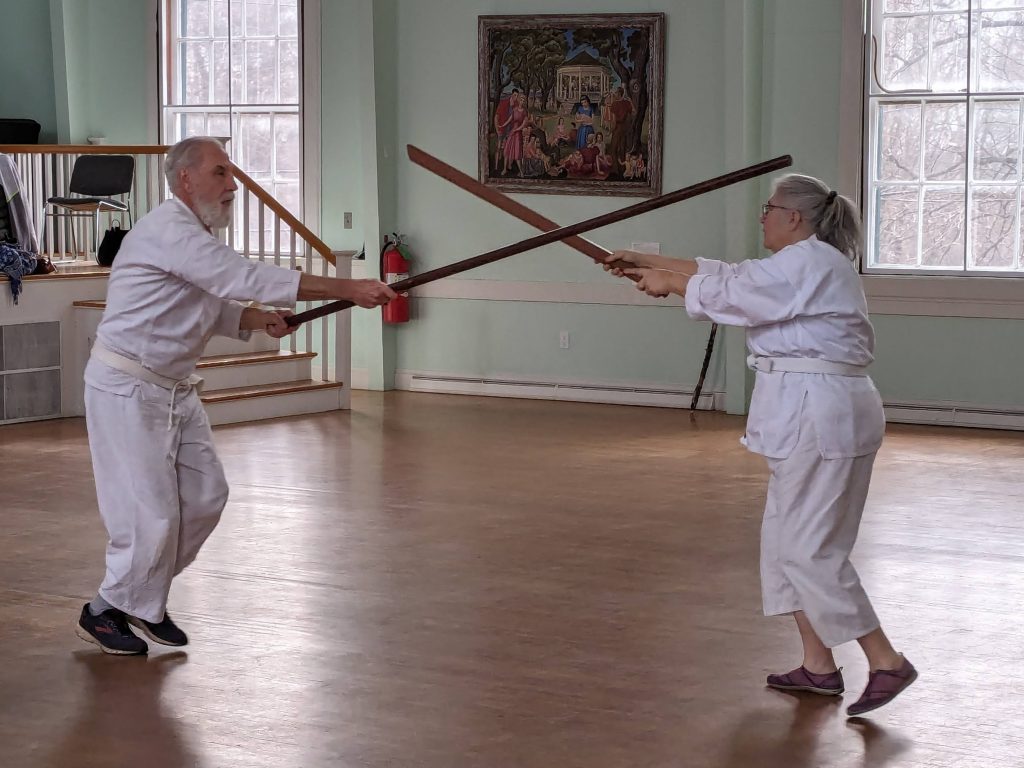
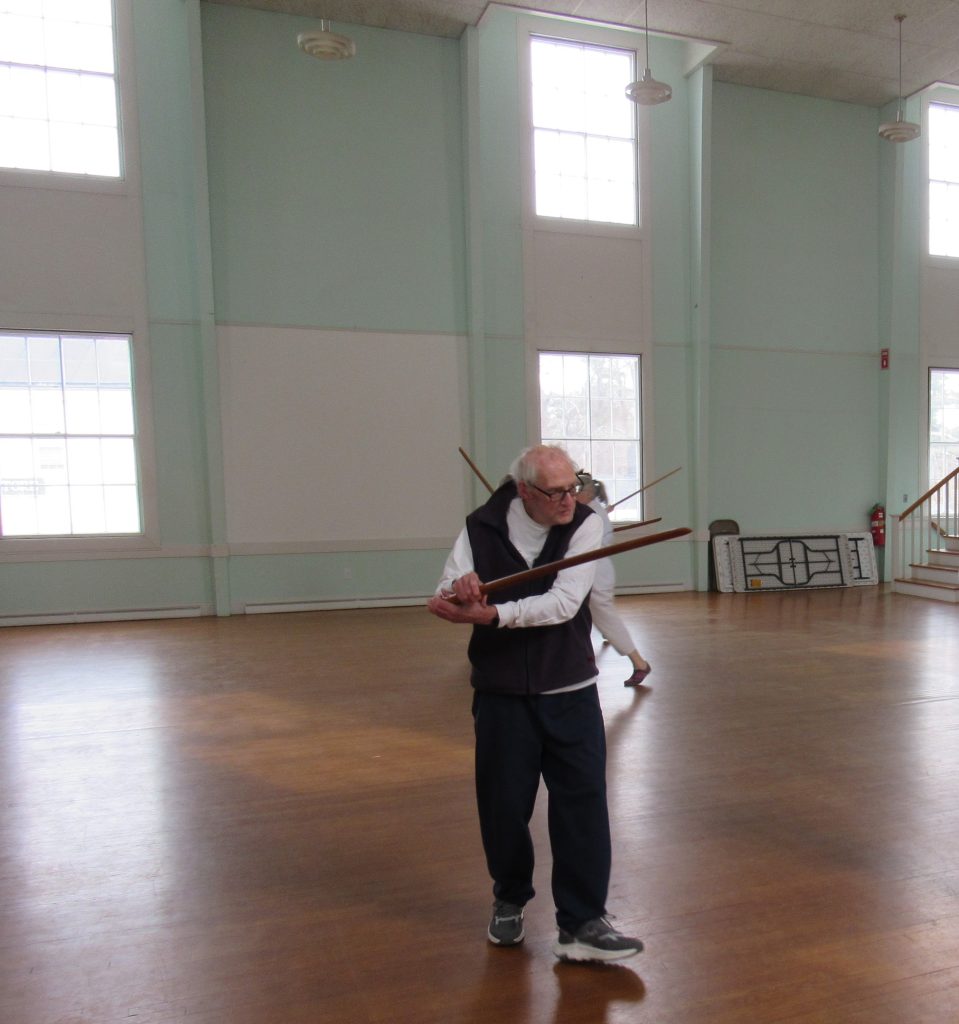
Rob Kedoin sensei led our opening keiko, and generously helped warm up our wintered and weathered bodies, preparing us for the keikos to come. He reminded us that the sword’s movement comes from the hara and introduced the idea that the end of our bokutoh was like a radiating beam of light that made it possible for our message to be felt by our partner.
Margaret Guay sensei, who was also Director of Instruction, stepped in last minute to lead our second keiko in the afternoon. With no advanced planning, she masterfully modeled how to say yes to the unknown and trust that it will all be as it needs to be. Without a single word said, we riffed on one another to warm the group up. Although I did not have a personal relationship with Ito sensei, I had really enjoyed reading the commemorative posts and especially his rendition of Neurologic Music Therapist’s Allison Davies song “Every little cell in my body is happy.” We marched and skipped around the dojo singing this song over and over.
The Keiko progressed to bokutoh kumite trying to catch our partner’s timing without being able to see them coming. I noticed it was nearly impossible to catch the timing of a daijodan cut when my partner was shining their sunbeam from the start. Reading you loud and clear already!
Also, we did some profound investigating around tenshingoso kumite, where I had some new insights. I was experiencing the end of “Ohh” as either being a gift offered to the world or doing the offering of the gift. Like, ‘behold this amazing being!’ And feeling myself as a gift when following my partner’s “Ohh.” This was the keiko where I entered full on cosmologic consciousness.
We ran eiko dai around and around the Petersham Town Hall for what seemed like forever. For me, it was very clear we were doing this together. Not little islands of trying, but a community finding it’s voice, and the courage to keep going.
That evening we went to Matt Shorten’s beautiful rural homestead to share a meal. Many stories, hilarious, inspiring, and questionable, were told about the early days of Shintaido. People I have never met were invoked and one story led to another. It was a real trip down memory lane, especially for those at the table who have been around the longest.
It felt as though all those people, and all of us, and all of you represent a cluster of glowing threads that make up the Shintaido community. People who have experienced Shintaido’s embodied transcendence. And we all speak this language that allows us to connect without talking, more deeply than words could ever aspire to. Through the tiny electro-kinetic sun beams we cultivate within and between our bodies and then blast off into the universe as a message back to itself.
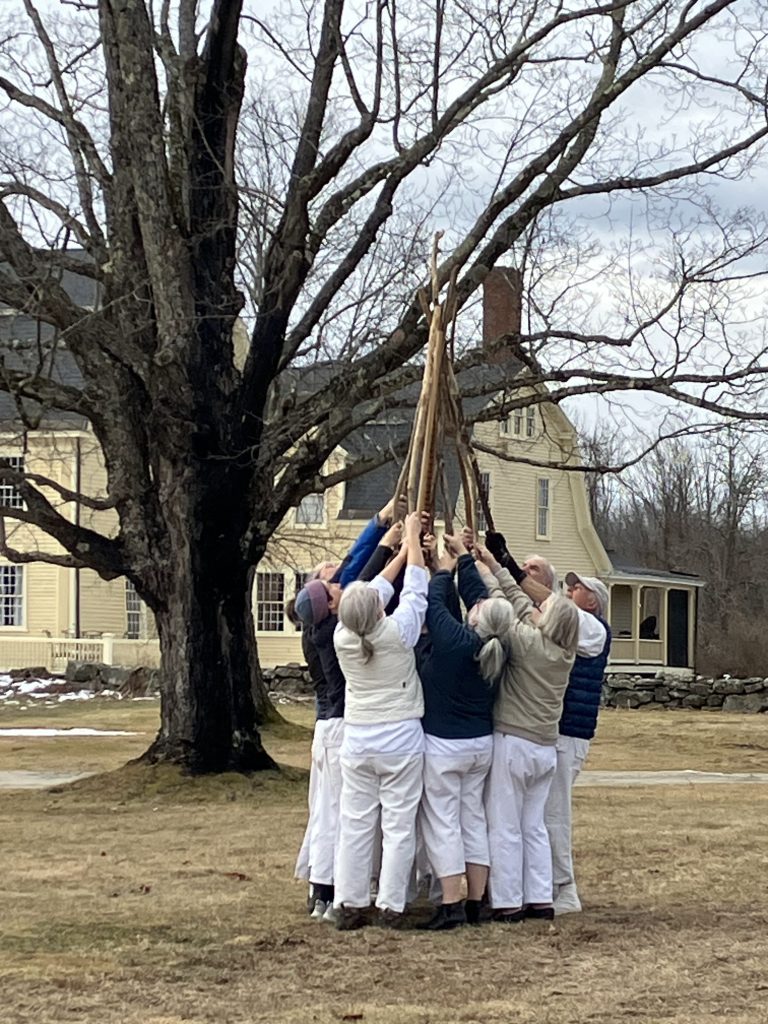
Stephen Billias sensei was the steadied goreisha we needed for our third and final keiko. We did a series of toitsukihon exercises with the boh and bokutoh which were a welcome grounding and centering after the previous day’s big opening. We did an experimental kumite with both bohs and bokutohs. We’d been instructed to bring a “Brad” stick for the weekend and, after introducing them to one another, we went out into the winter air, next to a big old tree and pointed our pure and glowing intentions up to the heavens. It was the first time it felt like we could directly bring Brad into our awareness as a group. And, I felt like Brad could sense our message. I heard the words “there are my people.”
I sometimes feel grief that, if I’m lucky and live a long life, I may very well be the last Shintaidoist in the Northeast someday. Michael Thompson sensei said something to me this weekend that brought me tremendous relief. He said “everything in a grain of sand…it’s all there.” He was referring to William Blake’s poem “Auguries of Innocence” that begins:
“To see a World in a Grain of Sand And a Heaven in a Wild Flower Hold Infinity in the palm of your hand And Eternity in an hour.”
The universe will remember and accommodate all the exploration we’ve done in Shintaido. Nothing gets erased at death. Every action and every person leaves an imprint. As Shintaidoist, we have practices that give us tangible ways to deeply connect with one another. I think that’s one of Shintaido’s greatest gifts.