Across Time and Space: In Memoriam

Across Time and Space: In Memoriam

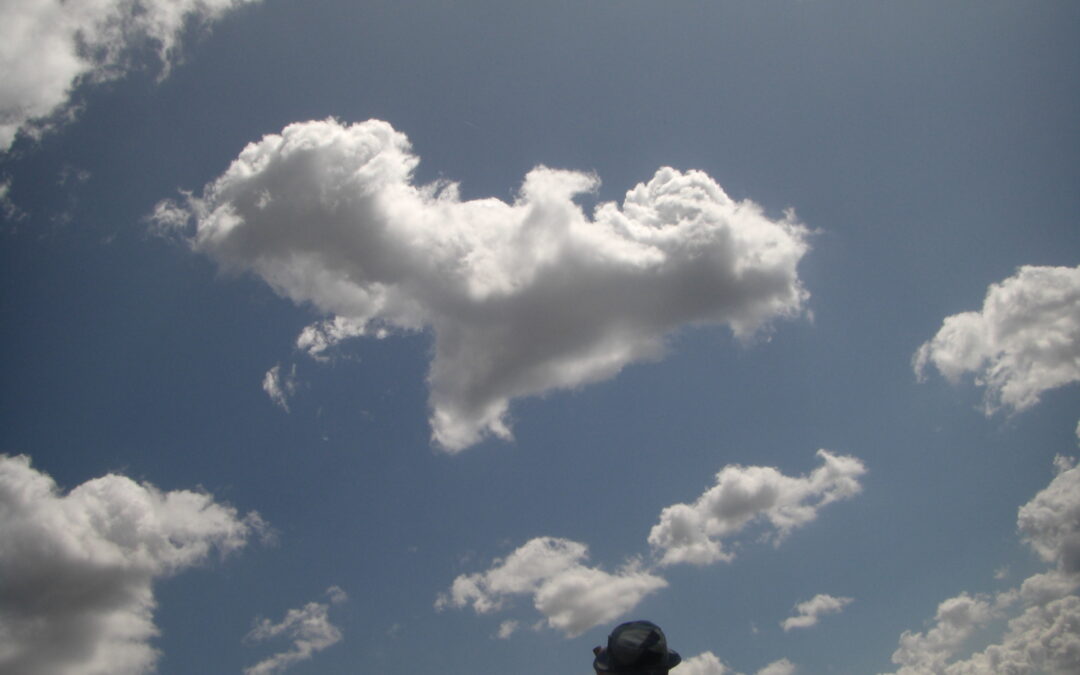
Image of Ito Sensei “looking forward,” as he named the image when sharing it.

by Connie Borden

Published:

As we celebrate our 50th Anniversary of the founding of Shintaido of America, it is important to pause in memoriam for those who died over these years. Each contributed to Shintaido. We still practice across time and space in Aikukan, a space of love, with these unique and special people.

(If you can’t find a linked article, please note that most should open in a new tab.)

      • Barbara Barnard, Christophe Bernard, Christina G. Cross
      • James Cumming, Juliette Farkouh, Anne-Marie Grandtner
      • H.F. Ito, Brad Larson, Bill Peterson
      • John Seaman, Russ Staples, Joe Zawielski
      • Marielle Bernier, Sarah Prince

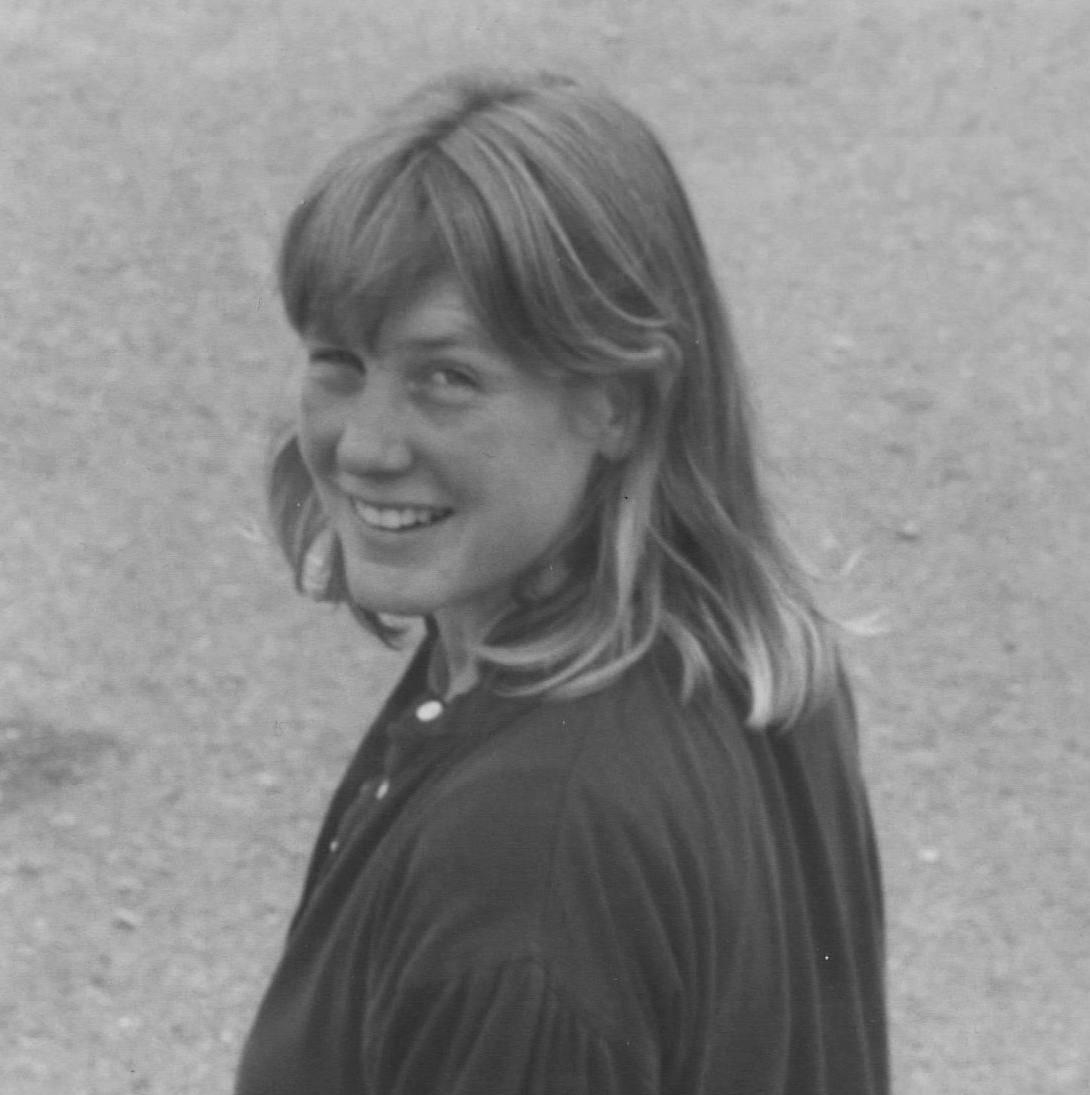
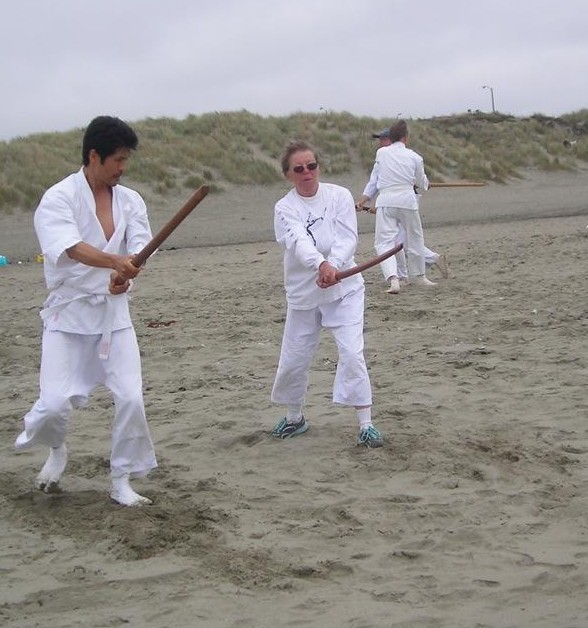
Barbara Barnard – Barbara was introduced to Shintaido by her cousin Pam Olton. In this article in 2015, BD36_May2015, Barbara reflects on her practice of Shintaido.  Barbara died in early 2016, here are people’s memories of Barbara: BD38_May2016.

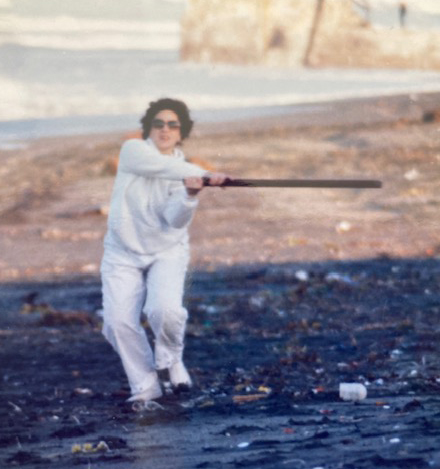
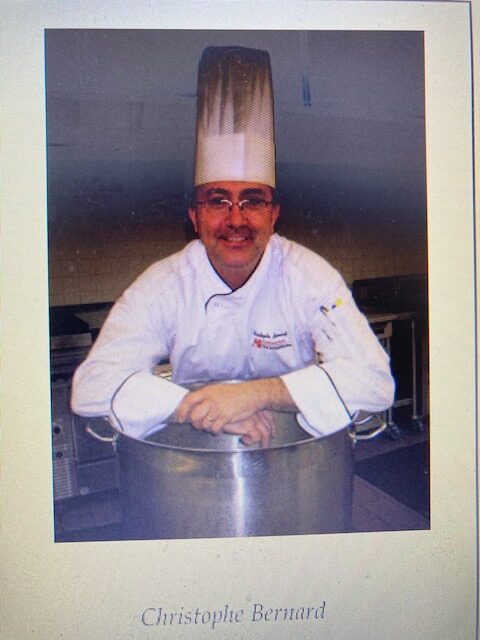
Christophe Bernard – Many memories are shared about Christophe in this 2013 edition of body dialogue – of his being an excellent French chief, of his ease at kumite, and the joy he brought others. He achieved ranks of Shintaido Graduate (1991), and 8 kyu in both Karate and Bojutsu. BD33_Sep2013

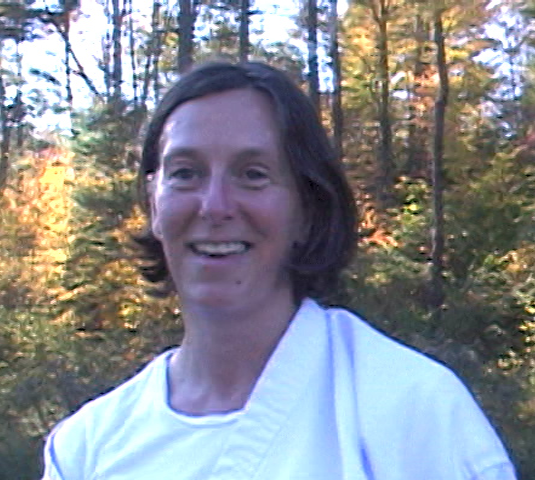
Christina G. Cross – died June 2021, She was active in the SF Bay Area in the1980s, she became a licensed acupuncturist in 1985. Christina was awarded Provisional Instructor (now call Graduate) in 1986 at Shintaido Ten. She also held a 5 kyu rank, awarded in 1985, in Bojutsu.
Barbara Barnard

Christophe Bernard

Christina G. Cross

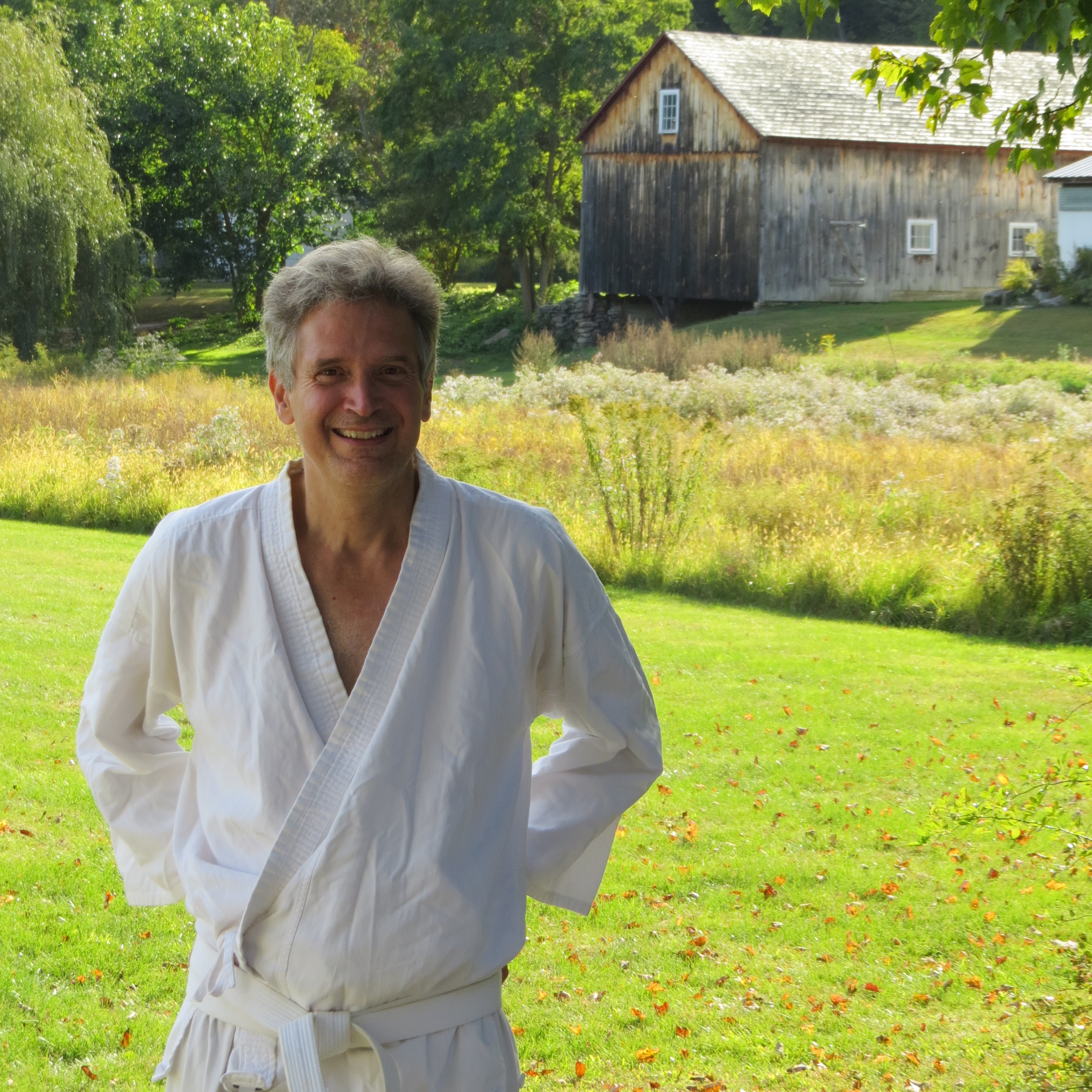
James Cumming – On May 1st, 2023, after a long struggle with Parkinson’s disease, James Cumming took the MAiD (Medical Assistance in Dying) medicine, which is legal in the state of Vermont where he lived. He passed away peacefully with his wife Evangelina “Vangie” Holvino by his side. James was a longtime Shintaido practitioner in England. He also spent time in the San Francisco Bay Area, where he stayed for a time with Bela Breslau and Ito-sensei. Read more about his life: Remembering James Cumming 

Juliette Farkouh – Shintaido Graduate and equipment manager for over 10 years, died Dec 12, 2009. In her 16 years of study, she also achieved 5 kyu in Shintaido Karate and 8 kyu in Shintaido Bojutsu. Here is an article: BD27_Jul2010

Anne-Marie Grandtner – died Dec 18, 2018. She taught Shintaido in Montreal, Canada. Read more here: Anne-Marie Grandtner

James Cumming

Juliette Farkouh

Anne-Marie Grandtner
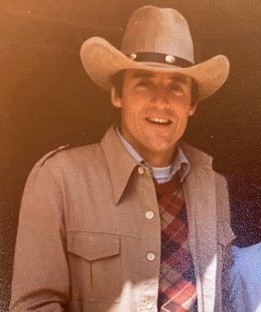
H.F. Ito – 1942 – 2023, established Shintaido movement in USA and Canada, co-founder of Shintaido of America. Read his full bio here: H.F. Ito | Shintaido of America

Brad Larson – Shintaido Instructor and Kenjutsu Shodan, Brad Larson died unexpectedly on November 2, 2023. Here is our tribute to Brad’s teaching showing his love of nature and the Boh. Sunday 2023-07-09 Nature as Keiko Partner. Read more about Brad in this Body Dialogue article: Celebration of Life for Brad Larson

Bill Peterson – Died May 13, 1996 of AIDS while receiving Hospice by the Bay services. H.F. Ito writes of holding Bill in his arms to visualize eiko in this article: Body Dialogue # 6. In this same newsletter, Bill’s writes about a past experience of doing sensei care.

H.F. Ito

Brad Larson

Bill Peterson
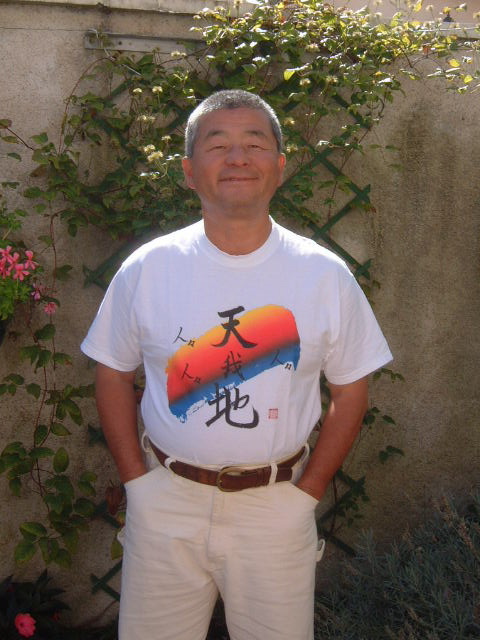
John Seaman – John, a long-time Shintaido instructor, passed away in April 2018.  John and Lee started their practice during the early days of Shintaido in Japan. Read how Tomi reflects about the impact John had on her life: How John Seaman Helped Shape My Life 

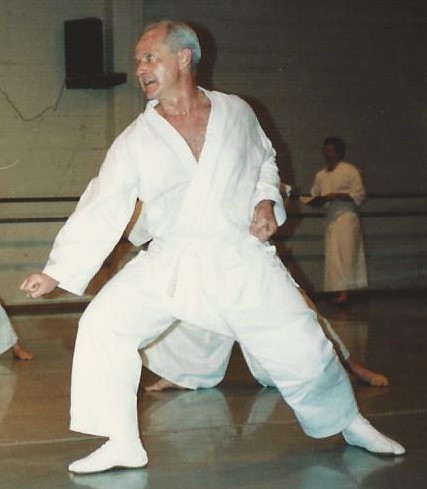
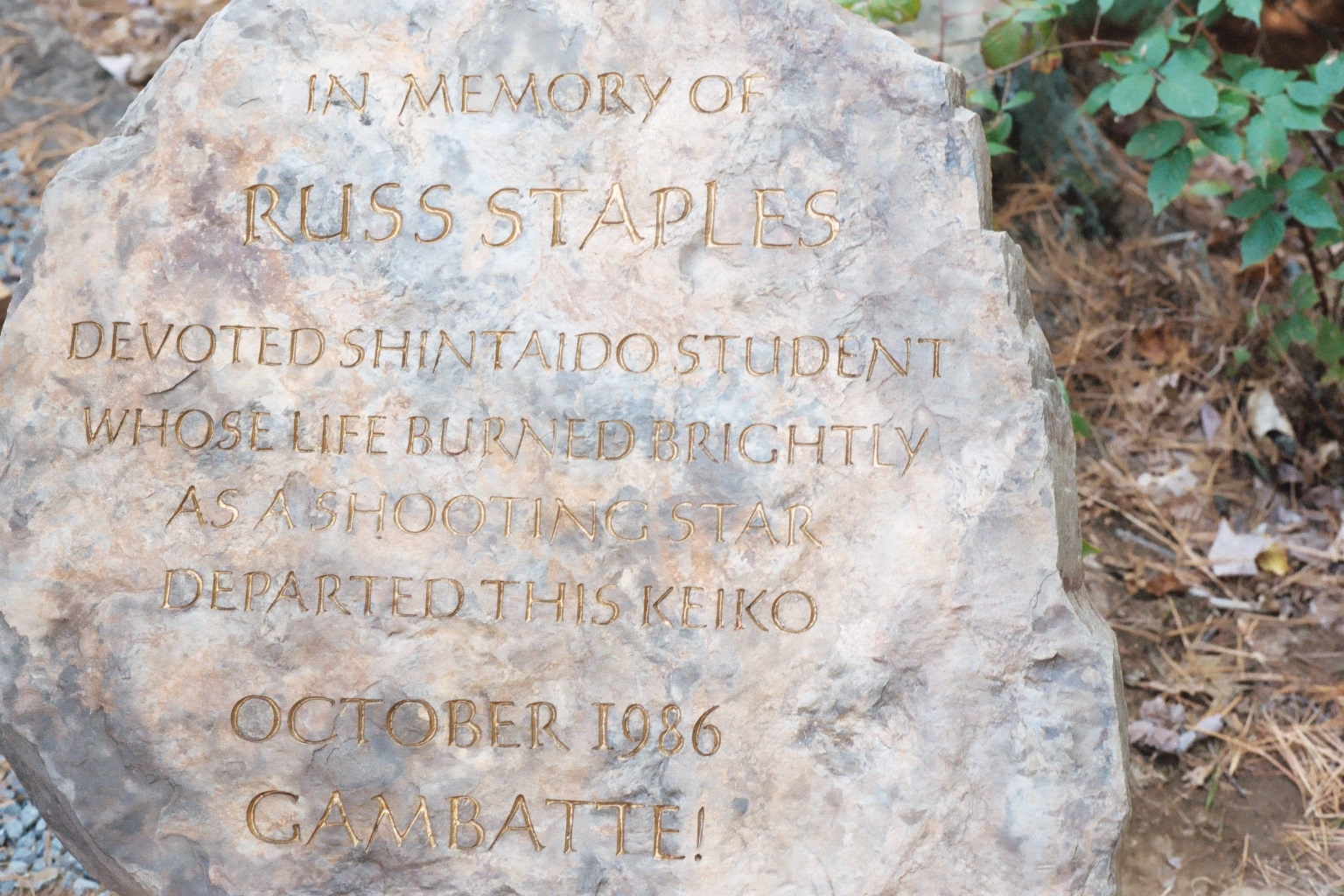
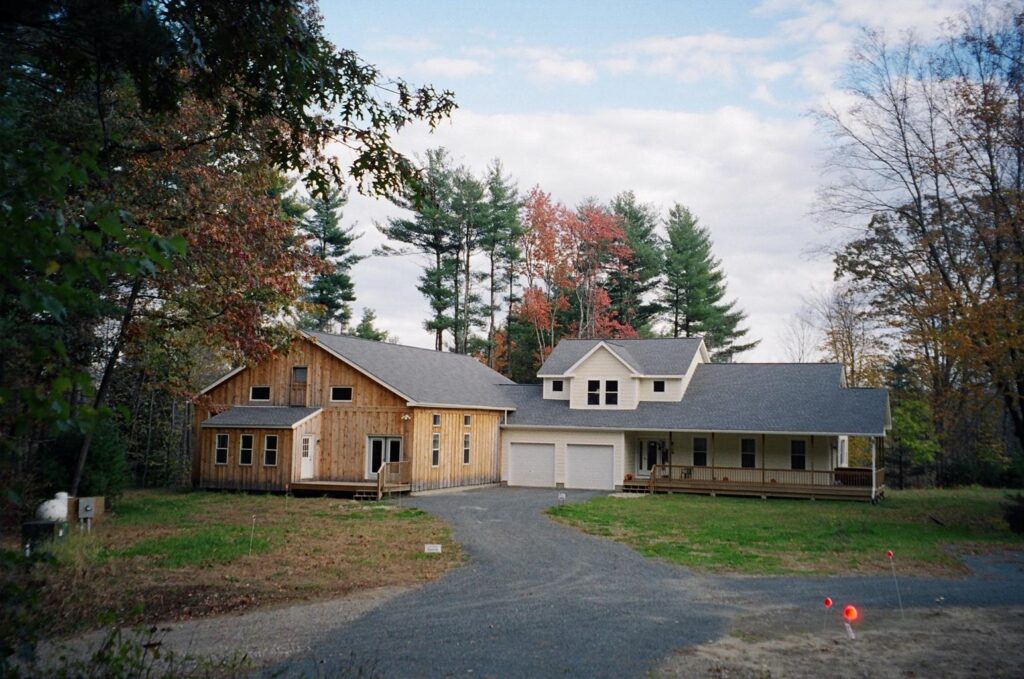
Russ Staples –  died in 1987. Joe writes in memorial for Russ here; 1987_1Winter-SOA_News and a donation was made in the name of Russ Staples: 1987_2 Spring-SOA_News.  In 2007, a gazebo to honor Russ was completed at Shintaido Farm in Deerfield, Massachusetts. The gazebo stands in a meditative spot on a hillside overlooking a wooded valley. Tall trees offer shade, privacy and beauty. There is an engraved stone that commemorates Russ. Read this article about the dedication of gazebo: BD22_Jan2008, pg 9: SHOOTING STARS

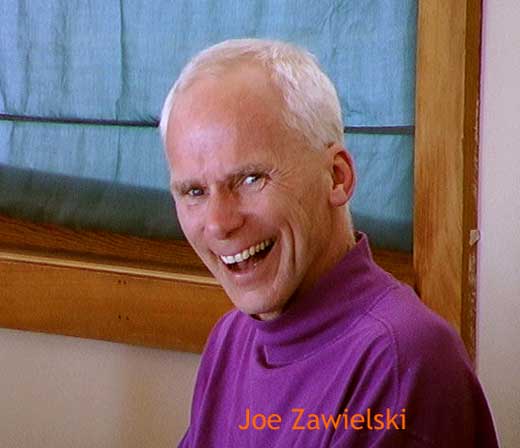
Joe Zawielski – Shintaido General Instructor, Kenjutsu Sandan, and Bojutsu Sandan, Joe Zawielski died August 1, 2018.  Gianni Rossi led a final keiko on July 21, 2018 with 50 people, including Joe. Here is an article about Joe: Joe Zawielski .  Here is what Joe wrote about his diagnosis of cancer in this Body Dialogue article: “The Joy of Life”  BD41_Oct2017.

John Seaman

Russ Staples

Joe Zawielski
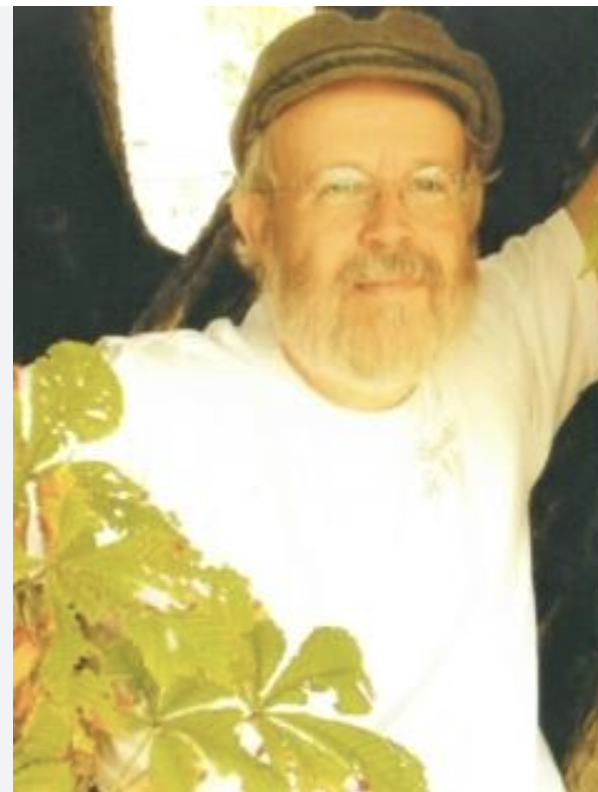
Marielle Bernier – Part of Ito-sensei’s original Quebecois group. Wife of Yves Hudon. Participated in many Shintaido events in Montreal, Quebec City, and at the Shintaido Farm.

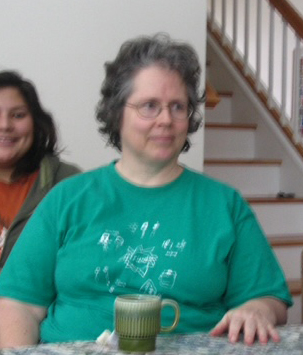
Sarah Prince – longtime Shintaido Northeast (SNE) practitioner. Unofficial photographer for SNE. Took many photos at keikos and gasshukus, including the three blowups that graced the walls of the Shintaido Farm dojo Ten Shin Kan.

Marielle Bernier

Sarah Prince
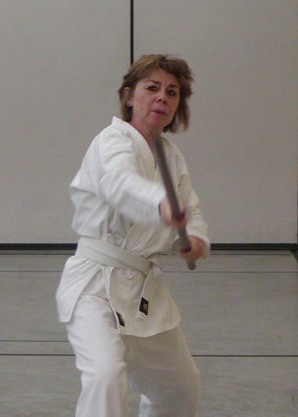
If you have photos you find more flattering or expressive, please send to use and we will consider placing it in the article. Send to president@shintaido.org

Reprint: Ito’s Stream Of Consciousness 1983

by H.F. Ito 

Published:

Reprint from Shintaido of America newsletter Issue #2  January 10, 1983

ITO’S STREAM OF CONSCIOUSNESS

I

When I took a trip to Mexico last summer, I was still looking for my next goal to reach. But when I had a meditation on the Teotihuacan Pyramid, I understood that my philosophical searching age was finished. What I need from now on is not on the surface.

Recently, I have felt that there is something within me which only I can transfer to people, That is, exactly what has been transferred to me from my ancestors, Now I have confidence to start my own school where I can express or transfer “something”. This “something” can never be expressed or described in words. The only way I can transfer it is through body movement, through correcting people’s posture, form and movement.

II

About Master Funakoshi

If you are familiar with the history of karate, you may know that Master Funakoshi is the first person who organized today’s karate program, after he had studied three major fighting techniques in Okinawa.

Originally, he was an instructor of the Shurite school which was known for its quick and sharp movements. After he became a master of Shurite, he had an aspiration to organize all of the martial arts in Okinawa. He was open and humble enough to ask for special instruction from his rival school, Nawate, which was known for its slow and steady movements, It was extremely unusual for a martial artist, who were generally conservative and stiff-necked, to do such a thing in that age.

If you write karate in English, it does not make any difference, but originally karate’s kara (唐) was the character for China and karate was known as the fighting technique which came from China. But when Master Funakoshi set up his new program, including Shurite, Nawate as well as Chinese styles, he used a new character for kara (空) which means “empty,” Thus, karate in this age means “empty hand.” Even though the meaning of karate became very popular as free-hand fighting techniques, I wonder how many karate instructors understand Master Funakoshi’s wish he put into the letter kara, which he took from the Buddhist Hannya sutra, one of the most respected sutras in Buddhism.

Just as Gurdjieff went to Paris, the center for artists at that time, after he had found the secret truth in Tibet, Master Funakoshi also had a destiny to follow and went to Tokyo with his new method. He was unusually brave to do so at that time when Okinawa was looked down upon by the great martial artists in Japan.

By the humbleness he showed when he went to his rival school, by the bravery with which he followed his destiny, and by the hope which he expressed in the character he used for karate, I think he is respected as the founder of karate in this age.

Accomplishment of Master Egami

Even those who are very familiar with the history of Japanese martial arts, do not know that Master Ueshiba Morihei, who is well-known as the founder of Aikido, was originally a successor of the Shin-kage-ryu Sojutsu (spear technique) and that Master Inoue Hoken, who is respected among Aikidoists as the first disciple (uchi deshi) of Master Ueshiba, was originally the successor of the Itto-ryu kenjutsu (sword technique).

Before World War II, as the highest disciple of Master Funakoshi, Master Egami was appointed by the Japanese army as the coordinator of all the martial arts in Japan. Later, when he was 40 years old, he became a disciple under Master Inoue, who had started Shinwataido, emphasizing the idea that heiho (兵法), war strategy, should be heiho (平法) tactics to engender peace.

Fortunately Master Egami who was following the wish of Master Funakoshi and the true meaning of “karate” could exactly adjust his philosophy to Master Inoue’s and finally received all of the grace of traditional martial arts which had been passed down to Master Ueshiba and Master Inoue.

Shintaido and Master Aoki

I don’t think it is only me who has found and secretly enjoyed the soul relationship between Dostoyevsky, Beethoven, and Van Gogh. But if someone found the common truth which they shared, it would be almost impossible for him to deny their influence into his life, even though he is an oriental martial artist. Sometimes I think Master Aoki was a sprout which came out in oriental soil sharing roots with these Western seniors.

As the head instructor of the Shotokai karate school, Master Egami’s freedom to directly develop a new holistic martial art was limited. Master Aoki was appointed to study and test all of the ideas which were collected by Master Egami. It was a heavy but graceful duty to complete Sogo Budo, or ‘holistic martial art’, during his apprenticeship period.

People who have read the Shintaido book must already know how hard and rich this training was. It was a great honor for me too, to be allowed to study with them, about twenty years ago, at a time when these two masters had their most harmonious relationship.

Ito-sensei, during an examination.

However, for Master Aoki, who grew up in a post-war democratic environment and who fell in love with Western fine arts, and the story of Jesus Christ’s life, it is the matter of time and the fate of genius to start his own movement, especially after he had found Eiko and Tenshingoso, which were not understood by the other instructors of the Shotokai school.

If you read this kind of history of martial arts just on the surface, you may be reminded of the story that Jung had to go in his own direction after he finished his apprenticeship under Freud. But what I want to describe is the younger generation naturally has a wider point of view, as their world broadens, even though they are exactly following their roots.

As proof to show that Shintaido is still an orthodox oriental martial art, I would like to present two examples here.

One of the top secrets of karate-do which is called Sankaku-tobi (triangle jump) was transferred only through the Funakoshi-Egami-Aoki line and has been programmed as one of our basic movements in Shintaido.

Even though most kendoists have lost the chance to do so, any student of Shintaido will experience the great dignity of Ittoryu school when they study Shintaido kenjutsu.

III

Principle and paradox of a double-edged sword

In Aoki-sensei’s textbook, Shintaido is described as a double-edged sword, For example, each form or movement must be meaningful both from a martial arts point of view and from a health movement point. of view, Thus, every particular technique in Shintaido was established after it had been checked to see if it was effective enough for killer techniques to “control life”, as well as for human development “to develop life”.

However, some people who study Shintaido a little bit and then go on to start their own independent style have already arranged the basics of Shintaido. In these days, some of them teach techniques or movement which work well in terms of “feel good” exercises, but which have lost all their martial arts meaning. Others, teach techniques which are useful and effective in terms of martial arts, but which have completely lost the well-considered aspects for human development. Therefore, the more they practice their own arrangements, the worse they are going to be spiritually and physically.

Since people believe in free enterprise in this country {North America}, it is true anyone can start his or her own school of martial arts or exercises. But if you are going to participate in spreading Shintaido, which was founded by Aoki-sensei, I would like to ask each of you to remember the principle of the double-edged sword which Aoki-sensei put into the Shintaido program.

Let me give another example of a double-edged sword. It someone studies or practices Shintaido in a country where there are old, strong traditions and a very strict social system, they will often experience a satori (awareness) that everyone should be entitled to equal rights, opportunities and freedom of expression. However, if people who grow up in a society based on freedom and independence, always look for these same goals in Shintaido, I may say they are using a one hundred dollar bill for only fifty dollars value. Just as a chemist uses a catalyst in experiments, I am sure these people can use Shintaido to improve themselves and to let their society go beyond its limitations.

Generally speaking, when the well-controlled society or person reaches certain limitations, we may have to break certain traditional restrictions or taboos which inhibit free-thinking so that new ideas will surface to improve society and the individual. On the other hand, when people reach limitations because they misunderstand freedom, interpreting it as selfishness, and they misunderstand independence, as only individual profit, society needs certain restrictions and the individual needs to develop consideration for others so that we can go beyond these limitations to build a new society and new individual selves.

For those who study Shintaido in the United States in this age, I recommend the study of well-developed consideration and discipline more than the aspects of freedom and independence in Shintaido. This is especially true for those who have studied for more than two or three years and who are still willing to continue. If the advanced student forgets these aspects, there is no way to develop a new stage for Shintaido of America and to give a good influence to this society.

IV

Truth is not information. Even if you collect a lot of information, you can never reach Truth; you will be a walking encyclopedia. In the Shintaido book, Aoki-sensei said, Truth never comes to you unless you approach it. I am not going to twist Sensei’s word, but let me give you a word of warning: If your way of approach is wrong, the truth will elude you. As Emily Dickenson has written about Beauty:

Beauty – be not caused – It is –
Chase it, and it ceases –
Chase it not, and it abides –

In the same way, if you find the correct way to approach Truth, you can live with it. I believe the basic way to approach Truth is related to the attitude of a child who wants to study and who is filled with both curiosity and awe. This attitude is automatically apparent in his or her physical posture. That is why in Shintaido, to acquire the correct form, posture and movement is very important.

If you are still willing to study these kinds of basics, please come to talk with me or invite me to talk with you. I am available here as a Shintaido missionary from Japan.

More Travels Across Time and Space: Revisit Shintaido Farm

More Travels Across Time and Space: Revisit Shintaido Farm

by Connie Borden

Published:
More travels across time and space:
Revisiting the SOA video made in 2008

In the 50th Anniversary of the founding of Shintaido of America, we are taking some looks back. Enjoy this video about Shintaido. Link to the 2008 Video

Here is what Stephen Billias wrote at the release of the video:

Greetings! This is to announce that the short Shintaido video shot last October at the Shintaido Northeast Fall Gasshuku is complete 

Many thanks to David Franklin, who edited the video. Also, thanks to Rob Kedoin and Bill Burtis, who provided subcommittee guidance during and after the filming, and to videographer Carlyn Saltman, and to the many people who appeared in the film, including Shin Aoki, Joe Zawielski, Gianni Rossi, Bela Breslau, Anne-Marie Grandtner, Deb Zawielski, Margaret Guay, and others.

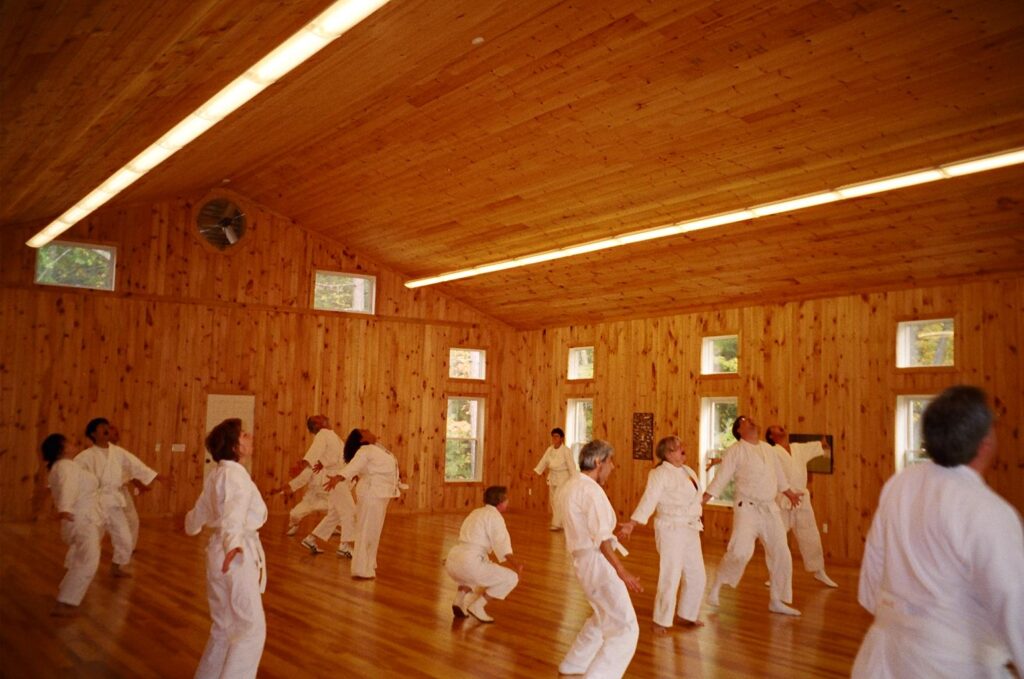
Enjoyed seeing Shintaido in the beauty of Western Massachusetts? The Shintaido Farm and dojo provided the setting for the video. Here is what Stephen wrote about the history of this special place:

In 2006, Bela Breslau and Stephen Billias founded the Shintaido Farm, a center for the practice of Shintaido. Many, many Shintaido events were held there during its ten-year existence. In 2016, Bela and Stephen sold the Shintaido Farm. What has become of it since then? The Shintaido Farm is now known as the Windhorse Hill Retreat Center, housing the Engaged Mindfulness Institute

Bela and Stephen are excited and gratified that the Shintaido Farm has become a lively and active place of spiritual development. All who participated in the Shintaido Farm experience contributed to the feeling that we created, and we can all be thankful that good and important things continue to happen there.

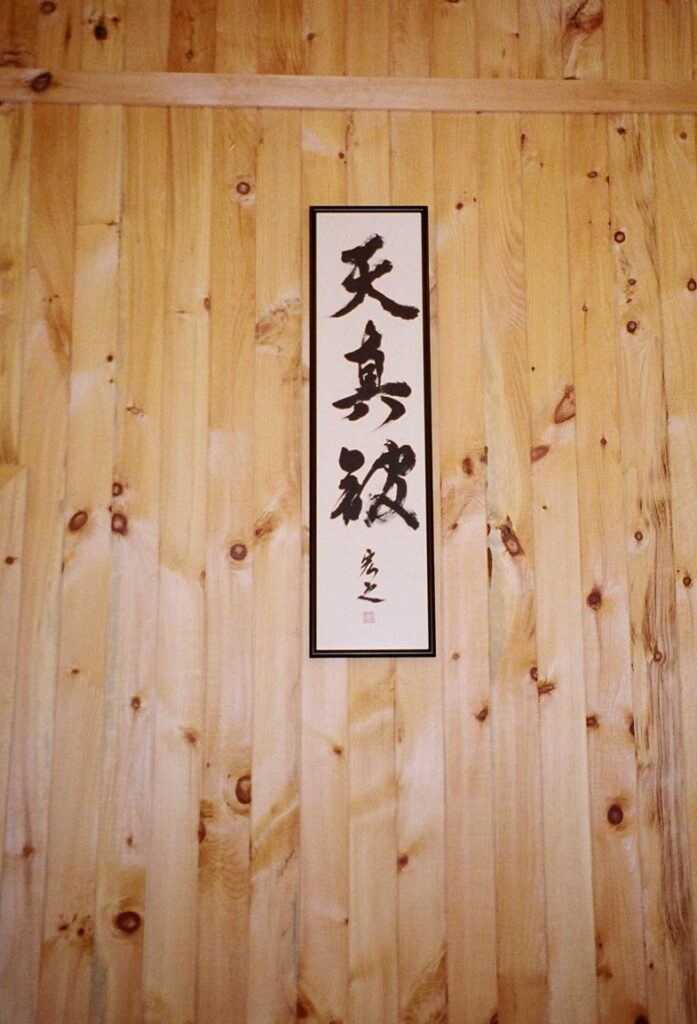
 In June 2006, when Ito came to the Shintaido Farm to teach the Shintaido Sans Frontieres workshop, he gave the dojo a name: Tenshinkan, which means “Heavenly Truth Building”. Later he presented calligraphy by Aoki Sensei of the new name.

Event Aug 2026 : Pacific Shintaido Bohjutsu Workshop and SOA Exams

Published:

Pacific Shintaido Bohjutsu Workshop and Shintaido of America Exams on August 29, 2026 in Golden Gate Park

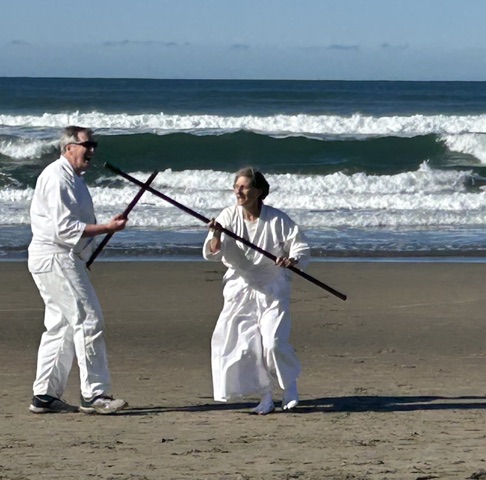
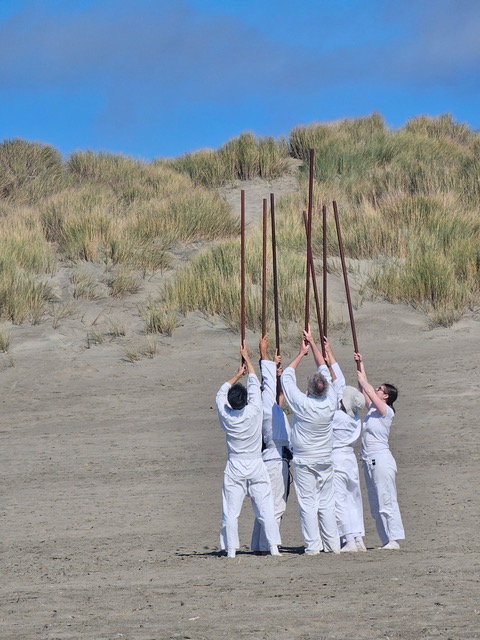
Come receive the latest inspirations of 4th Dan Shintaido Bohjutsu instructors Jennifer Peringer and Rob Gaston in an outdoor Shintaido Bohjutusu workshop entitled “The Art of Japanese Long Staff”.   Jennifer has been exploring kumiboh applications of Hino Kata (a formal sequence named after the element of fire) and Rob has been exploring bohjutsu applications of wakame (a practice inspired by the flowing flexibility of seaweed). The workshops are open to all levels from beginners to advanced. The day’s schedule will include two keikos, SOA examinations, a lunch/potluck, and a demonstration.

When:

Saturday, August 29, 2026 from 9 am – 3:30 pm

Where:

Bunny Meadow, Golden Gate Park. Entrance off Fulton at Arguello Gate (near the Conservatory of Flowers).
There will be limited parking so we suggest you carpool or park on Fulton.
Maps: Enter Here   Maps: Bunny Meadow  

Schedule:

First Keiko from 9:00 to 10:30 am, followed by examinations from 11:00 am – 12:00 pm. Lunch from 12:00 – 1:00 pm and exam results from 1:00 – 1:30 pm. Second Keiko from 1:30 – 3:00 pm. The event will end with a demonstration from 3:00 – 3:30 pm.

Event Cost:

$65 general  and  $60 for SOA members.
Payment in person at the event (cash, check or Venmo).

SOA examinations:

Notify Connie Borden via email at bordensheets@aol.com that you plan to take an examination.

Examinations are offered to 1 kyu in all Shintaido Disciplines.  

Pay online at   Examinations | Shintaido of America

Lunch:

We will have a picnic/potluck mid-day. More information to follow.

Equipment:

Bring your boh, notebook, sunscreen, water bottle, hat, and layers for San Francisco weather.

There will be limited parking so we suggest you carpool or park on Fulton.

Restrooms available.

For more information contact Jennifer Peringer at info@pacshin.shintaido.org or (415) 606-8710

Curious? Watch a free demo at 3:00 pm

GTC Event Sept 2026: Global Taimyo Community (GTC) gathering

GTC Event Sept 2026: Global Taimyo Community (GTC) gathering

Published:

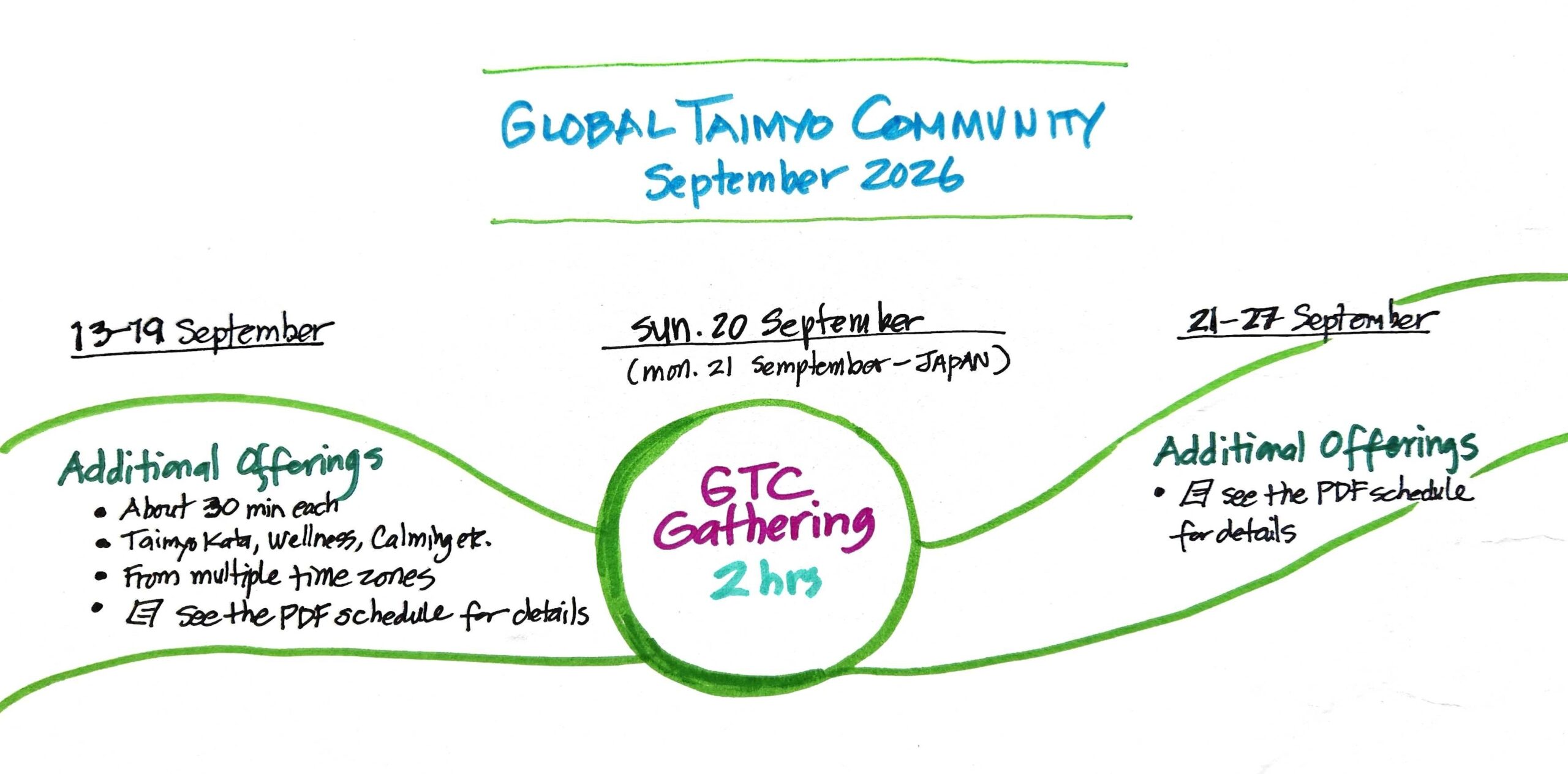
Global Taimyo Community (GTC) will be having their second 2026 ZOOM gathering on
20 Sept., 2026.

From 13 September to 27 September, there will be sessions to practice
Taimyo with our global community via ZOOM.

On 20 September, we gather to practice and talk about our practice of Taimyo in multi-lingual small groups via ZOOM.

Interested? Missed the April meeting? You can still join in September for $35.
Register here: Global Taimyo Community – Registration

(note: If you already registered for the full year, you are all set and do not need to register separately for this session.)

Curious to learn more about GTC? View Videos and read articles here:
Global Taimyo Community

Check the Theme page for the theme of the current year as well as past years to 2020.
Check Readings and Videos for articles and videos for the current and previous gatherings.