by
H. F. Ito
Shintaido Master Instructor
What is Gentle Shintaido?
Since this Spring Gentle Shintaido has been the topic European Technical Committee instructors have wanted to discuss.
Looking back at the history and development of Shintaido, “Shintaido for Everyone” has been an intention and repeated refrain. Although the term Gentle Shintaido makes sense in English, in French it sounds like a diluted version of Core Shintaido − like flying economy class because you can’t afford anything better.
During my Shintaido career I have seen many animated email exchanges on this topic.
“Shintaido without losing the experience”
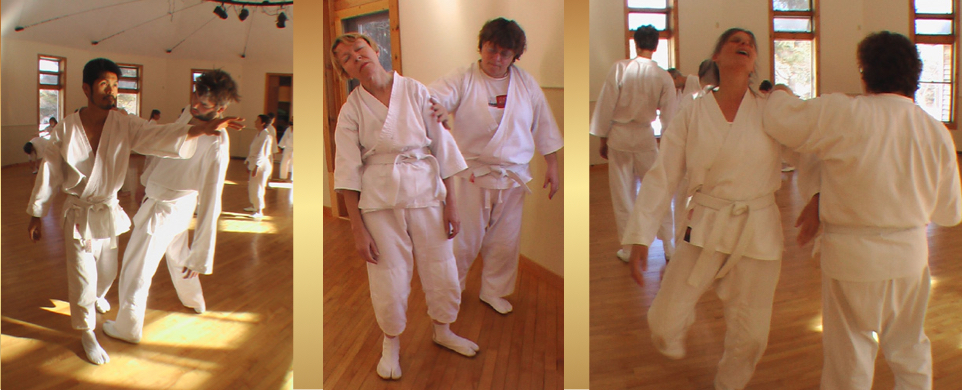
I have been closely involved in this discussion because Gentle Shintaido mirrors the approach I took starting in the early 2000s. I wanted to make Shintaido accessible to people outside the martial arts. My motto was “Modify Shintaido without losing the core experience.”
In talking with instructors – regardless of whether or not we use the term Gentle Shintaido – I have noticed the following themes:
- When we teach Shintaido to people who have physical, mental or emotional difficulties, the movement has to be gentle and soft. However, if that is all there is the students as well as the teacher may become bored.
- It is important to periodically share some Kaiho-kei techniques, or to do Chudan-tsuki on kibadachi with a firm kiai. Or you can give people the experience of Toitsu kihon movement, even if their bodies can’t sustain it for very long. This allows them to have an awakening experience.
- If we look back over the history of Shintaido, we see that in order to be avant-garde it is necessary to be classical first. From Karate to Shintaido Kaiho-tai to Shintaido Yoki-tai, we continue to build from classical roots. Jigo-kei, Kaiho-kei, Yoki-kei, Seiritsu-kei — all of these keiko forms have advantages, but none of them are as powerful alone as they are together. Good teaching must include them all.
- That is why Gentle Shintaido instructors must be able to switch immediately from one style to another in response to their students.
Should we say that, for example, students might start with Yoki-kei and as they grow stronger advance to Kaiho-kei (or maybe even Jigo-kei), and finish up in Seiritsu-kei?
I suggest that the 2020 examinations for Sei-Shihan and Dai-Shihan should focus on candidates’ ability to understand these points and to put them into practice in their own teaching.
For your information, I’m including a table showing the relationship between Yoki-kei and Kaiho-kei, as well as Jigo-kei and Seiritsu-kei. I originally developed this table to clarify my own thinking about the differences and similarities among these elements of Shintaido.
[table id=6 responsive=scroll/]
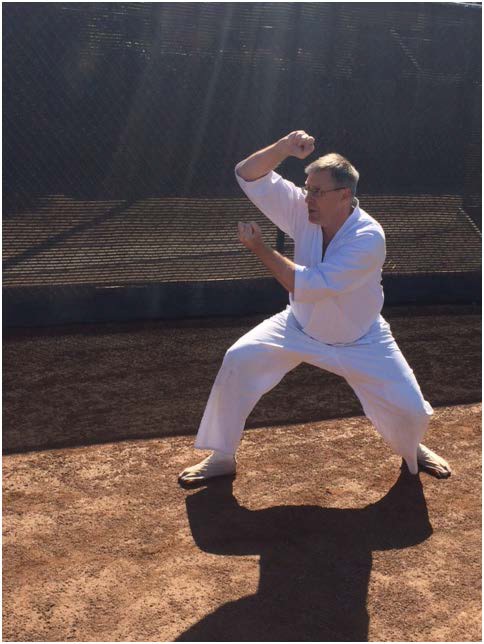
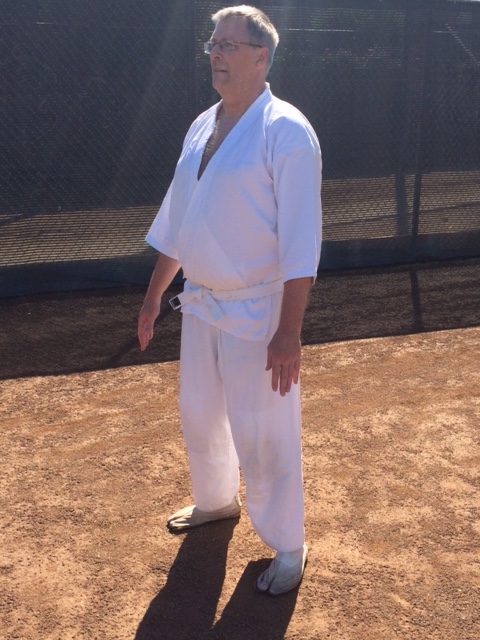
Addendum (Lee Seaman’s experience):
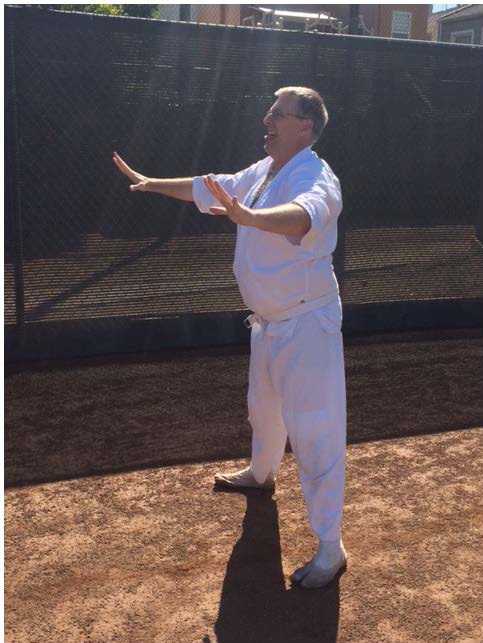
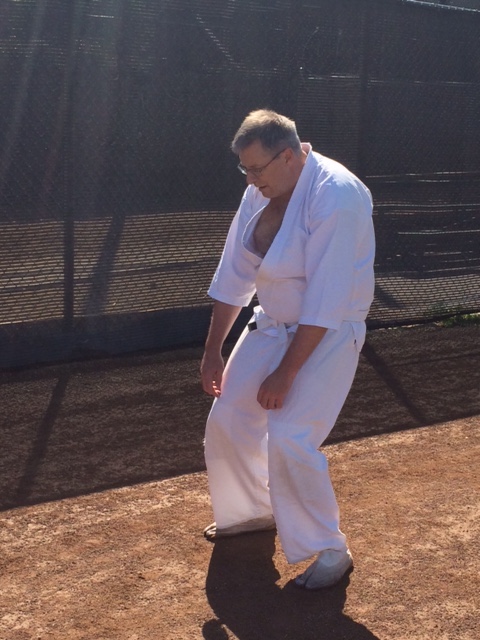
When I started Shintaido, I was 25 years old. Most of the other students were between 18 and 30, and Aoki-sensei had just celebrated his 30th birthday. Everyone was in great physical shape, and we did nothing but Kaiho-tai keiko. Aoki-sensei told us that Tenshingoso and Eiko were the core of Shintaido, and those two forms were also the core of our practice. The bigger the better, the farther the better, the louder the better.
I have been practicing Shintaido for almost 40 years now, and I have come to the conclusion that Aoki-sensei had a hidden teaching. In my experience, there is something more basic than Tenshingoso and Eiko. It reminds me of the koan about the gateless gate – I call it the techniqueless technique. It embodies Tenchijin, informs Tenshingoso, and is the beating heart of Eikodai. This core Shintaido is the basis of all our practice, and Kaiho-tai, Yoki-tai, Jigo-tai, and Seiritsu-tai are its branches.
I believe that, to give Shintaido to a world that needs it more than ever, we need roots in this core place.