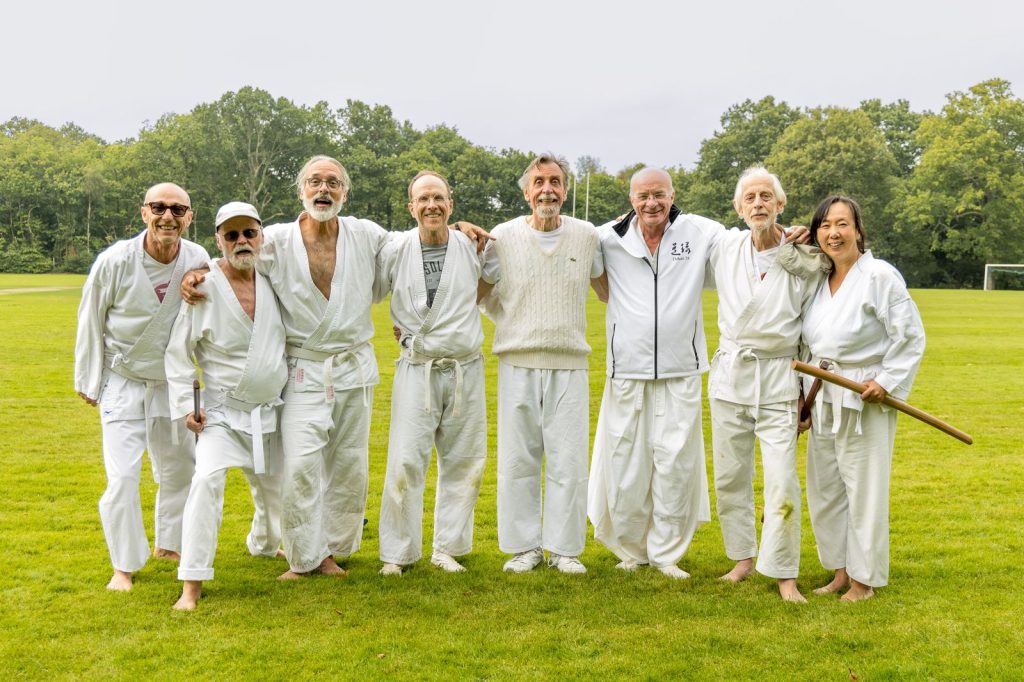
As a year ends, it is often time to reflect on what has been accomplished. Here are some highlights from Shintaido of America for 2024.
2024 was a year of transitions, starting with the death of Ito Sensei at the end of December 2023. Shintaido of America held a ZOOM Celebration of Life for Ito Sensei along with our international community from the UK, France, Germany, Czech Republic and Italy
Shintaido of America gained new SOA Board Members – Jim Sterling and David Palmer. Sandra Bengtsson agreed to be Acting Treasurer. At the end of the year, Nancy Billias completed 12 years of service on the SOA board to live full time in the UK. Doshu Michael Thompson stepped down from his role on the SOA Board.
After Dokan ’24, held in August in the UK, we saw the transition to Karate Godan & Shintaido General Instructor for Shin Aoki, Yondan Karate for David Franklin, Yondan Bojutsu for Robert Gaston and Jennifer Peringer, Shintaido Senior Instructors for Byron Russell and Margaret Guay, Shintaido Graduate for Heather Kuhn, and an appointment to Doshu for Connie Borden.
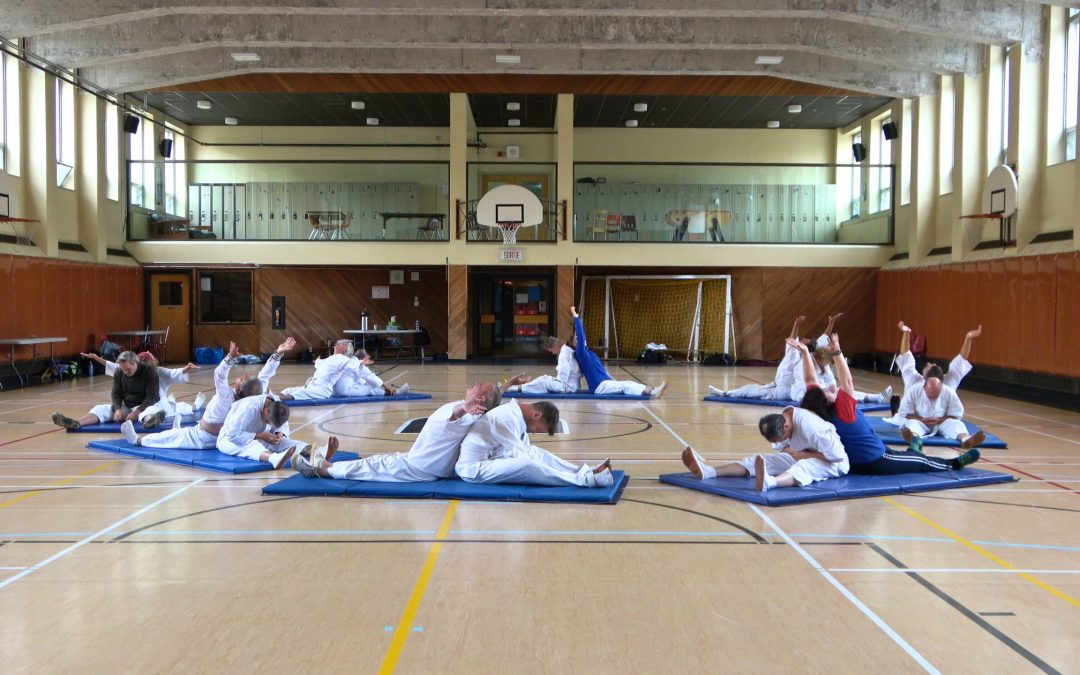
With the leadership of Robert Gaston as NTC Chair, Shintaido of America saw more keiko and workshops. Rob traveled to France to learn the newest boh kata and returned to teach a workshop in the SF Bay Area. Byron and Margaret in their new roles lead a one-day workshop in the SNE Region and are planning monthly keikos. Jennifer Peringer added students to her Monday Boh class and started a Thursday Karate class. Rob added a Tuesday night Shintaido class. Connie is piloting a Wednesday afternoon class on ZOOM to practice Shintaido. Shin Aoki has been invited to teach at the UK Daienshu in April of 2025. Lee Ordemann has had two successful Shintaido programs at a local library.
Plans for 2025 are developing with the SOA Board considering offering the Global Taimyo Community fiscal sponsorship. This will have the benefit of stability for GTC. Look for announcements about the one-week Taimyo program for July 2025. Our Shintaido of America YouTube continues to grow with published videos so check in 2025 for new releases. 2026 is in the planning stages for SOA as 2026 is the 50th Anniversary of the founding of Shintaido of America.
Here are the Board Members and Officers of Shintaido of America
BOARD MEMBERS – voting (as of December 2024)
Connie Borden, President David Franklin, Podcast Robert Gaston, NTC Chairperson David Palmer, member at large Laura Sheehan Barron, member at large Jim Sterling, Editor Body Dialogue
BOARD OFFICERS – non-voting (as of Mar 2024)
Sandra Bengtsson, Treasurer Chris Ikeda-Nash, Financial Officer Robert Kedoin, Webmaster
As a year ends, it is often time to reflect on what has been accomplished. Here are some highlights from Shintaido of America for 2024.
2024 was a year of transitions, starting with the death of Ito Sensei at the end of December 2023. Shintaido of America held a ZOOM Celebration of Life for Ito Sensei along with our international community from the UK, France, Germany, Czech Republic and Italy
Shintaido of America gained new SOA Board Members – Jim Sterling and David Palmer. Sandra Bengtsson agreed to be Acting Treasurer. At the end of the year, Nancy Billias completed 12 years of service on the SOA board to live full time in the UK. Doshu Michael Thompson stepped down from his role on the SOA Board.
After Dokan ’24, held in August in the UK, we saw the transition to Karate Godan & Shintaido General Instructor for Shin Aoki, Yondan Karate for David Franklin, Yondan Bojutsu for Robert Gaston and Jennifer Peringer, Shintaido Senior Instructors for Byron Russell and Margaret Guay, Shintaido Graduate for Heather Kuhn, and an appointment to Doshu for Connie Borden.
With the leadership of Robert Gaston as NTC Chair, Shintaido of America saw more keiko and workshops. Rob traveled to France to learn the newest boh kata and returned to teach a workshop in the SF Bay Area. Byron and Margaret in their new roles lead a one-day workshop in the SNE Region and are planning monthly keikos. Jennifer Peringer added students to her Monday Boh class and started a Thursday Karate class. Rob added a Tuesday night Shintaido class. Connie is piloting a Wednesday afternoon class on ZOOM to practice Shintaido. Shin Aoki has been invited to teach at the UK Daienshu in April of 2025. Lee Ordemann has had two successful Shintaido programs at a local library.
Plans for 2025 are developing with the SOA Board considering offering the Global Taimyo Community fiscal sponsorship. This will have the benefit of stability for GTC. Look for announcements about the one-week Taimyo program for July 2025. Our Shintaido of America YouTube continues to grow with published videos so check in 2025 for new releases. 2026 is in the planning stages for SOA as 2026 is the 50th Anniversary of the founding of Shintaido of America.
Here are the Board Members and Officers of Shintaido of America
BOARD MEMBERS – voting (as of December 2024)
Connie Borden, President David Franklin, Podcast Robert Gaston, NTC Chairperson David Palmer, member at large Laura Sheehan Barron, member at large Jim Sterling, Editor Body Dialogue
BOARD OFFICERS – non-voting (as of Mar 2024) Sandra Bengtsson, Treasurer Chris Ikeda-Nash, Financial Officer Robert Kedoin, Webmaster
I arrived on 3 October, 2024 to prepare for the ceremony with our hosts Mr. and Mrs. Yamazaki who are long-time friends of Fugaku and own the inn at Mt Asama.
Thanks to new technologies, we were able to communicate using a little English and a little Japanese.
It was raining and we were trying to imagine what we would do if the rain did not stop for the ceremony.
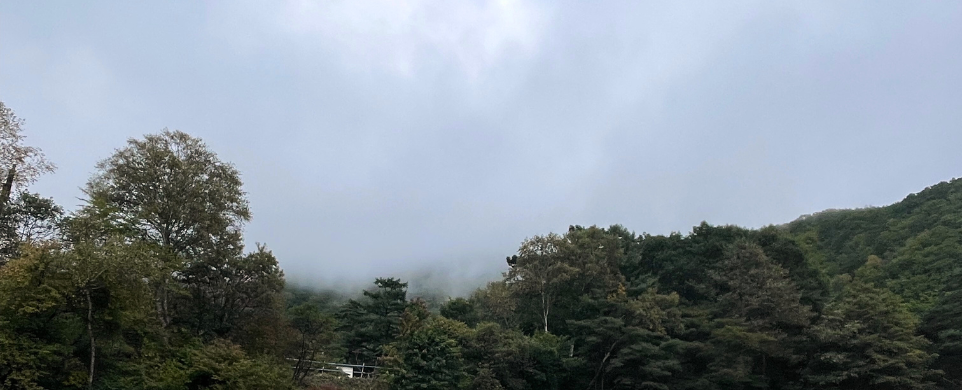
On the morning of 5 October, there was a beautiful mountain mist. I went to the dojo and practiced Diamond 8 cuts, and asked Mother Nature if she could clear up for the ceremony.
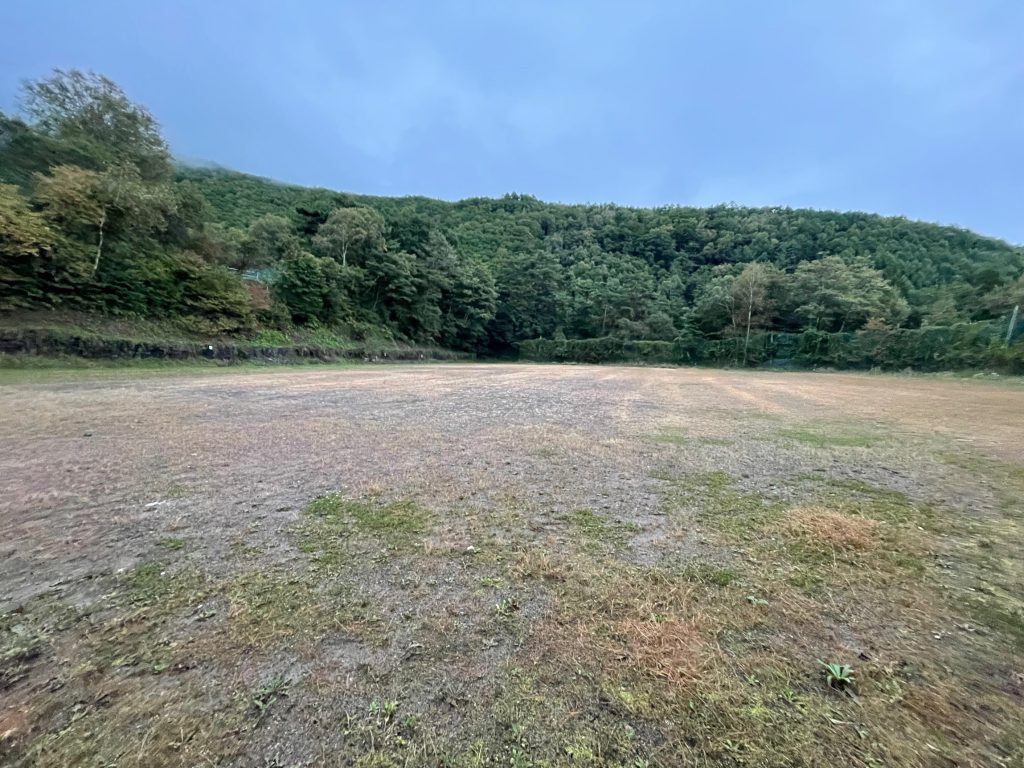
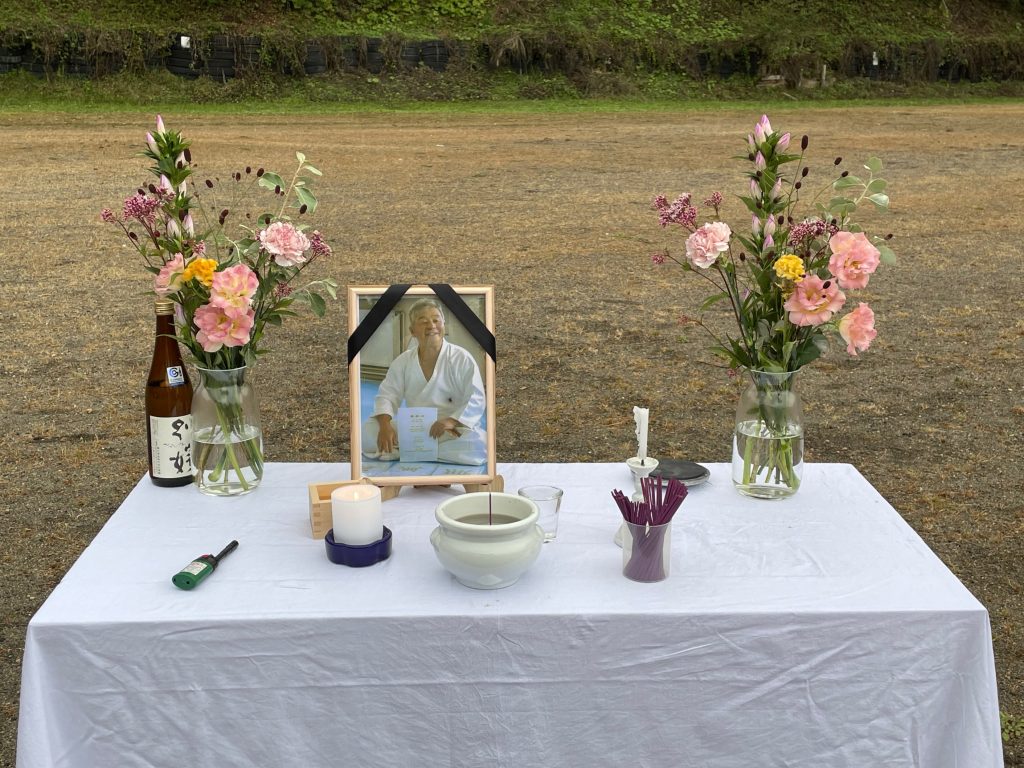
One hour before our friends arrived, it had cleared up !!!! We set up a table in the middle of the dojo with a white tablecloth, a photo of Fugaku (the one that I personally like so much), vases with flowers on each side, a candle to light, a wooden container for the sake and a glass.
Hideko san and Kazuo Hokari san arrived at Komoro station at 3pm, Also arriving were Misao Natsubori san, Watanabe san and Junko Yamamoto san (his last catch like Fugaku would have said). Iida san and Ushida san drove from Kyoto and arrived directly at the ‘Tengu onsen in Asama Lodge.)
Everyone had a moment to get their room keys. The Kansai Shintaido group changed into their keiko gi. A 3:30 pm we left together for the beautiful dojo surrounded by the mountain with the Fugaku’s urn in my arms. Misao brought a bottle of good sake for me to put in the wooden container for Fugaku, and Akemi san (the wife of Yukihiro Yamasaki, our host) filled the glass with water.
I lit incense, bowed and prayed in front of Fugaku’s photo, and everyone in turn did the same. We played the Dalai Lama’s chant throughout the ceremony.
I spoke to Fugaku indicating that I also represented his family (Yoshitaka san, his brother, Hiroko san, his sister, his 2 elderly cousins and their families) as well as my family in France and all the people around the world who were associated with this moment.
Hokari Sensei explained his relationship with Fugaku describing the history of Fugaku from Egami sensei onwards.
“My name is Hokari, an old friend of Ito-sensei. It’s been a long time since I’ve seen you, and on behalf of Nicole and late Ito-sensei, I thank you for taking time out of your busy schedules to attend Ito-sensei’s ash scattering ceremony today. All of you gathering here are people who have met Ito-sensei in your own ways, and have been instructed by him for many years, and have worked together to spread Shintaido.
I also express my gratitude to Mr. Yamazaki, the owner of Asama Sanso and his family, who prepared a thoughtful alter for the ceremony.
I apologize for the inconvenience to tell my about personal relation with Ito-sensei. The first time I met him was 60 years ago, at the summer training camp of the Chuo University Karate Club, where he was the captain of the club.
The Niigata University Karate Club, where I worked, also belonged to the same Shotokai as Chuo University, so I was allowed to participate in the training camp.
At that time, the Chuo University Karate Club was regarded as the headquarters of the Shotokai, with Egami Sensei as a master instructor and Aoki Sensei as a deputy instructor.
Some years later, after that event, Aoki Sensei moved away from karate and founded Rakutenkai with the aim of developing a new martial art that cultivated humanity. Since I was so fascinated by the philosophy advocated by Aoki-sensei, I left Shotokai, and jumped into Rakutenkai, where I met Ito-sensei again.
Rakutenkai’s practice resulted in Shintaido, and the Shintaido Association was established to spread throughout Japan and the rest of the world. Ito-sensei worked a division manager for spreading Shintaido, whereas I worked as a division manager of the general affairs.
Eventually, Ito-sensei moved to the United States and then France to promote Shintaido, mainly outside Japan and I stayed in Japan to serve as a general manager of the International Shintaido Federation, coordinating with the Shintaido groups in Japan, the United States, France, the United Kingdom, Italy, Australia, and other countries.
About 15 years later, I was hit by a truck driven by a drunk driver while jogging, and all my relatives were gathered to the hospital, because my life was in danger.
Fortunately, with the support of my robust body cultivated in Shintaido, I survived, but my pelvis was broken into three pieces, and both knees and both ankles were broken. That made it impossible for me to practice Shintaido, although it did not interfere with my daily life.
Therefore, I had to leave Shintaido, but have continued to have a close personal relationship with Ito-sensei, shared ideas based on Shintaido philosophy, and discussed not only Shintaido, but also a wide range of topics, including world politics and economic issues.
As you know, more than 10 years ago, Aoki Sensei launched a new martial art to replace Shintaido, called “Kenbu Tenshin-ryu”, that resulted in the situation where Shintaido has almost disappeared in Japan.
Ito-sensei struggled with whether he should follow Aoki-sensei, or continue with the Keiko-system of Shintaido. Finally, he made up his mind to believe in, and pursue Shintaido Keiko system, and instructed people who followed him.
Now that Ito-sensei has departed, I hope all of you will carry on his legacy and pass on Shintaido to future generations.
With that, I would like to conclude my remarks. Thank you.”
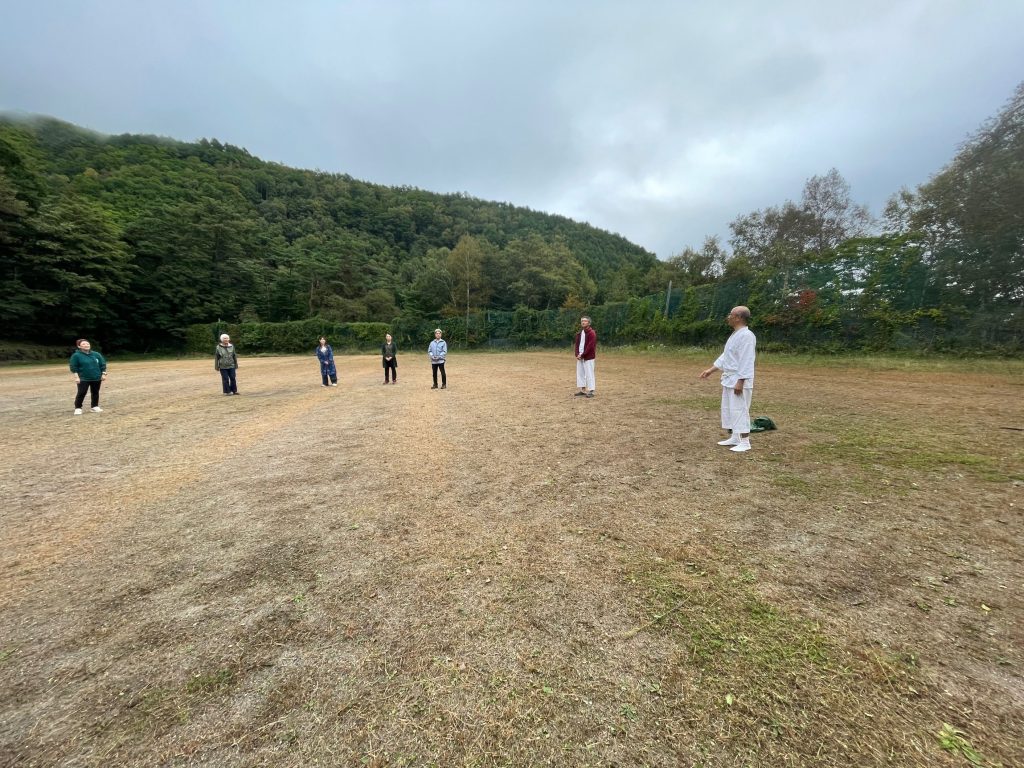
Then Watanabe san performed Tenshingoso with voice. Mr. and Mrs. Yamasaki and their children Dai san and Emma san joined us. It was their first time doing Shintaido.
It was so good.
Then I showed a short video of Fugaku singing “gin gin gira gira”, a nursery rhyme about the setting sun that he used to sing on the hill near the chapel where we practiced.
For him, it was a prayer for every person who had died since 1 May 2023*. I suggested that we sing this song twice for him, and he sang it as a form of Kotodama. It was so good that we could offer it to him.
Then came the scattering of the ashes. I took the urn, and we took turns scattering them around the dojo.
We separated Fugaku’s ashes into two portions, and scattered the majority all around dojo, and buried a small portion in a space between a monument and a couple of old trees planted by Japanese Royal families, that is located in the forecourt of Asama-sanso. He will stay in the dojo as well as under the Royal family’s trees. It seems as if his soul covers all around the big nature surrounding Asama-sanso, a place he loved so much.
We were moved, and happy to have been able to respect his wishes.
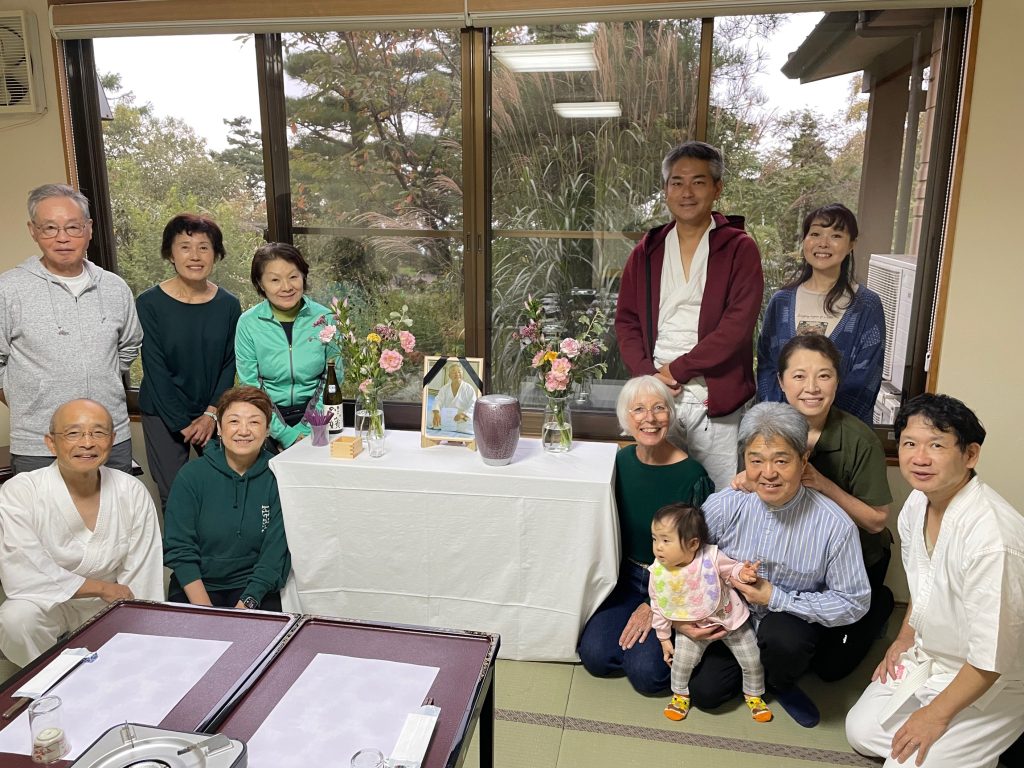
We came back and some of us set up the altar in the tatami room reserved for us for dinner.
We all soaked in the onsen with water straight from the volcano, which is red because it contains iron.
Before we started eating, Mr. Yamasaki offered sake to everyone and also to Fugaku in front of his picture. They also served part of the big dinner that we had.
Thanks to Misao san for her efforts in organizing the visit of our dear friends. Thank you to our friends for coming to see me. A warm gratitude to the Yamasaki family who supported me and offered their precious time to accompany Fugaku’s ashes to this place that was so precious to him. Thank you to all his friends who prayed around the world. Thanks also to our friends in Tokyo who couldn’t make it but whom Tamiko Sato san will be bringing together on 9 September for a memorial dinner.
Nicole Beauvois October 6, 2024 At Asama-Sanso lodging
As I wind down my 50+ year Shintaido career, I’m starting to look back on all that as happened during that time.
When I had come back to the U.S. after my introduction to Shintaido in France, I started to teach it in Geneva NY, where I had had a spectacularly unsuccessful and short-lived academic career. A couple of years later, Ito wrote me that he was intending to move to San Francisco to start a Shintaido school there, and suggested that we either join forces there or maintain bases on the two coasts. Since I had only been practicing for a few years and needed to deepen my understanding, I decided to move west. There, we created the nonprofit Rakutenkai Shintaido of America along with some Hobart College exiles including Pamela Olton, Bela (formerly Nancy) Breslau, Jim Sterling, Tom Abbott, and Stephen Pizzella.
I’m not going to attempt to recapitulate our story since then, only that, in addition to holding regular and intense morning & evening classes in the Bay Area, we hosted several international events featuring Aoki Sensei and several of the original Rakutenkai members from Japan. There was also a kind of French invasion when a few of Marc Bassis’s students came to study with Ito.
My West Coast experience, interrupted by a 2-year stay in Japan, ended in 1982 when I moved back East to Cambridge MA where I started a new chapter in my Shintaido career, thereby taking up the first option Ito had suggested eight years previously.
Since then, obviously, a lot has happened and times have changed. I have more or less retired from active participation in Shintaido events, outside of the occasional keiko with New England members. And, I will also be retiring from the SoA board by year’s end. In a way, I have always thought of myself as an observer as well as a participant in the Shintaido movement, so it’s not all that difficult to leave the organization behind while remaining interested in its evolution.
That’s not all that surprising given that I earned a Ph.D. in French literature, but had no problem abandoning that path to take up a weird body movement in France. Now, I move on to the final chapter which will include my Hitorigeiko consisting of Kenkotaiso, parts of Taimyo, and Minagawa’s deeply researched Diamond 8 program which is a way for me to keep Eiko in my practice.
Finally, on the occasion of “Dokan 24” in the U.K., Ula Chambers wrote in the welcoming brochure: “Dokan: the Circle, represents continuous and everlasting practice. It exists in both past and present while looking forward into the future. At its heart is peace and emptiness. Anybody may join or leave the Circle at any point. Dokan celebrates the journey of the individual and combines it with that of the whole group. It has neither beginning nor end.”
Another image for this event was a design by Charles Burns based on an ammonite fossil found by Nagako Cooper. It represented continuous growth and change as seen in the form of a spiral. It turns out that the spiral movement is one of Shintaido’s “hidden” forms. So there’s still more to study “jusqu’à la fin de l’histoire” (until the story comes to an end).
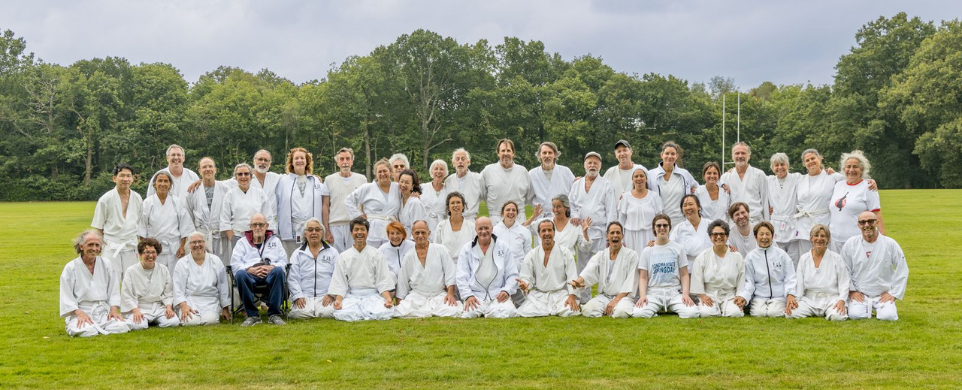
Dokan 2024 International gasshuku, in a significant way, started for us at different times. For the organizing team and Director of Instruction it began several years ago after the 2021 exams. Plans and theme ideas began percolating in their heads, with artwork and discussions. The location, Worth Abby, was tested out last year at the British Shintaido Daienshu and it worked well. At the closing ceremony Ula Chambers announced the theme of the 2024 International, Dokan, the way of the circle.
Enthusiasm for Dokan ’24 grew over the year and there were 54 people in attendance. People came from Japan, USA, UK, France, Italy, Belgium, Germany, Czech Republic and Italy. Also, this was an opportunity for many of the international attendees to link their gasshuku travel to a trip to Europe. We began to arrive on 15 August at Worth Abby and saw the location in a beautiful country setting, 30 miles south of London. Connections and warm greetings began.
The first day, began with checking in and finding our rooms, getting an orientation, meeting of teams and lots of hugs, reconnections and chats with old and new friends from around the world.
For some of us, it included the International Technical Committee (ITEC) meetings and keiko. For those not in ITEC, it was a chance to practice for exams or organize their gasshuku job teams.
For me, there was a wonderful afternoon keiko taught by Pierre Quettier on Goho Batto-ho in the sports center.
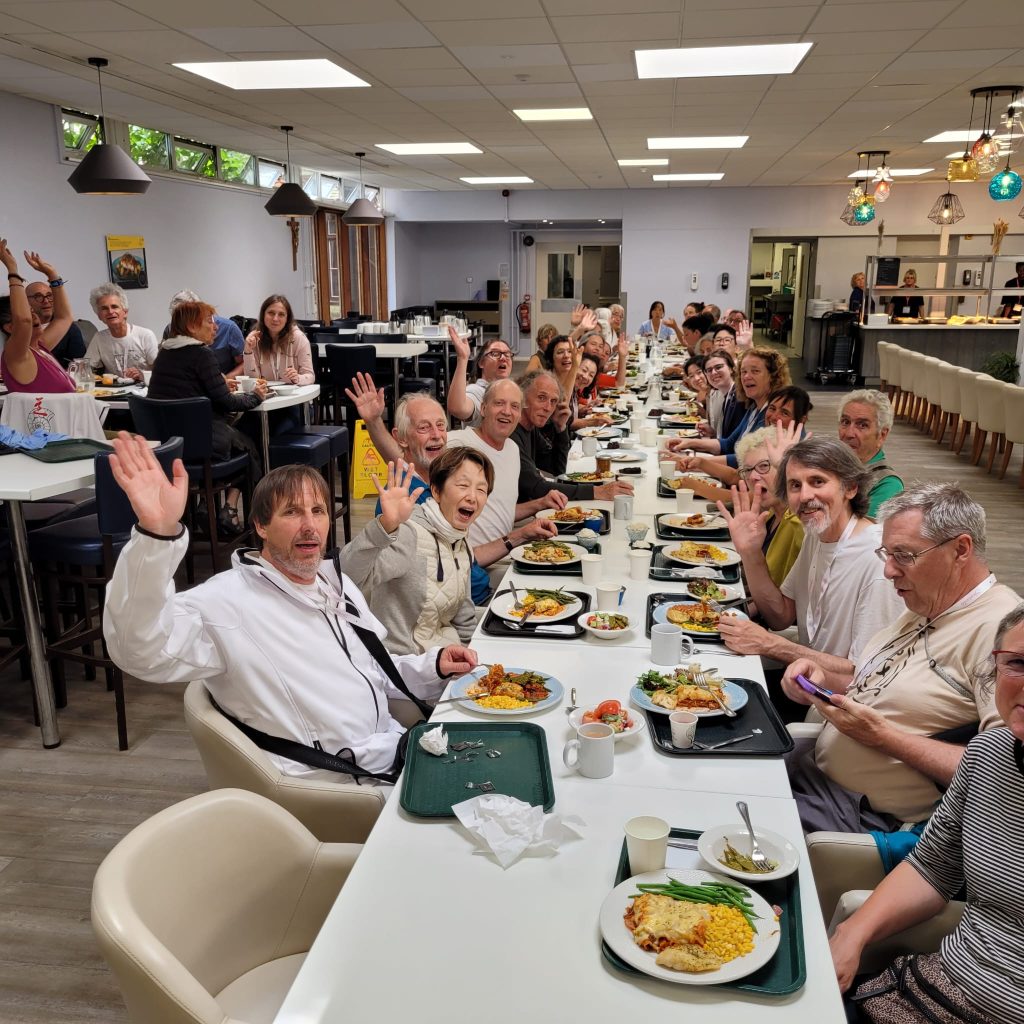
We met up with the rest of the early arrivers for dinner at the cafeteria, pulling our tables together so we could hear as many conversations and reconnect as much as possible. Those not in the ITEC keiko, talked about a wonderful time of practicing together in preparation for exams in the gorgeous Victorian wood and stain glass appointed, Whitehead room, lovingly called the Harry Potter room.
Following a welcoming meal, the evening included ITEC meetings about upcoming examinations and further planning. Others, hung out in the tea corner over seen with love by Margaret Guay who throughout the gasshuku could be relied upon for sustenance, warm feeling, conversation and laughs.
There were, 25 people, who had stayed the night and woke up with Taimyo led by Margaret Guay. In the morning light, and with dew on our feet, Taimyo transported us to calm old English countryside.
For ITEC members, the morning was filled by a thought provoking keiko by David Franklin on Renki kumite where we explored our way of breathing and moving , our connection to our partner and the outer limits of our balance.
In the afternoon we held joint SOA and ESC examinations. Heather Kuhn from USA, took her Graduate exam, and Craig Thorn, from England, took his Kenjutsu Nidan exam.
The Dokan ’24 International Gasshuku officially began at 5pm with the opening ceremony and a dedication to Ito sensei. His picture was posted on the wall and remained there throughout the gasshuku. Charles Burns, organizer extraordinaire, welcomed attendees. The opening ceremony concluded with Nicole B. presenting Minagawa sensei with Ito Sensei’s sword.
After supper we started the Opening Keiko in the Sports Hall. This was led by Ula and Gianni bringing everyone one together with a theme of Tenshingoso (solo, kumite and Tenshingoso massage). “The keiko had a warm, uplifting feeling and reminded us how nice it was to be all together in person.”
This keiko was followed by a presentation by Minagawa sensei and Michael sensei to announce the end of a “first wave” of Shintaido and a new era of leadership. Connie sensei and Ula sensei were awarded the rank and responsibilities of being our Doshu for the next 4 years. “The air in the room changed dramatically for me. Like a poof. All the unspoken contracted energies released in an instant.” This announcement of the new Doshu brought a palpable energy and excitement.
Each morning of the main gasshuku started with an early morning Taimyo taught by various ITEC members, Mieko H, Connie B., Robert G. and cumulating with Charles B. They were in a grassy open space looking west over the school’s golf course and the woods beyond. The scattered trees and expansive view had participants returning to the space throughout the gasshuku, whether for their private practice and meditation, or in groups to work on kumite for exams. There were spontaneous gatherings for a beautiful sunset that boggled the mind. The Taimyo practices and the draw of the space had reoccurring circular feel for me. It was the place that I came back to observe the changes in me throughout the gasshuku.
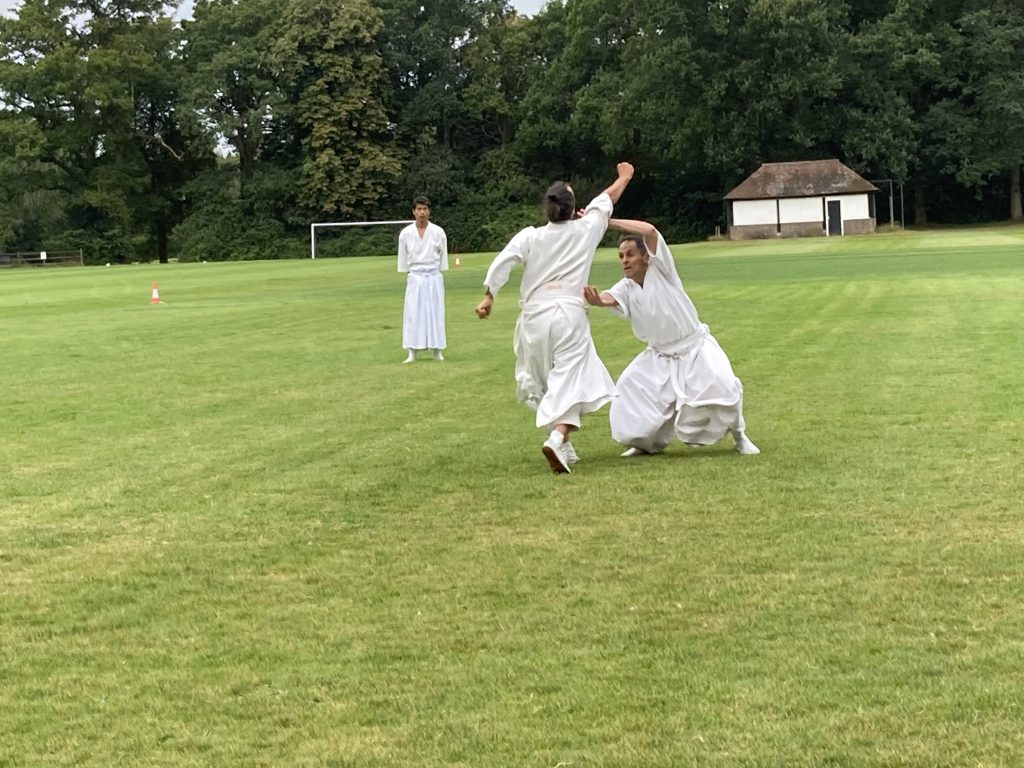
Keiko Two, Three and Four on Saturday the 17th and Sunday the 18th were longer, held outside on the sports fields a short walk across a bridge over the road.
There were Shintaido warmups for the whole group. Led first by Shin, then Pierre, and lastly Alain. Then we split into three groups that participants could join, Kenjutsu by, Pierre Quettier, Bojutsu, by Alain Chevet or Karate, by Shin Aoki. The keiko space was immense so each group moved to various edges of the field and focused on the curriculum.
Please read the descriptions of each keiko provided by the Goreisha.
Kenjutsu Program: From Common Standards to Personal Fluency
by Pierre Quettier
First of all, I wish us to review and set-up a formal toitsu-kihon program, specific to kenjutsu, performed with either a bokken or iaito. This study will include a review of the stepping exercises particular to the needs of this program. These exercises will be presented in the light of our experiences in France teaching complete beginners: those otherwise ignorant of Shintaido conventions.
In the same spirit, I will share our approach to Shoden-no-kata. At this event I will introduce a formal (sei) version of the kata, in preparation for the flowing (dai) manner that we are accustomed to.
In different vein, I also look forward to sharing most or all of the various battō-ho (sword-drawing exercises) handed down by Master Ito from the Toyama-ryu tradition he studied with Master Obata. These will be new to some people, while familiar to others, so we shall work together to harmonize our understanding of this new aspect of the shintaido kenjutsu program.
Last, but not least, I will invite all participants (according to their level) to engage with – and enjoy combining the above with – familiar exercises, such as san-nin ichi-retsu or jissen kumitachi, with one or several partners.
Bojutsu program: Return to the Future (a new approach to kata)
by Alain Chevet
It is with emotion that I express my gratitude to Ito Sensei for sharing with us his ultimate vision of the kata Shoshi-no-kon.
In keeping with the Dokan theme, it seemed obvious to me to dedicate this meeting to Shoshi-no-kon.
While being anchored in history, Shoshi-no-kon is also the manifestation of innovative creativity. All the kata are transmitted to us by the elders of past generations. It is up to us to study and practice them with respect. However, it is also up to us to bring them to life. We do this by practicing them to discover their multiple facets: martial, educational, social, spiritual…
In this spirit, I will share an approach to Shoshi-no-kon through interactions between the kata, the kugiri keiko from this kata as well as applications in kumibo.
This is also an opportunity to have a fresh look at the practice of kata in general. The participation of practitioners at different levels will promote a joyful practice imbued with “beginner’s spirit”.
Karate Program: Karate and the Rhythms of Nature
by Shin Aoki
In these keiko we will explore three elements that can enrich and deepen the experience of karate kumite:
finding and connecting with our partner’s center
managing the compression and expansion of space; and
refining our timing through heightened awareness.
Toward these ends, our physical movements will include, respectively, renki kumite, irimi and stepping practice, and wakame, all of which will be applied to basic forms of karate kumite
Saturday evening David Franklin and Arin Farahini led us in a workshop on “Shintaido as a performing art.” We engaged in a keiko of sound and movement, emotion and contemplation. We used techniques from theater to think “outside the box” about what is performance and what is the relation to our own Shintaido.
One person expressed, “I appreciated the profound presence of indigenous and holistic, communal wisdom.” For me it changed a way of looking at both. I could think of performance of Shintaido in new spaces for other more artistic reasons and what might be the feelings and thoughts of the observer watching me do Shintaido movement.
Sunday evening, Ula Chambers and Connie Borden facilitated a Keiko “stories activity.” We formed groups of 5-10, and shared past/present keiko experiences. Impressions included, “I am proud of the international Shintaido culture. I believe our practice represents an expression of what so many American liberals are reaching for but struggle to find.” “I have been at many events that have aspired to the connection and honest expression shown here.”
Exams on Sunday and Monday Mornings
High level karate and Bohjutsu exams took place on Sunday morning on the large outside dojo. So many examinees did well and there were more highlights than can be easily expressed in one article. Observers said it looked if the examinees left everything on the field expressing all they had. Ito-sensei’s picture was placed prominently at the examiners’ table and his presence was felt. The closeness and feeling of the exam led to a spontaneous eiko-dai across the field by examinees and audience together and returning arms around each other’s shoulders to a large circle wakame before returning our dorm rooms and having lunch.
The second day of exams on Monday morning featured high level Shintaido Kenjutsu and Shintaido exams. Again, the exams were exciting and inspirational to watch and participate in. The second day of exams concluded with Godan Kenjutsu by Alain and Pierre. This included performance with “naked blade”. The results of all exams are posted at the end of this article.
With the exams completed we headed into Keiko Five. Gianni sensei led us in a keiko to take care of our tired bodies. It focused tenshingoso massage from warming up to kumite making connection with other parts of body and unifying the movement by entire group. Images of people in laughter as they do Tenshingoso on their backs with their feet or massaging their partner by opening ahh as their arms massaged their partners’ back. Laughter and smiles erupting. The three groups showed a demonstration to the other what was studied. Gianni finished the keiko with Eido Dai – in partners, whether with boh, Bokken or open hand with a partner.
After this keiko and before dinner, exam results were given and the evening was filled with a festive party. We began after supper and stayed late into the night. Arin started with an invocation, Heather recited love poems, all were held in rapture as Marta and Jennifer sang and Jennifer accompanied on the piano, Reesa, Ida-san’s daughter, played a beautiful piece and Shin-san taught and led the group in line dancing.
Tuesday the 20th , the last day of the gasshuku began as usual with Taimyo. Charles chose to lead us from the far side of the valley. For me, this expanded my view and my keiko to be ready to go out into the world beyond the gasshuku. It brought up images from the gasshuku as I became an audience and a performer in a series of memories and my feelings and imagination reached out across the valley.
After breakfast, we gathered in the gym for the final keiko led in parts by Ula, Connie and Minagawa -sensei. They prepared us well to leave with joy and brightness. Ula did warm ups and unified our movement. Images of energy flowing around the room and through us danced in my head. Connie’s gorei brightened our feeling and raised our energy while Minagawa brought us together in a connected deep closing meditation.
Closing Ceremony and presentations were in the Whitehead room. Gasshuku teams were thanked and appreciation was given to the instructors and organizers. A special moment of appreciation was given to Ito-sensei and fellow Shintaidoist who died this past year. People gave feedback about the event and many tears (mine included) were flowing. Diplomas were presented, and Michael and Minagawa- sensei expressed their faith in the future of Shintaido as the new Doshu, and Go-dan will act like bookends with all the Yon-dan and General Instructors’ knowledge on the library shelves.
When I began practicing Shintaido in 1988 in San Francisco, there were many teachers and students. Most everyone was young-ish and physically strong. I was in my early 30s. I loved Ocean Beach in the morning and being near the water, but I often struggled to keep up during our practice of Shintaido “hardware.”
In 1994 H.F. Ito began developing Shintaido software: applications of Shintaido for those outside of the martial arts. He designed and taught classes for caregivers whose family members were facing the end of life and needed relaxation and exercise routines to ensure they didn’t burn out.*
The software applications focused on this particular audience. The Caregiver Workshops continued for nine years to great demand and appreciation, and became part of H.F. Ito’s worldwide Taimyo peacemaking journey that continues today as the Global Taimyo Community (See the DayStreetDojo site – Writings and Videos sections).
The Caregiver Workshops answered the question that John Seaman often posed, “To what end?” What do we hope to accomplish through our practice? What intention do we hold? I have been intrigued with the possibilities of Shintaido software for many years. It requires me to think beyond my assumptions about the benefits of Shintaido and see it from someone else’s perspective.
When we bemoan the lack of Shintaido students, we may be tempted to cast our minds back to the days of big classes and workshops to see how we can recreate that environment. However, I think it’s more effective to find groups of people and listen to what they need, i.e., where is the demand, and what is the demand?
PART 2: A Courageous Audience
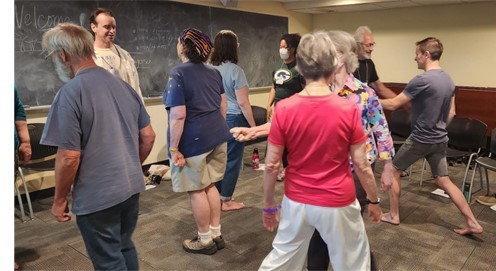
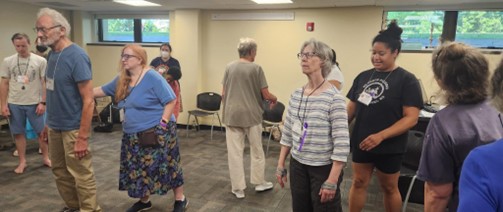
In my Body Dialogue article last Fall, “Where Keiko and Worship Meet” I described the low barrier, seated practice I developed for my friends with medical challenges via Zoom in 2021-2022. This led to a weeklong in-person workshop in 2023 for the Religious Society of Friends (Quakers) entitled, “Gentle Movement for Traumatic Times.” The design was in response to F/friends who had experienced racial trauma, and drew upon Wakame, Bamboo, Soto Irimi as creative responses to conflict.
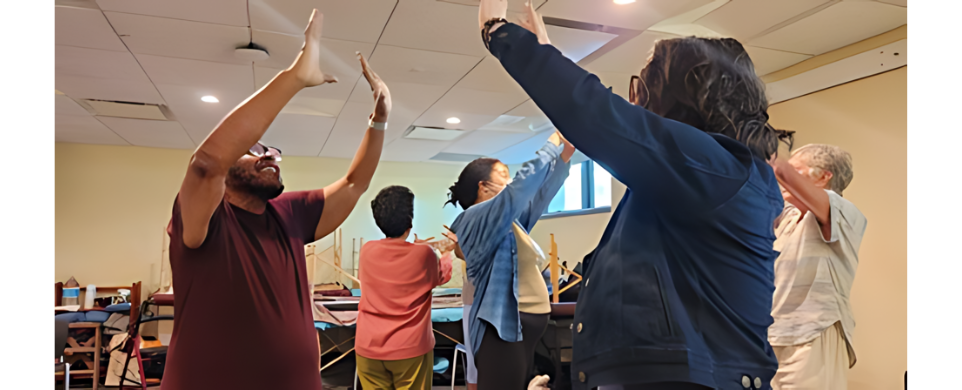
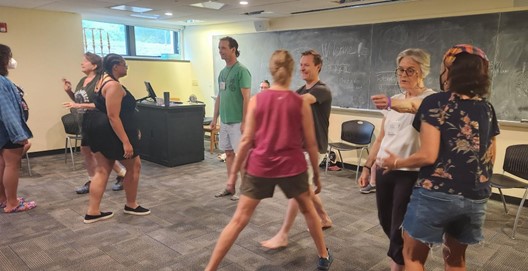
This summer I offered the same in-person weeklong workshop for Friends entitled, “Moving Gently to Address Stress & Conflict.” Our 23 participants quickly created a community space as we practiced the following principles and techniques.
Principles We Practiced
Managing the field of play – hold the big picture and the physical space
Clear beginnings and endings (bow in, bow out)
Working with spacing and timing as a strategic advantage
How to make our partners brighter and help them move toward their vision
How conflict can be generative
The importance of compassion and connection
Leadership-followership – through kumite
Instinctive responses vs. creative responses to conflict
Closing up the space to your opponent
Staying as physically close to an attacker as possible
Changing the plane of one’s body
Pivoting to share the same perspective
The importance of a sincere attack – without a sincere attack, transformation is impossible
Techniques We Practiced
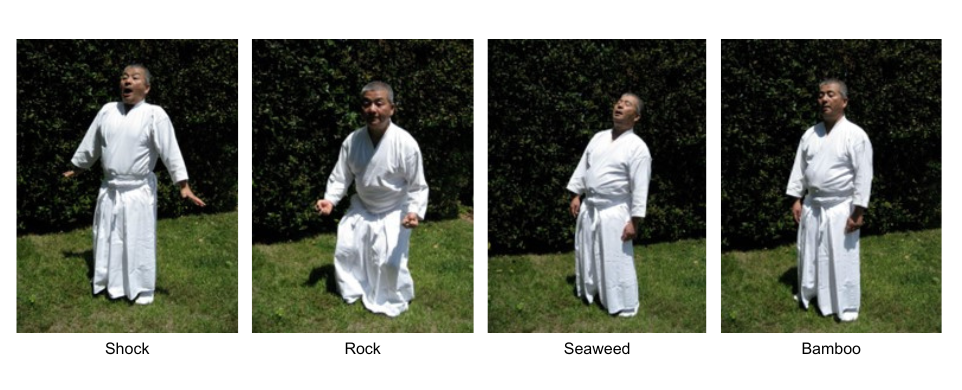
Shock-Rock-Seaweed-Bamboo – Shock and rock as instinctive, tense responses to life vs. seaweed and bamboo – going with the flow and standing firm
Stepping In (Soto Irimi) – Stepping toward an opponent and changing the plane of one’s body
“Welcome, this way please” (Ushiro Irimi) – Stepping toward an opponent to greet them, then pivoting to walk with them and share the same perspective
Heavenly Truth (Tenshingoso)
Blue Sky (Aozora Taiso)
I made a point of using translated, rather than Japanese terms, for ease of understanding: I didn’t expect people to wade through unfamiliar words. The entire workshop centered on accessibility – from options for seated practice, English-language terms and a focus on the practical applications of martial arts techniques in daily life.
Participants spent small group time talking about how each technique shed light on interactions with family members, managers, and colleagues in the past and present. How do we protect ourselves from being hurt in a conflict? How do we deal with challenging colleagues compassionately?
Our “Ah Ha” moments included:
A sense of agency in conflict, with confidence to move in, yet stay safe
How standing close-in, “beneath the “sword” is the safest place to be – while stepping back is just the opposite
Turning in order to stand shoulder to shoulder with the person coming at us and share the same perspective
One person shared a story about her friend changing the field of play. The woman was walking home at night when she felt a hand on her shoulder, and she knew what that meant. In a split second, she decided to engage with the man and not be a victim. As she turned, she said, “Hi! How are you doing? How is your mom?” The man was so startled he ran off. A wonderful example of connection as defense.
By the end of the week the group was brighter. The feedback I received showed that the effect of the workshop was much deeper than last year.
“Your teachings and the approach/energy/philosophy have had a seismic influence on my daily life, professionally and interpersonally.”
“It was a life altering experience.”
Because the curriculum was the same both years, I have been asking myself, “What was different this year?” From a technical perspective, I had internalized the workshop design so it was easier to focus on the “to what end?” of practice. Mostly, I think being able to embody what I was teaching and focus on the potential benefits made the difference. Benefits in the foreground: movement in the background.
Everyone brought a clear-eyed sense of how and where to put these tools and approaches to work in daily life. When interpersonal issues emerged, I challenged everyone to address them honestly and compassionately, as part of our practice – and we did. The group was courageous and they focused on much more than just feeling good.
Part 3: Seeking Reconciliation
This audience expressed a need for something beyond stress management and health: a clear demand for key somatic and interpersonal lessons from the martial arts. I saw a deep need for connection and reconciliation in the face of conflict. Participants really spent time applying the tools to conflictual situations at work and at home.
Post-workshop I’ve had strong demand for more – unlike any other workshop or class I’ve led – so I will have an opportunity to fine tune and iterate the offering. I am curious to see what needs emerge from ongoing connection via Zoom and perhaps in-person follow-up sessions.
When I was a Shintaido assistant, Ito reminded me not to teach using my personality – but to rely on the techniques. Even though I think the way I showed up this year made a difference, it felt like I was refracting and focusing energy in a way the group could catch it. Showing up with presence rather than personality.
So, I leave you with these questions: What is the value proposition that Shintaido offers? Is it what people really want and need? Is there demand – and if so, where is it?
Footnote
*Sponsored by the Kaiser Family Foundation through the generosity of Henry Kaiser and organized by Connie Borden, then executive director of Hospice by the Bay.