by Connie Borden and contributions by Rob Gaston, Sarah Baker & Peter Furtado (the Daienshu reporter)
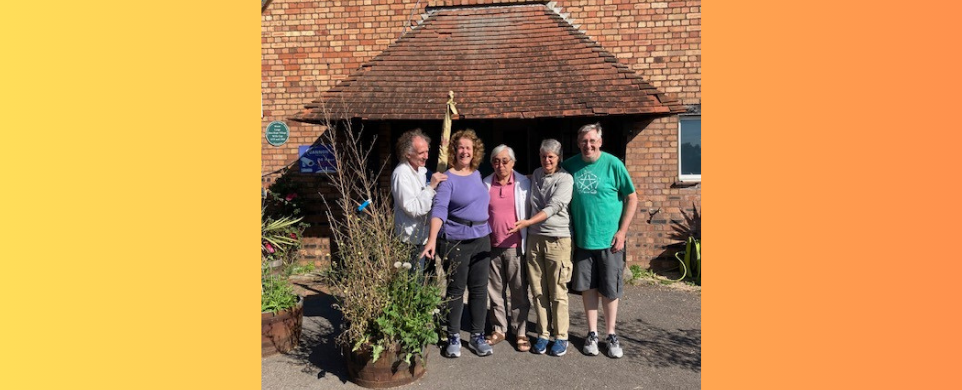
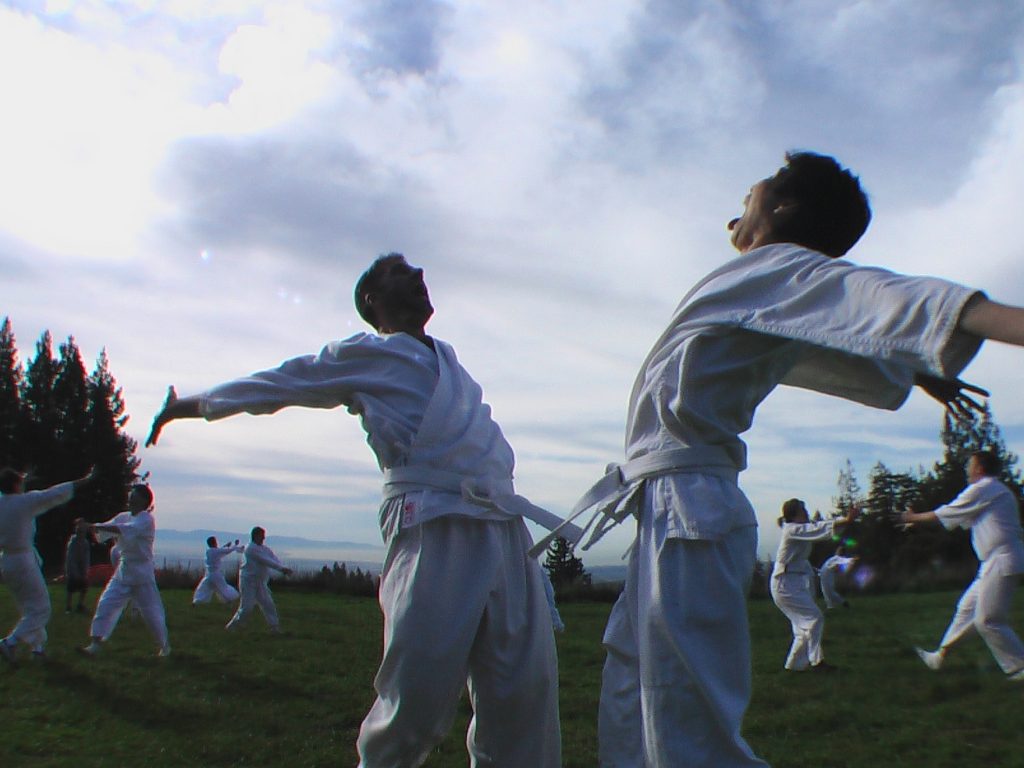
Thirty-three people attended the British Shintaido Daienshu 2023 held at Worth School from the 18th of August to the 20th of August 2023. Daienshu literally means “great maneuvers” and was the name given to the annual Gasshuku of the Sogo-budo Renmei (the transition organization from Shotokai karate to Shintaido and means “federation for a holistic martial art”). Worth Abbey is home to a small community of Benedictine monks. Worth School is an independent school in Turner’s Hill, W. Sussex UK. This event, led by Masashi Minagawa and managed by Charles Burns with the assistance of Viola Santa, represented new life.
As Charles Burns explains about the theme: “Shinsei (new life) allows us to look beyond the darkness of our turbulent times to find the hope that new life always brings. Joy, community, and our encounters with one another are all strong themes in our Shintaido world. Let’s imagine and experience new possibilities in our own lives, while enjoying the opportunities presented by a new venue for our ongoing practice.”
Prior the Daienshu, Robert Gaston, Connie Borden and Sarah Baker traveled to Scotland and the UK for 10 days. We are grateful to the hospitality of Nagako Cooper, Ula Chambers, Pam & Masashi Minagawa and Charles Burns for the extended time in Shintaido community. We practiced Taimyo, Shintaido, Bojutsu and Kenjutsu over these 10 days. We enjoyed the countryside around Dumfries Scotland, a river cruise in Shrewsbury UK and then taking a thermal spa in Bath!
Durning our travels we took many trains and climbed even more stairs, Fitbit not required. Some trains were fun, some were cumbersome, and some were rather stressful as we learned the ropes, but all got us to where we were heading, generally in one piece, if not worn out by more stairs. Also, for our traveling enjoyment, there were a few words of wisdom to live by which were frequently repeated, least we should forget: “Mind the Gap”, “Mind the Step”, and “See it, Say it, Sorted” (the latter referring to unattended baggage, of course right? I mean who wants unattended baggage left not sorted out?).
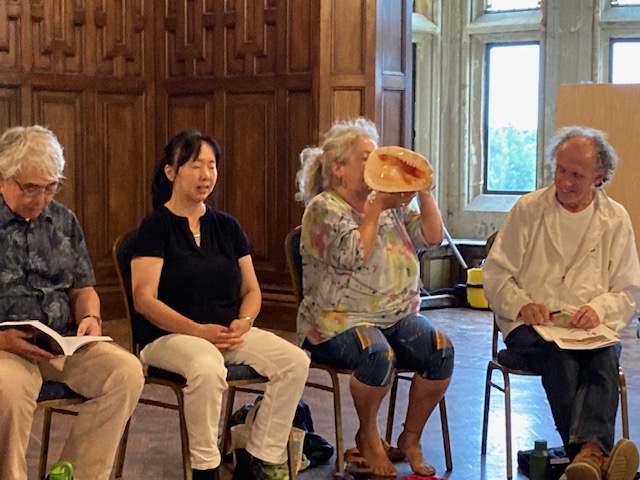
When we arrived at the Daienshu we were joined by other SOA members: Laura Sheehan- Barron with her husband Ted Barron and David Franklin. Our Daienshu experience was rich with 3 keiko plus two morning sessions and a special invitation to the British Shintaido College keiko and exams. The opening meeting started and ended with a long, low, resonant blast on a huge conch from Jackie Calderwood.
Master Instructor Masashi Minagawa was the instructor for the BSC keiko and three keiko in the Daienshu. Minagawa sensei shared in the BSC Keiko his insights into diamond 8 practice giving clear stepping sequence to go along with diamond 8 sei. Friday evening keiko was in the sports hall to the sounds of British rainfall outside. This first Keiko began with joyful warmup by Ula who had all laughing and relaxed. Minagawa sensei emphasized making and restoring strong connection since it has been some time since such a large and International group of shintaidoist have come together. Many stayed to practice long after keiko ended.
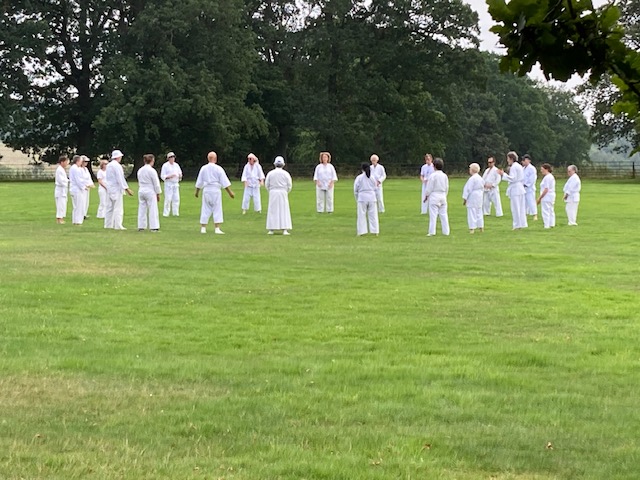
Our two morning keiko were outdoors under oak trees with a view of the green golf course. Nagako taught the first morning session on Taimyo Part III and Ula taught the second morning session on Diamond 8 Sei and Dai.
The Daienshu reporter Peter Furtado states:
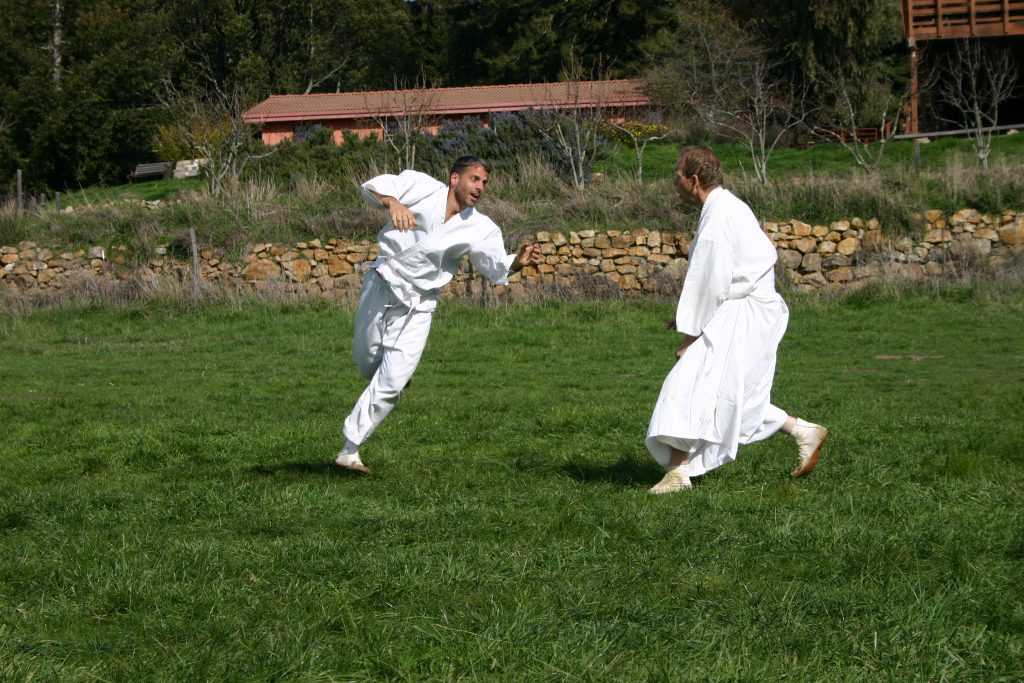
“The second keiko (Saturday morning) began with some vigorous tsuki and Eiko, before moving onto kumite, receiving tsuki attack with Tenshingoso applications, and receiving jodan attack with mai irimi and yoko irimi. Building on yesterday’s Ma exercises, Masashi stressed the importance of settling or grounding as you receive the attack, and before sending the partner on their way.
The (Saturday) afternoon session was entirely taken up with exams – which ranged from 9/10 kyu boh and karate exams, to nidan bohjutsu and kenjutsu. The entire session was very impressive, the examinees were all seriously committed, and the nidan kumite, in particular, both skillful and spectacular. Watching was a great opportunity for the newer members to see what their practice might lead to one day, and for older members to revisit their prejudices? about exams.”
Congratulations to all who passed their examinations!
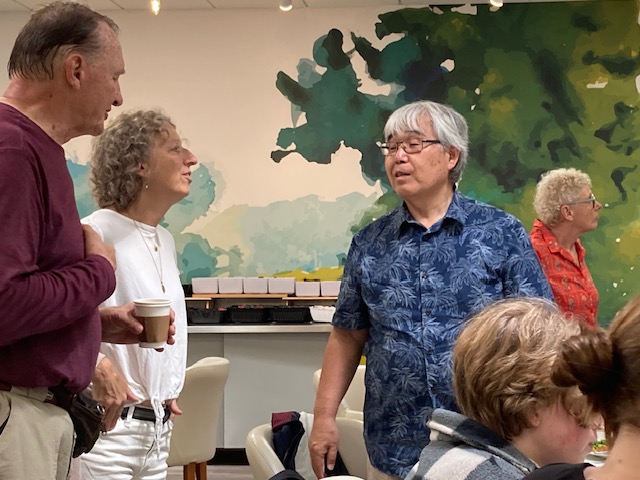
A party on Saturday night included being bathed in sound from the gong played by Jackie Calderwood. Masashi Minagawa explored the possibilities of sonic calligraphy, tracing the characters Do-Kan (way of the circle – the theme of next year’s International) on the gong. Carina hosted our party and Terry played the guitar while we joined in singing. Ula led us in dancing.
As Peter Furtado further reports:
“Early Sunday morning was just as bright, but somewhat dewier, than Saturday, as Ula led us in Diamond Eight Cutting under the trees. But by the time the final keiko began, in the outdoor dojo, dark clouds had appeared and the keiko was interrupted with short showers that made us move under the trees. The extensive kumite – wakame, more Tenshingoso applications – built on the previous two keiko, before we picked up our bokken and practiced kyukajo.
Building on all this, the keiko finished with a rare treat – genuinely spectacular and moving demonstrations by the ITEC members of key features of the keiko (and incorporating some exam feedback): Gianni Rossi showing tsuki, Tenshingoso and boh kata; Charles Burns and Rob Gaston showing neriai; Ula Chambers and Connie Borden kyukajo; and finally David Franklin and Gianni Rossi doing a typically free and powerful kiri oroshi kumite. Everyone watching knew that they had seen something very special, and had been given a unique gift, an intimate vision of what Shintaido can really be in the hands of committed practitioners.”
A strong ma lasted throughout the gasshuku and is continuing to maintain its presence in a vigorous dialogue on WhatsApp. During the closing ceremony, diplomas were distributed, sharing of experiences occurred and enthusiasm for returning in 2024 was said by all. Gratitude was expressed to the organizers and sensei. Jackie closed out the meeting with the blowing of the conch.
Here are some additional comments
Robert Gaston – There was a sense from the start of the Daienshu that the trees grew higher, and their roots deeper, over the course of our gasshuku.
Sarah Baker – Through the height of Covid we learned new ways of connecting using Zoom and other video resources. In those times seeds were planted as we all worked to continue to connect. In meeting together New Life has begun to sprout and take hold. Let us stay connected, however we can, and see what comes.
Connie Borden
Masashi Minagawa reflected the theme of “New Life” translates into his teachings. Teaching Shintaido movements in ways that are accessible and beneficial to the practitioners. His teaching such as Kiroroshi no kumite is to go far enough with the technique to find a person’s center and by going through Ten to reach “just the tipping point” that results in change. The goal of rolling is not the goal, the goal is to change your partner with just enough technique to be effective and nothing extensive that might be too harsh for your partner to appropriately receive.
Feeling inspired to join the community? Then consider attending the International 2024 being held in this same location from 16 August 2024 to 20 August 2024. As Peter Furtado reports:
“ The site is vast, green, orderly, and peaceful, with wonderful outdoor dojos and fabulous spaces for morning Taimyo; a large sports hall . . .and a huge dining room where we were offered huge school-food portions supplemented by a salad bar.”
by H.F. Ito edited by Lee Seaman and Tomi Nagai-Rothe
Mourning
A number of people close to me have passed away recently: my wife Nicole’s brother Philippe Beauvois, my friend Jim Cummings who was a business partner with my friend and colleague John Kent – in addition to my cousin in Japan.
Nicole and I started a morning/mourning ritual to remember them and to pray for their souls. We also hope this will help them in their passage out of this life. According to Buddhist tradition, there is a long “tunnel” called the bardo that the soul must travel on its way to Nirvana. It takes 49 days and during that time the soul may become attracted to and side-tracked by episodes related to their karma. This is why relatives and friends pray for 49 days to help the soul emerge from the tunnel without getting stuck. Nicole and I have been doing that for Philippe, Jim and my cousin.
16 years ago, I envisioned Eiko Dai cosmology as a Kaiho-kei approach to passing through the bardo. My own fusion of morning mourning is a Yoki-kei approach. I use Master Ma’s Tai Chi warm-up – goboho kenko (五防保健功 – literally “five ways of maintaining your health”) in addition to Yoki-kei Tenshingoso (天真五相).
Yugen
Noh classical Japanese theater is very dramatic, very old, and full of symbolism. In Noh the main character often comes out center stage, and then another character shows up. It reminds me of a person walking in the woods and suddenly meeting a ghost. Usually we think of ghosts as scary, but in this case the main character isn’t frightened at all. The ghost is often someone who has passed away and begins sharing their regrets, so the main character and the ghost end up talking. The ghost shares everything about its life regrets (almost like counseling or psychotherapy) and then it disappears.
Zeami, the founder of Noh, talked a great deal about yugen (幽玄) – a fundamental Noh Theater concept. Yugen means “profound grace and subtlety.” It is one of the three ancient ideals underlying Japanese culture and aesthetics. Zeami said it’s almost impossible for young Noh actors to express yugen on stage: they must reach a certain level of maturity before they understand it. To me the concept of yugen is deeply related to these ghosts in Noh theater. It seems obvious to me now, but I don’t think I could have understood that when I was a young man.
I have often led celebrations of life for Shintaido friends and students who have died including Bill Peterson, Juliette Farkouh, Christophe Bernard, Anne-Marie Grandtner, Joe Zawielski, and John Seaman. When I did those, the feeling was very Kaiho-kei, strongly expressing my ki energy for them. But now when I do the morning mourning ritual, it is Yoki-kei, more resilient and receiving. For me, Yokikeikeiko is essentially an expression of yugen.
During our morning rituals Nicole and I often saw Philippe, and just as in the Noh drama, we weren’t frightened. In fact, it seemed very natural. Behind Philippe, we saw Nicole and Philippe’s parents. It felt like time travel – connected to an alternate reality. Rather than frightening, it was a pleasure and a comfort. No separation between this world and the other world.
Epilogue
Shintaido comes from the martial arts and when I was younger, I talked a lot about life and death when I was teaching. But I never actually thought about death being beside me during keiko. It wasn’t until I began to learn diving that I realized how close death is: one tiny mistake can be fatal when you are diving. So that really changed my teaching of Shintaido. I learned to have much more real-time respect for life and death. And though death is scary, it wasn’t like that when Philippe came with his parents. It was more like, “Wow!”
I started my 49-day morning mourning ritual with Philippe’s death, but in the middle of it Jim died, and then my cousin, so the 49-day rituals stacked up and extended out in time.
And now I feel, “Okay, I can keep going with this meditation for those who pass away before me!” Until the end of my life . . .
Acknowledgements – Many thanks to Lee Seaman and Tomi Nagai-Rothe who helped me put these experiences into words.
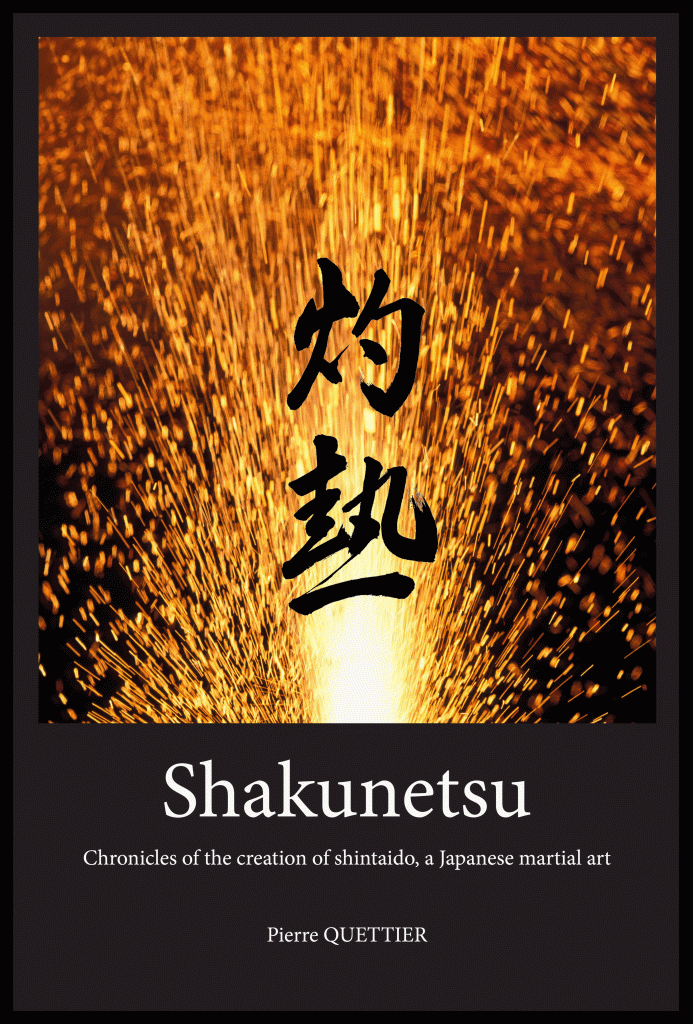
Shintaido of America (SOA) is honored to announce the release of the English version of Shakunetsu; Chronicles of the Creation of Shintaido, a Japanese Martial Art. The goal of this collective biography is to provide the stories of many who studied Shintaido in the 1960’s and 1970’s. Pierre Quettier, author of the book, shares his academic analysis of these interviews.
Shakunetsu was first released in French in January 2022. In October 2022 the board of SOA agreed to sponsor the efforts to release an English version of this book. A group of five, Peter Furtado, Nancy Billias, Lee Seaman, Lee Ordeman, and Pierre Quettier guided by the coordination efforts of HF Ito, undertook the editing and proofreading of the English version.
First let’s understand the time and settingwhen the creation of Shintaido was being developed.
Pierre Quettier, Shintaido General Instructor, author, and sociologist states:
“In the extraordinary burst of the sixties, a group of young Japanese idealists embarked on a quest typical of the time: to break down the cultural and class barriers of the venerable budō to bring the essence to the greatest number. They founded Rakutenkai, the “society of optimists”, then, in 1975, a brand new discipline, Shintaïdō.”
Peter Furtado, Shintaido Senior Instructor, Journalist, and historian writes in the foreword:
“This unique book is complex in its ambition and structure. At its heart is the raw material of history – it brings together the oral testimony of 19 Rakutenkai members who describe in their own words how they came to join, what they were seeking and what they found. But this is supported, and given meaning, by the more academic commentary of sociologist and shintaido instructor Pierre Quettier, who carefully places their testimony in the contexts of the Japanese martial and other arts, and of the youth culture – in Japan and around the world – of the time, which had many similarly grand ambitions to change the world, though taking a different path up the mountain. He also offers a personal, honest, and sometimes painful account of the process of meeting the contributors and assembling the texts. As a social scientist who takes the name of that discipline seriously, he sticks closely to the evidence he has collected, declining to conjecture or judge, and refusing to repeat myths unless they can be grounded in fact. In the introduction, he explains the physically and emotionally arduous – and extended – process of preparing this work.”
HF Ito, Master Instructor, and co-founder of SOA remembers how important he felt about having these biographies collected from Rakuntenkai members:
Some time at the beginning of 2000, I got a call from Pierre Quettier who wanted to interview the former Rakutenkai members, who devoted their young lives in order to create Shintaido founded by Master Aoki during the ‘60s~’70s, I immediately understood his intention as a sociologist!I remembered there was a series of documentary films produced by NHK, in which the directors collected stories of many Japanese engineers, scientists, & entrepreneurs who worked behind scenes, in order to encourage & rebuild the Japanese industry, economy, and technology which were crushed by the events of WW II. The title of this program was “Project X”. So, this is how I started to work together with PQ to publish a book, later named “Shakunetsu!”
Pierre Quettier describes his enthusiasm for this academic project:
“Having studied ethnology . . ., now holding a teaching-research position at the University of Paris 8 and well versed in biographical methods in the social sciences, I decided to take up Bernard Ducrest’s historical project as my own and to initiate a process of collecting life stories of the Rakutenkai members. H.F. Ito was enthusiastic about it and in 2002 I obtained a small budget from the head of my service at the university; with it H.F. Ito and I traveled all over Japan to interview the members one by one.”
Members of the project team who spent nine months of intense editing and proofreading share their impressions.
Senior Instructor Lee Seaman:
This is an amazing project. I began practicing Shintaido in Tokyo at the end of 1975. Ito-sensei had left for San Francisco the month before, the Shinjuku office was being run by Minagawa-sensei, and my first keikogi was labeled “Sogo-budo Renmei” rather than “Shintaido.” Because I understood Japanese, I was often asked to translate formally and informally at gasshukus, and we also went to Sunday services at Nogeyama, so I got to know many of the original Rakutenkai members. I’m so grateful for Pierre’s interviews, which capture the voices of their keiko and the joys, fears, and complex human relationships, not only of that time and place, but also the Shintaido art form as it lives and grows in our lives today.
Senior Instructor Lee Ordeman:
It was a privilege and a great benefit to participate as an editor for the Shakunetsu project. I helped edit the book’s biographical section, which will be of most interest to those of us who practice shintaido. Even though I practiced in Tokyo for 10 years in the 1990s, I only got to know a few of the Rakutenkai members mentioned in the book, and so I was very interested to finally read the personal stories of so many of our oldest sempai. I was fascinated to learn about their childhoods, sometimes very challenging, about how they met and started keiko with Aoki Sensei, Ito Sensei, and others, about their daily lives and experiences in keiko and what shintaido has meant to them beyond the dojo, even after leaving shintaido circles. All the bios inform our current practice and how we relate as a community. Some of them are quite moving and inspiring. I now enjoy a deeper sense of the people who came before me, whose bodies helped create and transmit the forms and the spirit of shintaido to others and ultimately to us. The movement of their bodies can be felt in our movement, and now their stories can be understood and felt as our story.
Senior Instructor Peter Furtado:
“I am a historian who has spent my career communicating academic historical understanding to non-academics and across cultures globally. Pierre asked me to help him in two key ways. First was to support his chapters that contextualize the interviews at the heart of the book, and in particular to work with him on placing the Rakutenkai in the context of 1960s Japan, notably its countercultural and radical spirit, in order to ensure that the book’s references, some of them quite obscure, make sense to a modern Anglophone audience. Second was to introduce the book by way of a Foreword that explains both its rather unusual structure and its author’s approach, deeply grounded in French academic tradition, in order to help the American reader, who is more likely to be a Shintaido practitioner than an anthropologist, understand what to expect.
It was a great privilege to contribute in this way and to work with Pierre who was amazingly constructive and responsive to queries great and small. I believe the book is both fascinating and important in multiple respects, and it’s wonderful that Shintaido of America has invested so much time and energy in publishing it in English.”
Instructor Nancy Billias:
Working on this project has been a very special kind of group kumite. Through proofreading and copyediting, I have learned so much about the origins and early days of Shintaido! What began as a chore became an enticing process. Each meeting has really been like a mini-keiko, with the instructors doing fine-tuned quality control in meticulous detail and with constant deep attention to faithfully transmitting the history of our art form. The result is a precious artifact that will benefit every Shintaido practitioner. Many thanks to Pierre and Ito and the whole team for their dedication to ensuring that these memories are recorded for future generations.
Gratitude is also given to other volunteers who gave their time and talents. These volunteers for editing include Stephen Billias, Derk Richardson,and Guy Bullen. Sarah Baker has formatted the work for a print-on-demand via Amazon. Thank you also goes to Mieko Hirano for consolidation of biographies and translation, Peter Furtado for the Preface of English edition, Pascal Lardellier for the French foreword and Jean-François Degremont for the afterword. Pierre Quettier receives the deepest gratitude for 20 years of nurturing the writing and translations of this book.
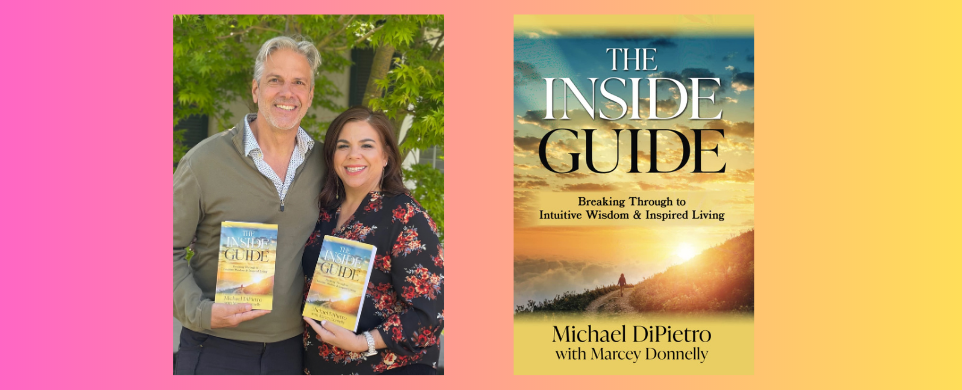
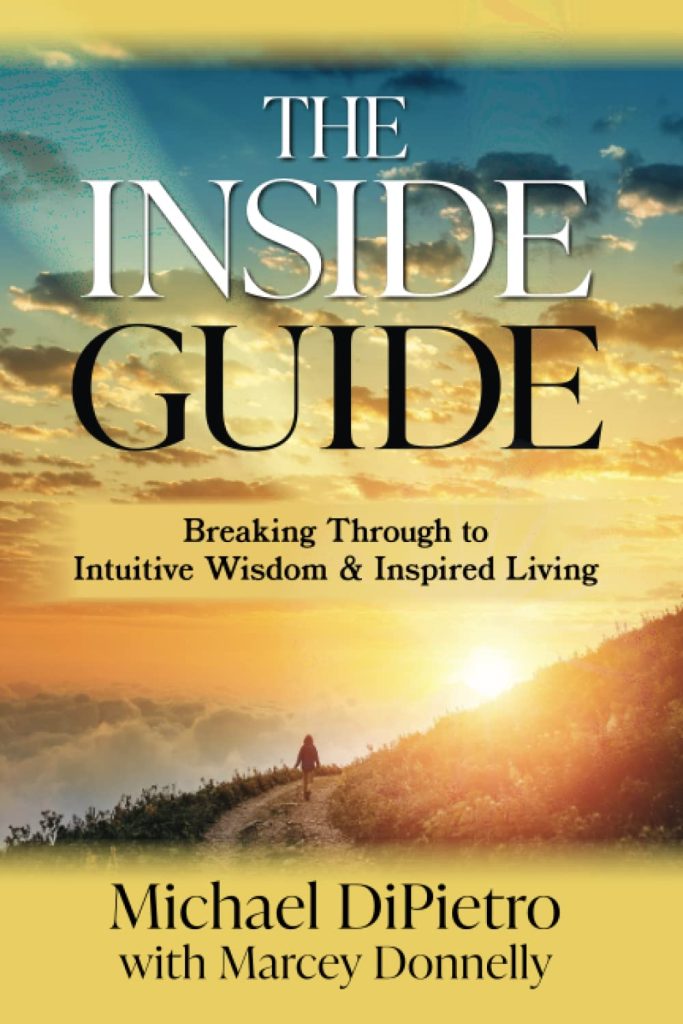
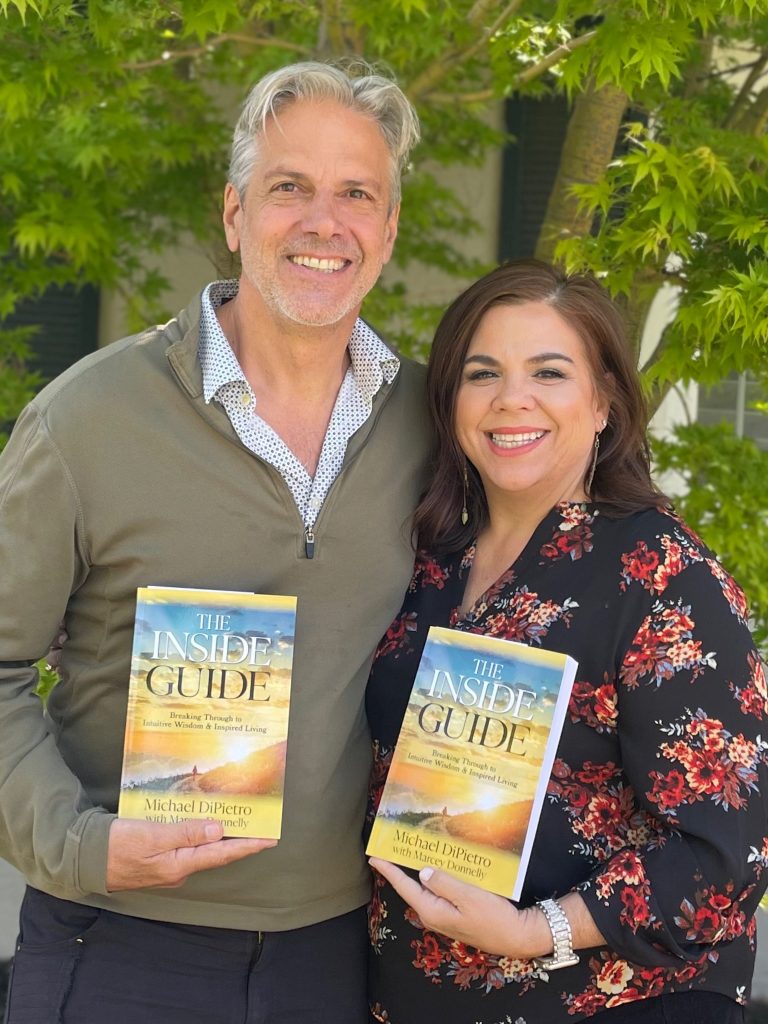
Much of the time when we undertake a new venture, we don’t know the full extent of what the journey will entail. Writing a book is a prime example of this. Recently, with the collaboration of my writing partner Marcey Donnelly, I self-published my debut book, “The Inside Guide: Breaking Through to Intuitive Wisdom and Inspired Living”. It has been quite a ride and I was honored when asked to share some of my experience in Shintaido’s “Body Dialogue.” This article aims to highlight the book’s overview, its connection to Shintaido, and how the practice helped me in preparation. Additionally, I will discuss specific aspects of Shintaido mentioned in the book and their significance.
A brief overview of the book
“The Inside Guide” serves as a transformative manual, guiding readers to introspection. Within its pages, a self-directed framework leads individuals on an inner journey, exploring their interior lives and uncovering innate wisdom. Offering breakthrough tools and profound insights, the book sheds light on how our minds create our reality. It empowers readers to work with their unconscious minds and unlock the hidden keys to lasting positive change. Moreover, it steers them toward a mystical awareness, culminating in living a truly inspired life aligned with their purpose.
The book is sectioned into three parts that are titled: Finding Answers, Overcoming Obstacles and Living Purpose. These parts also correlate to mind, body and spirit. Obviously, there is a link to Shintaido in these themes. I’ve always experienced Shintaido as a holistic practice, so even though much of the time the focus is on the body, our mind and spirit are developed as well. The book parallels a similar approach to keiko in reaching for the center of the being and then encouraging the reader to express their purpose from that center out into the world.
Why now for this book?
The timing of this books’ release is relevant as we consider the intersection of societal needs and the need for effective tools for the development of individuals.
In our current society, external distractions increasingly divert our attention away from introspection. Social media, daily demands, recreation, and even our focus on others often hinder us from dedicating time to self-reflection. Consequently, we are losing the contemplative focus crucial for personal growth. However, as most of us already know true transformation begins from within. The purpose of “The Inside Guide” is to inspire individuals to look inward and discover the peace, goodness, energy, and talents that lie within themselves.
In working with many clients over the years, I’ve seen a common theme that they cannot figure out how to clear what is holding them back. They keep getting stuck in the same recurring patterns that run interference on leading a full and happy life. By fostering greater awareness and equipping readers with practical tools, this book aims to enhance individual well-being for the betterment of society as a whole.
How Shintaido helped me prepare
Shintaido, with its holistic approach, played a significant role in my preparation for writing this book. Three particular practices come to mind:
The practice of Tsuki helped me to be singularly focused on a particular outcome, to be linear in my intent to complete a goal and to focus my energy with the entirety of my being. While I must admit, this seems like an ongoing practice for me, I did find improvement in reaching my goals the more I worked with my Tsuki.
Another aspect or keiko that I found useful was that of coming from our center. In Kumite, we reach for the center of ourself and our partners and we express from that center outward. This practice gave me a deeper understanding of how to do that not only from a movement perspective, but also in how I show up and work with my clients. I recognize the essence of those I work with and support them in their authentic expression.
The third exercise is I found particular helpful was Eiko Dai. To me this supports really putting oneself out there in life without the fear of judgment from others. Artists in particular, often grapple with insecurities when sharing their work with the world. They must overcome the stereotypical “artist angst” when exposing themselves to outside critique – how will my work be received, will I be laughing stock, will the world and my peers take me seriously? With the free expression we foster through Eiko Dai we can overcome this challenge and release ourselves from the needless preoccupation with what others think. We simply express with our full self.
Benefits of Shintaido in becoming more successful
Beyond the obvious health benefits of Shintaido, such as joint mobility, flexibility, strength and improved circulation, benefits also happen in the psycho-spiritual aspects. Body awareness helps us get in touch with unconscious content buried deep within, unveiling patterns that can limit our expression. We can use the practice to see how physical patterns in our body and in our movement reflect psychological patterns that can keep us inhibited. As we practice and become more fluid and natural in our movements, much of the time it will reflect and shift in the psychological pattern as well. Personally, Shintaido has helped me combat depression and discover a more vibrant and energized approach to daily life. By embracing the movement, the expression and the connection with others, I unlocked my natural abilities and found the confidence to be myself in a unique way. Shintaido practitioners find the practice when they are ready and gain the specific benefits they require at that point in their lives.
Some aspects of our practice that are mentioned directly in the book and why I included them in my work
The most obvious and explicit reference to Shintaido comes toward the end of the book when I talk about “proper timing in taking action.” I will share the excerpt below but I must first clarity why it positioned where I did and why I chose to include this particular practice. Throughout the book we work with the metaphor of reaching the mountaintop and returning to the village. This is a way of discussing our spiritual and/or peak experiences and the need for the integration of those experience into our everyday life. In part three of the book the focus is primarily on ways of being that support living an aware and awaked life in the world – the return to the village. To that ends, I chose to discuss proper timing as one of the ways people can work with living in the world. Here is what I wrote:
The Journey to the Mountaintop and the Return to the Village – pg 15
The mountaintop represents our retreat from everyday life and the clarity of enlightenment. We go to the mountaintop to have our spiritual experiences. The return to the village is the integration back into our everyday life of whatever spiritual experiences we have had on the mountaintop. That aspect, that return, is where a lot of peoplehit challenges.
We will discuss this more in Part Three, but it is important to understand that this book helps people make that journey back to the village. It gives them a roadmap not only for reaching their mountaintop, but just as importantly, for integrating their spiritual awakenings into their everyday life.
And then,
Proper Timing in Taking Action – pg 241
As we begin to follow spirit, listen internally, and take action in the world, there is a proper timing as to when to take action. We are looking for an opening or a window in time. What is the exact moment when my action is going to be most effective? Sometimes that means acting immediately; sometimes that means waiting. Not always jumping immediately into action, but waiting for the right timing. Waiting for some signal, the cue, or an opening.
How do you know the best moment to jump into action?
It is almost like a window opens and then you jump through it! If you wait for the proper timing, then when you take action, it works like magic, like clockwork. If the timing isn’t right, things may not work out.
This concept comes from martial arts. In the martial art I practiced called Shintaido, when we are practicing “attack and receive” scenarios, there is a proper timing to receiving your opponent’s attack. If your timing is superb, you can move in a relaxed, slow state and still beat the other person. We call that “A-timing.” If I am too soon, my opponent has time to adapt. If my timing is too late, then I must speed up and rush to deal with the situation. There is a timing that comes from perceiving the right moment but in a different kind of way. The perception, how to sense into that, is a different kind of perception.
When we practiced, we explored that timing by learning to sense the other person’s intent in our own bodies. When anyone moves their body in any way, there is first an intent in the mind. Then that intent travels in their nervous system, to their muscles, until it transfers into movement. When you get sensitive and open enough, you can actually feel another person’s intent. Before they actually start to move, you can move according to their intent. This means you are already ahead of them once they actually start the movement.
By analogy, we can see that there is a proper timing to our actions. If you are too soon or too late on your timing, you are not going to have the most effective outcome. This may seem like a very nebulous concept. Even during martial arts practice, it was very nebulous. It is almost like a “psychic feeling” in your body; this person is about to move, and I act, trusting my body’s sense. If they’re already moving, I am too late.
What is this little window of proper timing? When is the moment when your action is going to be most effective? If it is too soon or too late, you might not have the best results.
You can begin to track it by noticing your timing in everyday life. Are you showing up right on time? Are you showing up early? Are you running late? If you say, “Oh, I am running late,” your timing is not correct. If you are too early to your appointments, then it is also not proper timing.
Being “on time” is being in the right place at the right time. Notice if you are showing up early or late in your life and explore adjusting your timing. Maybe something is saying, “Not yet.” Maybe wait a day or two, a week or two. We are just trying to listen for those “impressions,” if you will. The gut hunch on when is best.
All of Part Two of the book is primarily focused on the body, but more specifically on our neurology and how it affects our experience. However, toward the beginning of Part Two, we discuss the importance of the body and increasing one’s sensitivities by noticing more subtly in the body. This seems to have a particularly Shintaido “feel” to it, so I will share these excerpts:
Your Body Allows You to Feel – pg 111
If you did not have your body, you would not have the ability to have experiences. More specifically, your body is exceedingly important for the feeling aspect of your experiences. Your feelings are a very important piece in the field of transformation as well as for your inner guidance. Noticing feelings is an ability that comes easier for some and takes practice for others.
The deeper truth of your experiences comes from the somatic or body level. An experience from the somatic level will often show you more than you could uncover through a verbal inquiry from a mental place. It can show you more quickly and more efficiently if you’re willing to see it.
You can begin to explore sensations and your different experiences from a somatic perspective by asking yourself, for example, “Where am I feeling this sensation? What does it feel like in my gut? What do my hips feel like?”
You could go piece by piece through your body and begin to notice experiences at the body level. When there is a particular experience there is a way to start exploring.
Exercise
Sit still. Keep your spine straight. Then notice. What sensations come up? What do you do with those? Accept them by allowing them to be. These are the first two levels in working with a somatic approach in transformation. Notice the sensation and allow it.
Sometimes this exercise will begin to unlock some of the emotions that go along with an experience. If you sit quietly long enough and do not try to “wiggle out” of something, generally, the deeper content starts to arise.
Sometimes you can be carrying emotions in your body and you do not notice it until you sit in silence. You may start to recognize a particular feeling or that something was going on that you were not in touch with. That is part of meditation; that is part of noticing.
However, there are instances when noticing and accepting does not get to the desired change in a deeper pattern. In those cases, we need to practice transformation, and that is what this part of the book is about, the deeper keys to transforming your experiences.
For now, this is about noticing the feelings in your body. Recognizing feelings pulls you out of your mind because you actually notice what is happening in your body. It bears repeating: If you did not have your body, you would not have the ability to have experiences. Through this practice of noticing you create an opening for more information. Exploring through your body is the key. Again, your body is very important.
Deeper Aspects of Your Body – pg 112
Since the body is what allows you to have experiences, you can begin to build your ability to notice your sensations with finer and finer levels of detail. You might have a sensation, but there are the gross and the subtle levels of the sensations you encounter. Typically, people only notice what is coarse or heavier, but as you progress, you build your acuity to notice the sensations with more and more granularity.
As things get deeper, as you progress more into the spiritual aspects, or the unknown dimensions of the inner terrain, a lot of times very subtle sensations can have a very big impact. Generally, when the sensations are subtle, they are more difficult to notice. In addition to the awareness of the sensation, as we have mentioned, the location in your body of the various sensations is also a big factor in developing your acuity.
What are you feeling for a certain experience in your body and where are you feeling it?
The body holds certain aspects from many of the experiences in our past. We hold things in our hips, we hold things in our backs, we hold things in our shoulders, and so on. As you start to explore through the body, you can notice where you are holding tension. What happens as you begin to work with that tension? What content thoughts, feelings, memories or emotions arise as you release certain tensions in your body? This tension is sometimes referred to as our “body armoring.” It is a way people protect themselves from the unconscious content they don’t want to see.
Throughout the book we also highlight key concepts and then, for easy reference, we provide a summary of all these key concepts at the end of each part. The following example is from the excerpt above and is the main takeaway that bears repeating:
KEY CONCEPT Without our bodies we would not have experiences. Through the practice of noticing how our bodies respond to the external world, we create a new level of understanding ourselves.
There are various other small instances throughout the book that a Shintaido practitioner could identify as inspired by the practice. I have given these few examples in the hopes that you better understand the link of Shintaido practice to the success of whatever endeavors you undertake in your life. It has been a great honor to share my perspectives with you and I invite you to read the entire book and explore working with me directly if you want to accelerate your transformative journey. Many Blessings!
Shintaido and nature; Nature and Shintaido – always have been linked. I was reminded of this during our recent Shintaido of America Podcast discussion when the topic of Shinrin-yoku (forest bathing) was discussed. As I reflected more on nature, the teachings of nature on the cycle of life and on giving meaning to life. I realized this connection from the soil to the sky can result in moments of Yugen (a deepening of emotional awareness triggered by awareness of the universe).
One moment of such awareness was in New England in the fall of 1986 at Spring Hill. Annelie Wilde wrote about this in Body Dialogue:
During Friday evening keiko we were treated to a magnificent display of stars. As we studied variations of mochikai, someone turned off the surrounding lights. Lacking competition from earthbound illumination, the stars seemed to multiply and move closer to the earth to fill our hearts and souls with wonder and reverence. lto-sensei asked Faith Ingulsrud read to us from Psalms 19:1
“The heavens declare the glory of God, The vault of heaven proclaims his handiwork; Day discourses of it to day, night to night hands on the knowledge. No utterance at all, no speech, No sound that anyone can hear; Yet their voice goes out through all the earth, And their message to the ends of the world.”
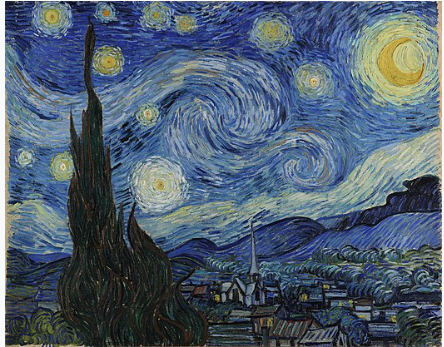
To prepare us for hoshiotoshi or knocking down stars, he told us about the Italian painter Fontana, who painted a canvas all gold and then cut through the canvas to reach the other side. Our objective was to scratch out a mere 1000 stars. There were so many stars in the heavens that night that even if we had each succeeded in our task, none would have been missed.
Perhaps I have stirred some memories for you – at the beach, on a mountain top, in the wilds of national parks or green space in the inner city. I think now of how alive the soil was and is beneath our feet with each handful of soil teaming with life. What moments are stirred for you?
Join us in the monthly Shintaido of America Podcast discussions. Our next meeting is 27 June 2023 at 11am Pacific, 2pm Eastern, 7pm UK and 8pm Europe. Contact Connie at president@shintaido.org for the ZOOM link.
On May 1st, 2023, after a long struggle with Parkinson’s disease, James Cumming took the MAiD (Medical Assistance in Dying) medicine, which is legal in the state of Vermont where he lived. He passed away peacefully with his wife Evangelina “Vangie” Holvino by his side.
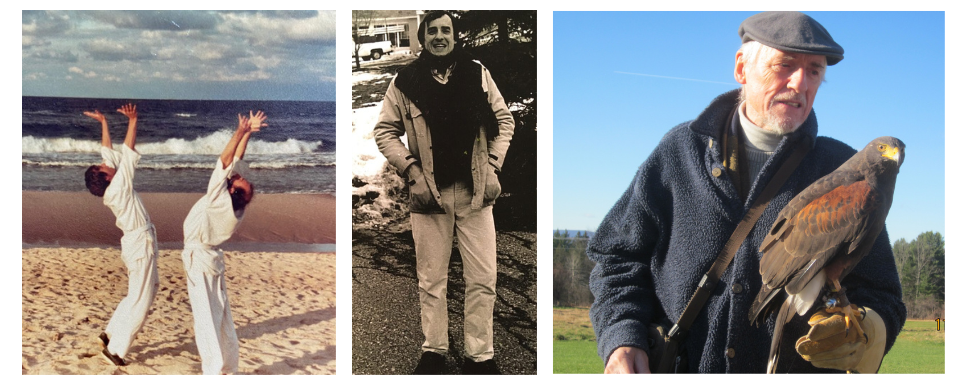
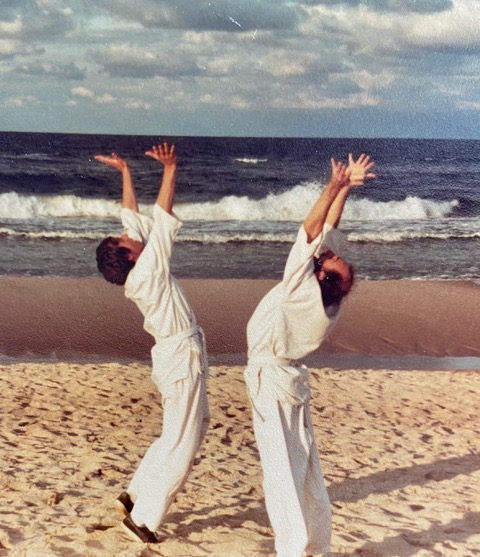
James was a longtime Shintaido practitioner in England. He also spent time in the San Francisco Bay Area, where he stayed for a time with Bela Breslau and Ito-sensei. Here’s a photo of James (on the left) doing Shintaido on a beach somewhere with his longtime friend and business partner John Kent.
I got to know James through Bela. When we moved East in 2004 to build and run the Shintaido Farm, Bill Strawn and Eve Siegel, friends from the Bay Area let Bela know that that James and Vangie were still living in Brattleboro, just a few miles up the road from Deerfield. We connected with them. James came back to Shintaido, participated in a few classes at the Farm, and reconnected with Master Instructor Michael Thompson and other people in Shintaido Northeast.
James introduced me to Tai Chi, which I have been studying for a dozen years now. This is a great debt I owe James, because Tai Chi turned out to be the right practice for me at my age–soft, relaxing, thoughtful. James and I worked on a non-fiction book proposal, and quickly grew close. James and Vangie had many friends in the area, particularly among the Tai Chi students of teacher Wolfe Lowenthal. Somehow, possibly through the practice of Tai Chi, James had managed to stabilize his Parkinson’s and for many years he was in relatively good health despite his illness. Unfortunately, at the end of last year, James fell in the parking lot of a medical facility after a doctor’s appointment. That fall precipitated a difficult period of decline marked by stays in three hospitals and rehab places before returning home after three months.
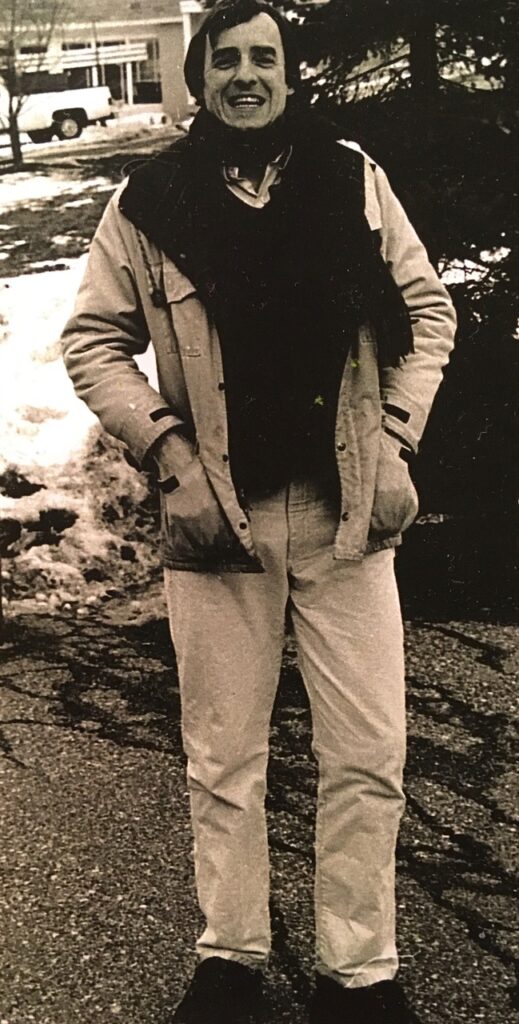
You can read more about James’s struggles and joys in his and Vangie’s website Paths to the End, where they posted updates about James and created a forum where people could talk comfortably and exchange ideas about death and dying. Though he looks a bit forlorn in the picture on the home page of their website, James was a strong man with a terrific sense of humor, dry and wry in the British way, but also capable of a loud belly laugh when the mood struck him. He was gentle, inquisitive, warm, a loyal friend and a rousing companion. Bela told me stories of she and James and a few other roustabouts having long evenings of carousing in San Francisco. Here’s a picture of a young James, around the time he met Vangie:
James and I had many wonderful talks on a variety of subjects. Among other things, I learned that James had been a pilot in the RAF, though he never had to serve in combat. For many years he and John Kent taught cross-cultural learning classes. Later James and Vangie gave workshops on change through their company Chaos Management.
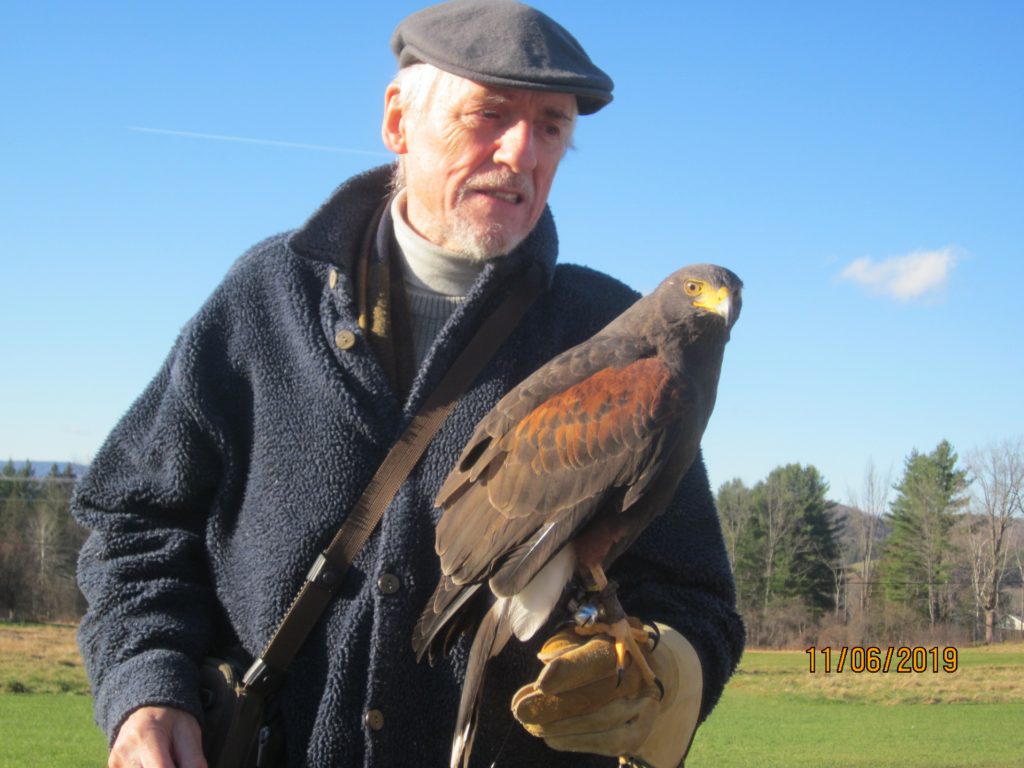
My favorite picture of James is this one of him handling a falcon at New England Falconry in 2019:
Both James and the bird are majestic.
James included a link to the British Army’s Last Post bugle call as part of his final post on the Paths to the End website. Quintessentially English, James was a citizen of the world. Shintaido practitioner. Tai Chi student, international traveler, gifted teacher, loving husband, cherished friend.
I was looking for some words from Tai Chi or Shintaido that might sum up James’s life and ending. What I found instead were the last lines from The Soldier, by the poet Robert Frost from James’s adopted home state Vermont: