Releasing on January 5, 2022 – join our release party on January 4, 2022!
Our motivation to start a podcast
When Shintaido of America was founded in 1976, we set a few goals that we wanted to achieve. From supporting local groups, providing a high-quality educational environment for upcoming Shintaido instructors to spreading the knowledge of Shintaido in America.
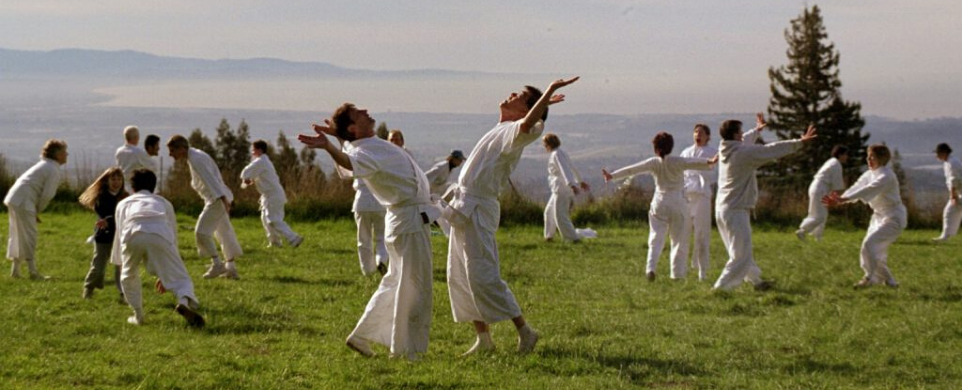
Shintaido is a physical practice, the knowledge and understanding come through our bodies via movement. At the same time, Shintaido is a complex system of thoughts and values that can be approached intellectually.
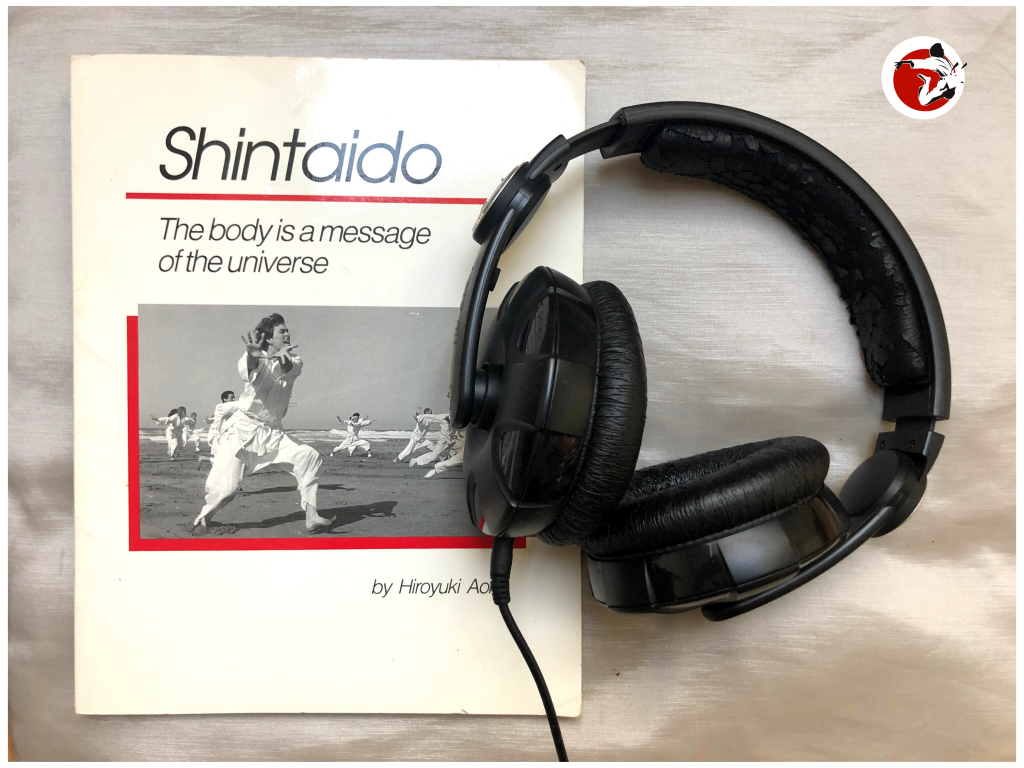
In 2022, it is going to be exactly 40 years since Shintaido of America first published the English translation of the original book by Master Hiroyuki Aoki Shintaido – The body is a message of the universe. In this book, Master Aoki introduces Shintaido not only as a set of physical forms but also as a manifestation of human beings’ relationship to the world.
This book highly influenced Shintaido’s spread around the globe – practitioners who relied on their physical practice now had a chance to learn in more detail about the philosophical background of Shintaido and look for new ways to deepen their experience.
The old needs to be supported by the new
Relying on the original goal of Shintaido of America to spread the knowledge of Shintaido, we decided to go back to the roots and take a closer look at Master Aoki’s book. But this time, in the form of an audio podcast series.
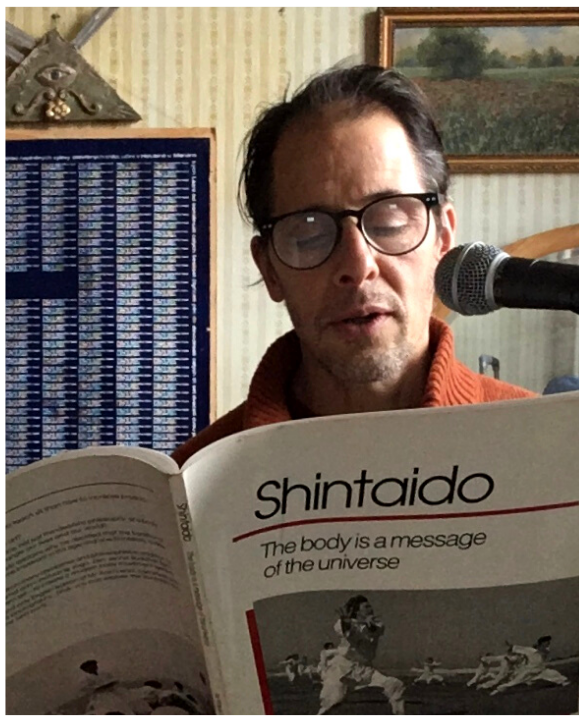
We are very excited to announce the release of the first podcast dedicated to Shintaido. And, we are going to devote the first season to reading Shintaido – The body is a message of the universe. In the 20-episode season, our narrator instructor, David Franklin will read the entire book divided into separate parts for better understanding.
The first season is going to be released regularly throughout the year 2022 with the first episode published on January 5.
On January 5, 2022, you will be able to find the podcast on the majority of podcast applications, our website and our YouTube channel. On our website, you will find a page dedicated to the podcast where we will publish the episodes to list along with additional materials such as pictures, related articles and reflections.
Welcoming the podcast together on January 4
One does not release a podcast every day. We feel very close to our community and we wish to invite you to our release party of the podcast.
The release party is going to take place on January 4, 2022, via ZOOM and the program is more than exciting!
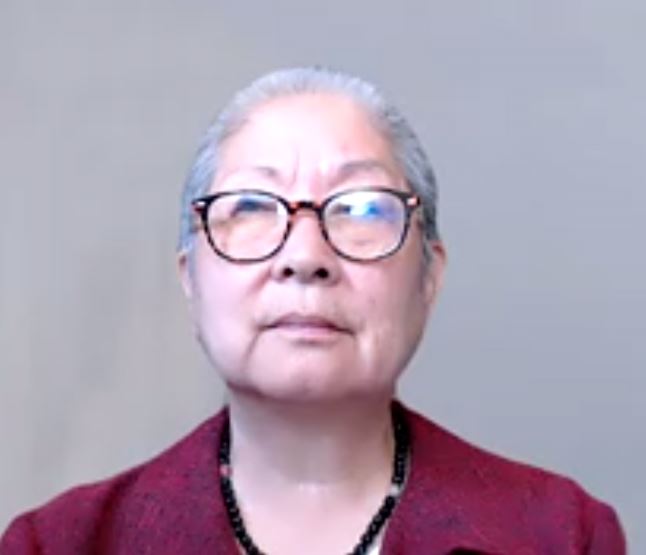
🔴 We will introduce you to the producing team who is behind the podcast creation, our president Connie Borden is going to speak in more detail about our motivation to start a project like this.
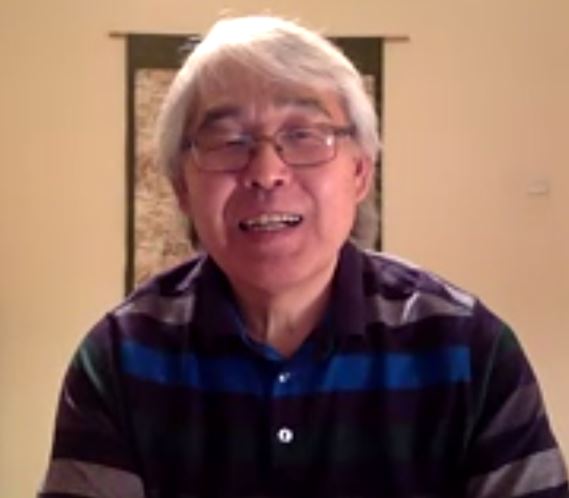
🔴 Our special guests HF Ito sensei, Masashi Minagawa sensei and other important figures of Shintaido will talk about their relationship to the original text as well as about how the podcast can help us to reflect on Shintaido from new perspectives.
🔴 Those of you who decide to join us will also have the unique opportunity to listen to a short excerpt from the podcast. You will be the first public audience of our podcast!
🔴 And together, we will make a toast to welcome the podcast.
Save the Date, January 4, 2022, and join our online release party. Let us know about your presence in our Facebook event and feel free to invite your friends. If you prefer to skip social media, we will be more than happy if you will share this article or simply tell your friends about it.
We can accept up to 100 participants to the ZOOM call so make sure to be on time. For those of you who might not find a place at the release party or simply wish to participate from a distance, the whole party is going to be live-streamed on our YouTube channel, shared on our Facebook and then uploaded to our YouTube channel.
Help us spread the word about the podcast
The idea of creating a Shintaido of America podcast came to mind one year ago. Since then, we have been working hard to find the right way to do it so you can enjoy the best audio podcast.
We care about this project and one of our deepest wishes is to reach as many listeners as possible. Which is something you can help us with. Do you know someone who might be interested in this? Let them know – share this article with them, show them our social media or simply tell them to subscribe to our podcast and give it a try.
Are you feeling generous and wish to support our project even more? You can donate whatever amount you feel is adequate. Shintaido of America is a non-profit organization and we rely on the efforts of volunteers but some things require even more than that and we are grateful for any support you can provide.
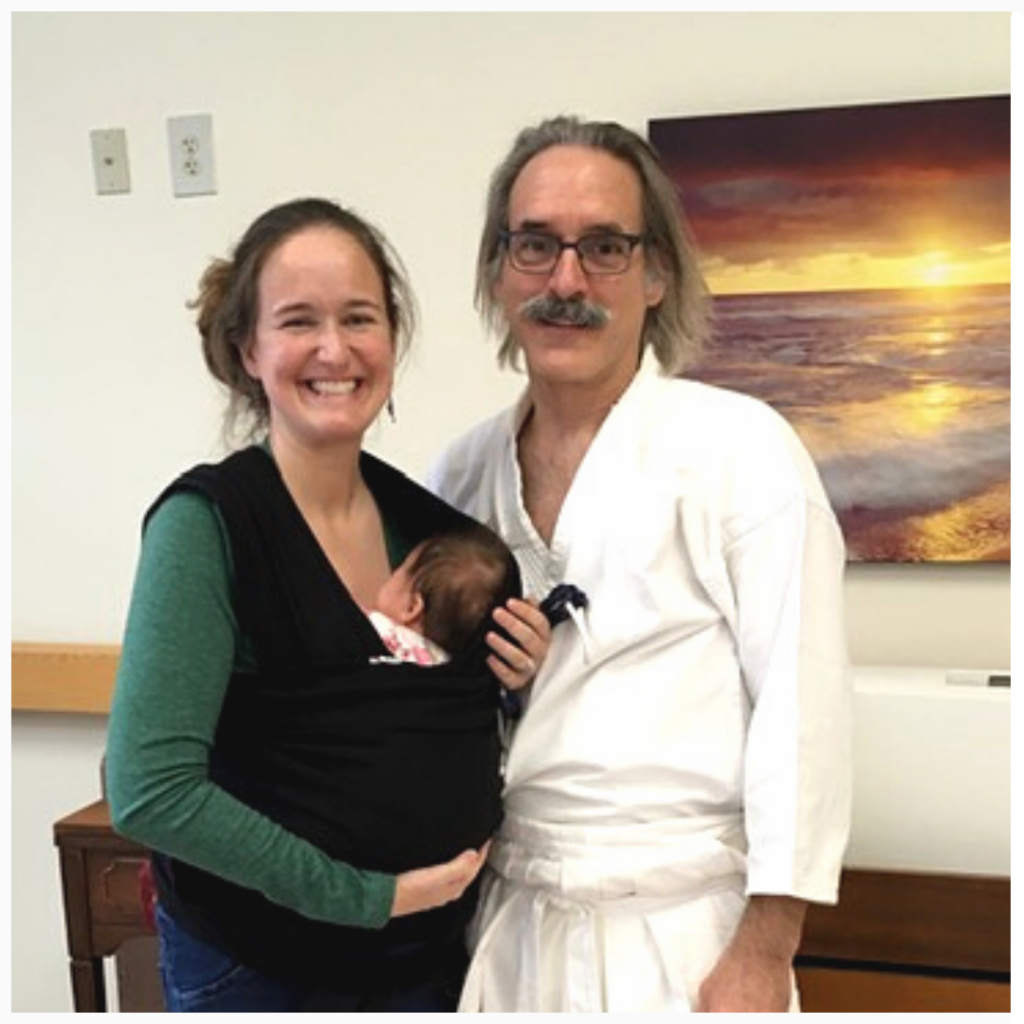
The narrator of the Shintaido of America podcast, instructor David Franklin
Frequently asked questions
Where do I find the Shintaido of America podcast?
Regularly in 2022, we will publish the Shintaido of America podcast on most of the podcast applications, our website and our YouTube channel.
How do I subscribe to the Shintaido of America podcast?
First of all, you need to download a podcast application. You can take a look at this list of recommended applications to help you choose. Once you have the application downloaded, it needs to be installed.
Then, open your podcast application and look for “Shintaido of America podcast”.
What is a podcast anyway?
A podcast is an online audio show focused on a specific topic that you subscribe to via your smartphone. If you prefer to read more about what a podcast is, we recommend taking a look here.
But don´t worry – if you do not have a smartphone or if you prefer to keep things simple, you can always listen to our podcast via our website or on our YouTube channel.
When can I start to listen to the Shintaido of America podcast?
The official release of the first episode is January 5, 2022. Before that, you can follow our Facebook, Instagram and website to learn more about the content of the podcast.
Reflections on the Global Taimyo Community Workshop, August 2021 by Tomi Nagai-Rothe
Over the past year I helped plan and organize – with a team of three others – a virtual international workshop marking the 20th anniversary of H.F. Ito’s founding of the Global Taimyo Community* in 2001. The creation of this community came in the wake of 9/11, and a deep desire to create connection and peace in an increasingly violent, chaotic time.
We scheduled the workshop between Hiroshima Day (August 6) and Nagasaki Day (August 9) and September 11 – a backdrop of war and violence – to highlight the importance of Taimyo Kata as a tool for fostering inner and outer peace.
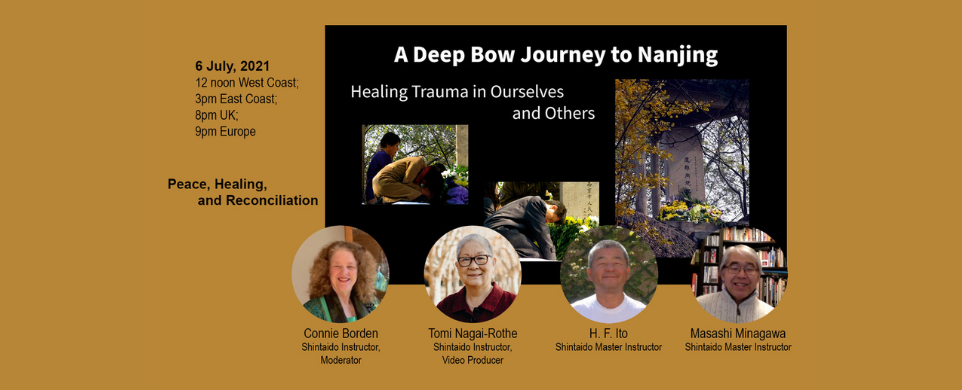
In conjunction with the workshop we produced a 32 minute video entitled, A Deep Bow Journey to Nanjing: Healing Trauma in Ourselves and Others ** in which H.F. Ito and Masashi Minagawa tell their stories of accepting an invitation from Kazuaki Tanahashi to join 30+ Japanese citizens for a trip to Nanjing, China to apologize for the 1937 Nanjing Massacre by the Japanese military.
From this account the workshop might sound like a grim commemoration of several violent anniversaries but in practice it was so completely different than that. I witnessed playfulness and humor; the joy of reconnecting with old friends and meeting new ones; practice with folx who had never encountered Shintaido or Taimyo before; a 90 minute dialogue about Taimyo practice, violence and reparations; and new insights into Taimyo. Several people shared profound insights with the group and a few reported transformational experiences during the week.
For me it was a beautiful manifestation of the unification of self, family/friends/society, Nature (Earth) and Heaven (Ten): Ten-Chi-Jin-Ware Ittai. The two elements that I believe set this gathering apart were:
1) The power of a strong shared intention to foster healing and peace 2) Coming together as a deeply accepting community to meet participants where they were emotionally, spiritually, and physically
I think this is what allowed the group to encompass the space between Hiroshima-Nagasaki Day, September 11 and the Nanjing Massacre. Without deep community I know I cannot survive the trip to difficult places in history or in my own heart. A loving community allows me to shift my consciousness and to grow in challenging circumstances.
Most of us are privileged enough to not live our lives in constant trauma. Yet there is so much we can learn from those who experience life in extremes where our mortality is so clear. As a martial art, Shintaido is by definition about living at the edge of life and death.
Those who have worked in hospice settings or acted as caregivers at the end of life understand this. H.F. Ito recounts the story of his rescue dive training in which his instructor told everyone the importance of descending to where the diver in trouble is and just being there with them: feeling their panic and whatever else they are experiencing. “You cannot save them” was the warning. “You can only be there fully, in the hope that they can save themselves.”
The hope and intention is that the two divers can eventually make their way to the surface – to the light and air.
Going into Um (the meditative space of Nothingness and darkness) with a partner can be the same as the rescue dive. Can we go so deep that it scares us? Go so deep that we are in uncharted territory?
Only by fully embracing the depths of Um and Nothingness in my life can I taste Heaven (Ten, the Universe).
As essential as H.F. Ito and Masashi Minagawa’s examples are to help us see the possibilities of apology and the start of healing trauma, I don’t think what we experienced could be attributed to the presence of any particular person or even our Taimyo practice. I think it could have been any short kata – even Tai Chi or another short movement form – if the two elements of clear intention and community had been present.
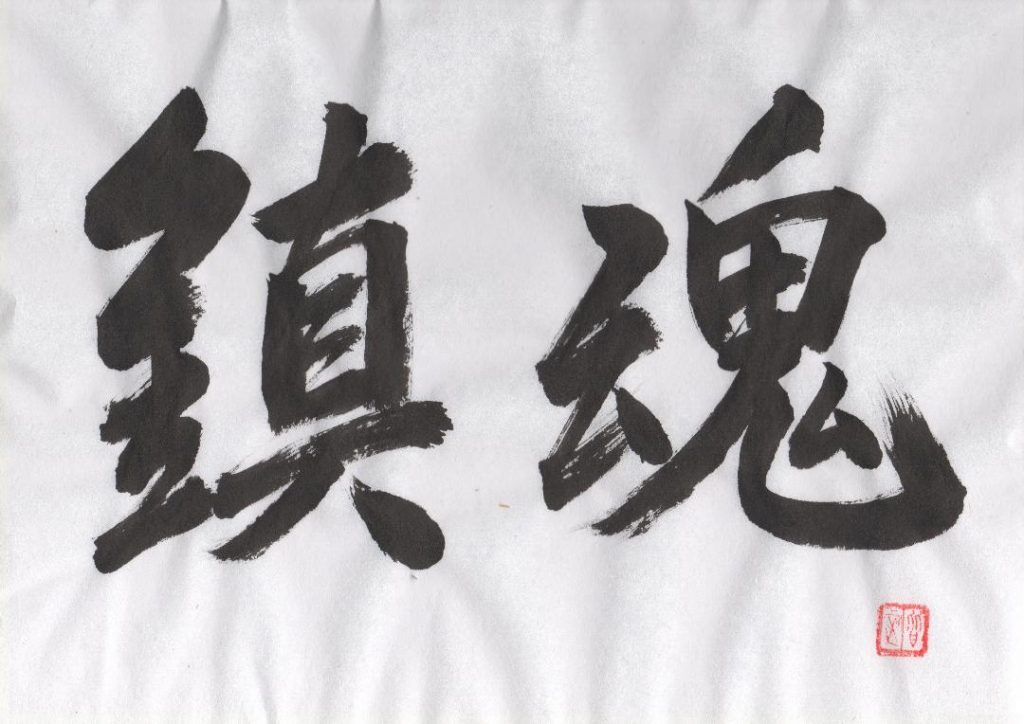
Chinkon – “Requiem” calligraphy by Masashi Minagawa Used to set the tone for a Taimyo Peacemaking Workshop in August 2020
I think the transformative aspect, the crucible as it were, was coming together to witness one another. As Masashi Minagawa says in his Personal Journey to Nanjing video***, the purpose is not to teach or show or heal but only to be fully present and loving. I would call this unconditional love.
John and Lee Seaman taught Shintaido (and Tai Chi/Life Exercise) in Bellingham for more than 30 years and Lee continues to teach today. There was a widespread conception that John and Lee taught Shintaido to struggling and broken people. In truth, each one of us is broken and struggling in some way whether personally, in the life of our family, our culture or our nation. The only difference was that in John and Lee’s presence it was brought out of the shadows. The rest of us are just hiding our brokenness so no one can see it.
“There is a crack in everything.
That's how the light gets in.”
― Leonard Cohen, Selected Poems, 1956-1968
The taste of deep community we felt was an experience of holding and witnessing one another.
As a Friend (Quaker), we often use queries to help unpack and explore big topics. It may be helpful to carry a query with you, like a smooth polished stone in your pocket.
In the spirit of exploration, I leave you with these queries: • What is the ultimate purpose of my practice? • How deep is my community?
Notes and links
* Taimyo and Peacemaking Several articles on Taimyo by H.F. Ito and research on the etymology of Chinkon (Requiem) by Masashi Minagawa Day Street Dojo
** A Deep Bow Journey to Nanjing: Healing Trauma in Ourselves and Others (32 min.) An account of the 2007 apology trip to Nanjing, China by H.F. Ito and Masashi Minagawa – with English subtitles – with French subtitles – with Japanese subtitles
Covid-19 made its effects felt around the world in 2020 with most gatherings being cancelled, including Shintaido events. As vaccines became available and more adults were able to get vaccinated, small slits began to open in the curtain of isolation. Small groups again talked of gathering and as such the fall SOA gasshuku typically held in Quebec Canada made plans to come together.
Beginning as humble hopes and dreams to the reality of border restrictions into Canada actually easing, the extraordinary plans of gathering with distant friends again began in earnest. SOA members from CA, FL and Canada arranged to meet Ito Sensei and Nicole in Quebec City, QU, CAN as has happened so easily in the past. But this gathering had the added complication of proof of Covid-19 vaccinations and 72 hour pre-travel testing, hoping for negative results.
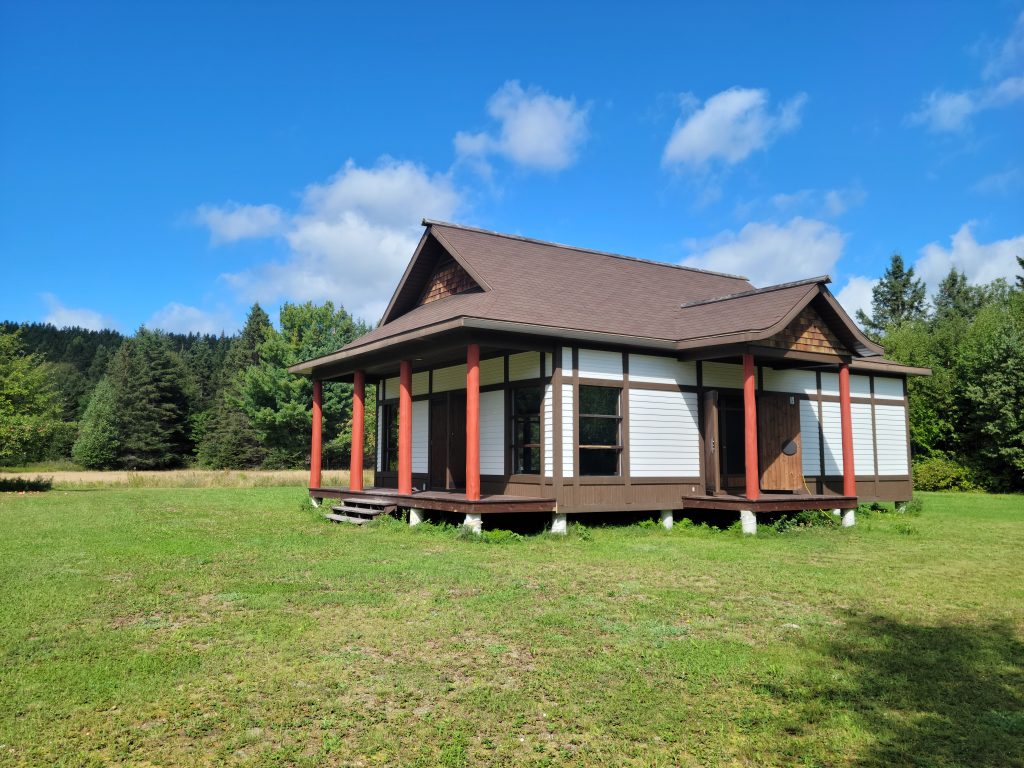
But then it all came together and we all were heading to Canada once again. With the first hurdle, travel, met and cleared, new challenges presented themselves. Where could our small group gather to practice? Though Canada’s borders were opening to international travellers, venues, indoors and out, within Quebec were re-imposing strict guidelines on group size and acceptable activities. Questions arose about where we would be able to practice. Then the answer came. Carole and Denis invited the small group to their dojo on the eastern edge of the Gaspésie Peninsula.
With more planning for transportation and lodging, the small group including Ito Sensei, Nicole, Herve, Connie, Rob G, and Sarah gathered in Quebec City and drove to Carole and Denis’. Everyone had their jobs. Connie and Rob took turns piloting the minivan. Sarah provided navigation. Herve filled our time with lively conversation and endless discussion topics. Nicole and Ito lent us strength and stability amid the chaos.
From the moment of arriving at Carole and Denis’, home we entered a dream world. Covid-19 was momentarily put aside. Masks were something to be remembered when leaving the compound much like wallets, jackets, and water bottles might be.
We gathered for communal meals, flowing and washing over each other in a blend of languages from French and English to the occasional Japanese. Subgroups got rowdy with laughter and serious discussions. Everyone felt relaxed and generally happy. But we didn’t forget why this small group came together in the first place, and we had 6 inspiring Shintaido keiko in our host’s amazing dojo.
Melonie who lives just down the street, joined us for 3 of these classes.
Gasshuku are generally special and unique. This gasshuku, dispite the challenges and restrictions was also special and unique.
Rob Gaston impressions from Canada
A unification of the dojo space, nature, Carole and Denis’ personality and character and the local community in a way that seems to flow so you can feel all parts when focused on any one part. The feeling of living in harmony so that the spirits of the first people, the nature spirits are present and surrounding and liking the keiko we did.
The warmth of welcome of the Quebec Shintaido group from the moment of arrival at Herve’s to the endless abundance of cookies that came from Carole and Denis’ freezer in the basement. The feeling was my image of what I want to express in ten position meditation pose number 2, and then going beyond in their warm welcome.
There was a joy I think everyone felt in being able to do keiko in person again.
Connie’s impressions from Canada
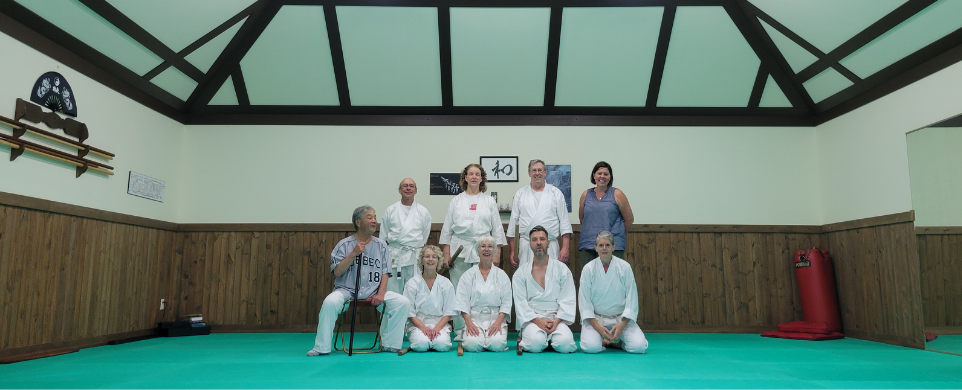
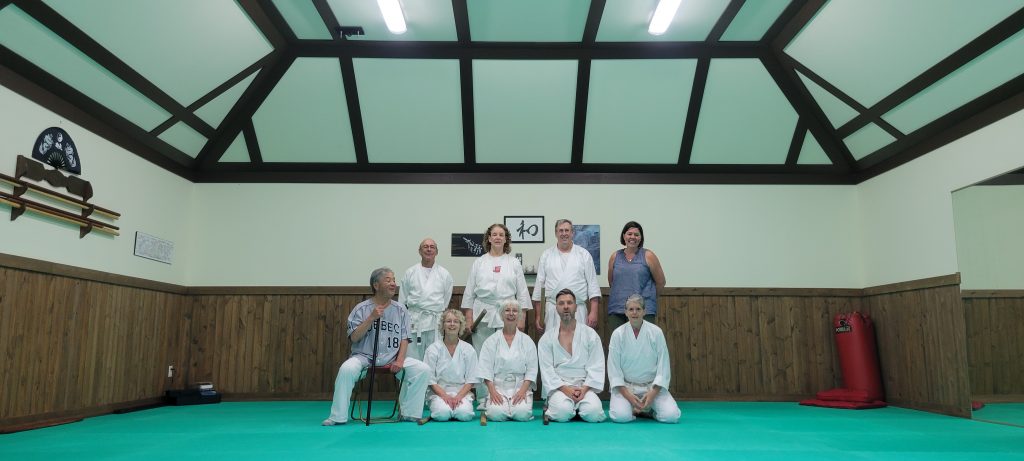
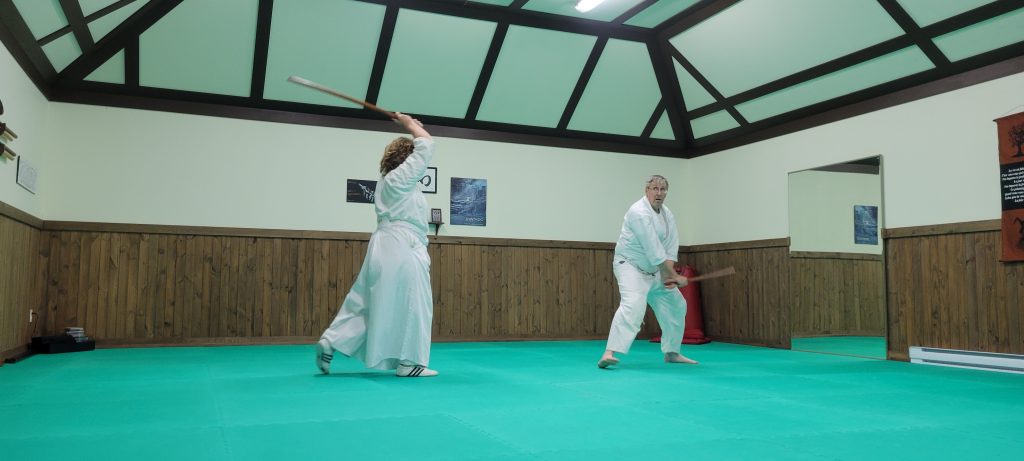
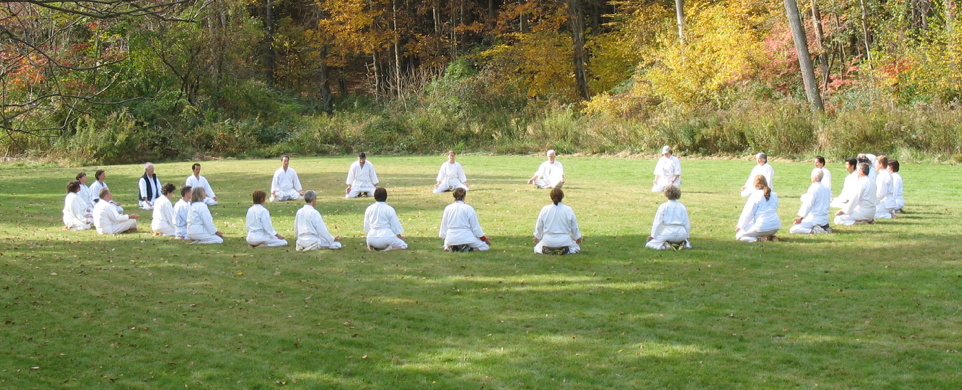
Eight people joined in a group to practice Kyukajo, Shintaido and Jissen. We were fortunate to have Carole and Denis offer their private dojo (see picture). The three days moved through uniting our bodies and minds to harmony with others, ultimately expanding to include the community and big nature.
Friday morning, Carole led warmups followed by Connie Borden and Robert teaching Kyukajo. Ito sensei reminded the group of the difference between working with the blade tip/first one-third of the sword in Kyukajo and working with the middle section of the blade as in Jissen.
Saturday morning, Connie taught Taimyo part II and part III. During the deep bow Ito Sensei suggested we fully bow by releasing the hips backwards and having the top of the head/chakra point downward (within each person’s ability). During big dipper, Ito sensei reinforced that a relaxed position without strain would allow each of us to reach further up and down while spiraling our body. Saturday afternoon, Rob taught attack and receiving for Jodan Uchite.
Sunday morning, Connie taught Shoden no kata kumitachi. Everyone practiced Mitori keiko and shared feedback on seeing how a person moved with the bokken. Sunday morning ended with exams for advanced students. Sarah Baker and Denis Bujold became Advanced Students.
Rob Gaston concluded the weekend of study with the sixth keiko. The study was Jissen Kumitachi Dotoh. Ito sensei encouraged students to watch Rob and Connie to notice the management of timing and space.
Ito Sensei provided a memorial evening of Taimyo under the night sky. Big nature provided a sky full of stars and the Milky Way, while the bay waters lapped gently near our feet.
Food and conversation completed the full gasshuku experience. Thank you, Sarah, for navigating our travels. Thank you, Nicole, and Melanie, for your presence. Thank you, Carole, Denis and Herve for organizing. Thank you, Rob, for co-teaching and collaborative travel. Thank you, Ito sensei.
Check out videos from the Gasshuku on Shintaido of America YouTube channel. Subscribe to our YouTube channel and never miss a new video.
“Wonderful information, wonderful video.” “I was deeply touched.” “Moving, beautiful presentation.” “Somuch power in the desire to heal – almost as much as the healing itself.” “Deeply moved . . . by the transforming power of Shintaido teachings and movements.”
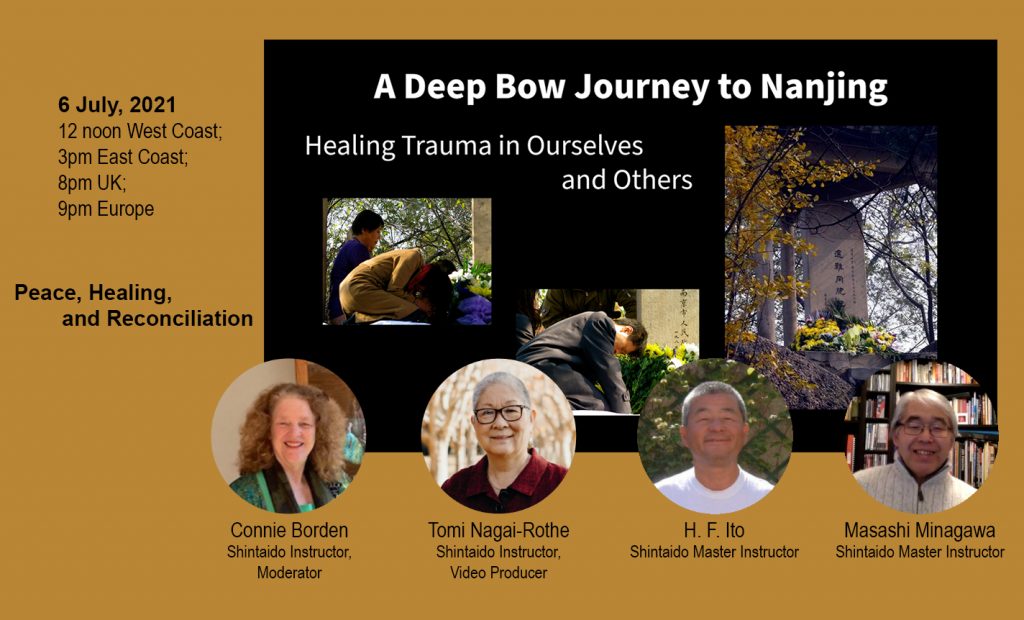
These are a few of the responses to A Deep Bow Journey to Nanjing presentation on July 6, 2021 attended by more than 77 people on Zoom of a joint partnership of Shintaido of America and Reimagine.
Connie Borden introduced herself as the moderator (and Shintaido instructor) and shared the purpose of the presentation: “Our hope is to show ways that body movements support healing and reconciliation from past traumas. We intend to show how body movement can help to prepare for the end of life as well as how to live well in this moment.”
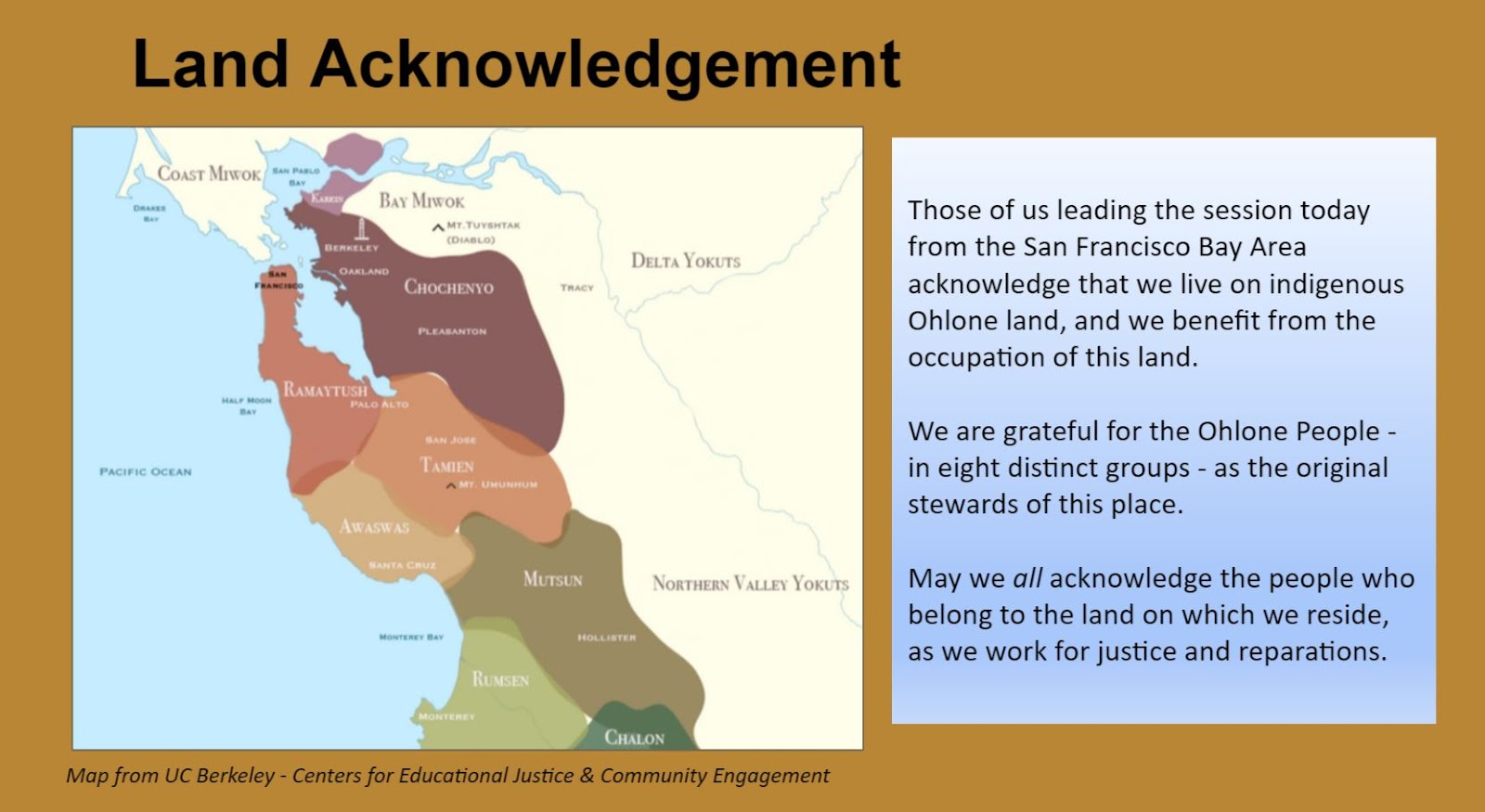
She then acknowledged that the land of the San Francisco Bay Area meeting hosts is occupied indigenous land of the Ohlone People – in eight distinct tribal groups.
Tomi Nagai-Rothe, Shintaido instructor and video co-producer, talked about wanting to bring this story of healing and repair to more people, through the video project. She mentioned the martial arts philosophy of living at the edge of life and death. She believes that healing body movement like Shintaido is a powerful tool for coming into alignment with our own deeper rhythms which, in turn, allows us to connect more deeply to others.
After the video showing, H.F. Ito, Master Shintaido Instructor, talked about his trip to Nanjing as an important part of addressing his negative cultural inheritance. He described the concept of our bodies as a mudra (Sanskrit: “gesture, seal or sign”) or whole body antennae that allows us to receive energy from the universe as well as sending energy.
H.F. Ito also talked about sword movement – in the post-Samurai era – as a spiritual cleansing technique to clear away unneeded thoughts or energy.
Masashi Minagawa, Master Shintaido Instructor, spoke about “wordless transmission” through body movement (kata in Japanese). He recounted a Shintaido performance at the first anniversary of 9/11 at London’s Royal Opera House during which he experienced sword movement becoming an act of spreading peace. The sword movement was transformed into his master HIroyuki Aoki’s wish to spread flowers over the bombed out buildings of Tokyo after Aoki had lost so many family members and friends to the violence. Masashi Minagawa saw white petals falling from the ceiling of the Opera House, covering the audience.
Some reminders from our Master instructors regarding Shintaido healing movement:
Use healing movement practice in daily life for all types of situations
Avoid expecting a specific or immediate result
Be non-judgmental
Practice gratitude
If you are interested in going further, please join Master H.F. Ito and Master Masashi Minagawa for a virtual workshop August 22-28 – the 20th Anniversary of the Global Taimyo Peace Community.
Registration includes:
2 – 90 minute virtual classes with H.F. Ito (8/22 and 8/28)
Up to 7 weekday classes with regional instructors (optional)
Second showing of the video featuring Master H.F. Ito and Master Masashi Minagawa (subtitled in English, French and Japanese): A Deep Bow Journey to Nanjing
A facilitated conversation about the video and workshop theme (with French, Japanese and English subgroups)
Taimyo Kata instructional materials – demonstration video and written sequence
When the idea of dissolving the International Shintaido NPO was first proposed, I was strongly against it. For 13 years as a board member of ISC and then IS, I worked hard to establish a legally incorporated organization. Further, I spent a year on another committee that wrote the bylaws for IS. After all this, I couldn’t imagine giving up on an ideal and such a long-held goal. But then I considered the situation from a longer and wider historical perspective.
Lee Oderman with his family
Instead of seeing this moment as a setback, I began to see it as a stage of transition away from an old model, the iemoto system of leadership, and toward something more appropriate. The iemoto system is the way traditional Japanese cultural schools, including martial arts schools, handled succession of leadership. When a master died or ended his or her career, a new individual would be chosen to carry on and further the legacy. This system may have worked well in feudal times, but in modern times, it has not shown a lot of success – at least not for martial artists. Think of aikido or the various schools of karate. Succession at these schools has not gone smoothly. When a master has died or given up control, the school has divided and the tradition weakened. As far as I can tell, no organization like ours has succeeded in making this transition without splitting apart and weakening the stream of knowledge.
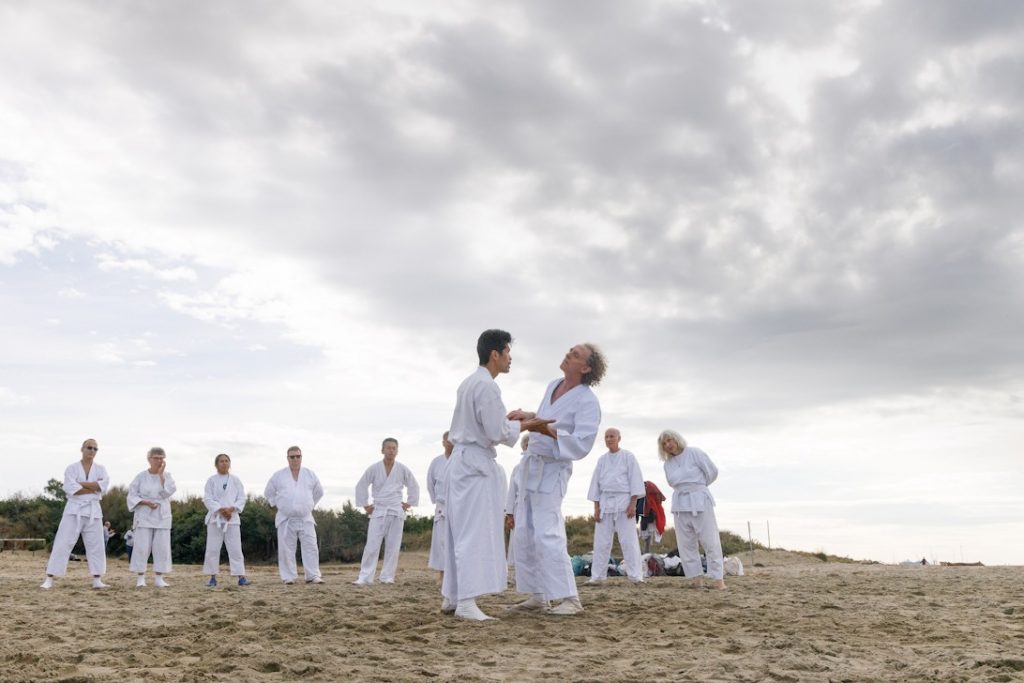
Shin Aoki teaching in Italy
We have been traveling this path of transition away from the old system for some years now, and we are discovering that such change doesn’t come as an event but as a process, and a longer and harder process than we had imagined. One main cause of our difficulty is that within Shintaido we maintain elements of pre-modern Japanese culture. Besides some superficial cultural traces like Japanese clothing and Japanese vocabulary, we have some important, deep and influential traditions, like sempai/kohai relationships and the students’ deep devotion and loyalty to a main teacher, whom we burden with great responsibilities and expectations, even beyond the walls of the dojo.
These ancient Japanese cultural elements rely on conditions that don’t normally exist in Western student-teacher relationships. [They don’t fit comfortably in modern culture anywhere, for that matter, arguably not even in Japan.] Over the last six years or so, we have been trying to knit these traditional Japanese elements into a way of self-organizing that embraces democratic principles. Not surprisingly, we are finding that hard to do: For some things we expect top-down leadership, for some we expect grassroots initiative, for some we expect the doshu to delicately indicate which way to go. It is confusing, sometimes frustrating, and at times conflicting for sempai and kohai alike.
It can be hard going, but for an “avant garde” martial art, that was founded in principles and ideals both Eastern and Western, in which the individual is valued as much as the group, we can neither return to a feudal approach to leadership, nor can we lock down another way of organizing ourselves that doesn’t work or feel relevant to so many in the group. Instead, we can respond to the new conditions and adapt. Just as our “new” martial art evolves with the demands of the times, so can its approach to organization and leadership.
It is unlikely that we will figure all this out on the first try, and maybe not on the second or third. We will have to revise and revise as we go. Like Jim Sterling said when ITEC and the Board met in March to discuss the way forward, we will wipe away the mandala and make a new one.
Without an individual patriarchal/matriarchal leader to tell us what to do, how we make decisions and organize will continue to be a process. The process will require us to voice our points of view to one another. The process will show us our differences, and it is valuable and important that it do so.
We can embrace these moments of opposing views as opportunities to practice our art. Shintaido shows us how to deal with differences and deal with the discomfort, regardless of the structure by which we do it. Shintaido life is not a life without differences with others. A life in Shintaido is rather a life equipped to deal with the differences, even conflicts, and to turn them into opportunities for making things better for everyone. And leading up to this moment, as we have struggled and experienced occasional disagreement, this process of change has brought us closer together, and we are now communicating better than ever.
Though I have come to believe that the IS NPO based in France should be dissolved to make way for the next phase or our organization, I don’t regret the work to create and operate IS as a waste of effort. The organization served a very good purpose: First, it taught us many things we are now finding useful as we refine how to organize ourselves in the future. Second, it held us together all this time. It did so especially through a much greater crisis in 2015 and 2016, when we were actually splitting apart, as we broke with the iemoto system and then struggled to hold together what was left. It was an emotional and divisive time; people were angry with each other and the future of Shintaido itself seemed at risk. But in this crisis we found opportunity to overcome differences. Finding agreement to create a new organization and attempting to make it support a unified curriculum and exam system brought us closer together than we were before.
I believe the next phase will bring us even closer together as we continue to make Shintaido a vital, strong and internationally unified stream of learning that brings joy and light to people well into the future.
See you in keiko and at exams!
Lee Ordeman served on the boards of the ISC and IS from 2008 until this spring. He also helped write the IS bylaws and code of ethics. He started practicing Shintaido 34 years ago in Cambridge, Massachusetts, studying with Michael Thompson and David Franklin. In 1990 he moved to Tokyo, where he became an instructor and studied with Hiroyuki Aoki, Mitsuru Okada, and H.F. Ito during his regular visits to Japan. Lee moved back to the U.S. in 2000 and since then has led classes in Baltimore and Washington, DC. He is also a regular guest instructor at El Haddawi, a school of body movement in Bavaria, Germany.
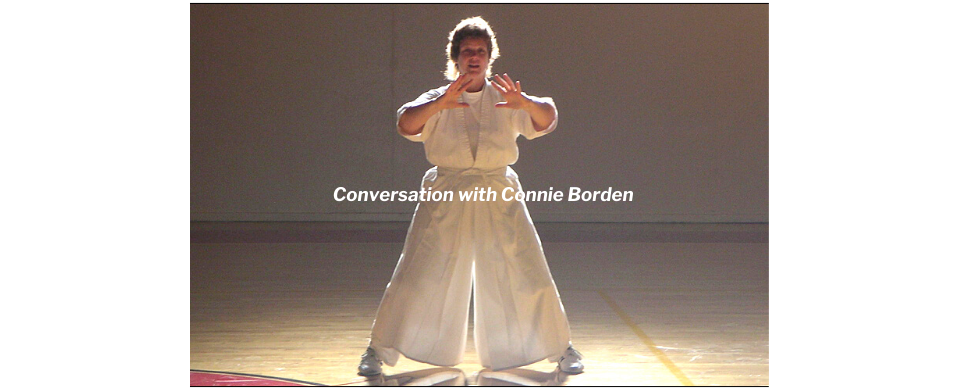
Please take a look at the first of what I hope will be a series of conversations with Shintaido instructors and practitioners. We want to learn more about each other’s Shintaido experience, as well as get to know a bit about the personal and professional life of our community members.
Our first conversation is with Connie Borden.
Connie has been teaching and practicing Shintaido since 1984. She is a General Instructor, the President of Shintaido of America and Chairperson of the Shintaido International Technical Examination Committee. I’m sure many of you have studied with her, attended workshops she has organized or been in meetings that she has led.
Connie’s professional life as an RN and Nurse Practitioner has given her many insights into the world of healing and caregiving. She has spent the last 27 years focusing on hospice and palliative care, counselling patients and their families who are facing serious illness and at times, the end of their lives.
I hope you enjoy this conversation on our SOA YouTube Channel.