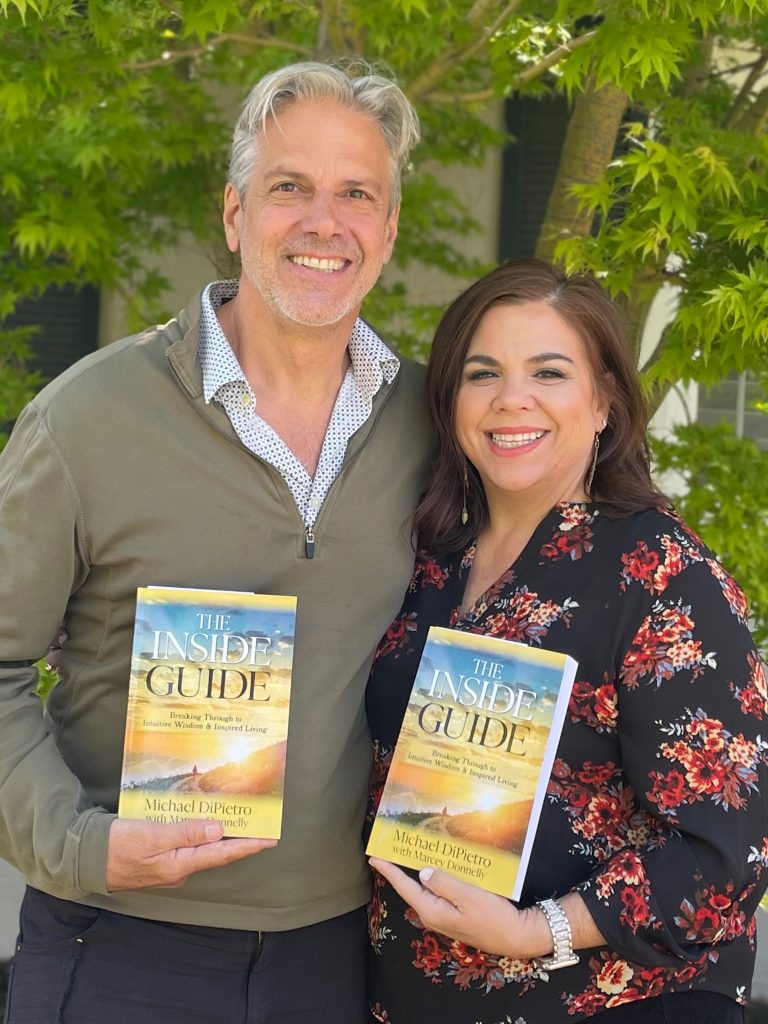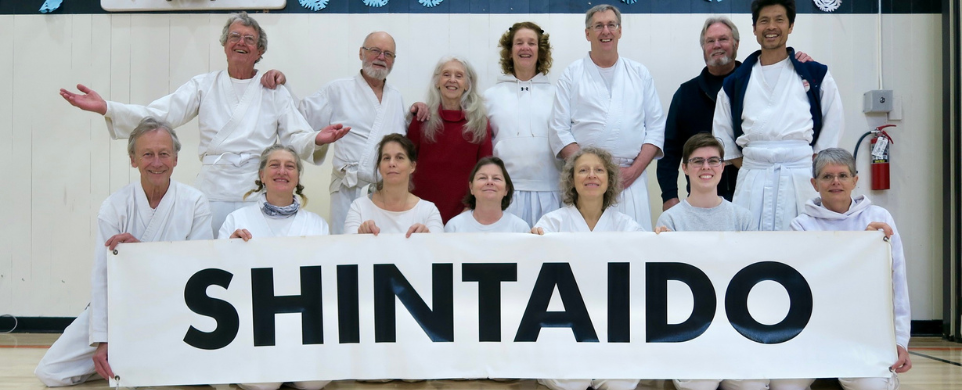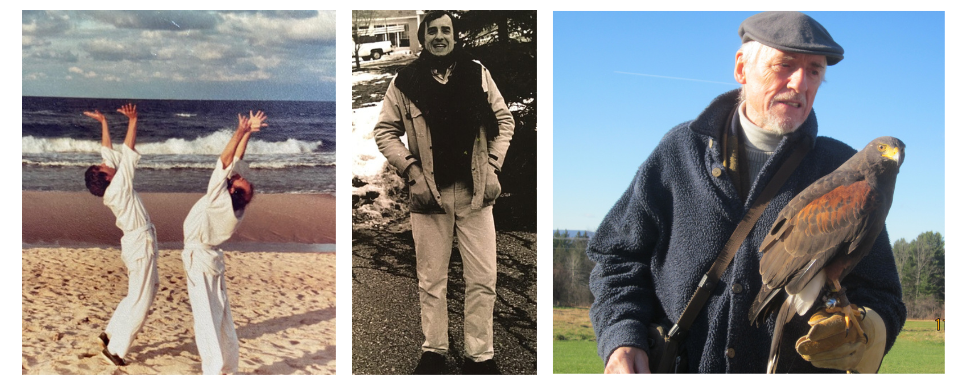
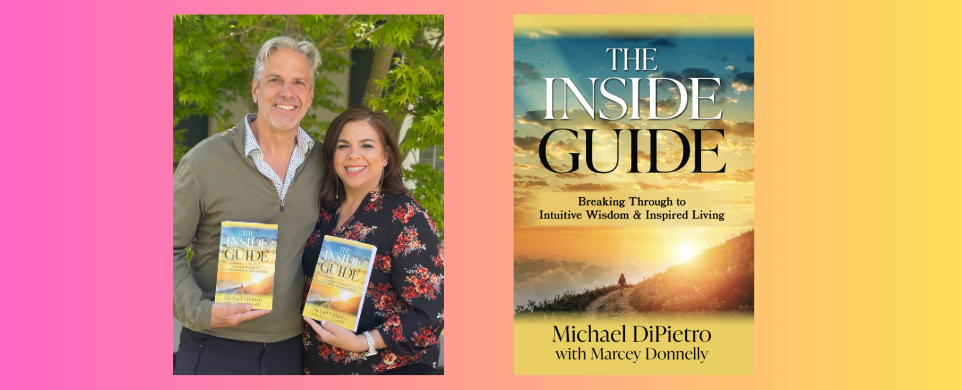
Shintaido’s influence on the new book “Inside Guide.”
by Michael DiPietro
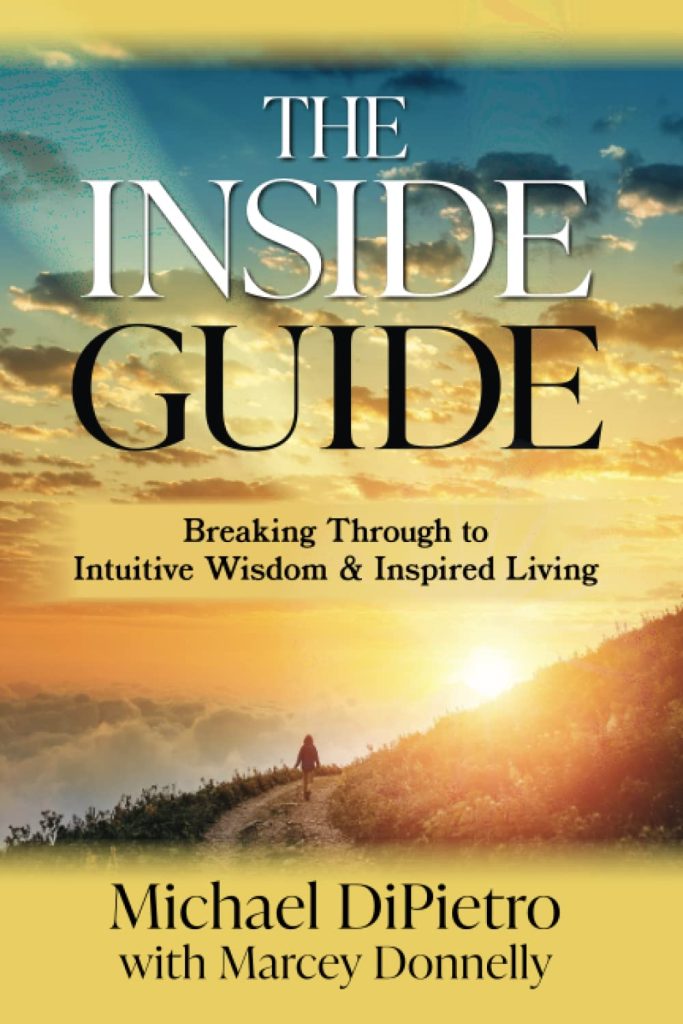
Much of the time when we undertake a new venture, we don’t know the full extent of what the journey will entail. Writing a book is a prime example of this. Recently, with the collaboration of my writing partner Marcey Donnelly, I self-published my debut book, “The Inside Guide: Breaking Through to Intuitive Wisdom and Inspired Living”. It has been quite a ride and I was honored when asked to share some of my experience in Shintaido’s “Body Dialogue.” This article aims to highlight the book’s overview, its connection to Shintaido, and how the practice helped me in preparation. Additionally, I will discuss specific aspects of Shintaido mentioned in the book and their significance.
A brief overview of the book
“The Inside Guide” serves as a transformative manual, guiding readers to introspection. Within its pages, a self-directed framework leads individuals on an inner journey, exploring their interior lives and uncovering innate wisdom. Offering breakthrough tools and profound insights, the book sheds light on how our minds create our reality. It empowers readers to work with their unconscious minds and unlock the hidden keys to lasting positive change. Moreover, it steers them toward a mystical awareness, culminating in living a truly inspired life aligned with their purpose.
The book is sectioned into three parts that are titled: Finding Answers, Overcoming Obstacles and Living Purpose. These parts also correlate to mind, body and spirit. Obviously, there is a link to Shintaido in these themes. I’ve always experienced Shintaido as a holistic practice, so even though much of the time the focus is on the body, our mind and spirit are developed as well. The book parallels a similar approach to keiko in reaching for the center of the being and then encouraging the reader to express their purpose from that center out into the world.
Why now for this book?
The timing of this books’ release is relevant as we consider the intersection of societal needs and the need for effective tools for the development of individuals.
In our current society, external distractions increasingly divert our attention away from introspection. Social media, daily demands, recreation, and even our focus on others often hinder us from dedicating time to self-reflection. Consequently, we are losing the contemplative focus crucial for personal growth. However, as most of us already know true transformation begins from within. The purpose of “The Inside Guide” is to inspire individuals to look inward and discover the peace, goodness, energy, and talents that lie within themselves.
In working with many clients over the years, I’ve seen a common theme that they cannot figure out how to clear what is holding them back. They keep getting stuck in the same recurring patterns that run interference on leading a full and happy life. By fostering greater awareness and equipping readers with practical tools, this book aims to enhance individual well-being for the betterment of society as a whole.
How Shintaido helped me prepare
Shintaido, with its holistic approach, played a significant role in my preparation for writing this book. Three particular practices come to mind:
- The practice of Tsuki helped me to be singularly focused on a particular outcome, to be linear in my intent to complete a goal and to focus my energy with the entirety of my being. While I must admit, this seems like an ongoing practice for me, I did find improvement in reaching my goals the more I worked with my Tsuki.
- Another aspect or keiko that I found useful was that of coming from our center. In Kumite, we reach for the center of ourself and our partners and we express from that center outward. This practice gave me a deeper understanding of how to do that not only from a movement perspective, but also in how I show up and work with my clients. I recognize the essence of those I work with and support them in their authentic expression.
- The third exercise is I found particular helpful was Eiko Dai. To me this supports really putting oneself out there in life without the fear of judgment from others. Artists in particular, often grapple with insecurities when sharing their work with the world. They must overcome the stereotypical “artist angst” when exposing themselves to outside critique – how will my work be received, will I be laughing stock, will the world and my peers take me seriously? With the free expression we foster through Eiko Dai we can overcome this challenge and release ourselves from the needless preoccupation with what others think. We simply express with our full self.
Benefits of Shintaido in becoming more successful
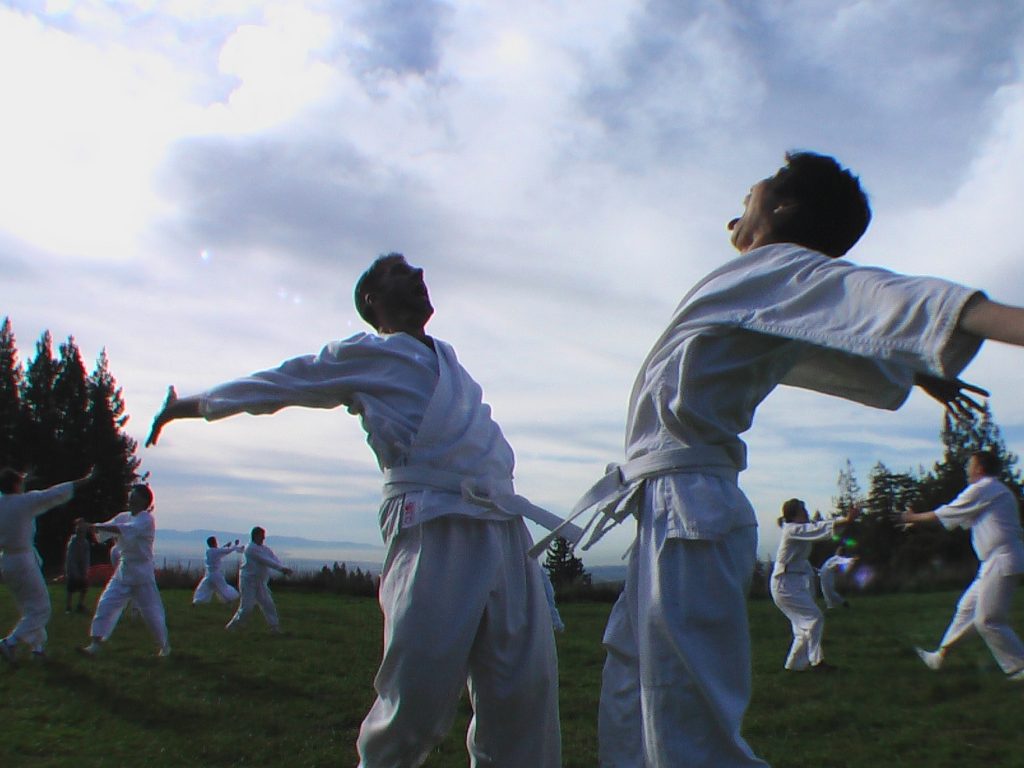
Beyond the obvious health benefits of Shintaido, such as joint mobility, flexibility, strength and improved circulation, benefits also happen in the psycho-spiritual aspects. Body awareness helps us get in touch with unconscious content buried deep within, unveiling patterns that can limit our expression. We can use the practice to see how physical patterns in our body and in our movement reflect psychological patterns that can keep us inhibited. As we practice and become more fluid and natural in our movements, much of the time it will reflect and shift in the psychological pattern as well. Personally, Shintaido has helped me combat depression and discover a more vibrant and energized approach to daily life. By embracing the movement, the expression and the connection with others, I unlocked my natural abilities and found the confidence to be myself in a unique way. Shintaido practitioners find the practice when they are ready and gain the specific benefits they require at that point in their lives.
Some aspects of our practice that are mentioned directly in the book and why I included them in my work
The most obvious and explicit reference to Shintaido comes toward the end of the book when I talk about “proper timing in taking action.” I will share the excerpt below but I must first clarity why it positioned where I did and why I chose to include this particular practice. Throughout the book we work with the metaphor of reaching the mountaintop and returning to the village. This is a way of discussing our spiritual and/or peak experiences and the need for the integration of those experience into our everyday life. In part three of the book the focus is primarily on ways of being that support living an aware and awaked life in the world – the return to the village. To that ends, I chose to discuss proper timing as one of the ways people can work with living in the world. Here is what I wrote:
The Journey to the Mountaintop and the Return to the Village – pg 15
The mountaintop represents our retreat from everyday life and the clarity of enlightenment. We go to the mountaintop to have our spiritual experiences. The return to the village is the integration back into our everyday life of whatever spiritual experiences we have had on the mountaintop. That aspect, that return, is where a lot of people hit challenges.
We will discuss this more in Part Three, but it is important to understand that this book helps people make that journey back to the village. It gives them a roadmap not only for reaching their mountaintop, but just as importantly, for integrating their spiritual awakenings into their everyday life.
And then,
Proper Timing in Taking Action – pg 241
As we begin to follow spirit, listen internally, and take action in the world, there is a proper timing as to when to take action. We are looking for an opening or a window in time. What is the exact moment when my action is going to be most effective? Sometimes that means acting immediately; sometimes that means waiting. Not always jumping immediately into action, but waiting for the right timing. Waiting for some signal, the cue, or an opening.
How do you know the best moment to jump into action?
It is almost like a window opens and then you jump through it! If you wait for the proper timing, then when you take action, it works like magic, like clockwork. If the timing isn’t right, things may not work out.
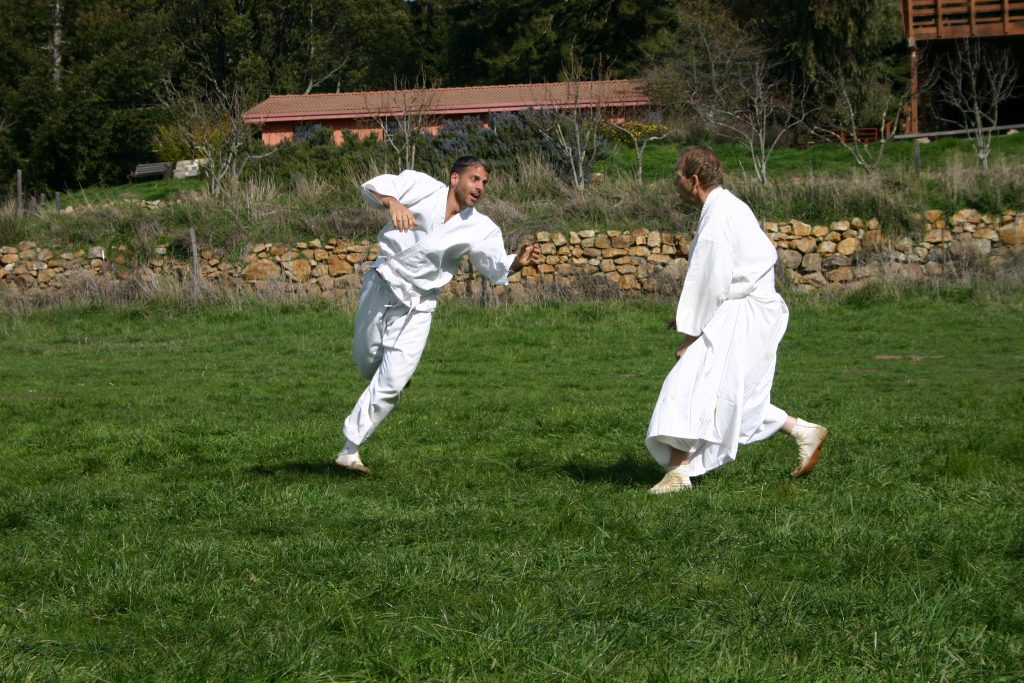
This concept comes from martial arts. In the martial art I practiced called Shintaido, when we are practicing “attack and receive” scenarios, there is a proper timing to receiving your opponent’s attack. If your timing is superb, you can move in a relaxed, slow state and still beat the other person. We call that “A-timing.” If I am too soon, my opponent has time to adapt. If my timing is too late, then I must speed up and rush to deal with the situation. There is a timing that comes from perceiving the right moment but in a different kind of way. The perception, how to sense into that, is a different kind of perception.
When we practiced, we explored that timing by learning to sense the other person’s intent in our own bodies. When anyone moves their body in any way, there is first an intent in the mind. Then that intent travels in their nervous system, to their muscles, until it transfers into movement. When you get sensitive and open enough, you can actually feel another person’s intent. Before they actually start to move, you can move according to their intent. This means you are already ahead of them once they actually start the movement.
By analogy, we can see that there is a proper timing to our actions. If you are too soon or too late on your timing, you are not going to have the most effective outcome. This may seem like a very nebulous concept. Even during martial arts practice, it was very nebulous. It is almost like a “psychic feeling” in your body; this person is about to move, and I act, trusting my body’s sense. If they’re already moving, I am too late.
What is this little window of proper timing? When is the moment when your action is going to be most effective? If it is too soon or too late, you might not have the best results.
You can begin to track it by noticing your timing in everyday life. Are you showing up right on time? Are you showing up early? Are you running late? If you say, “Oh, I am running late,” your timing is not correct. If you are too early to your appointments, then it is also not proper timing.
Being “on time” is being in the right place at the right time. Notice if you are showing up early or late in your life and explore adjusting your timing. Maybe something is saying, “Not yet.” Maybe wait a day or two, a week or two. We are just trying to listen for those “impressions,” if you will. The gut hunch on when is best.
All of Part Two of the book is primarily focused on the body, but more specifically on our neurology and how it affects our experience. However, toward the beginning of Part Two, we discuss the importance of the body and increasing one’s sensitivities by noticing more subtly in the body. This seems to have a particularly Shintaido “feel” to it, so I will share these excerpts:
Your Body Allows You to Feel – pg 111
If you did not have your body, you would not have the ability to have experiences. More specifically, your body is exceedingly important for the feeling aspect of your experiences. Your feelings are a very important piece in the field of transformation as well as for your inner guidance. Noticing feelings is an ability that comes easier for some and takes practice for others.
The deeper truth of your experiences comes from the somatic or body level. An experience from the somatic level will often show you more than you could uncover through a verbal inquiry from a mental place. It can show you more quickly and more efficiently if you’re willing to see it.
You can begin to explore sensations and your different experiences from a somatic perspective by asking yourself, for example, “Where am I feeling this sensation? What does it feel like in my gut? What do my hips feel like?”
You could go piece by piece through your body and begin to notice experiences at the body level. When there is a particular experience there is a way to start exploring.
Exercise
Sit still. Keep your spine straight.
Then notice.
What sensations come up? What do you do with those?
Accept them by allowing them to be.
These are the first two levels in working with a somatic approach
in transformation. Notice the sensation and allow it.
Sometimes this exercise will begin to unlock some of the emotions that go along with an experience. If you sit quietly long enough and do not try to “wiggle out” of something, generally, the deeper content starts to arise.
Sometimes you can be carrying emotions in your body and you do not notice it until you sit in silence. You may start to recognize a particular feeling or that something was going on that you were not in touch with. That is part of meditation; that is part of noticing.
However, there are instances when noticing and accepting does not get to the desired change in a deeper pattern. In those cases, we need to practice transformation, and that is what this part of the book is about, the deeper keys to transforming your experiences.
For now, this is about noticing the feelings in your body. Recognizing feelings pulls you out of your mind because you actually notice what is happening in your body. It bears repeating: If you did not have your body, you would not have the ability to have experiences. Through this practice of noticing you create an opening for more information. Exploring through your body is the key. Again, your body is very important.
Deeper Aspects of Your Body – pg 112
Since the body is what allows you to have experiences, you can begin to build your ability to notice your sensations with finer and finer levels of detail. You might have a sensation, but there are the gross and the subtle levels of the sensations you encounter. Typically, people only notice what is coarse or heavier, but as you progress, you build your acuity to notice the sensations with more and more granularity.
As things get deeper, as you progress more into the spiritual aspects, or the unknown dimensions of the inner terrain, a lot of times very subtle sensations can have a very big impact. Generally, when the sensations are subtle, they are more difficult to notice. In addition to the awareness of the sensation, as we have mentioned, the location in your body of the various sensations is also a big factor in developing your acuity.
What are you feeling for a certain experience in your body and where are you feeling it?
The body holds certain aspects from many of the experiences in our past. We hold things in our hips, we hold things in our backs, we hold things in our shoulders, and so on. As you start to explore through the body, you can notice where you are holding tension. What happens as you begin to work with that tension? What content thoughts, feelings, memories or emotions arise as you release certain tensions in your body? This tension is sometimes referred to as our “body armoring.” It is a way people protect themselves from the unconscious content they don’t want to see.
Throughout the book we also highlight key concepts and then, for easy reference, we provide a summary of all these key concepts at the end of each part. The following example is from the excerpt above and is the main takeaway that bears repeating:
KEY CONCEPT
Without our bodies we would not have experiences. Through the practice of noticing how our bodies respond to the external world, we create a new level of understanding ourselves.
There are various other small instances throughout the book that a Shintaido practitioner could identify as inspired by the practice. I have given these few examples in the hopes that you better understand the link of Shintaido practice to the success of whatever endeavors you undertake in your life. It has been a great honor to share my perspectives with you and I invite you to read the entire book and explore working with me directly if you want to accelerate your transformative journey. Many Blessings!
Michael DiPietro
Transformational Guide, Master of Neuro-Linguistic Programming (NLP), Shintaido Instructor
Email: michael@loveguide.us
Website: www.loveguides.us
For following on social media use: www.linktr.ee/insideguide
The Inside Guide available on Amazon: click here