Introduction Tomi Nagai-Rothe and Connie Borden, both Shintaido Instructors, are also active with HF Ito, Sarah Baker, Rob Gaston and many others in the Global Taimyo Community (GTC). GTC formed after September 11 in 2001 and re-formed on the 20th anniversary in 2021. GTC believes that Taimyo Kata can function like a ritual form through which we can search and/or heal our inner world as well create better relationships with our outer world — including neighbors, community, and Nature.
This is the second of two articles written for the 2022 gatherings on the theme of Kintsugi (金継ぎ, “golden joinery”), also known as kintsukuroi (金繕い, “golden repair”). Mending is one way to transform objects and ourselves. Yet before we can mend or make amends, we need to feel the brokenness fully, be it a personal weakness or the violence of war. Deeply feeling the brokenness is a personal responsibility and a collective responsibility that is painful and necessary.
These articles were written to help open conversations. Our hope is to create a brave space rather than a “safe space.” The keiko analogy would be a perspective-altering kirioroshi kumite as opposed to an enjoyable keiko where you leave the same way as you arrived. It’s not that we feel unsafe in an incredible kirioroshi kumite – quite the contrary – we feel so safe with our partner that we can open ourselves to them.
Please reflect and share your comments on these articles being shared with the Shintaido audience via Body Dialogue.
My understanding of feelings of grief and loss stem from my experience working in the hospice field starting in 1994 and the death of my father in 1998. Later my professional experience expanded into palliative and hospice care.
Each person is different, and feelings of grief can vary in intensity. Feelings of grief and grieving can be cyclical. This process can often feel like one step forward and two steps back. Anniversaries and special occasions can bring back these feelings of grief.
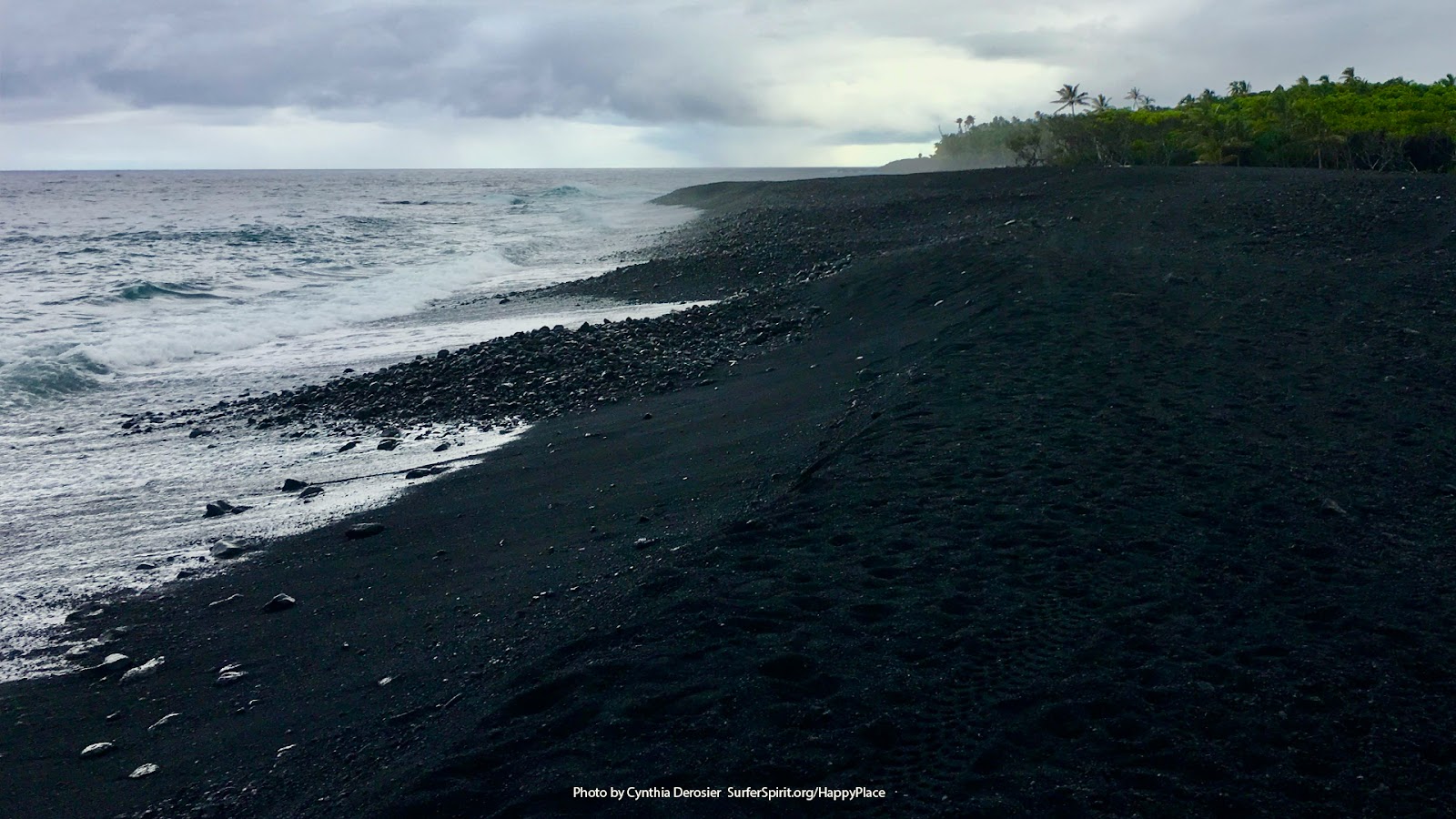
Photo by Cynthia Derosier
What have I experienced? The first step was becoming vulnerable enough to experience these emotions. It’s much easier to deflect and deny them. Due to our fear of being controlled by our emotions, it is common to hide these feelings. My own experience at my father’s death was numbness. I recall seeing a poster showing faces of 32 emotions. I could only identify two or three of the emotions at that time. I was that numb. Over time through therapy and doing more Shintaido, I could also experience anger, sadness and gradually remembering more of the many facets of my father’s life.
Perhaps you remember something similar? Perhaps you too can recall the impact of opening your hands, opening your body and then opening your mind through Shintaido movements? And did you wonder what was happening? I believe these movements of raising our arms overhead, opening the center of our body and using our voices can result in feelings of vulnerability.
How did I experience doing some of these movements? The first was centering, finding where I feel my emotions, where I hold tension, where I block to avoid joining with others. One way to center is the seated, rocking motion where we rock from one hip to the other hip. Rocking itself is soothing. Rocking side to side draws our attention to where the center of our being is and when we are off center. Being centered, I could be aware of my emotions, thoughts and feelings. Another movement was raising my arms overhead and relaxing to allow my partner to cut me during Tenshingoso kumite. As I opened my arms overhead, leaned backwards from my center and received the overhead cut, I found my center – often the heart area – being opened. This life exchange of energy through kirioroshi kumite can be supportive as each person is cut and then cuts their partner. When I opened and was cut, I was then softer and more receptive to the energies of the environment. This cathartic type of movement allowed me to cry. Early in my practice at gasshukus amongst the beautiful, strong, enduring redwood trees. I would find myself crying and hugging the redwood trees. At another gasshuku on Ocean Beach with sand below my feet, I found myself crying when being cut and rolled. Over time these reactions to being opened during practice have been less startling, and more familiar so I can say “Oh this is happening again, what can I learn from this?”
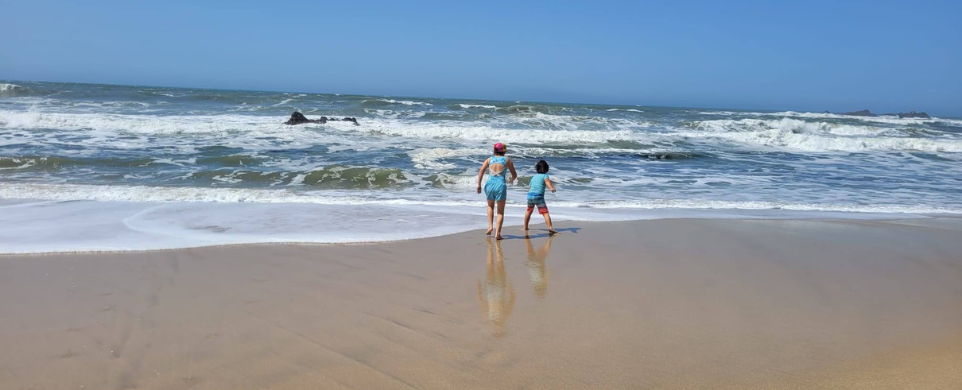
Photo by Tomi Nagai-Rothe
Death is one of the most obvious reasons for grief. What else might constitute times of grief from loss? Sometimes it comes with the diagnosis of a medical condition that results in loss of physical mobility. At other times it might be from a change in a significant relationship with resulting feelings of loss of a promised future. A job loss, change in a living situation or a loss of income are others. Even what we consider to be happy events – a child’s high school graduation or a marriage – can bring tears that are a mixture of happiness and sadness. These emotions seem to reflect a clear demarcation of a change we are experiencing from one state of being to another state of being.
What are some ways people can begin to acknowledge feelings? For some it is focused talk therapy, for others journaling, for others listening to music, and for others doing art, gardening, or body movement. Where and how to acknowledge feelings with others is also critical. Where and how require a space that provides love and is non-judgmental. One of the common experiences for a person who has had a recent event such as death is they report that people grow tired of hearing about their loss. Some people find it helpful to join a focused support group on loss, such as a bereavement group. For others, the sacred space of a dojo provides the place to explore and acknowledge feelings, thoughts and emotions.
Suffering is present for us all. I am reminded of the saying “be gentle with others, you do not know what they are experiencing.” To open and be aware of one’s emotions including grief, anger, and sadness, is the first step. Sharing with others as a next step keeps us human and open. These upcoming Global Taimyo Community gatherings can be one place to practice vulnerability. Our gatherings can be a place to gather, to build peace within ourselves and to support each other by being in community. Our gatherings can be a community to foster mending and finding ourselves more human.
Les sentiments de deuil
par Connie Borden
9 mars 2022
Ma compréhension des sentiments de deuil et de perte provient de mon expérience de travail dans le domaine des soins palliatifs depuis 1994 et du décès de mon père en 1998. Plus tard, mon expérience professionnelle s’est étendue aux soins palliatifs et aux soins en hospice.
Chaque personne est différente, et les sentiments de deuil peuvent varier en intensité. Les sentiments de chagrin et de deuil peuvent être cycliques. Ce processus peut souvent donner l’impression d’un pas en avant et de deux pas en arrière. Les anniversaires et les occasions spéciales peuvent faire resurgir ces sentiments de deuil.
Qu’est-ce que j’ai vécu ? La première étape a été de devenir suffisamment vulnérable pour vivre ces émotions. Il est beaucoup plus facile de les détourner et de les nier. Par peur d’être contrôlé par nos émotions, il est courant de cacher ces sentiments. Lors du décès de mon père, j’ai moi-même ressenti un engourdissement. Je me souviens avoir vu une affiche montrant les visages de 32 émotions. Je ne pouvais identifier que deux ou trois de ces émotions à ce moment-là. J’étais à ce point engourdie. Avec le temps, grâce à la thérapie et à la pratique du Shintaido, j’ai pu ressentir de la colère, de la tristesse et, progressivement, me souvenir des nombreuses facettes de la vie de mon père.
Peut-être vous souvenez-vous de quelque chose de similaire ? Peut-être vous souvenez-vous aussi de l’impact de l’ouverture des mains, de l’ouverture du corps et de l’ouverture de l’esprit par les mouvements du Shintaido ? Et vous êtes-vous demandé ce qui se passait ? Je crois que ces mouvements consistant à lever les bras au-dessus de la tête, à ouvrir le centre de notre corps et à utiliser notre voix peuvent entraîner des sentiments de vulnérabilité.
Comment ai-je vécu l’exécution de certains de ces mouvements ? Tout d’abord, en me centrant, en trouvant où je ressens mes émotions, où je maintiens des tensions, où je bloque pour éviter de me joindre aux autres. L’une des façons de se centrer est le mouvement de balancement assis, où l’on se balance d’une hanche à l’autre. Le balancement en soi est apaisant. Se balancer d’un côté à l’autre attire notre attention sur l’endroit où se trouve le centre de notre être et sur les moments où nous sommes décentrés. En étant centrée, je pouvais être consciente de mes émotions, de mes pensées et de mes sentiments. Un autre mouvement consistait à lever les bras au-dessus de ma tête et à me détendre pour permettre à mon partenaire de me couper pendant le Tenshingoso kumite. Lorsque j’ouvrais les bras au-dessus de ma tête, que je me penchais vers l’arrière à partir de mon centre et que je recevais la coupe au-dessus de ma tête, je découvrais que mon centre – souvent la région du cœur – était ouvert. Cet échange d’énergie vitale à travers le kumite kirioroshi peut être un soutien car chaque personne est coupée et coupe ensuite son partenaire. Lorsque je me suis ouverte et que j’ai été coupée, j’étais alors plus douce et plus réceptive aux énergies de l’environnement. Ce type de mouvement cathartique m’a permis de pleurer. Au début de ma pratique à Gasshukus, parmi les beaux, forts et durables séquoias. Je me surprenais à pleurer et à étreindre les séquoias. Dans un autre gasshuku sur Ocean Beach, avec du sable sous les pieds, je me suis retrouvée à pleurer quand on me coupait et me roulait. Au fil du temps, ces réactions à l’ouverture pendant la pratique sont devenues moins surprenantes et plus familières, ce qui me permet de dire : “Oh, cela se reproduit, qu’est-ce que je peux apprendre de cela ?”.
La mort est l’une des raisons les plus évidentes du deuil. Qu’est-ce qui pourrait constituer d’autres moments de deuil à cause d’une perte ? Parfois, il s’agit du diagnostic d’un problème médical qui entraîne une perte de mobilité physique. Dans d’autres cas, il peut s’agir d’un changement dans une relation importante, qui entraîne un sentiment de perte d’un avenir promis. Une perte d’emploi, un changement dans les conditions de vie ou une perte de revenus en sont d’autres. Même ce que nous considérons comme des événements heureux – l’obtention du diplôme d’études secondaires d’un enfant ou un mariage – peut provoquer des larmes qui sont un mélange de de bonheur et de tristesse. Ces émotions semblent refléter une démarcation claire d’un changement que nous vivons d’un état d’être à un autre état d’être.
De quelle manière les gens peuvent-ils commencer à reconnaître leurs sentiments ? Pour certains, il s’agit d’une thérapie par la parole, pour d’autres de la tenue d’un journal, pour d’autres encore d’écouter de la musique, et pour d’autres de faire de l’art, du jardinage ou des mouvements corporels. Le lieu et la manière de reconnaître ses sentiments avec les autres sont également essentiels. L’endroit et la manière nécessitent un espace qui offre de l’amour et ne porte pas de jugement. L’une des expériences les plus courantes pour une personne qui a vécu un événement récent comme un décès est que les gens se lassent d’entendre parler de leur perte. Certaines personnes trouvent utile de se joindre à un groupe de soutien axé sur la perte, comme un groupe de soutien aux personnes en deuil. Pour d’autres, l’espace sacré d’un dojo permet d’explorer et de reconnaître les sentiments, les pensées et les émotions.
La souffrance est présente pour nous tous. Je me souviens du dicton “soyez doux avec les autres, vous ne savez pas ce qu’ils vivent”. S’ouvrir et prendre conscience de ses émotions, y compris le chagrin, la colère et la tristesse, est la première étape. L’étape suivante consiste à partager avec les autres, ce qui nous permet de rester humains et ouverts. Les prochains rassemblements de la communauté mondiale Taimyo peuvent être un lieu de pratique de la vulnérabilité. Nos rencontres peuvent être un lieu de rassemblement, pour construire la paix en nous-mêmes et pour nous soutenir mutuellement en étant en communauté. Nos rassemblements peuvent être une communauté qui favorise la réparation et la découverte de notre humanité.
Introduction Tomi Nagai-Rothe and Connie Borden, both Shintaido Instructors, are also active with HF Ito, Sarah Baker, Rob Gaston and many others in the Global Taimyo Community (GTC). GTC formed after September 11 in 2001 and re-formed on the 20 th anniversary in 2021. GTC believes that Taimyo Kata can function like a ritual form through which we can search and/or heal our inner world as well create better relationships with our outer world — including neighbors, community, and Nature.
This is the first of two articles written for the 2022 gatherings on the theme of Kintsugi (金継ぎ, “golden joinery”), also known as kintsukuroi (金繕い, “golden repair”). Mending is one way to transform objects and ourselves. Yet before we can mend or make amends, we need to feel the brokenness fully, be it a personal weakness or the violence of war. Deeply feeling the brokenness is a personal responsibility and a collective responsibility that is painful and necessary.
These articles were written to help open conversations. Our hope is to create a brave space rather than a “safe space.” The keiko analogy would be a perspective-altering kirioroshi kumite as opposed to an enjoyable keiko where you leave the same way as you arrived. It’s not that we feel unsafe in an incredible kirioroshi kumite – quite the contrary – we feel so safe with our partner that we can open ourselves to them.
Please reflect and share your comments on these articles being shared with the Shintaido audience via Body Dialogue.
Preface I spent the Covid period wondering how to bridge the gaps of physical and social separation — from differences in vaccination status and masking, to beliefs about climate change, to warfare in many parts of the world, to the war being waged against Black and Brown people on the streets of Turtle Island (the USA).
I am an activist by nature and have been working for positive change since age 12. Over the past two years I spent time co-organizing Black Lives Matter car caravans, examining my city’s decision to cut a position at the public library while the police department was asking for more than three times that amount in new patrol cars, and writing about the need to support our local indigenous tribe’s request that all settlers pay an honorary land tax to support the reclamation of their stolen land.
And yet, it felt like more was needed. Not more of the same, but activism on another level. I am not one to only pray and practice Taimyo, so I have started working with Ito’s practice of creating peace by being more peaceful, combined with the concept of radical self-responsibility. Though it is still very much a work in progress, I think of this as a form of spiritual activism. This article is my current thinking about using Taimyo and other tools for spiritual activism – in pursuit of peace.
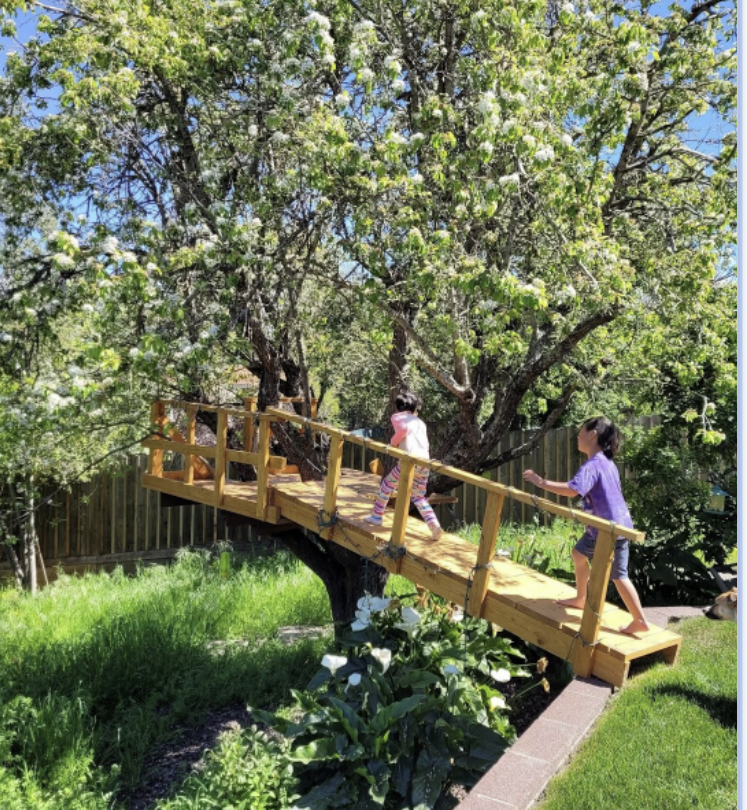
My family defines peace as actively building connections among people, animals, and the natural world. We feel that those connections foster safety, healing, and growth. We host Peace Potlucks to bring together our community, and my extended family lives together in a place we call Pear Tree Village as an example of sustainable co-living and daily connection (our pear tree and tree house are pictured above).
In Shintaido and Life Exercise* , we similarly invest in creating deep connections (Ma 間 = space) with our partners and others with whom we are practicing. We value and foster these connections in and outside of the dojo, including via Zoom. Every evaluation and examination I’ve taken looked deeply into my connection with my partner and whether I affected them positively. As instructors, our goal is to create a unified experience through our gorei (instruction). The North Star** of our practice is trying to embody Ten-chi-jin-ware-ittai — the unification of ourselves, society, heaven and earth: the ultimate form of connection.
Taking this principle past the dojo and into our lives can be both intriguing and very challenging because our practice can’t just be about people we like or with whom we make easy connections. For example, I can’t go to keiko and decide who I will or won’t have as a kumite partner. I need to bow to the next person, whoever that is, and start building that kumite relationship immediately.
The importance of taking our practice beyond the dojo is illustrated in the five step process:
Ito explained that one way to understand this is through our practice: Warm-ups Break out Kihon Kumite Our keiko and life outside the dojo
In the bigger world our keiko becomes real and hard when we understand the need to do kumite with people we dislike – or even fear and hate – if we want to create positive change in the world. When I say “do kumite” I mean, energetically and imaginatively interacting with them – not necessarily confronting them in real life. Even this imaginary encounter can be very difficult.
I believe this means using our practice to grow and attempt to get beyond the natural tendency to take sides, e.g. “I disagree with these people so they must be wrong.” There is much written about how divisive and violent public life has become – even to the point of warfare. So where do we, as articipants in the Global Taimyo Network, start if we really want to nudge the world toward reconnecting broken connections and peace?
A great example from Shintaido is the sagari iirimi practice that Ito calls, “Welcome, this way please.” You can see it in this 7 second video. In the kumite we reach out as an opponent steps toward us, as if opening our front door. We open the door and draw them toward and beside us. Both of us end up facing the same direction: seeing the world from a similar vantage point. When Ito teaches this he makes the point that when we face one another we are looking in different directions, i.e. I am looking west while my partner is looking east. In contrast, taking the effort to see the same landscape from the same direction is, at the very least, a place to begin building understanding and connection.
My personal belief is that I first need to model this – to dig deep and do energetic kumite with those I really would rather avoid – if I want the world around me to change.
Jennifer McLean – teacher and international prayer leader – believes that holding a negative thought about someone can hold them in a negative pattern. Multiplied by thousands or millions of people it can become a real negative force. You may not believe this example, but in the Global Taimyo Community we practice the inverse – doing Taimyo Kata and holding people and the planet in peace. So couldn’t the same be true in the negative form?
I am really taken with the story of Dr. Hew Len and his work at the Hawaii State Hospital in the high security ward for the criminally insane. The staff and patient environment was extremely chaotic when he arrived.
He spent four years at the hospital, full-time, occasionally reviewing patient files but mostly doing a continual Hawaiian Ho’oponono prayer. Almost all patients improved and were discharged and the staff dynamic improved greatly. The ward closed after four years due to lack of patients. Whether or not you believe this shift came about as a result of Dr. Len’s prayers, the idea of creating this type of change through the Global Taimyo Community is really intriguing to me.
If you are open to trying out this approach, I think there are several ways to practice this inward-outward reconnection:
Imagine a person (or group of people) on a different “side” than you are. This could be a social, cultural or political issue or just someone you dislike or fear – living or dead. Hold them far from you at a safe distance and spend time being curious about their childhood and formative years, their hurts and fears, and their basic needs. How does this feel standing across from them in your imagination?
For someone less threatening, imagine you are doing the “Welcome, this way please” kumite with them. What do you both see, facing the same direction? How does that feel?
If either of these is too difficult, ask yourself, ” If I could do it, what might it feel like?”
Jennifer McLean has shared an adaptation of the traditional Hawaiian Ho’oponono reconciliation and forgiveness process*** in the form of a guide prayer/meditation. It is a healing approach that simultaneously addresses those we fear or hate, and the unacknowledged parts of ourselves that those people trigger. It is a longer version of what I have outlined above. You have probably encountered other forms of prayer, meditation and healing that function in this way.
Regardless of the approach, I think all of them require grounding in one’s own safe space with support from friends and family. Pear Tree Village is one source of support for me to do this connection work, along with spiritual friends in the Friends (Quaker) community. For Buddhists this community is found in the sangha, for churchgoers it is the fellowship. Whether you follow a faith tradition or find your grounding in Shintaido, my hope is that we can support one another in the Global Taimyo Community as we follow the path of peace together.
* A term created by Lee Seaman and H.F. Ito to describe the combination of Yokikei Shintaido – including Taimyo Kata – and Tai Chi that Ito uses in his teaching.
** North Star – Many non-governmental organizations and individuals in Turtle Island (USA) use this term to indicate their ultimate destination and vision. It comes from the work of abolitionist Harriet Tubman who led enslaved people to freedom, traveling at night and navigating by the light of the North Star.
Préface J’ai passé la période du Covid à me demander comment combler les écarts de séparation physique et sociale des différences de statut vaccinal et de masquage aux croyances sur le changement climatique, en passant par les guerres dans de nombreuses régions du monde et la guerre menée contre les Noirs et les Marrons dans les rues de Turtle Island (États-Unis).
Je suis un activiste par nature et je travaille pour un changement positif depuis l’âge de 12 ans. Au cours des deux dernières années, j’ai passé du temps à coorganiser des caravanes Black Lives Matter, à examiner la décision de ma ville de supprimer un poste à la bibliothèque publique alors que le service de police demandait plus de trois fois ce montant pour de nouvelles voitures de patrouille, et à écrire sur la nécessité de soutenir la demande de notre tribu indigène locale, qui souhaite que tous les colons paient une taxe foncière honoraire pour soutenir la récupération de leurs terres volées.
Et pourtant, j’avais l’impression qu’il fallait faire plus. Pas plus de la même chose, mais de l’activisme à un autre niveau. Je ne suis pas de ceux qui se contentent de prier et de pratiquer le Taimyo, j’ai donc commencé à trravailler avec la pratique d’Ito qui consiste à créer la paix en étant plus pacifique, combinée au concept d’auto-responsabilité radicale. Bien que ce soit encore un travail en cours, je considère cela comme une forme d’activisme spirituel. Cet article présente mes réflexions actuelles sur l’utilisation du Taimyo et d’autres outils d’activisme spirituel – dans la poursuite de la paix.
Ma famille définit la paix comme la création active de liens entre les personnes, les animaux et le monde naturel. Nous pensons que ces liens favorisent la sécurité, la guérison et la croissance. Nous organisons des “Peace Potlucks” pour rassembler notre communauté et ma famille élargie vit ensemble dans un endroit que nous appelons le “Pear Tree Village” (village des poiriers), un exemple de coexistence durable et de connexion quotidienne (notre poirier et notre cabane dans les arbres sont illustrés ci-dessus).
Dans le Shintaido et les exercices de vie, nous investissons de la même manière dans la création de connexions profondes (Ma 間 = espace) avec nos partenaires et les autres personnes avec lesquelles nous pratiquons. Nous valorisons et encourageons ces connexions à l’intérieur et à l’extérieur du dojo, y compris via Zoom. Toutes les évaluations et tous les examens que j’ai passés ont examiné en profondeur ma connexion avec mon partenaire et ont cherché à savoir si j’avais un effet positif sur lui. En tant qu’instructeurs, notre objectif est de créer une expérience unifiée à travers notre gorei (enseignement). L’étoile polaire de notre pratique consiste à essayer d’incarner le Ten-chi-jin-ware-ittai – l’unification de nous-mêmes, de la société, du ciel et de la terre : la forme ultime de connexion.
Transposer ce principe au-delà du dojo et dans nos vies peut être à la fois fascinant et très difficile, car notre pratique ne peut pas se limiter aux personnes que nous aimons ou avec lesquelles nous établissons facilement des liens. Par exemple, je ne peux pas aller au keiko et décider qui sera ou ne sera pas mon partenaire de kumite. Je dois m’incliner devant la personne suivante, quelle qu’elle soit, et commencer immédiatement à construire cette relation de kumité.
L’importance d’amener notre pratique au-delà du dojo est illustrée par le processus en cinq étapes: Nuke Nobi Kiki Sae Jizai 抜け 〜 伸び 〜 利き 〜 冴え 〜 自在 libération expansion efficacité clarté liberté (ma traduction)
Ito a expliqué que l’une des façons de comprendre cela est à travers notre pratique: Échauffements Break out Kihon Kumite Notre keiko et la vie en dehors du dojo.
Dans le grand monde, notre keiko devient réel et difficile lorsque nous comprenons la nécessité de faire du kumite avec des personnes que nous n’aimons pas – ou même que nous craignons et détestons – si nous voulons créer un changement positif dans le monde. Quand je dis “faire du kumite”, je veux dire interagir énergétiquement et imaginairement avec eux – sans nécessairement les affronter dans la vie réelle. Même cette rencontre imaginaire peut être très difficile.
Je crois que cela signifie utiliser notre pratique pour grandir et tenter de dépasser la tendance naturelle à prendre parti, par exemple : “Je ne suis pas d’accord avec ces gens, donc ils doivent avoir tort.” Il y a beaucoup d’écrits sur la façon dont la vie publique est devenue divisée et violente – jusqu’à la guerre. Alors, par où commençons-nous, en tant que participants au Réseau Global Taimyo, si nous voulons vraiment pousser le monde vers la reconnexion des liens brisés et la paix ?
Un excellent exemple tiré du Shintaido est la pratique sagari iirimi qu’Ito appelle “Bienvenue, par ici s’il vous plaît”. Vous pouvez le voir dans cette vidéo de 7 secondes. Dans le kumite, nous tendons la main lorsqu’un adversaire s’avance vers nous, comme si nous ouvrions notre porte d’entrée. Nous ouvrons la porte et l’attirons vers nous et à côté de nous. Nous finissons tous les deux par faire face à la même direction : nous voyons le monde depuis un point de vue similaire. Lorsque Ito enseigne cette technique, il souligne que lorsque nous nous faisons face, nous regardons dans des directions différentes, c’est-à-dire que je regarde vers l’ouest et que mon partenaire regarde vers l’est. En revanche, faire l’effort de voir le même paysage depuis la même direction est, à tout le moins, un point de départ pour la compréhension et la connexion.
Ma conviction personnelle est que je dois d’abord modeler cela – creuser profondément et faire du kumite énergétique avec ceux que je préférerais vraiment éviter – si je veux que le modèle de l’art du kumite se développe.
Jennifer McLean – enseignante et chef de file international de la prière – pense que le fait d’avoir une pensée négative sur quelqu’un peut le maintenir dans un schéma négatif. Multipliée par des milliers ou des millions de personnes, elle peut devenir une véritable force négative. Vous ne croyez peut-être pas à cet exemple, mais dans la Communauté mondiale Taimyo, nous pratiquons l’inverse – faire le Taimyo Kata et maintenir les gens et la planète en paix. Ne pourrait-il pas en être de même pour la forme négative ?
Je suis très impressionné par l’histoire du Dr Hew Len et son travail à l’Hôpital d’Etat d’Hawaï dans le service de haute sécurité pour les fous criminels. L’environnement du personnel et des patients était extrêmement chaotique à son arrivée.
Il a passé quatre ans à l’hôpital, à plein temps, examinant occasionnellement les dossiers des patients mais faisant surtout une prière hawaïenne Ho’oponono continuelle. Presque tous les patients se sont améliorés et sont sortis de l’hôpital, et la dynamique du personnel s’est grandement améliorée. Le service a fermé au bout de quatre ans par manque de patients. Que vous croyiez ou non que ce changement soit le résultat des prières du Dr Len, l’idée de créer ce type de changement à travers la Communauté Globale Taimyo m’intrigue vraiment.
Si vous êtes ouvert à l’idée d’essayer cette approche, je pense qu’il y a plusieurs façons de pratiquer cette reconnexion intérieur-extérieur :
1) Imaginez une personne (ou un groupe de personnes) d’un “côté” différent du vôtre. Il peut s’agir d’un problème social, culturel ou politique ou simplement d’une personne que vous n’aimez pas ou craignez – vivante ou morte. Tenez-la à une distance sûre de vous et passez du temps à être curieux de son enfance et de ses années de formation, de ses blessures et de ses peurs, et de ses besoins fondamentaux. Que ressentez-vous en vous tenant en face d’elle dans votre imagination ? 2) Pour une personne moins menaçante, imaginez que vous faites le kumite “Bienvenue, par ici s’il vous plaît” avec elle. Que voyez-vous tous les deux, face à la même direction ? Comment vous sentez-vous ? 3) Si l’une ou l’autre de ces situations est trop difficile, demandez-vous : ” Si je pouvais le faire, qu’est-ce que cela pourrait me faire ? “.
Jennifer McLean a partagé une adaptation du processus traditionnel hawaïen Ho’oponono de réconciliation et de pardon sous la forme d’une prière/méditation guide. Il s’agit d’une approche de guérison qui s’adresse simultanément à ceux que nous craignons ou détestons, et aux parties non reconnues de nous-mêmes que ces personnes déclenchent. Il s’agit d’une version plus longue de ce que j’ai décrit ci-dessus. Vous avez probablement rencontré d’autres formes de prière, de méditation et de guérison qui fonctionnent de cette manière.
Quelle que soit l’approche, je pense qu’elles nécessitent toutes de s’ancrer dans son propre espace de sécurité avec le soutien de ses amis et de sa famille. Le village de Pear Tree est une source de soutien qui me permet de faire ce travail de connexion, ainsi que des amis spirituels de la communauté des Amis (Quakers). Pour les bouddhistes, cette communauté se trouve dans la sangha, et pour les pratiquants de l’église, dans la fraternité. Que vous suiviez une tradition religieuse ou que vous trouviez votre fondement dans le Shintaido, mon espoir est que nous puissions nous soutenir mutuellement dans la Communauté mondiale Taimyo, alors que nous suivons ensemble le chemin de la paix.