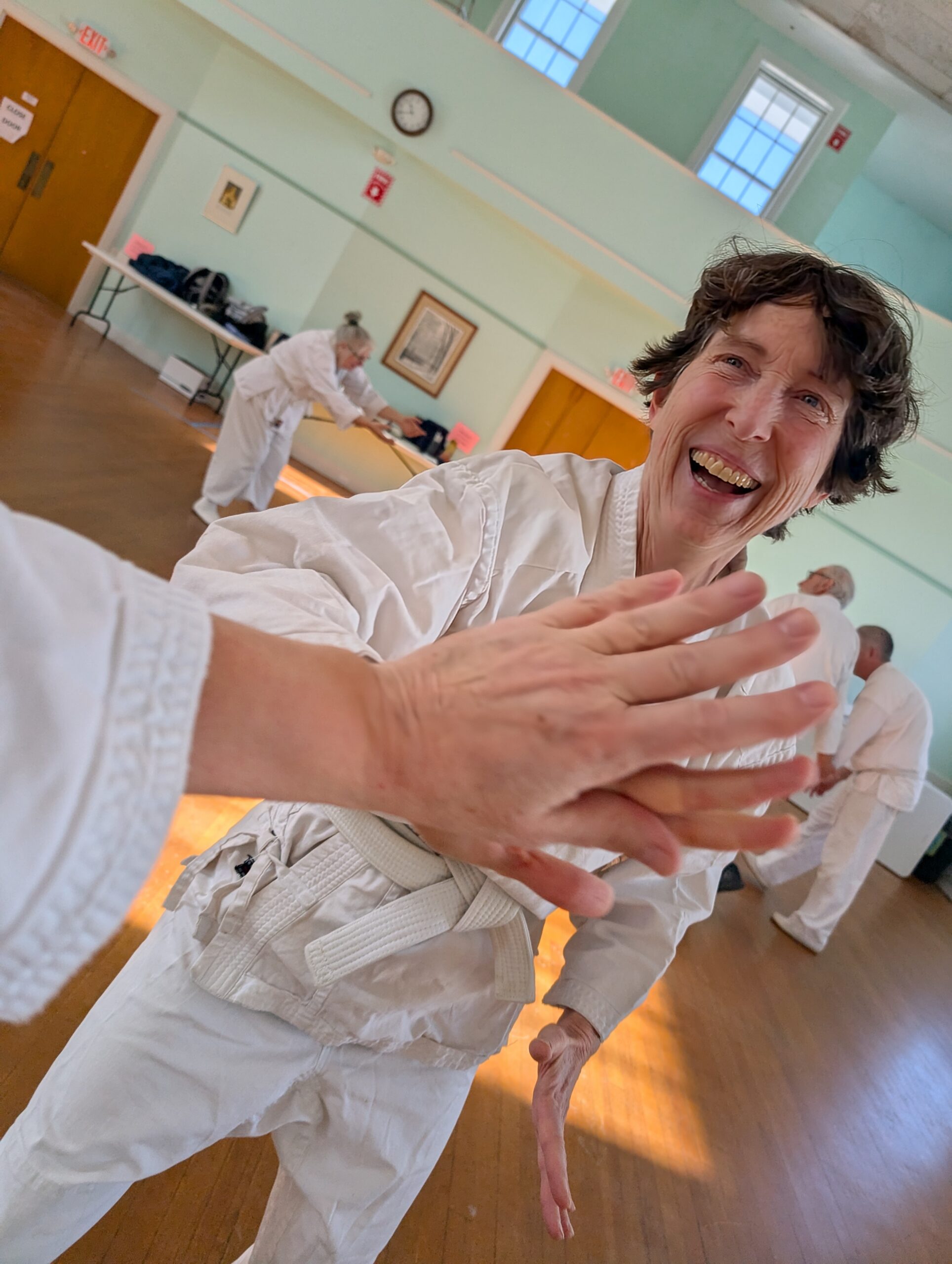
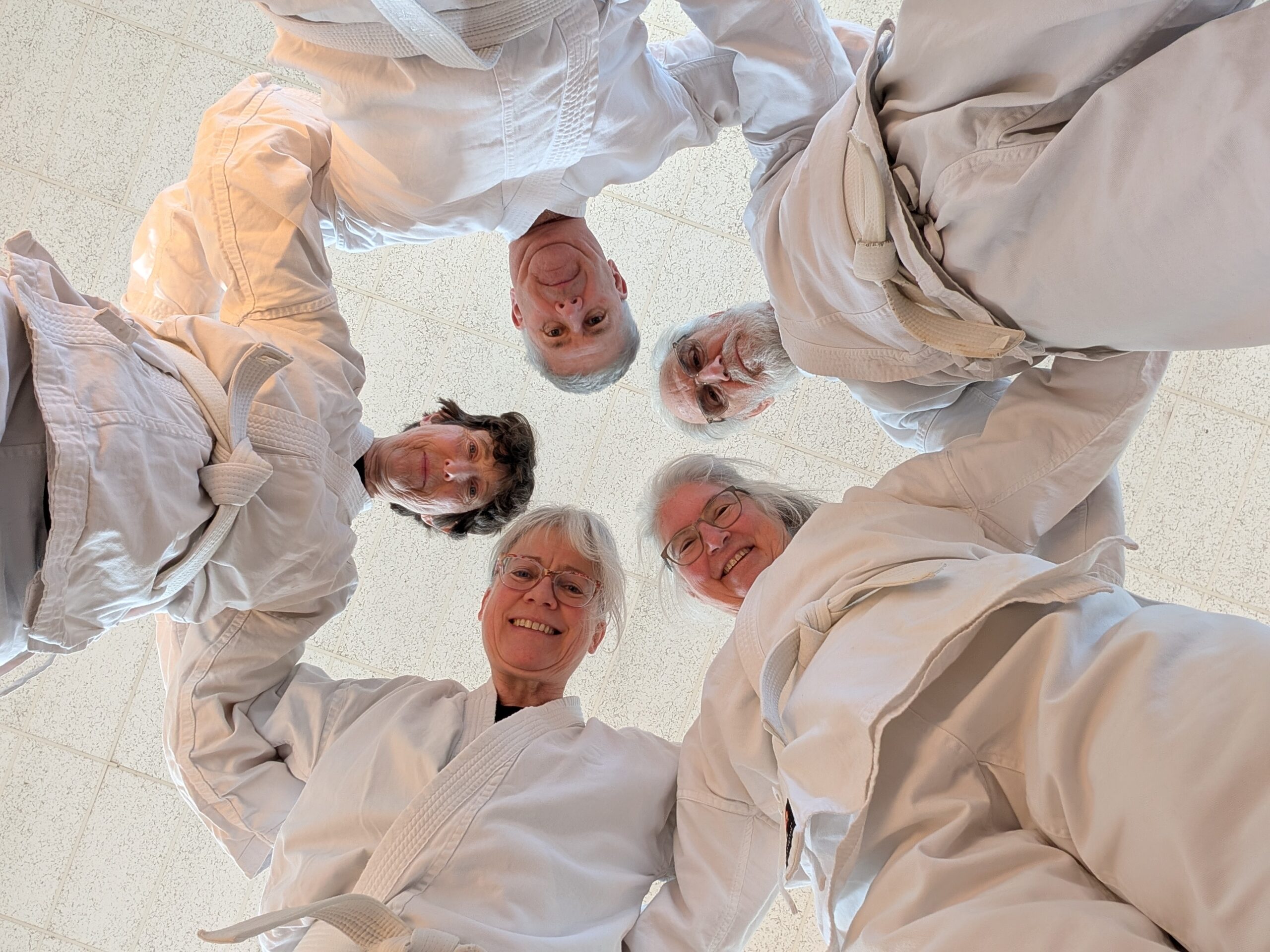
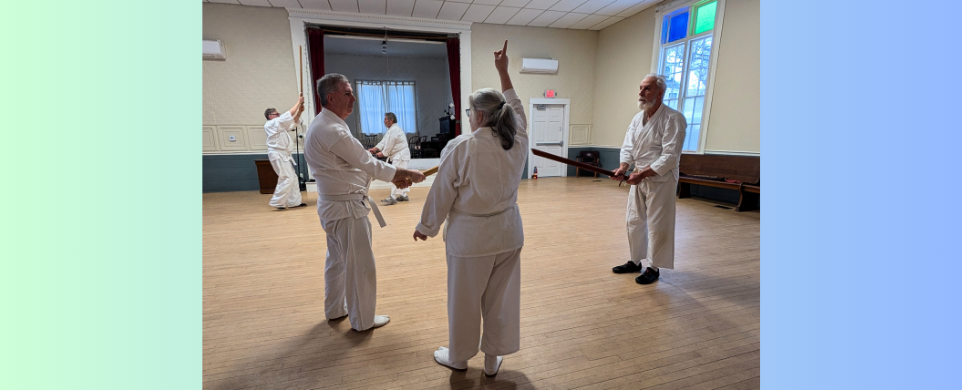
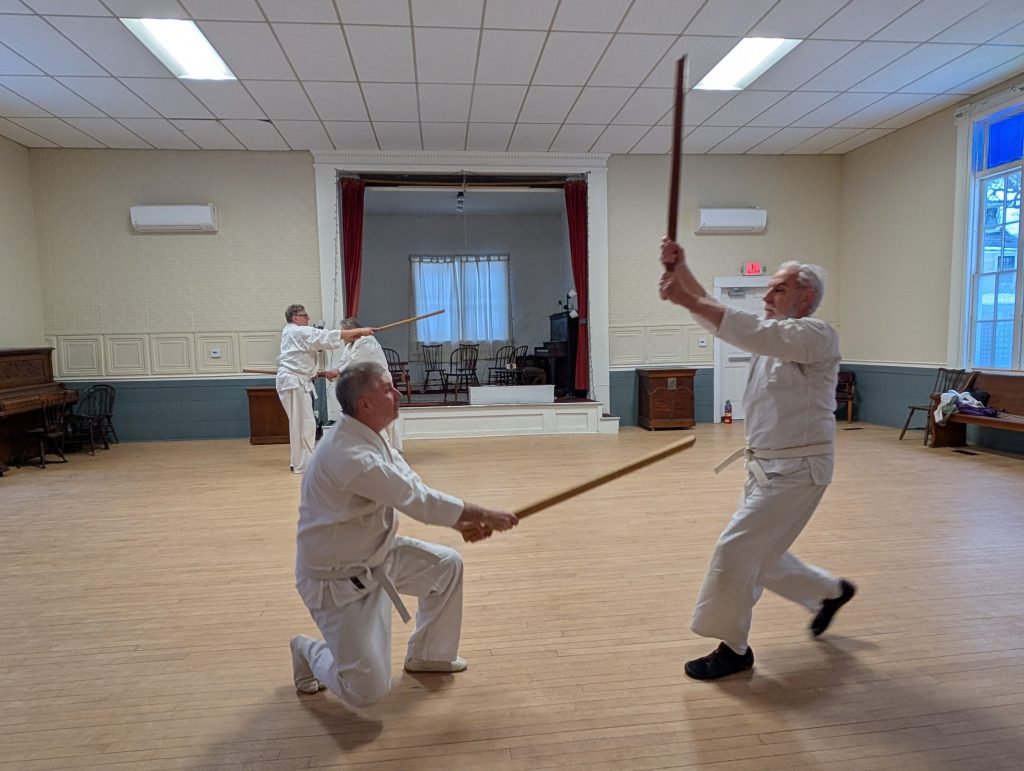
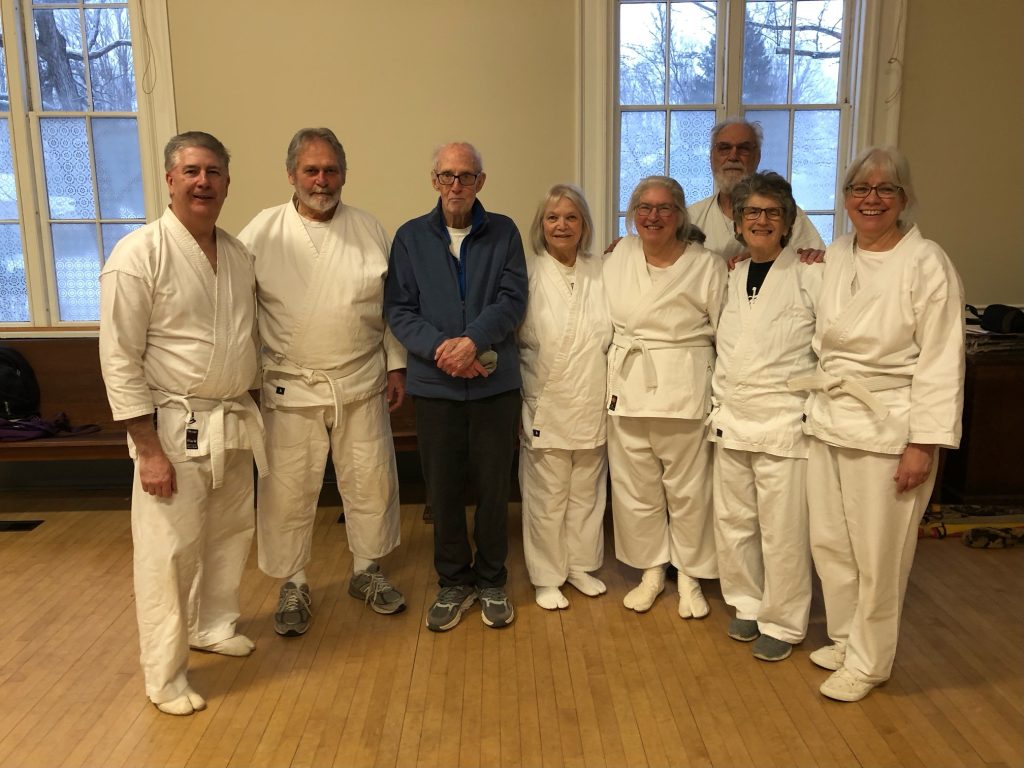
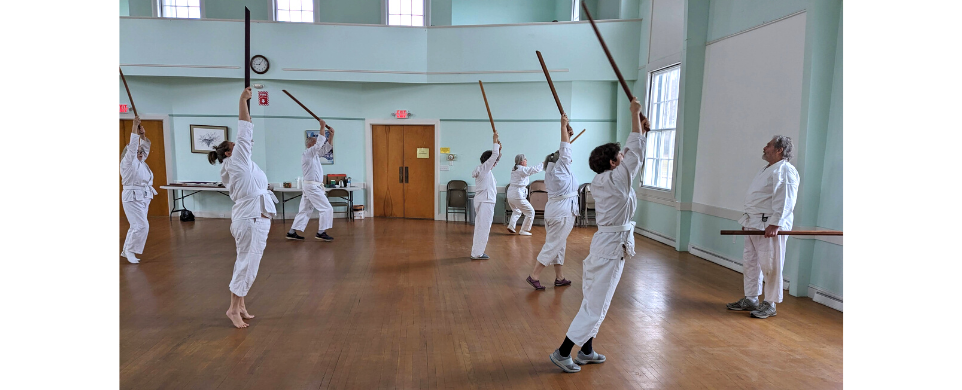
The announcement for the Shintaido Northeast Kangeiko 2025 went out in January. Kangeiko means cold-weather practice and is a time to come together for keiko. This year’s Kangeiko theme was Cultivating Inner Life: Finding Freedom in the Form. The event was held at the Montague Meeting House, in the Berkshires of Massachusetts.
Finding Freedom in the Form
In Shintaido, the phrase “Ten Chi Jin Ware Ware Ittai” (天地人我々一体) embodies the unity of Heaven (Ten), Earth (Chi), and Humanity (Jin)—a philosophy that extends beyond the dojo into a way of life. At its core, it teaches that true mastery comes not from isolated skill or strength but from a seamless integration of mind, body, and spirit. Through disciplined practice, a practitioner transcends mere technique and steps into a deeper form of Freedom—the ability to act without hesitation, move without resistance, and live without internal conflict.
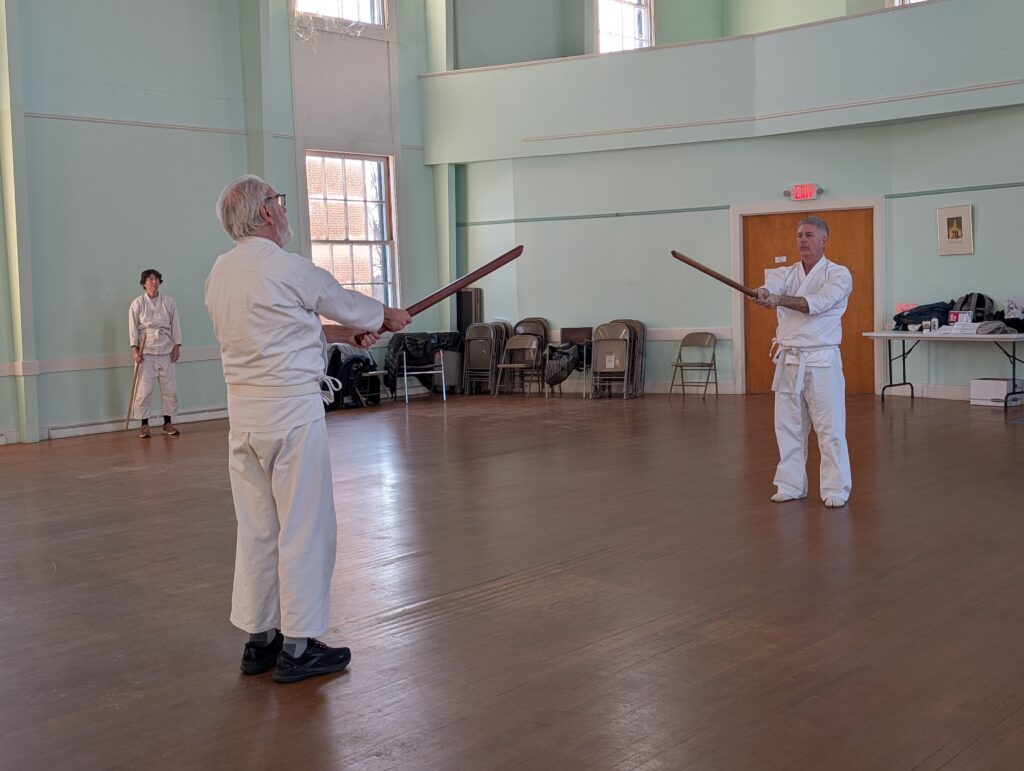
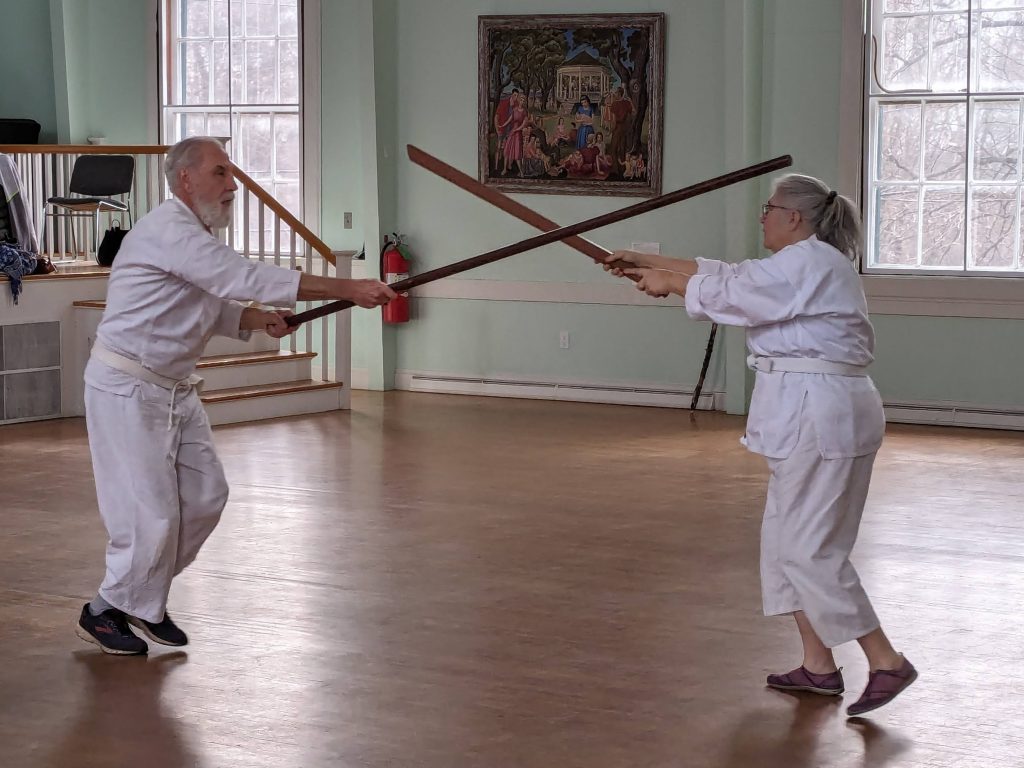
In a stressful situation, the principle of Ten Chi Jin manifests in how a seasoned practitioner moves with balance, awareness, and adaptability. Earth (Chi) represents grounding and stability, the foundation of any practical stance or technique. Heaven (Ten) symbolizes intuition and perception, the ability to read an opponent’s intent before they act. Humanity (Jin) is the bridge where skill and spirit merge to create seamless action. Senior Instructor Bela Breslau demonstrated using the bokuto and free hand Shintaido that when a practitioner unites these three elements, they achieve a state of flow where techniques arise effortlessly, free from fear or doubt.
This integration leads to Freedom in movement—the ability to react instinctively rather than being bound by rigid Form. In Shintaido, it’s not simply learning to fight but responding to life with fluidity, adapting to challenges with the grace of water encountering a stone. This way of practicing is the path to internal and external Freedom—one that cannot be achieved through brute force but only through deep understanding and unity with the world.
Freedom Through Oneness
Instructor Stephen Billias led the second Keiko with a strong emphasis on oneness. A notable exercise was a two-person Shoko sword meditation. One person performed Shoko for an extended period while assisted and supported by a second person. This exercise was a powerful reminder of the spiritual truth expressed in ‘Ten Chi Jin Ware Ware Ittai’-that the separation between self, and the universe is an illusion. In Shoko’s meditation, suffering arises from resistance—from seeing oneself as separate from the flow. When practiced with awareness, Shoko becomes a tool for dissolving this illusion. The two-person Shoko meditation exercise Stephen led was a poignant reminder that we need each other to succeed in humanity (Jin).
Path to True Freedom
Senior Instructor Margaret Guay, a highly respected teacher in Shintaido, led the third Keiko with bokken sword techniques. Margaret showed that Freedom is not an absence of rules but a mastery of them—the ability to transcend limitations not by ignoring them but by understanding them so profoundly that they cease to be restrictive. With a beautiful Dai Jodan cut, she showed not to fear confrontations but to overcome them. ‘Ten Chi Jin Ware Ware Ittai’ is to live aware, grounded, and free. It is to see no separation between action and stillness, force and surrender, self and universe. The Kangeiko emphasized that Freedom in the Form is not just how to cut but how to live with a mind unburdened, a spirit untamed, and a body in perfect harmony with nature.
Thank you to Senior Instructors Margaret Guay, Bela Breslau, Instructor Stephen Billias, and Master Instructor Micheal Thompson for leading and organizing this successful Kangeiko.
I arrived at the Petersham Town Hall with a heavy feeling the size of a grapefruit in my solar plexus. It was mostly grief with an edge of an almost stubborn need to honor the mounting deaths in our local and larger Shintaido community. I was a little afraid we wouldn’t be able to find the courage among us to fully acknowledge the impact of the missing people in our circle and the tragedy that we’ve all watched recently unfold.
When Joe Zawielski sensei died in the Summer of 2018, it was a huge loss for Shintaido Northeast (SNE) and for his students, among many others. To this day, my eyes well up every time we do bokutoh practice. I can see Joe swerving around his koshi as he gently cuts the space around him. There have been several keiko when I have felt his presence in the circle, but it’s challenged me to know what exactly to do with that feeling. Whether to acknowledge it out loud or not, and I wonder whether anyone else is noticing it too.
On November 2, 2023, we tragically lost Brad Larsen. Since then, I have spent hours on the phone, texting and talking to SNE members; trying to wrap our minds around what happened to him, and how to find peace with the sudden empty “Brad-shaped hole” that was left. For a long while, we’d named this persistent unsettled vigilance when we were checking the news daily for any indication of how he’d passed. It was difficult to find acceptance when there were so many questions surrounding why and how he’d died.
Just weeks before Kangeiko, we received the answers we’d been seeking, and they were devastating. But, it did mean we could finally move on to the task of embracing the grief that had in some ways been on hold. February 10-11, 2024, would be the first retreat where a large group of us would gather to practice since his murder.
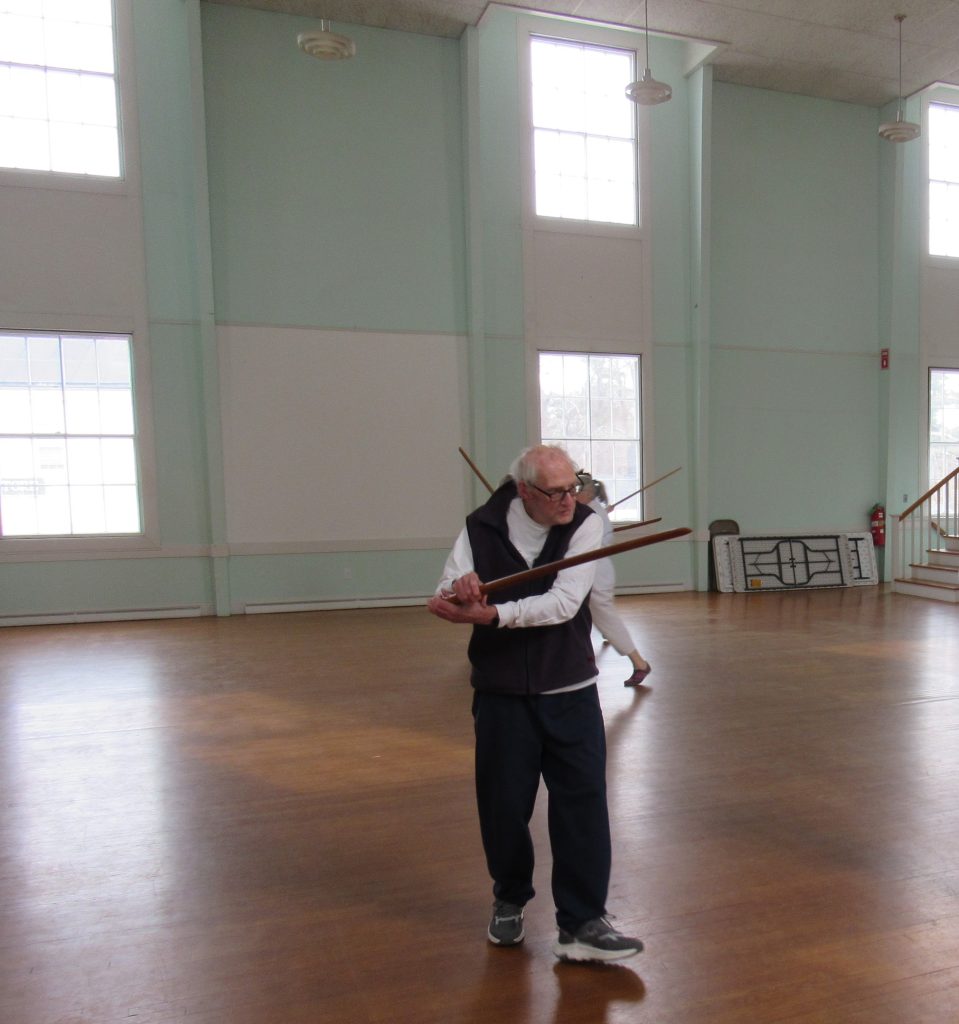
Rob Kedoin sensei led our opening keiko, and generously helped warm up our wintered and weathered bodies, preparing us for the keikos to come. He reminded us that the sword’s movement comes from the hara and introduced the idea that the end of our bokutoh was like a radiating beam of light that made it possible for our message to be felt by our partner.
Margaret Guay sensei, who was also Director of Instruction, stepped in last minute to lead our second keiko in the afternoon. With no advanced planning, she masterfully modeled how to say yes to the unknown and trust that it will all be as it needs to be. Without a single word said, we riffed on one another to warm the group up. Although I did not have a personal relationship with Ito sensei, I had really enjoyed reading the commemorative posts and especially his rendition of Neurologic Music Therapist’s Allison Davies song “Every little cell in my body is happy.” We marched and skipped around the dojo singing this song over and over.
The Keiko progressed to bokutoh kumite trying to catch our partner’s timing without being able to see them coming. I noticed it was nearly impossible to catch the timing of a daijodan cut when my partner was shining their sunbeam from the start. Reading you loud and clear already!
Also, we did some profound investigating around tenshingoso kumite, where I had some new insights. I was experiencing the end of “Ohh” as either being a gift offered to the world or doing the offering of the gift. Like, ‘behold this amazing being!’ And feeling myself as a gift when following my partner’s “Ohh.” This was the keiko where I entered full on cosmologic consciousness.
We ran eiko dai around and around the Petersham Town Hall for what seemed like forever. For me, it was very clear we were doing this together. Not little islands of trying, but a community finding it’s voice, and the courage to keep going.
That evening we went to Matt Shorten’s beautiful rural homestead to share a meal. Many stories, hilarious, inspiring, and questionable, were told about the early days of Shintaido. People I have never met were invoked and one story led to another. It was a real trip down memory lane, especially for those at the table who have been around the longest.
It felt as though all those people, and all of us, and all of you represent a cluster of glowing threads that make up the Shintaido community. People who have experienced Shintaido’s embodied transcendence. And we all speak this language that allows us to connect without talking, more deeply than words could ever aspire to. Through the tiny electro-kinetic sun beams we cultivate within and between our bodies and then blast off into the universe as a message back to itself.
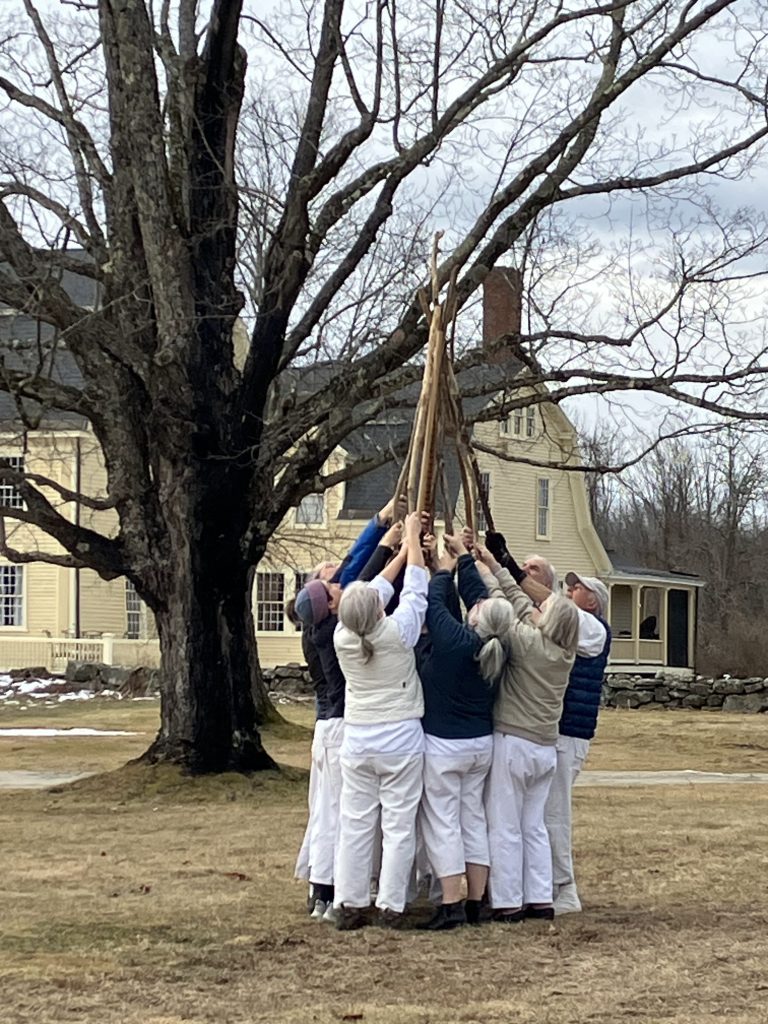
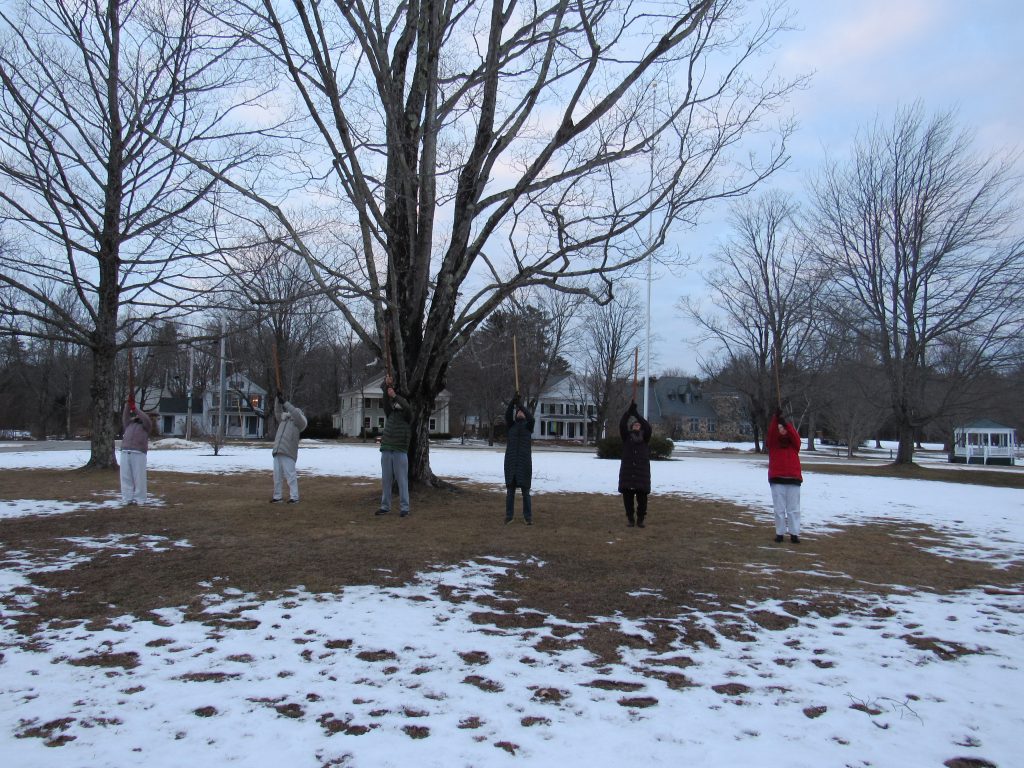
Stephen Billias sensei was the steadied goreisha we needed for our third and final keiko. We did a series of toitsukihon exercises with the boh and bokutoh which were a welcome grounding and centering after the previous day’s big opening. We did an experimental kumite with both bohs and bokutohs. We’d been instructed to bring a “Brad” stick for the weekend and, after introducing them to one another, we went out into the winter air, next to a big old tree and pointed our pure and glowing intentions up to the heavens. It was the first time it felt like we could directly bring Brad into our awareness as a group. And, I felt like Brad could sense our message. I heard the words “there are my people.”
I sometimes feel grief that, if I’m lucky and live a long life, I may very well be the last Shintaidoist in the Northeast someday. Michael Thompson sensei said something to me this weekend that brought me tremendous relief. He said “everything in a grain of sand…it’s all there.” He was referring to William Blake’s poem “Auguries of Innocence” that begins:
“To see a World in a Grain of Sand And a Heaven in a Wild Flower Hold Infinity in the palm of your hand And Eternity in an hour.”
The universe will remember and accommodate all the exploration we’ve done in Shintaido. Nothing gets erased at death. Every action and every person leaves an imprint. As Shintaidoist, we have practices that give us tangible ways to deeply connect with one another. I think that’s one of Shintaido’s greatest gifts.
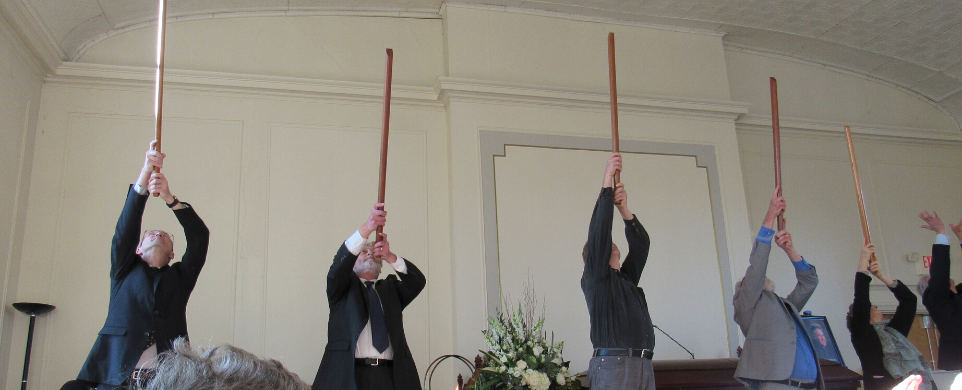
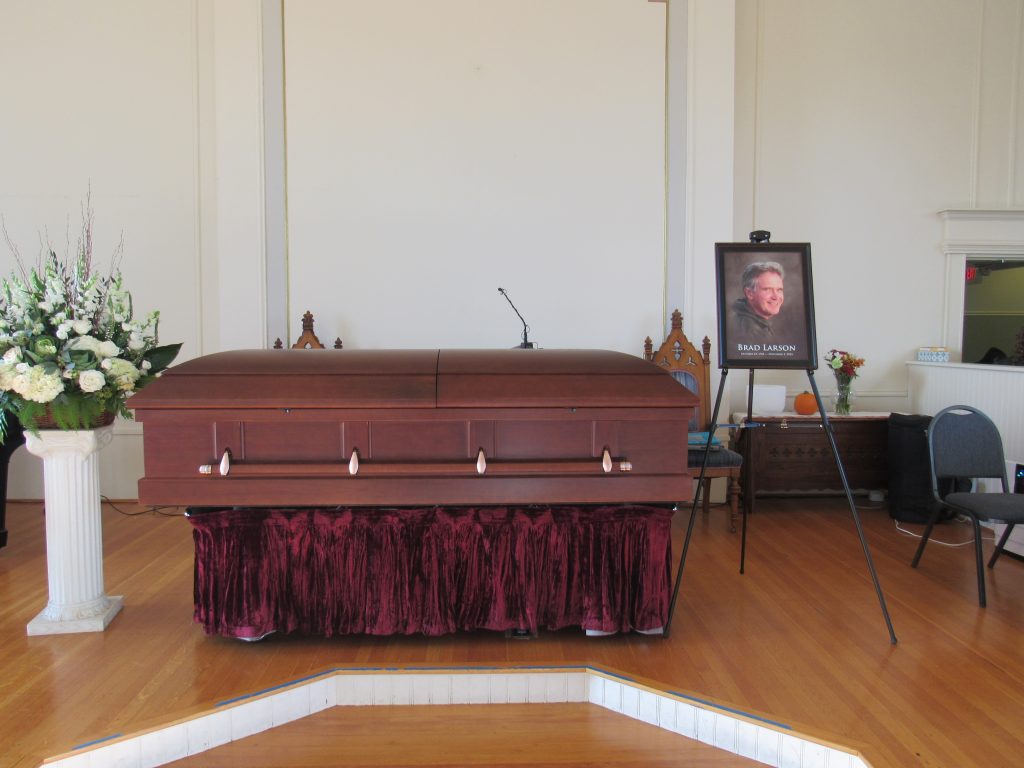
By Rob Kedoin On Sunday, November 12th, Shintaido members gathered at the Unitarian Church of Sharon for Brad Larson’s memorial service. The church was filled with so many people that some watched the service from an overflow location in the building. The service was beautiful. Rev. Jolie Olivetti spent time talking about Brad’s family as well as his many interests in Shintaido, Biodanza and drum circles. There was a period of sharing where people could tell stories of Brad. These stories ranged from his omnipresent smile to his involvement in the church, the Historical Society and his many contributions to the world of interactive storytelling in museums.
From a personal perspective, Gail and I began the day by hiking in the nearby Moose Hill Wildlife Sanctuary. I know how Brad loved to run with his boh or joh through the woods and while I have no idea if he ever ran the trails of Moose Hill, it helped me to envision being on trails he once traveled.
Toward the beginning of the service, the reverend relayed a message from Brad’s mother which affected me deeply, that, “Brad would be the first one to forgive.” I needed to be reminded about this because I had felt myself growing angrier and angrier about Brad’s death.
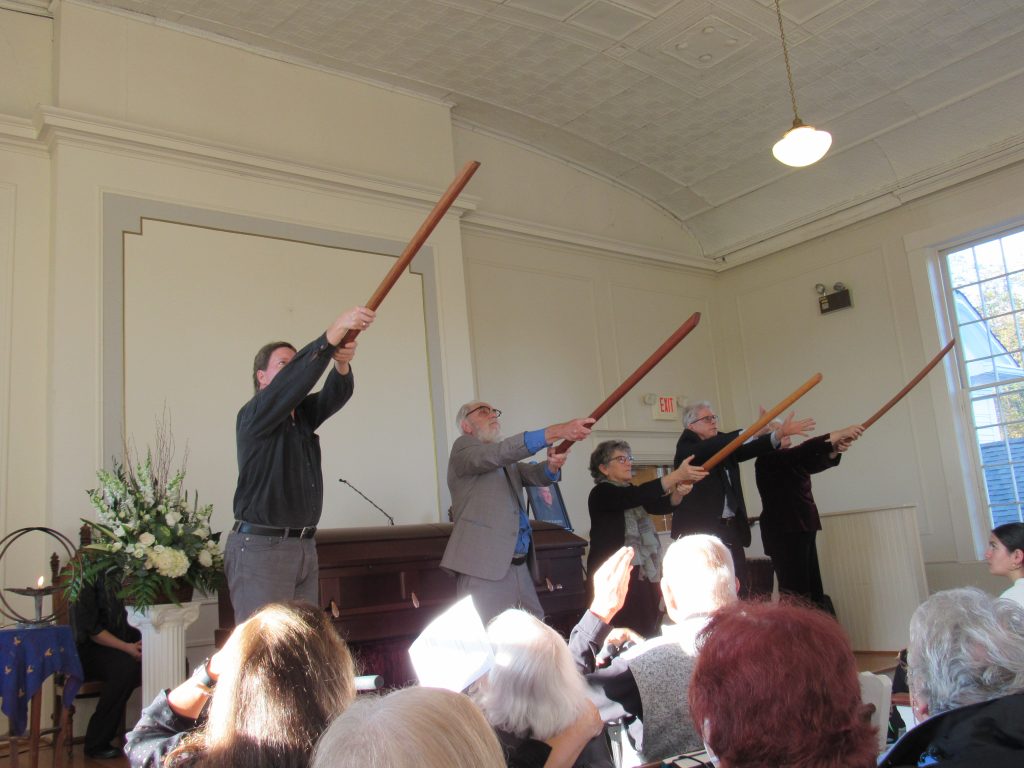
Matt Shorten spoke about Brad and Shintaido, then led us in Tenso and Shoko as we stood at the front of the church. David Curry then invited the attendees to join us in open handed Tenso and Shoko. Facing a church full of people, palms outstretched in Shoko, all sharing their love for Brad was awe inspiring.
For myself, I will always miss doing the standing back stretch with Brad. I always felt like I was being lifted like a rag doll and being stretched by a kind, gentle giant.
Brad once spoke to his church’s congregation about a three-rock meditation he learned from Thich Nhat Hahn. Since the congregation thought it fitting to send us away with packets of three rocks and the meditation directions, it seems like a good way to close. Hold each stone consecutively in hand:
Stone 1: Breathing in, I see myself as a flower; breathing out I feel fresh Stone 2: Breathing in, I see myself as a mountain; breathing out I feel strong Stone 3: Breathing in, I see myself as still water; breathing out I reflect things as they are
In the Northeast, our coldest cold spell this winter came in February. It was down to zero where I live just north of NYC, and windy as well. In an otherwise mostly mild winter, it suddenly felt dangerous just to be outside. My chickens, who usually strut around happily in the open air all season, took refuge in their dog crate and did not want to come out. I was reminded that cold, very cold, and extremely cold are all quite different things.
So it was for Kangeiko weekend. I planned to join the gasshuku late, driving up to Massachusetts in time to make the second keiko, because I had business at home on Saturday morning. That morning I got voice mail from Mary Foran saying, “The dojo has no heat. We are in the basement with a space heater. Just letting you know in case you want to rethink coming all this way.” I texted back, “Unless you decide to give up and go home, I’d like to come. I want to see everybody.” Since Kangeiko means cold weather practice, and since we’ve done a lot of Kangeiko together for many years, I didn’t think there was much chance of disbanding because of cold weather, even extremely cold weather.
Sure enough, when I got to the Town Hall in Petersham, Massachusetts, I was greeted by friends in down vests and gloves, saying, “Wear whatever you want for this keiko as long as it’s warm.” They led down to the basement where, with the help of the space heater, the space was up above freezing, just barely. Bela Breslau had taught that morning, and had to start by discussing with the group what to do about the lack of heat. Unfortunately, a couple of people had needed to drop out because the cold wasn’t workable for them, including Michael Thompson who had been scheduled to give some of the instruction. The people who stayed had begun by huddling in a circle and sharing verbally some of what was going on in their lives. Then Bela led freehand sword cutting. Swords turned out not to work because the basement ceiling was too low.
For the second keiko, Matt Shorten led warmups and Stephen Billias taught. I found that the basement was really very cold! After a 3-hour drive, it was hard to feel that warmups had done much in the way of warming my body. But as we went through our usual keiko progression, bringing more vigor into our movement, the warmth started to come. We practiced more sword movements free hand: hasso and mugen. Finally, Stephen asked if we were willing to go upstairs into the dojo with no heat at all, so we could use our swords. We agreed, we went, and it was even colder! But – now we had bokutohs and boken. And Stephen had us working in pairs. There is something about the alertness that comes with kumitachi that warms my body, every time. It was especially noticeable once Stephen put us in groups of five, with four attacking one who stood in the center. The eyes, the brain, the blood, the arms and legs all went on high alert. Now it seemed good to me to be doing such a very cold weather practice, bringing life and warmth into the depths of winter.
Stephen brought us outside for a final tenso-shoko. We stood in a patch of the village green and cut forward as the church bell struck five and the bell tower of the Town Hall turned orange in the setting sun.
Dinner was at Matt and Bonnie’s home, cozy, potluck, with a dog and a fire. Some of us stayed at Hartmann’s herb farm, a place we have been before, before the pandemic, before Joe Zawielski sensei’s passing. It was good to be back. As Margaret Guay- who was my roommate – said to me, “This feels important.” The importance was not in the content of the keikos so much as in the resumption of the gasshuku kata. It was important to eat together, to do more than one keiko and experience the physical/emotional/spiritual changes from one keiko to the next. It was good that at least some of us could be together under one roof.
On Sunday morning, Margaret led us in beautiful katas: diamond eight (free hand and then with sword) and finally Taimyo Part One. As we walked out of Town Hall after saying our goodbyes, guess what! It was up to forty degrees. The cold weather lasted just as long as the Kangeiko.