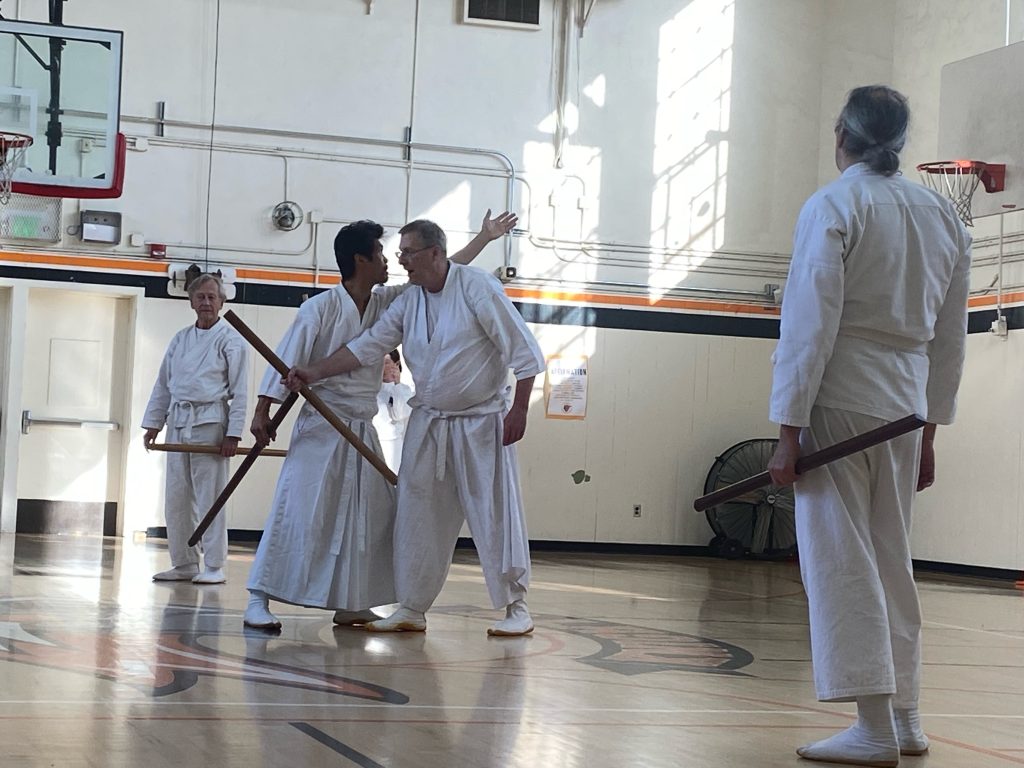
Over the 2024 Martin Luther King Jr. weekend, Pacific Shintaido hosted its annual Kangeiko workshop in the Claremont Middle School gymnasium in Oakland, California.
Master Ito Sensei died on December 30, 2023, just a few weeks before Kangeiko 2024, and his spirit infused the entire weekend.
General Instructor Connie Borden and Senior Instructors Robert Gaston and Shin Aoki were our instructors, guiding us through four keiko (two on Saturday, two on Sunday) and each, in their own way, developing and leading kenjutsu-based curriculum inspired by the theme “Finding Center.”
By inviting Connie Sensei, Rob Sensei, and Shin Sensei to instruct, the Pacific Shintaido board (Shin Aoki, Cheryl Williams, and Derk Richardson) was providing them the opportunity to share some of what they had gleaned from their recent international travels—Connie Sensei and Rob Sensei to British Shintaido Daienshu 2023 last August, and Shin Sensei to a gasshuku in Japan last October.
The PacShin board came up with the theme as a general, rather than prescriptive, concept, and in his opening remarks on Saturday morning, Derk mentioned a few ideas that came to mind when the Board conjured the theme: We live in increasingly polarized times when finding center is essential; Shintaido movement originates from the center and returns to the center; in kumite, we find out partner’s center, find our own center, and connect the two, becoming one; the center can be a slippery target, requiring our concentration, awareness, and sensitivity to find it; the sword (bokuto, bokken) can be a compass to help us find center; finding center is connecting with our true selves; finding center enables us to take refuge in stillness.
A dozen Shintaido practitioners, from the greater San Francisco Bay Area, and also from Oregon and Florida, participated during the weekend. Each keiko was taught entirely by one instructor. On Saturday morning, after Sandra Bengstsson led warmups, Shin Sensei led the class through tachi jumping, wakame kumite that involved sensing the layers leading to the partner’s center, and irimukae—stepping forward and backward holding the bokuto perpendicularly and “entering” the sword and letting the sword “enter” you. The keiko also included Tenshingoso with sword, both individually and facing a partner; stepping practice (steps number three, four, five, and six), adding chudan cutting with sword, and kumitachi—daijodan versus chudan kiriharai.
After a midday potluck brunch hosted by Shin Sensei and Robert Friedman at their home in the Oakland hills, keiko two began with Nao Kobayashi leading warmups. Rob Sensei introduced a form of renki kumite to foster connection, with one partner using an open palm to receive the other partner’s fist. After pushing back and forth, the receiver would draw and send the attacker away. The next stage was for the receiver to apply the other hand to the back of the attacker’s arm or shoulder while sending away. The keiko concluded with daijodan versus chudan kumite first with open-hand cuts and then with sword. The differing levels of Shintaido experience among the participants allowed for a wide variety of partner-pairing.
On Sunday morning, Sally Gaston led warmups (fulfilling one element of her Shintaido Assistant exam, which she would successfully complete the next day). Connie Sensei then led the group in tachi jumping with increasingly quicker partner changes, the frenzied pace had everybody laughing. She settled us down with standing meditation before instructing us in Diamond Eight cut sei, using bokken, both stationary in place and with a triangle stepping pattern. The final exercise Connie Sensei introduced involved the opening three steps of Okuden no Kata, receiving/avoiding a daijodan cut from behind.
After lunch at a local restaurant, Derk led warmups for the final keiko, which Shin Sensei taught as a kind of synthesis, summation, and extension of the preceding curricula. We again did renki kumite, this time stepping back and forth, remaining connected by the backs of our wrists, and searching for one another’s center. After individual open-hand toitsu kihon (daijodan, jodan kirikomi, and chudan kirikomi cuts), we proceeded to kirioroshi kumite with various partners. Following that, Shin Sensei led us in Kyukajo #2 (nikajo) and #3 (sankajo), two of the nine-plus techniques fundamental to classic Shintaido Kenjutsu practice. Kyukajo #2 is daijodan sword cut versus jodan, #3 is daijodan versus chudan.
Those of who had attended Pacific Shintaido Kangeiko 2020, “Rediscovering Kyukajo,” might have recalled that Master Instructor H.F. Ito had shared his understanding of three elements basic to formal Kyukajo practice: It should be done with bokuto; stepping sequences all end by drawing the feet into musubidachi stance; and each kumite begins with partners bowing to each other, drawing their swords into shoko position, lifting their swords in tandem into tenso, and returning together down to shoko. The partners repeat shoko-tenso and bow at the conclusion of kumitachi, as well.
The energy level of the keiko escalated dramatically with several rounds of Eiko Dai kumite with sword, partners running toward one another from opposite corners of the gym, one cutting with daijodan, the other cutting jodan or chudan. We concluded the keiko with Tenshingoso kumite, first in partner pairs and then all together.
Upon reflection, it is clear that every exercise and technique led by our instructors—Connie Sensei, Shin Sensei, and Rob Sensei—during Kangeiko 2024 advanced our understanding of and brought us physically closer to “finding center.” We extend our gratitude to them for deepening our understanding, polishing our techniques, strengthening our relationships within the Shintaido community, and inspiring us to take our practice out into the world in our everyday lives.
In the closing ceremony, Derk read a poem by the Chinese-American poet Ha Jin:
A Center You must hold your quiet center, where you do what only you can do. If others call you a maniac or a fool, just let them wag their tongues. If some praise your perseverance, don’t feel too happy about it— only solitude is a lasting friend.
You must hold your distant center. Don’t move even if earth and heaven quake. If others think you are insignificant, that’s because you haven’t held on long enough. As long as you stay put year after year, eventually you will find a world beginning to revolve around you.
This Shintaido of America podcast series was produced by a group of volunteers. Technical support funding was generously provided through the Joe Zawielski Memorial Fund and Shintaido of America membership dues.
If you are not already a member, please consider a Shintaido of America membership today, or help support us by making a tax-deductible donation to this 501(c)(3) organization.
Episode 1: “The atom bomb inspires an avant-garde martial art”
Section of the Book: About the Author and Book by Shintaido of America Introduction by Michael Thompson Translator’s Note by H.F. Ito Life, Burn by Hiroyuki Aoki
Read More About Episode One
Episode 1 introduces us to Hiroyuki Aoki, the founder of Shintaido. Master Shintaido instructors Michael Thompson and H.F. Ito offer their perspectives, while the last essay was written by the young Mr. Aoki before Shintaido was established.
Hiroyuki Aoki, the founder of Shintaido, has been called a “pioneer,” and the discipline he created with the Rakutenkai group in the 1960s has been called “an avant-garde martial art.” As children, Aoki and members of the group experienced the bombing of Japan during World War Two, and many lost family members to the atomic bomb. But even as the technology of war continued to increase its destructive power, these young people dove deep into the traditional fighting techniques of Japanese martial arts to transform the essence of these ancient teachings into a movement discipline for modern society.
As one of Aoki’s students, Michael Thompson, writes: “Shintaido contains elements of the martial arts which appear violent and meditation which is quite calm and peaceful. They are not any more mutually exclusive than the two hemispheres of our brain.”
Another of Aoki’s students, Haruyoshi Ito, writes: “The more violence is turned into a form of spiritual garbage through misunderstanding and suppression, the more virulent is its odor when the cap blows off and it is finally released…”
Mr Aoki’s aim in founding the Rakutenkai group was to seek creative solutions to the psychological, interpersonal, and ecological challenges of violence. Along the way, they invented an amazing system of training for both body and mind that can benefit everyone, regardless of age, gender, or physical condition.
This is the story of the body movement discipline they created in answer to the challenges of modernity: Shintaido, the “new body way.”
View Images from the Book
Episode 2: “What is Shintaido?”
Section of the Book: Part 1: The Philosophy and History of Shintaido – Chapter 1: What is Shintaido?
In Episode 2, Aoki describes the basic character of Shintaido as a system of body movement that can be a guide to solving problems within ourselves, in our relationships with others, and even in our relationship to the cosmos, the source of our lives.
Read More About Episode Two
“As a mood or feeling, Shintaido is more religious and artistic than scientific. It is more emotional and primitive than rational,” writes Shintaido’s founder, Hiroyuki Aoki. “It involves cooperation more than competition in its movements. But it is cooperation that emphasizes individual expression, rather than passive group enjoyment.… Shintaido cannot be understood by trying to pigeon-hole it into traditional or popular categories such as martial arts, gymnastics, health fads, or religion.”
The difficulty of creating an art that overcomes barriers to mutual understanding is something Aoki understands well. Shintaido grows from the soil of Japan’s ancient traditions, but it is not necessary to “turn Japanese” to master it. A child of the 1960s, Shintaido speaks to an international audience and invites everyone to experience movement that is not “…constrained by tense shoulders, …[and] clenched fists, but rather one in which our hands and bodies are open to our partner and our neighbor in a gesture of respect, forgiveness and acceptance.” Thinking about body movement this way, it is easier to see how Shintaido, although born from the masters of the samurai tradition, may be closer in spirit to master artists such as Gauguin or William Blake.
View Images from the Book
Episode 3: “Meeting karate master Egami-sensi”
Section of the Book: Part 1: The Philosophy and History of Shintaido – Chapter 2: How Shintaido was born – Introduction to Chapter 2 – Section 1: Meeting Master Shigeru Egami
Read More About Episode Three
Before Shintaido was created decades ago, its founder, Hiroyuki Aoki, was a young student of drama and visual art. It was only by accident — when his acting teacher suggested that he should study karate to improve his acting skills — that he met karate master Shigeru Egami. Aoki’s artistic approach to body movement gave impetus to the discipline that eventually became Shintaido.
“As a lover of music and art, I also wanted Shintaido to have the same value as the works of Bach or Mozart in music, or as the works of Michelangelo, Cezanne or Picasso in the world of art, or as the great works of literature.… The philosophy of these artists in the modern period is as familiar to most Japanese as boiled rice and miso soup.”
Egami’s approach to karate was already far from traditional. Aoki writes that according to Egami “…the practice of karate involves competition within oneself. … He completely changed the traditional and feudalistic conception of our practice.… Through his teaching, karate movement suddenly approached the basic thinking of the artists and philosophers I had always admired…” And yet, his artistic drive led the young Aoki to feel confused: having become the highest-ranking black belt under his teacher, he was on the certain pathway of an apprentice, poised to take over master Egami’s Shotokai karate school. But the pathway of an artist demands constant exploration and often impels one to pursue the unexpected and the uncertain.
Episode 4: “How is a karate master like a symphonic conductor?”
Section of the Book: Part 1: The Philosophy and History of Shintaido – Chapter 2: How Shintaido was born – Section 2: Gorei as conducting and classical studies through kata
Read More About Episode Four
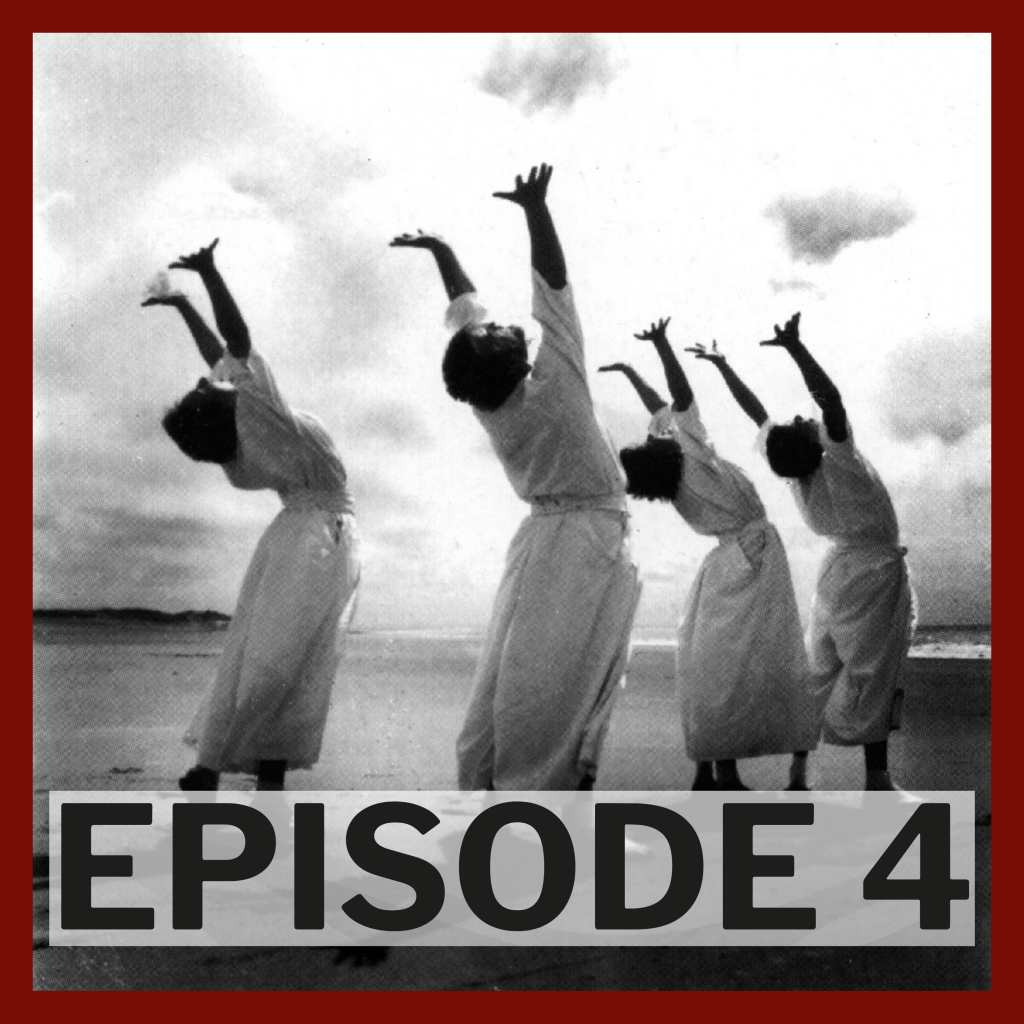
Imagine that you are watching a group of dancers, or martial artists, moving in synchronization, the group naturally breathing as one, timing synchronized to the microsecond, but not with military rigidity — they are moving with the naturalness and grace a school of fish or a flock of birds. The scene shifts to a classical orchestra, each section and each musician contributing a part, which the conductor weaves together into a spectacular whole.
Part of Aoki’s inspiration in Shintaido was gained through the perspiration as master Egami’s disciple, leading karate training in his school. The choreographer, the orchestral conductor, and the karate master all share something in common: the ability to “orchestrate” group activity, to give “gorei” (号令). Aoki describes his experience leading classes in the Shotokai karate training hall: “Once I started to lead the whole class using a gorei, I was never allowed to break my concentration even for a second.”
In Shintaido, the aim of the leader has shifted away from preparing the participants for combat, and has moved much closer to that of the choreographer or conductor: letting the individual talent of each person shine, while contributing positively to the life of the whole. Under Egami’s direction, Aoki also immersed himself in the classical kata of karate, researching and documenting them in detail. But his goals lay beyond the preservation of a great tradition. “The difficult task of collecting these karate kata continued,” writes Aoki, “as well as my study of other body movements. Eventually, this all blossomed into Tenshingoso (the Five Cosmic Breaths), …which became the first basic technique (or kata) of Shintaido.”
Episode 5: “The martial arts and the evolution of consciousness”
Section of the Book: Part 1: The Philosophy and History of Shintaido – Chapter 2: How Shintaido was born – Section 3: the martial arts and the history of the evolution of consciousness
Read More About Episode Five
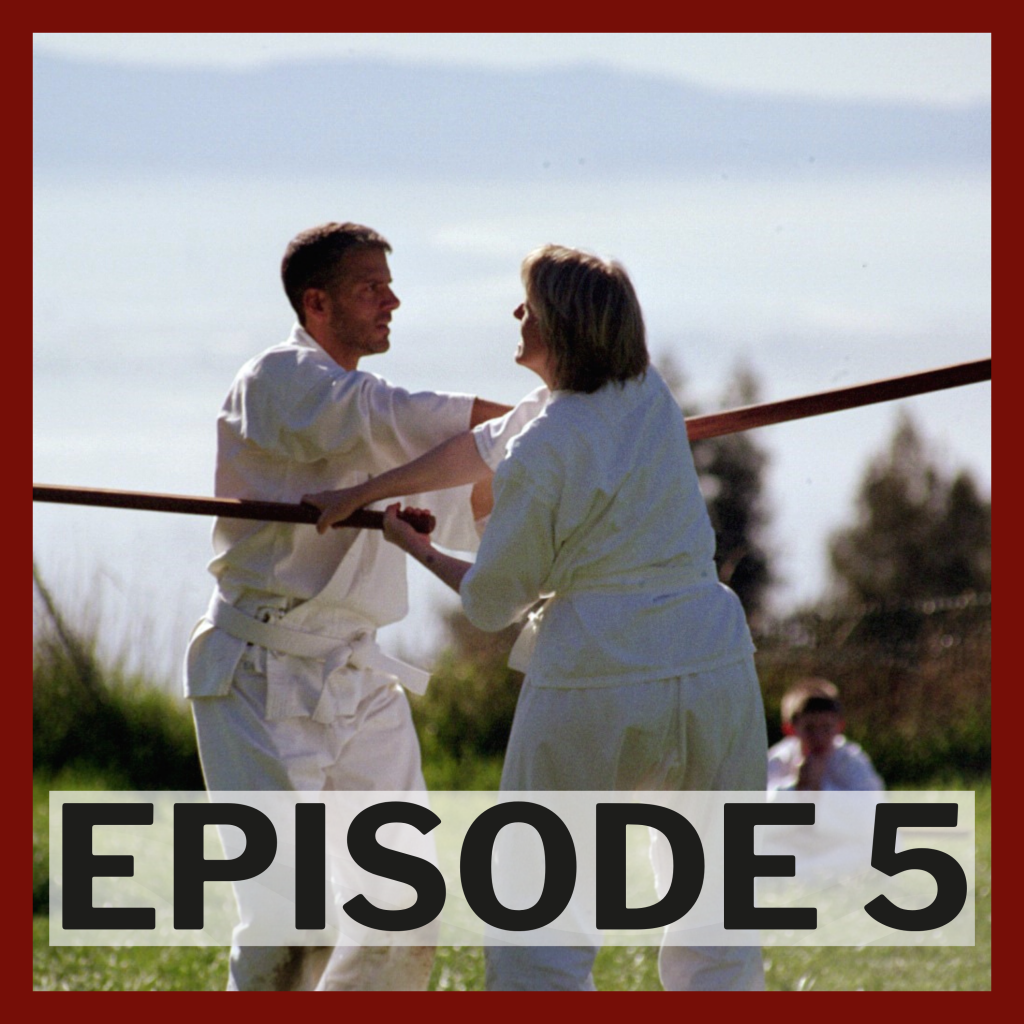
Although Shintaido is a “new” body way, it exists on the foundation of an ancient samurai warrior tradition. But when guns were appeared on the battlefields of Japan in the 16th century, it changed the calculus. Imagine fighters who had trained for years integrating movement, mental focus, and breathing to attain an advantage on the battlefield— killed en masse in short time by a less-trained but better-equipped army, their training and armor suddenly tactically useless against this new weapon.
From the introduction of guns in mediaeval Japan and onward, technological developments in warfare branched off in one direction, leading to the atomic bomb and other advances in military hardware, a trend which continues to this day.
The musket by itself did not cause the elite samurai warriors to become interested in meditation, calligraphy, landscape painting, tea ceremony, and other art forms. But it did make clear that in the modern age, military victories are achieved largely by technological superiority. Meanwhile, the spiritual aspect of the warrior’s “combat” grew into the samurai philosophy of living perfectly up to the moment of death. In a sense, the atomic bomb in 1945 may have revealed a similar truth as rifles did in the 16th century: if the goal is simply winning, technology is decisive. But the ancient martial arts include a kind of “technology” of movement that works with the mind and body and connects us to nature. Much of this traditional body “technology” (or rather, systematic set of training techniques) has little to do with battles, fighting, winning and losing. These teachings are the starting point of Shintaido.
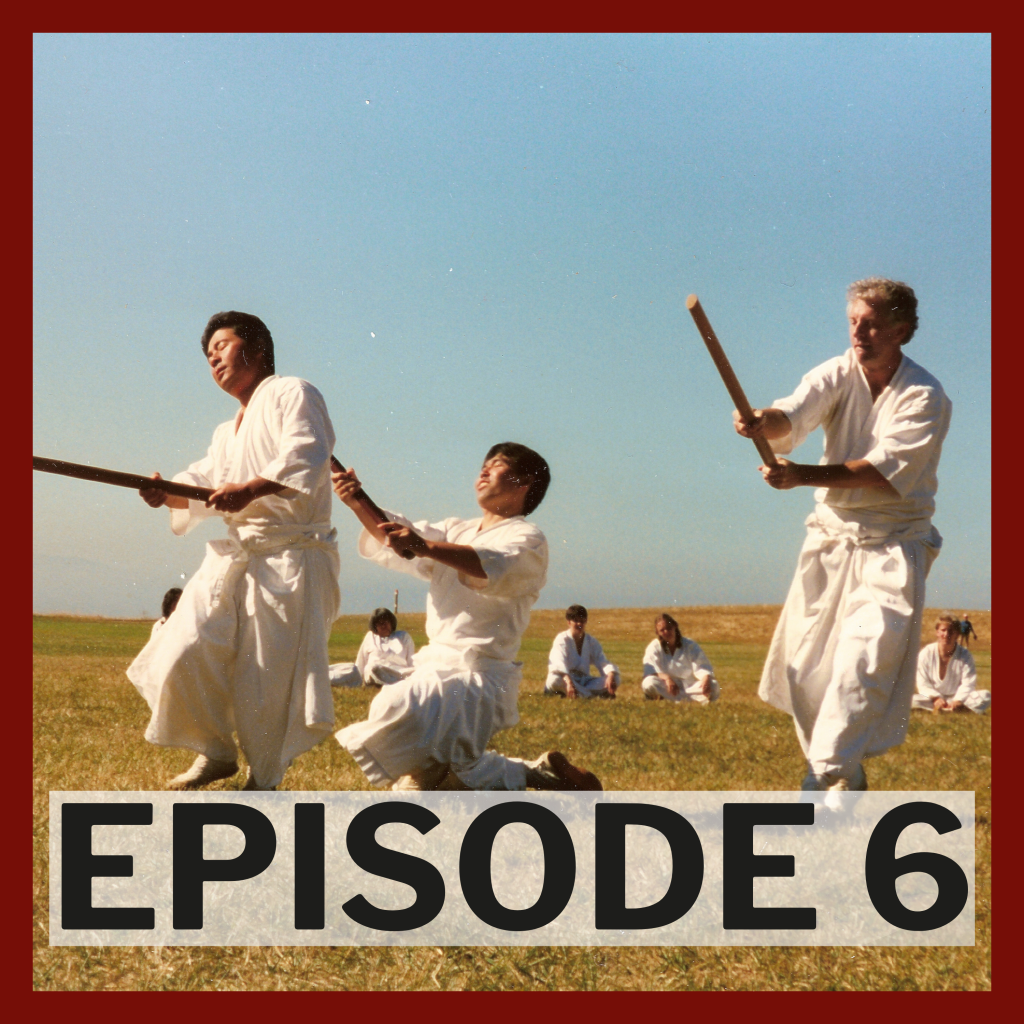
Episode 6: “An ancient sword master expands space-time”Section of the Book:
Section of the Book: Part 1: The Philosophy and History of Shintaido – Chapter 2: How Shintaido was born – Section 4: The sword technique of Hariyaga Sekiun: expanding time, space, and energy
Read More About Episode Six
Imagine two samurai warriors of nearly-even status and skill, facing each other on a narrow bridge in the mountains, both wanting to cross, and both honor-bound not to back down. In a few moments, one of them will be dead, and neither knows if it will be him or his opponent. At this moment when everything becomes silent just before the battle, both are striving to sense even the smallest hint of the impulse to move, the slightest sound of the weight shifting in anticipation of an attack. They are intensely “tuned-in” to each other. Each one’s knows that his survival may depend on his capacity for mindfulness. The slightest gap in attention might mean instant death.
At this moment, we might say that these “opponents” are in a sense “unified.” This was the insight of the mediaeval swordsman Hariyaga Sekiun, and his insight was tested in practice multiple times. Sekiun’s philosophy was influenced by Zen, and his teaching aimed to strip away occult practices and pre-conceived responses to an attack. Therefore Aoki considers Sekiun to be in the same category as avant-garde artists of the modern era, who changed our way of seeing. He clarifies the relevance of a thinker like Sekiun: “…[E]ven though the present time is far different than the classic age of martial arts, it offers many new directions and adversaries which must be confronted. We have the responsibility and obligation to express our opinions and beliefs to our nation and our leaders, especially in regard to social and environmental problems. Our movement, therefore, must be different from what has come before.”
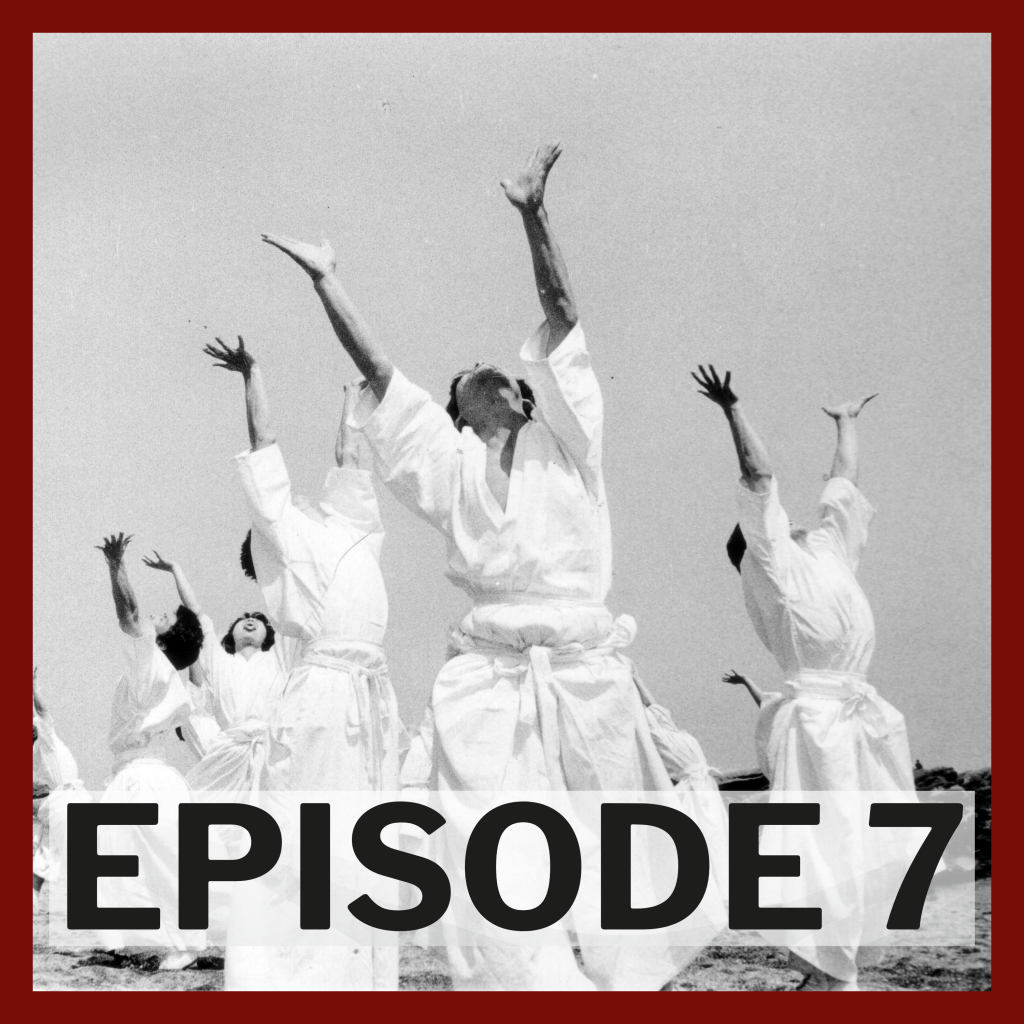
Episode 7: “Putting the art back into the martial arts”
Section of the Book: Part 1: The Philosophy and History of Shintaido – Chapter 2: How Shintaido was born – Section 5: developing a modern martial art
Read More About Episode Seven
If ancient movement arts—if we widen our focus beyond martial arts to include, for example, traditional Japanese Noh theater or tea ceremony—if these ways of movement are not just “museum pieces” but are still relevant for us today as contemporary, living systems of physical training; then we might ask if they should be not just revived or preserved, but somehow re-invented. Aoki explains his goals in the process of inventing Shintaido, as he writes:
“By using body movement, we could regain a measure of the genuine communication which has almost disappeared from our lives, and at the same time, repair our bodies and minds from the damaging effects of modern civilization.…
“After retracing the last three hundred years of martial arts history, I concluded that just as modern art had to be created in its own historical context, the martial arts could be adapted to modern conditions, and the forms and movements would be completely different from the traditional styles.
“…[T]he simple study of classical methods never produces a new way of expression. One cannot be an Andy Warhol merely by practicing drawing for a prescribed amount of time. Similarly, I did not limit my study to karate and the other martial arts in this limited way.” The purpose of Shintaido, as Aoki summarizes it, is “…not to preserve old classical forms and transmit them to succeeding generations,” but to use “…a body movement or the martial arts to examine the conditions of our own age.”
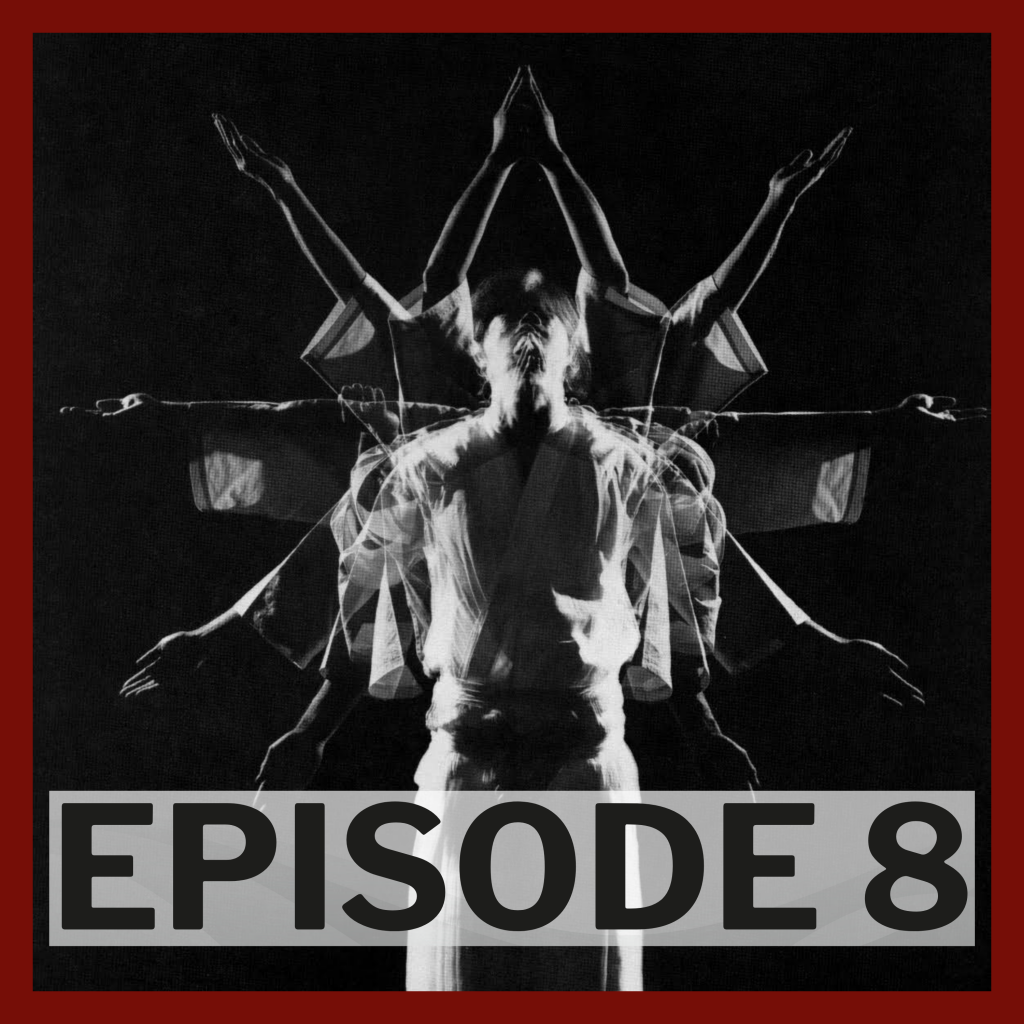
Episode 8: “The locus of one swing of the sword is a sign”
Section of the Book: Part 1: The Philosophy and History of Shintaido – Chapter 2: How Shintaido was born – Section 6: the locus described by the swing of the sword is itself a sign— stripping away spirituality
Read More About Episode Eight
“What is cutting?”– this question, which seems simple, reminds us of a koan, the genre of seemingly nonsensical questions or proverbs used as teaching occasions in Zen. Generally there are no verbal koans in Shintaido, because it is above all a body movement discipline. But might there be such a thing as a physical koan, a quest or a question “asked” in the language of movement? Aoki’s answer to the question “What is cutting?” is mysterious: “The locus of the swing of the sword is itself a sign,” which suggests that the answer is yes.
Aoki reveals the process by which he arrived at this formulation, which grew from an urge to strip away everything that he perceived as unnecessary, to eliminate any artificial elements or superficial “spiritual” meanings, leaving only the essential, primordial aspects of the movements to shine through. He describes his approach: “I tried to remove all spiritual gloss until we could reach a ‘zero point’ … Finally the day came when the meaning of all techniques became zero for me…” From this description, we might get a glimpse of the process by which Shintaido was invented, we might even say the “paradigm shift” that happened for Aoki in the quest to invent Shintaido.
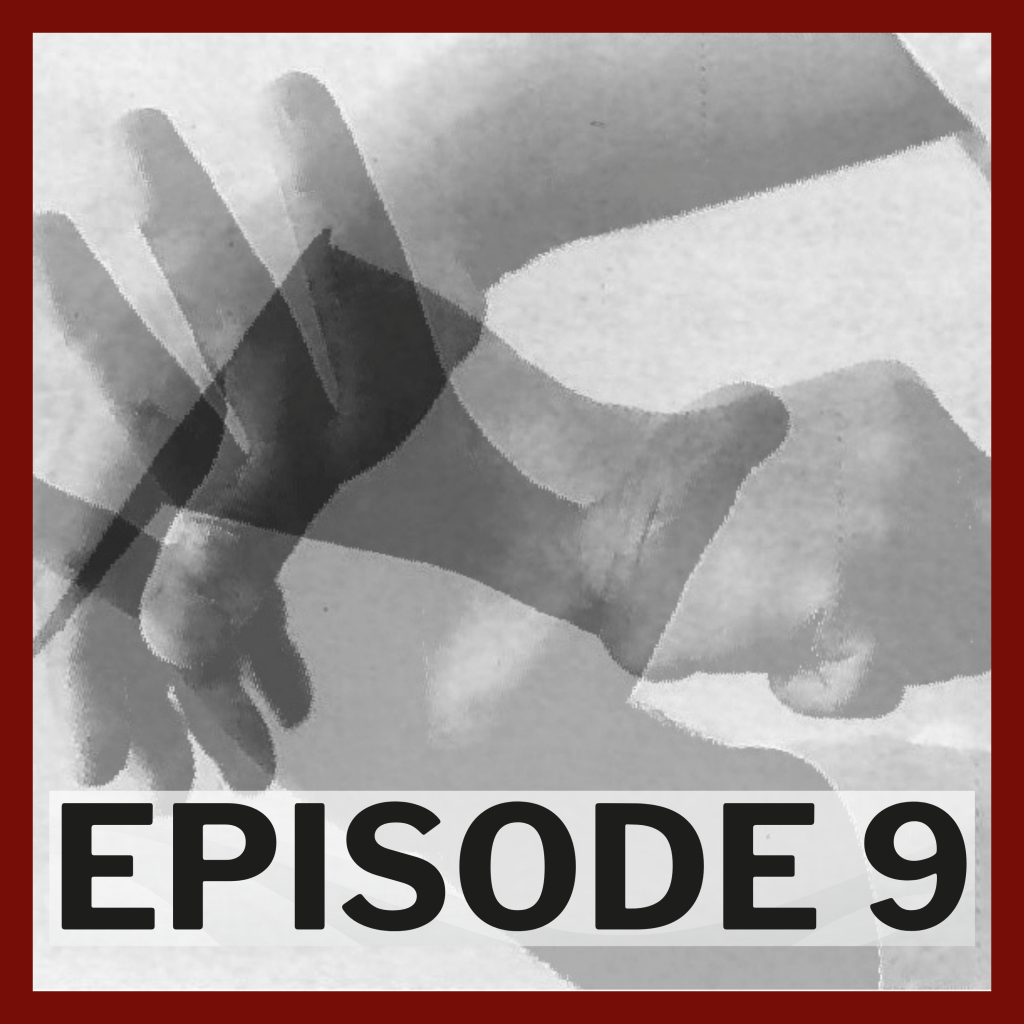
Episode 9: “Discovering the world of true natural body movement”
Section of the Book: Part 1: The Philosophy and History of Shintaido – Chapter 2: How Shintaido was born – Section 7: Looking for the strongest technique
Read More About Episode Nine
What do a cobbler, an infant, and a Buddhist statue have in common? This may sound at first like the set-up for a joke, or simply an absurd question. But in fact, here Aoki describes how his search for principles of truly natural movement led beyond the formulaic prescriptions common in many traditional martial arts. “Even though babies have had no physical training, their expression of power is so strong and automatic that it is difficult for us to imitate,” he writes.
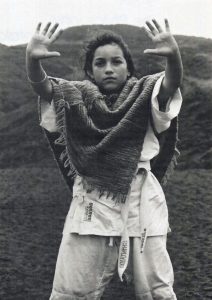
Paradoxically, he sees a similarity in the movements of master craftsmen (who of course are highly trained): “On close inspection, I discovered that as an artisan works, his seemingly slow movements are soft and devoid of shoulder tension.” Integrating these observations with the study of the postures and hand gestures of ancient Buddhist statues led Aoki to the signature gesture of Shintaido called “kai sho ken,” the wide-open hand with palm and fingers completely stretched and extended.
Aoki describes this discovery: “I finally found that the open hand… was stronger than the hardest fist because when we open our hands, we can automatically express the full power of our life energy.” In combination with other hand positions such as a tight fist or a completely relaxed hand, the open hand becomes one of the fundamentals of the holistic training system that was soon to be named “Shintaido.”
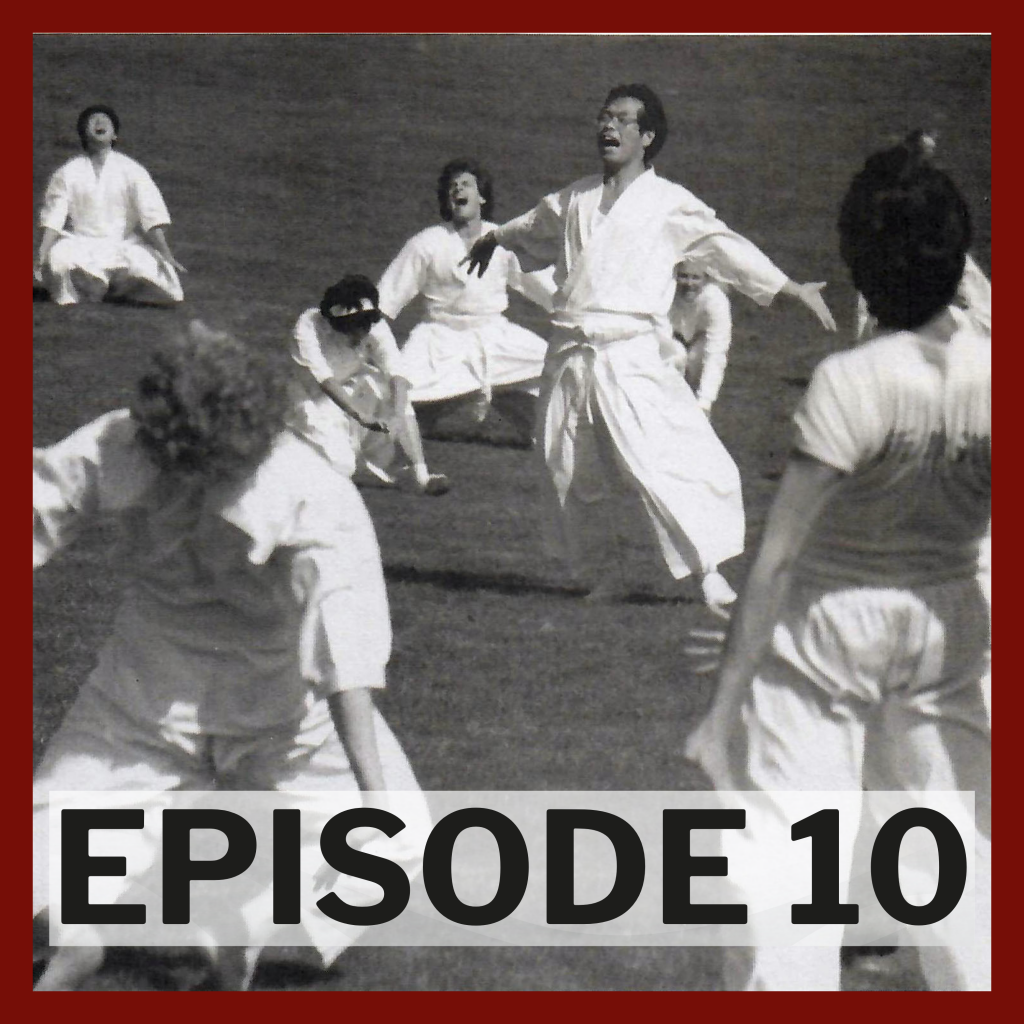
Episode 10: “Giving voice to the hidden cosmic breath”
Section of the Book: Part 1: The Philosophy and History of Shintaido – Chapter 2: How Shintaido was born – Section 8: Tenshingoso— an embodiment of the hidden cosmic breath
Read More About Episode Ten
Episode 10 describes the creation of the foundational kata (a sequence of movements) of Shintaido, which in the title of this section Aoki calls “an embodiment of the hidden cosmic breath.” In Aoki’s mind, this kata, like a great work of art, should be “…an embodiment and expression of the common Tao of many different disciplines, [which] simulates the cycle of a human life and even the rhythm of the cosmos.”
He also intended that the kata should be concise and simple, take only a few minutes to practice, be accessible to wide range of people, require little space, help us focus on the infinite horizon, support a bright, well-rounded character, and function as an antidote to the routine discouragements of daily life. The sequence of movements, usually accompanied by the vocalizations, that emerged after a thorough process of testing and refinement was named Tenshingoso, the Five Breaths of Cosmic Reality.
Aoki acknowledges that he achieved these ambitious aims by “standing on the shoulders of giants,” as Isaac Newton said, and expresses his gratitude to his former teacher Shigeru Egami of Shotokai karate-do, and to master Hoken Inoue (also called Noriako Inoue) and his art of Shinwa Taido (also called Shin’ei Taido). Inoue was the nephew of Morihei Ueshiba, the founder of Aikido.
In many traditional martial arts, such a kata, a nugget of essential knowledge of the discipline, would be kept as a secret, known only to the select few. But Aoki’s aim was different than that of traditional martial arts, and so Tenshingoso — the Five Breaths of Cosmic Reality — was made a central pillar of Shintaido, and anyone who practices may start learning it during the first lesson.
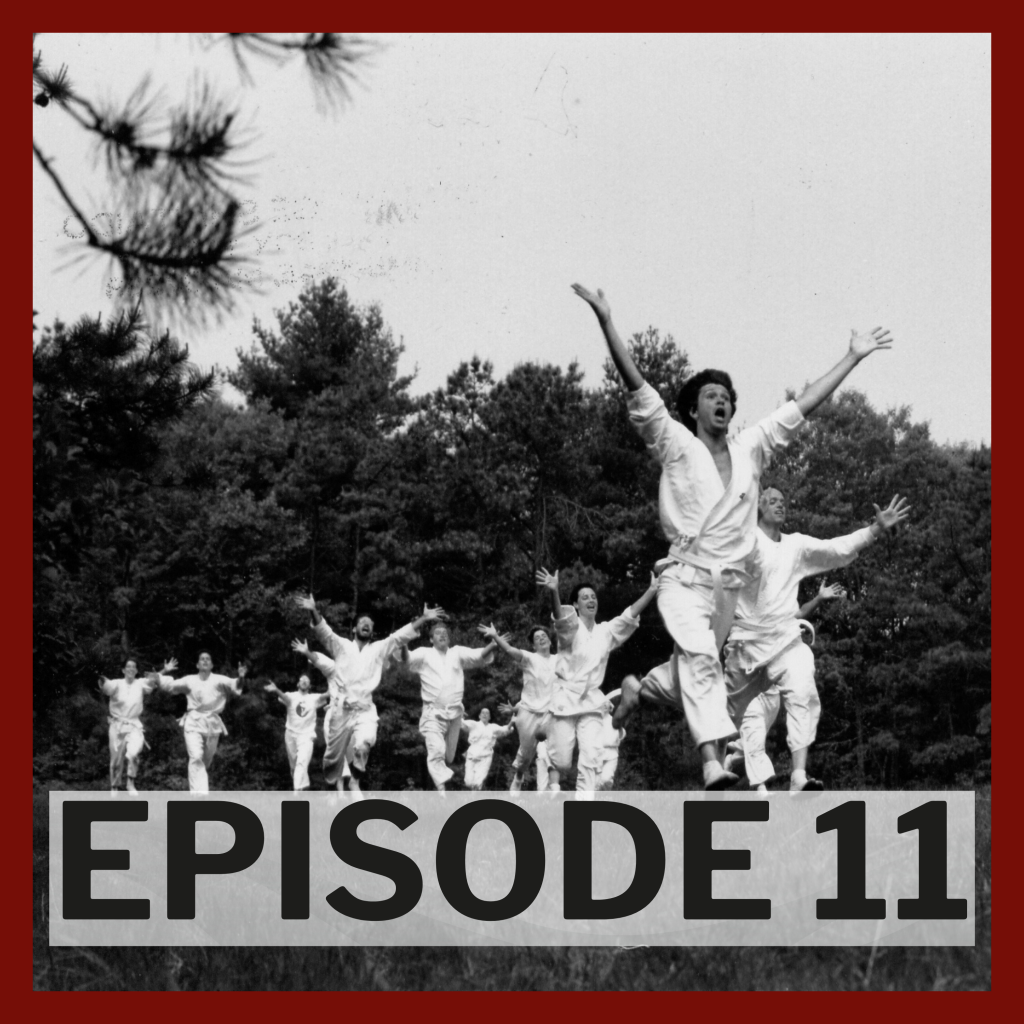
Episode 11: “Scream to the sky: the gyroscope of Shintaido”
Section of the Book: Part 1: The Philosophy and History of Shintaido – Chapter 2: How Shintaido was born – Section 9: The birth of Eiko — the gyroscope of Shintaido
Read More About Episode Eleven
Imagine that you are being invited to join a series of trainings or practices that are described like this:
People joining this training have to put their house in order before each practice, as if they might not return. Our purpose is to discover our physical limits and the threshold of the unknown world which begins at the end of our psychological strength.
These were the conditions for the people who invented Shintaido, the Rakutenkai group, which was formed under Hiroyuki Aoki’s leadership in 1965. In the last episode, we heard about Tenshingoso, the five breaths of cosmic reality. This episode presents the other fundamental form of Shintaido: Eiko no ken, the “sword of glory,” known now simply as Eiko or “glory,” which Aoki describes as the “gyroscope” of Shintaido.
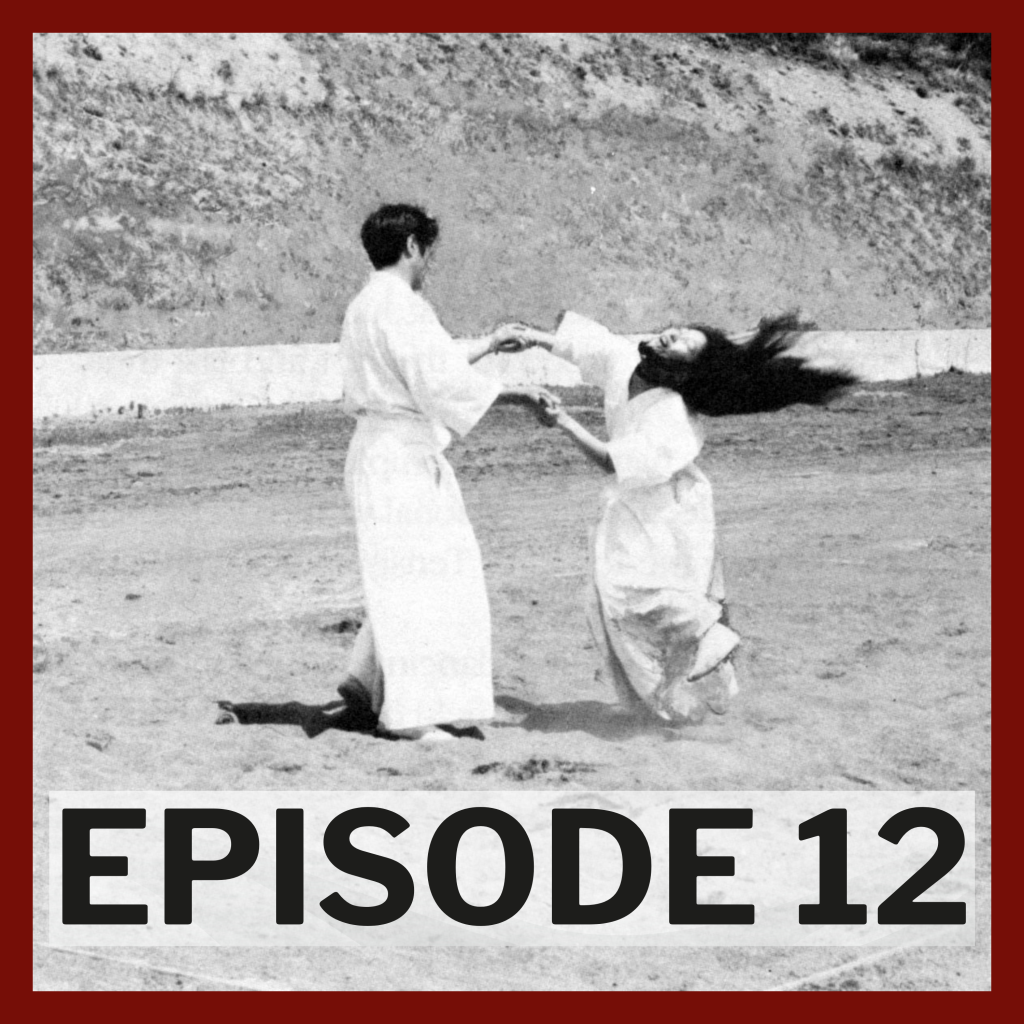
Episode 12: “Playing with light”
Section of the Book: Part 1: The Philosophy and History of Shintaido – Chapter 3: What Shintaido has conceived: Hikari to tawamureru — “playing with light”
Read More About Episode Twelve
Imagine that in creating Shintaido, expert martial artists were asked to commit themselves fully to a partner exercise — in Japanese “kumite” — that was nothing like “sparring,” that was completely outside the norms and standard practices of any traditional martial art. Aoki describes Hikari to Tawamureru, meaning “playing with light” like this: “All that is required is that we express ourselves as simply and sincerely as possible, regardless of our physical strength. It is not even necessary to move. It is enough simply to play or just be present. This kumite is a revival of the childhood expression that we lost by growing up.
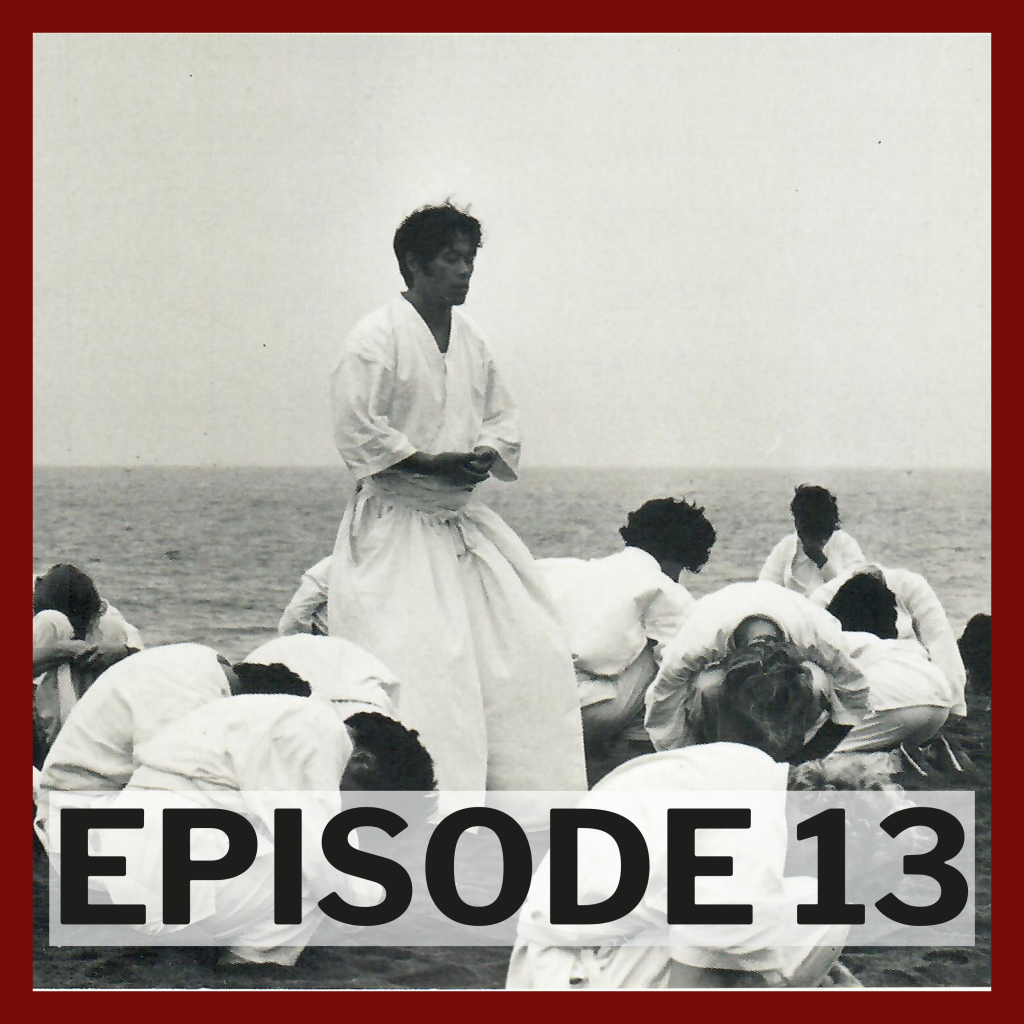
Episode 13: “To overcome the barriers to mutual understanding”
Section of the Book: Part 1: The Philosophy and History of Shintaido – Chapter 4: To overcome the barriers to mutual understanding
Read More About Episode Thirteen
Teaching and learning — sharing knowledge as opposed to mere information — is a profound process that changes the lives of the individuals involved. The types of social relationships that exist in Japan — Shintaido’s country of origin — are different than those in the USA or Europe. Logically, this has a powerful impact on how we understand the teaching and learning process.
In this episode of the podcast, Aoki shares his insights into this question from the perspective of an author of an entire body of knowledge — a body of knowledge that grew from Japanese soil, but has taken root in the USA, Canada, Australia, Europe, and elsewhere outside Japan.
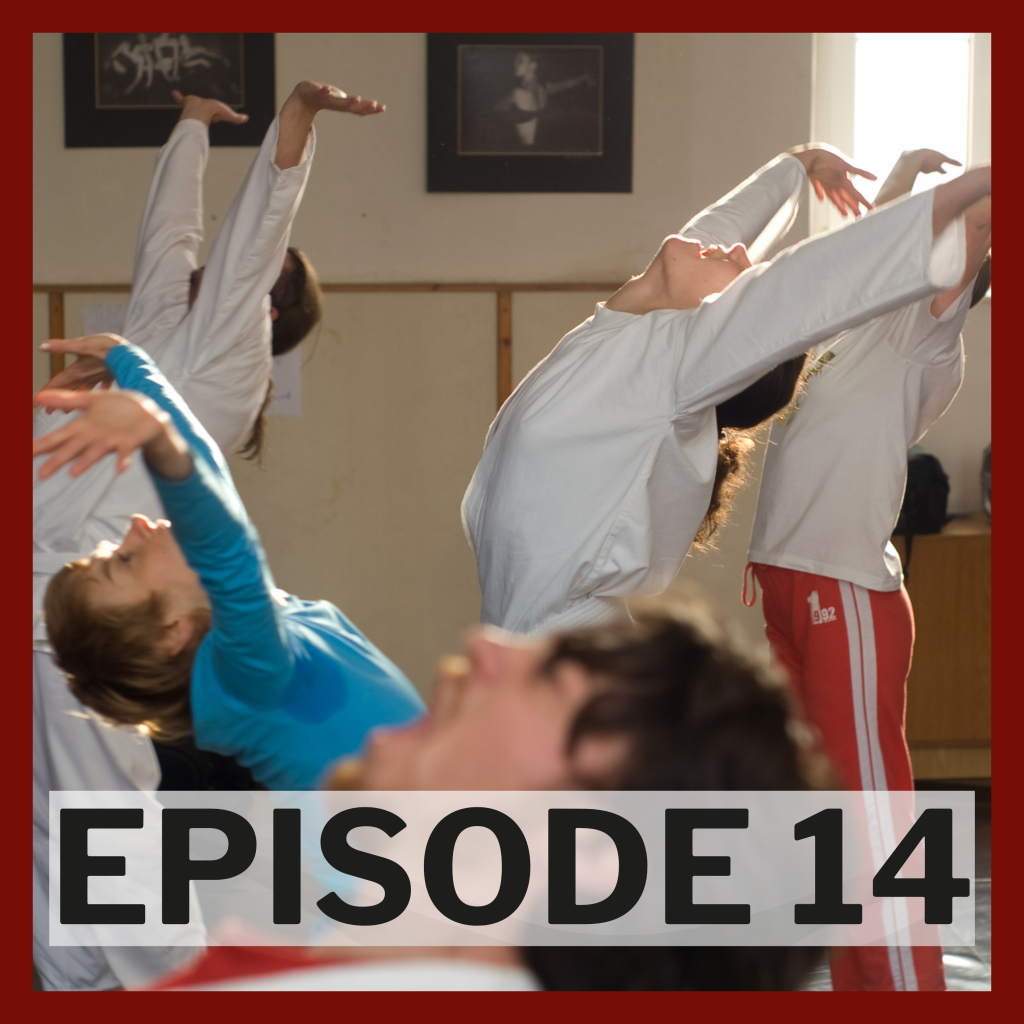
Episode 14: “How to make this age better”
Section of the Book: Part 1: The Philosophy and History of Shintaido – Chapter 5: How to make this age better
Read More About Episode Fourteen
“Creativity is not the exclusive province of artists and artistic expression. If we stop the automatic acts of daily life, surrendering yesterday’s happenings and separating ourselves from the old self of one day ago, through an act of our will, we will discover a new life of continuing satori, or many small enlightenments…”
With these words, Aoki succinctly brings home the relationship between the physical movement practice of Shintaido and its meaning in the broader context of so-called ‘spiritual’ traditions, and most importantly, describes its immediate application to our daily lives.
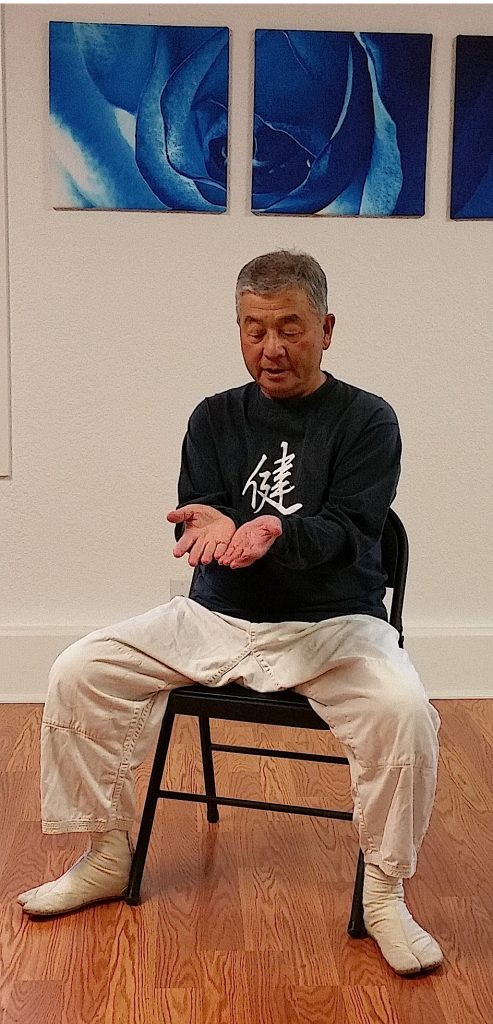
Navigating Roles and Identity I met H.F. Ito (“Ito” to most of us) in May 1988 when I began practicing Shintaido in San Francisco. At first, I knew him through his students who were my teachers – Jim Sterling, Connie Borden, and Ben Schireson. When I came to know Ito better, we would talk about the cross-cultural kumite of Shintaido roles: the hierarchy of Japanese student-teacher and sempai-kohai relationships vs. the level playing field friendships common in the U.S. He liked to play across that canvas sometimes as the stern goreisha and at other times as a friend cracking jokes over dinner. While dancing that dance with Ito it helped to know both cultures and the cues to transition back and forth, up and down.
Photo by T. Nagai-Rothe
Ito brought Shintaido to San Francisco in 1975 and drove his first students with the intensity of his Rakutenkai* experience. (In Bela Breslau’s words, “One day I was so mad, I decided I would keep doing Daijidan Kirioroshi until I dropped – and that would be on him!”) As much as Ito taught Shintaido and the cultural forms associated with it, he was changed by living in the US. He described how his Japanese friends viewed him as less and less Japanese the more time he had spent away.
Neither was he American, though he made his home in San Francisco for more than 30 years. And though Ito had spent a great deal of time in France when he moved there to join his wife, Nicole Beauvois, in 2011 he was not French either. The role of traveling instructor and Shintaido ambassador was apropos. Ito navigated the edges, crossed boundaries and connected groups of people in Turtle Island (U.S., Canada), Japan, the United Kingdom, France, Switzerland, Germany Spain, Belgium, Italy, Romania, Australia, and Sweden.
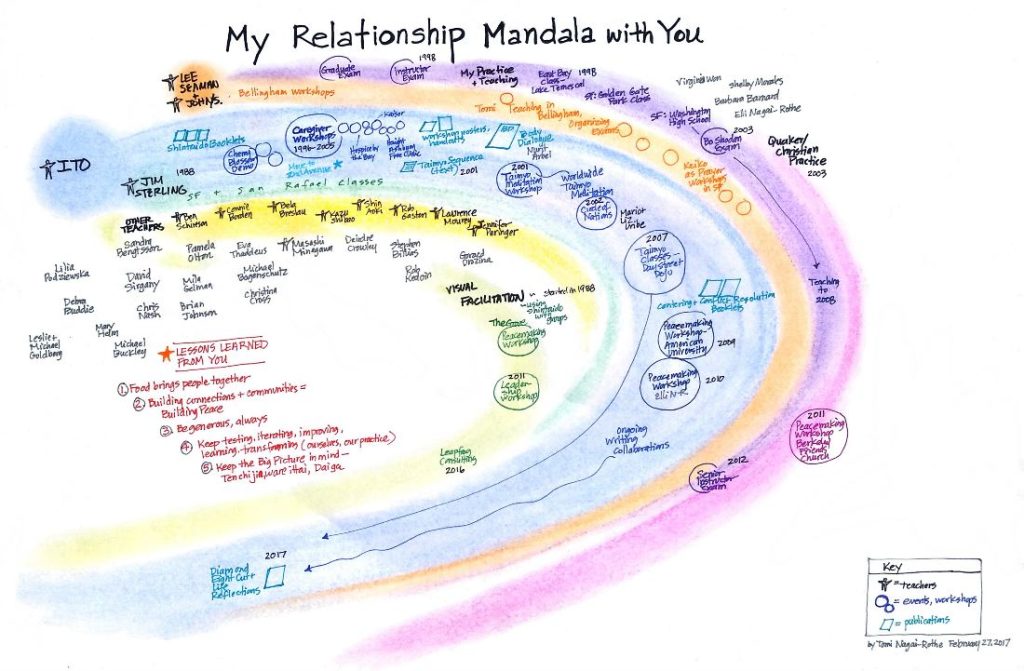
Ito often spoke about his relationship mandala – the web of friendships and partnerships that he had woven over 50 years. He asked me to illustrate how his relationships had led him to teach in Switzerland and I made this graphic for his Swiss group.
Graphic by T. Nagai-Rothe
Ito moved between worlds and connected people. Though we often speak about how we are all connected to one another and Mother Earth, Ito actually spent much of his time doing things to build strong connections among us. He gladly hauled bo, bokuto, jo, tabi and all manner of equipment from continent to continent just to make our practice better.
In my family, we define peace as actively building connections. In that light, Ito was all about making peace – every day.
I know Ito well because he moved in with my family in 1998. Over time I was able to navigate through our roles with one another: older family member-younger family member, teacher-student, author-writing collaborator, chef-sous chef, friend-friend.
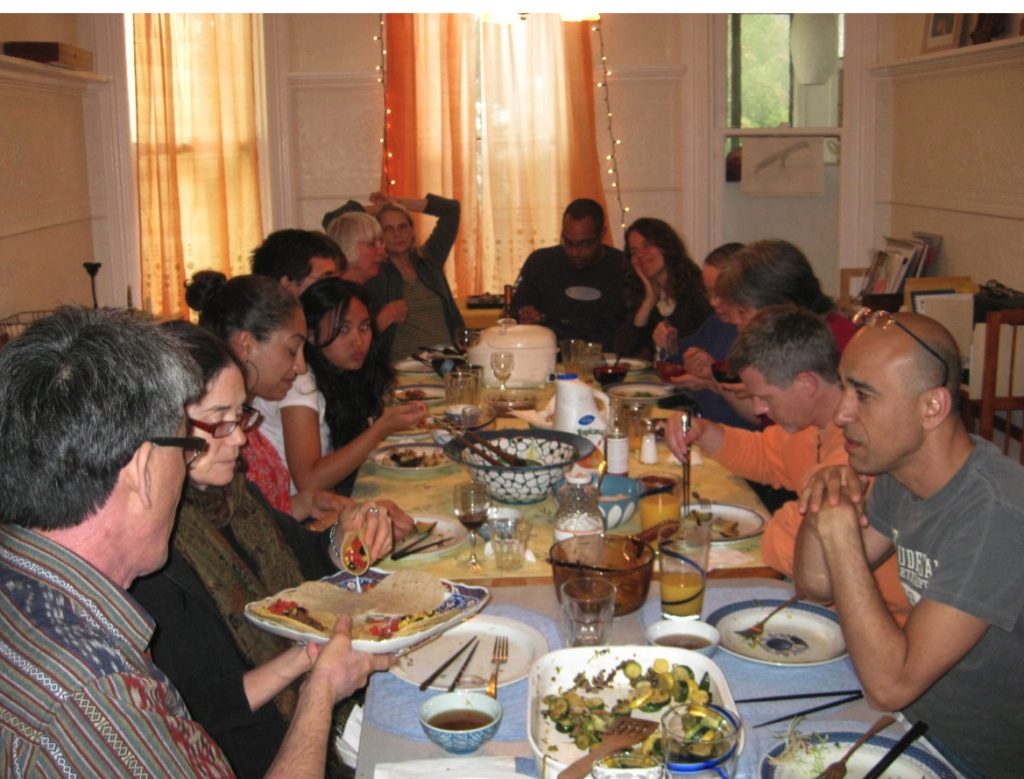
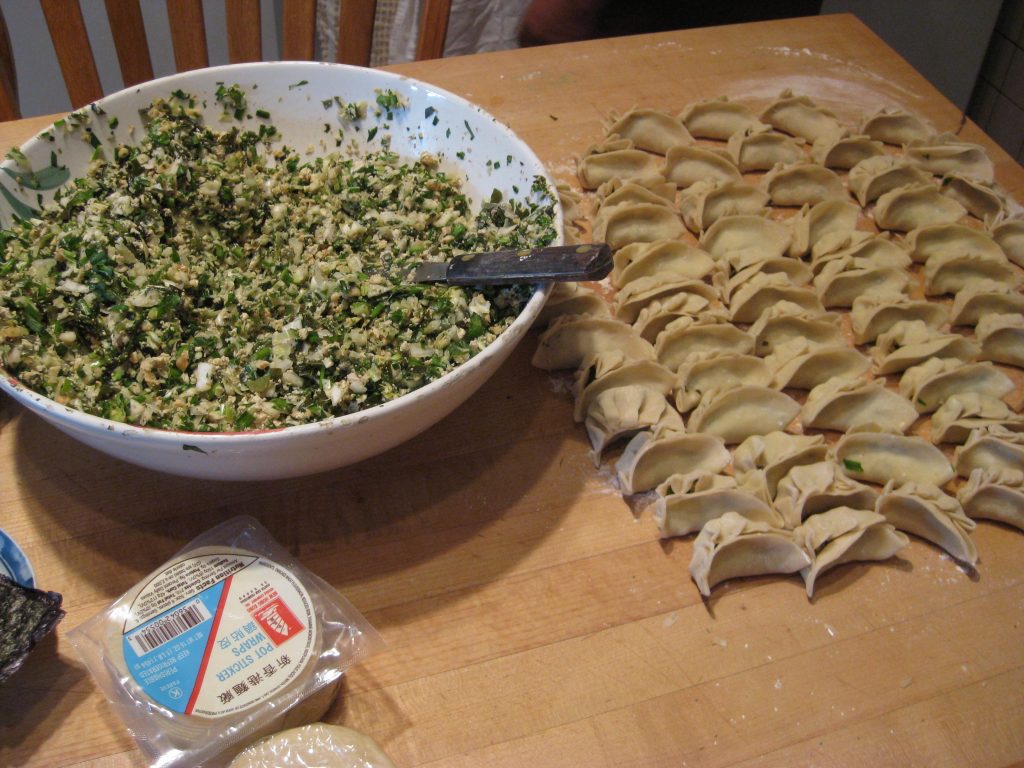
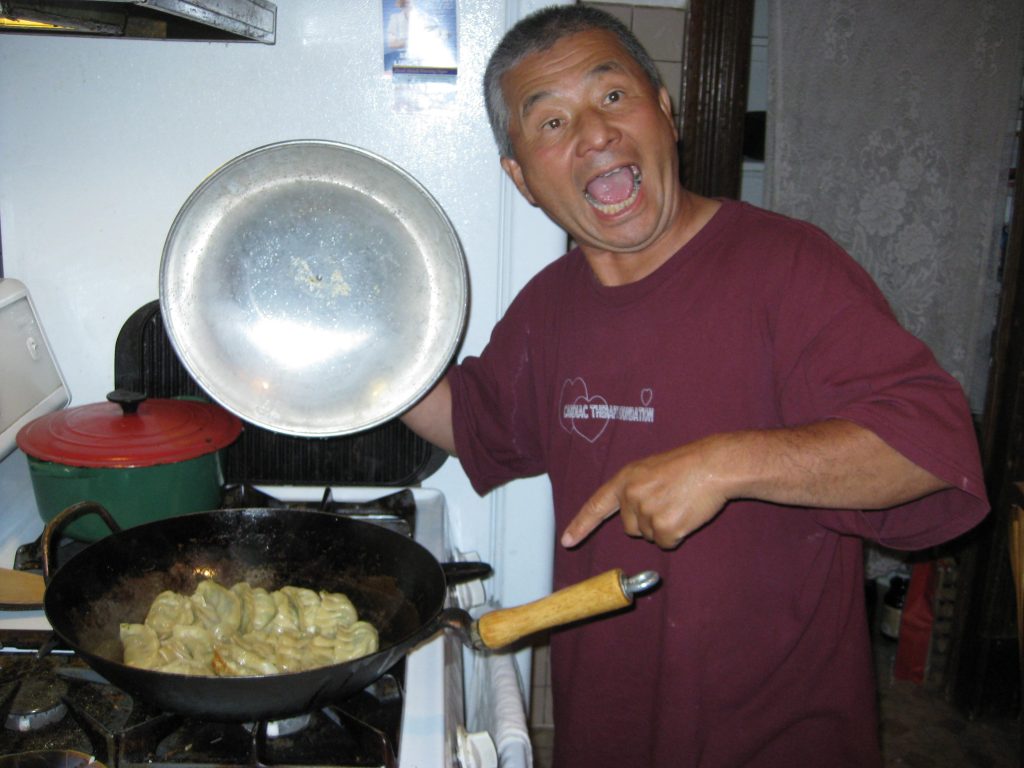
Building Community Ito loved to cook and invite people over to eat. The tempura fests and gyoza (potsticker) making parties at our 643 2nd Avenue house were epic. We would eat trays and trays of gyoza and Ito would produce yet another tray!
photo by T. Nagai-Rothe. 2010
Ito learned to make gyoza at the Chinese restaurant where he worked in Yokohama while part of Rakutenkai. Everyone contributed to the group in some way and Ito was assigned to work at the restaurant so his wages could support everyone. He would work at the restaurant, then get off his shift to join the Rakutenkai keiko at Nogeyama Park in the middle of the night.
At our house, Ito would start creating the gyoza filling early on party day because it took hours to mince the cabbage and garlic. I once asked him if he wouldn’t prefer to use the Cuisinart and he said, “It’s better to chop by hand. The energy in the gyoza isn’t the same if you use a food processor!”
photo by T. Nagai-Rothe
It was about building community, meal by meal. Food prep hour by food prep hour. My kids, Elli and Kai, formed their love of community meals from these gatherings. And when I think about the Shintaido of American examination criteria about building community – something I’ve never heard of in other martial arts examinations – I remember how Ito modeled this for us.
photo by T. Nagai-Rothe
In 1993 Ito began studying scuba diving in Hawaii. After one trip, he returned with a story about the examination process to become a freediving instructor. Ito had failed a written exam because the exam included trick questions that he was unable to register as a non-native English speaker. He said he was devastated because it meant he couldn’t progress any further in the program. The story continued, however, to include the class instructors’ response. They said, “No problem. We’ll work with you until you can pass the exam.” That completely stunned Ito: it was a completely different paradigm from competitive martial arts and the Japanese educational system. A new world: helping everyone be successful in practice! As a result, Ito completely changed his teaching style to focus on each student’s strengths and their learning style – not his agenda. He became adept at sensing which teaching approach would suit a student, based on his observations of them.
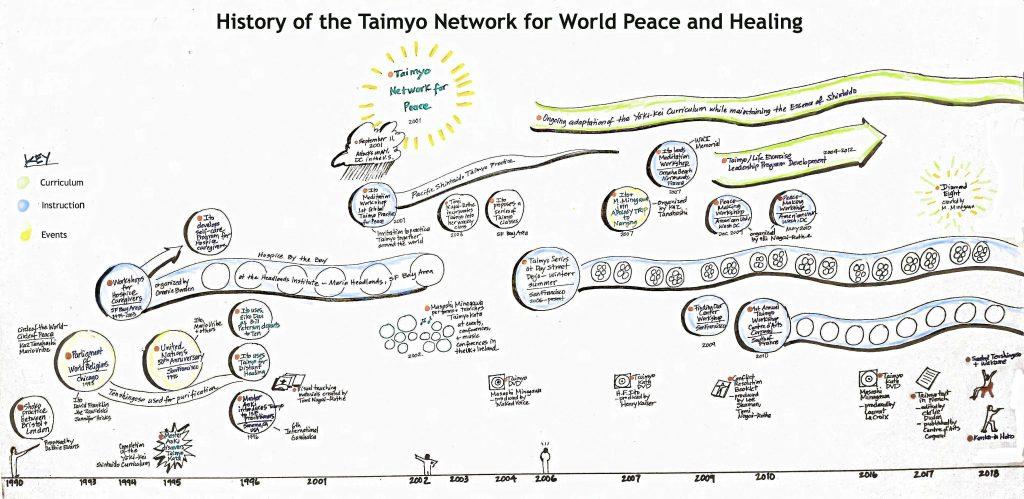
Peacemaking: Inner & Outer Iin 2001 Rob Gaston and I organized a meditation workshop with Ito in the Bay Area for September 23-30 – a weeklong in-person and virtual international practice. The early registration date was September 9 and our flyer said, “Please join us in the early morning to clear yourself and begin each day mindful and refreshed.” And then came September 11.
After 9/11, I remember a week of collective vulnerability and openness – the kind that we experience in Daijodan Kirioroshi – but because that isn’t a generally valued state of being, the anger and ugliness followed shortly after.
Ito, Rob and I didn’t know if we should postpone the workshop or continue as planned. We had to process what had happened ourselves before we could reframe the workshop. After some reflection and conversation, we decided to stay on track with the workshop, and frame it as practicing Taimyo Kata to create a ring of connectedness and love around the world. And though we were challenged to stay connected at a distance with email but no Zoom, it was a powerful experience. We needed that practice.
That week Connie Borden wrote, “One way to learn the value of human life is through practicing a body movement that requires you to fully give up your life and from this place of release the sense of holding on to life is even more important.”
This was the beginning of the International Taimyo Network practicing inner and outer peace, now known as the Global Taimyo Community.
Graphic by T. Nagai-Rothe
18 months later Ito was home in March 2003 and we watched U.S. tanks invade Iraq on tv, completely aghast. We were both sad and speechless. Ito said he was pained that the U.S.had created a legacy of violence for its young people. He talked about how younger generations in Japan have suffered from the violence it perpetrated during World War II.
One of Ito’s earliest memories was seeing the mushroom cloud rise over the hills that separated Kure from Hiroshima and hearing the deafening sound – on August 6, 1945. He was at his grandparents’ house in the mountains where his mother was about to give birth to his brother Yoshitaka (Juguro). Ito was marked by his experience of the U.S. Occupation of Japan as a young boy. Though there were some good interactions with U.S. servicemen, the feeling of being controlled by another country was dark and disempowering. He majored in law at Chuo University because of his deeply felt sense that he wanted to ensure justice in the world.
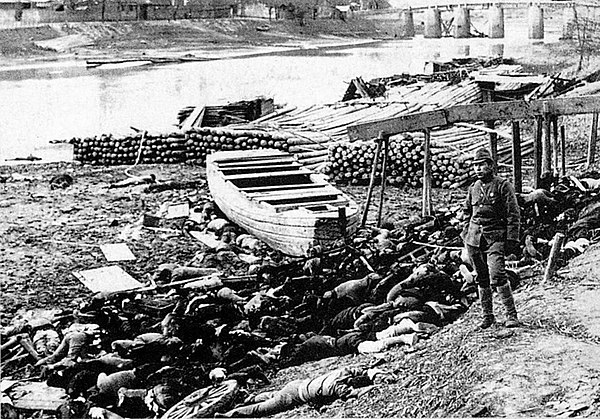
In 2007 Ito and Masashi Minagawa traveled to Nanjing, China to attend an international conference on the Nanjing Massacre that his friend, Kazuaki Tanahashi had co-organized. Ito had talked about the lingering guilt and shame of being Japanese without acknowledging the horrible violence unleashed on Nanjing residents in 1937, and the conference was an opportunity to make a public apology. He was very anxious about visiting China, and especially about going to Nanjing as a Japanese national.
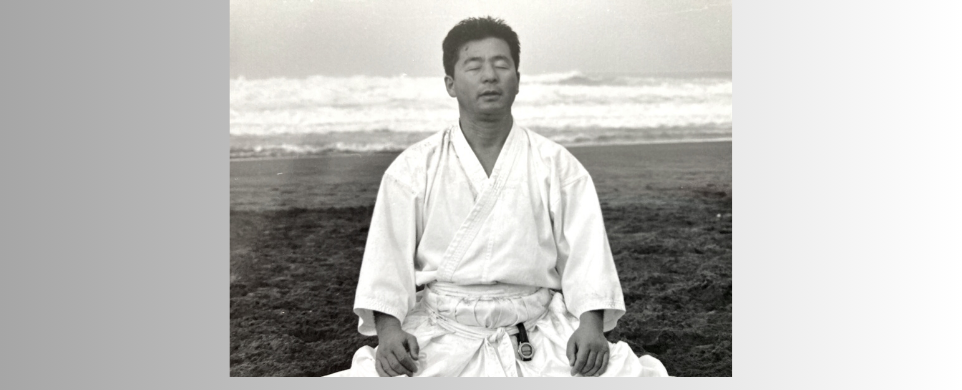
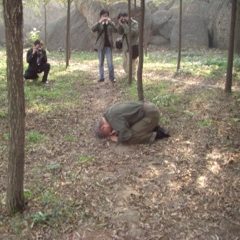
He told the story of getting away from an apology media event and finding his way to the edge of the river with M. Minagawa. It was where residents had been killed by Japanese soldiers or chased into the water to drown. Ito and M. Minagawa bowed deeply and sat by the river in meditation.
Derivative work of photo by Moriyasu Murase, 村瀬守保 (Wikimedia Commons)Photo by M. Minagawa
Ito could feel those who had drowned in the river. They were sad yet offered forgiveness. He felt drawn to the water to get closer, but his scuba training mandated a clear return plan and he couldn’t imagine how he would return to the beach, so he stayed on shore. M. Minagawa said he could feel Ito being pulled toward the water, so he focused on energetically anchoring Ito to the beach. (A 32 min. video interview about the Nanjing trip with Ito and M. Minagawa with Japanese and French subtitled versions.)
In a world filled with violence, there are few stories of feelings of remorse, apology, reconciliation and making amends (repentance) on the part of individuals or nations responsible for the violence. No one wants to take responsibility, to face feelings of shame, or simply to apologize. This is why Ito and M. Minagawa’s Nanjing trip and their time at the river stands as a model for opening the door to connection – and peace.
As Ito grew older, he changed his idea about his practice and his teaching. He studied Tai Chi with Master Ma and evolved his practice toward Taimyo Kata, meditation and Tai Chi. He made peace with his aging body and continued to grow and change – the opposite of most of us who tend to hold onto what we have. In equal measure his connection to Ten (“heaven”), the Universe and the Divine grew and deepened as he released earlier conceptions about his practice.
After Nicole’s brother Philippe died, Ito began a meditation “requiem” for him and other friends who had transitioned in that period. Ito said that he could see Philippe and his friends in front of him as he practiced. He was very comfortable in the thin place between this life and what lies beyond. Ito was preparing to move between worlds, and the practice of life and death.
Ito navigated his last boundary in this life smoothly, and continued his requiem practice in his mind in late December until he died. Nicole says that Ito was enjoying a continuous state of Fang Song – part of the mantra from his Tai Chi teacher Master Ma – “relax, relax, just relax.”
photo by H.F. Ito
When Ito’s friends transitioned, he would always laugh and say, “Now she is OMNIPRESENT!” So now Ito is able to completely span all roles, places, cultures, and forms.
When I spoke to Lee Seaman on December 30 I mentioned how sad I was that we didn’t have more time to listen, and ask for more details about his life and practice. Lee said, “Don’t worry. Part of Ito is alive in each of us who studied with him.”
I felt bad that I was unable to complete a project for Ito that I’d planned this year, but knowing Ito I’m equally sure that my real gift to him is ultimately who I have become through his nurturing and what I will do with it. Each of us has received something from Ito and is part of his legacy.
I wonder, “What will we do to pay it forward?”
…
The beauty of the Shintaido community is that we are all over the world. For this reason, we publish Tomi´s personal remembrance also in French and Japanese.
Feel free to share this article, and the translations to anyone who might wish to read about HF Ito´s life. Thank you.
Notes & links
* The arts/martial arts group organized and led by Shintaido founder Hiroyuki Aoki.